Department of Biochemistry, Howard Hughes Medical Institute, Brandeis University, Waltham, United States.
Elife. 2017 Sep 27;6:e31259. doi: 10.7554/eLife.31259.
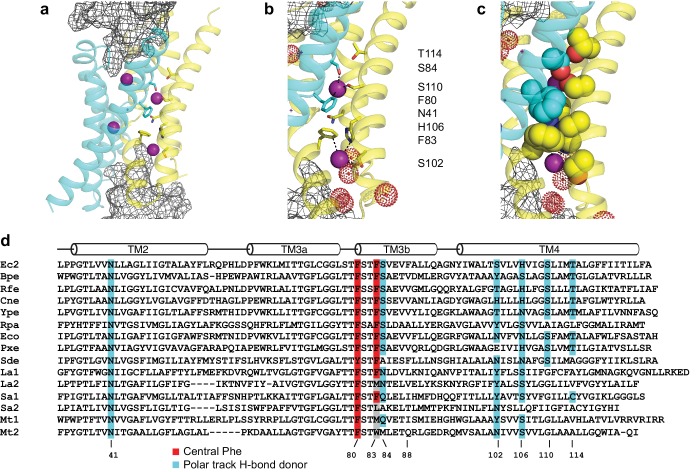
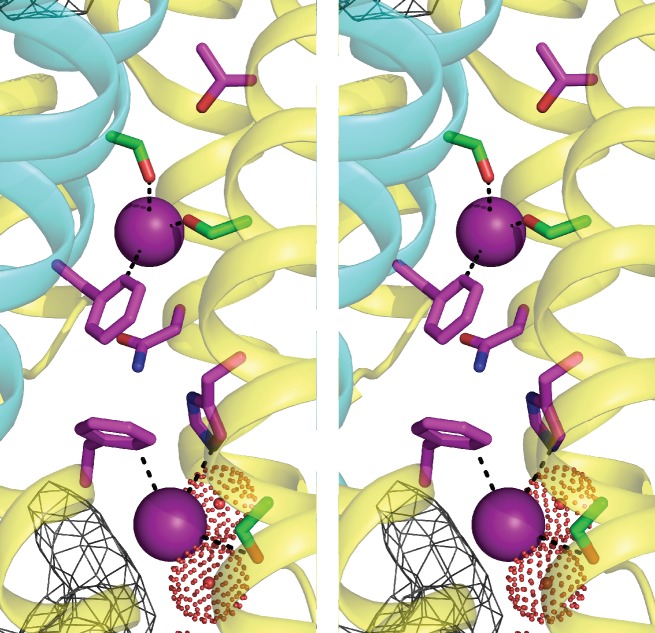
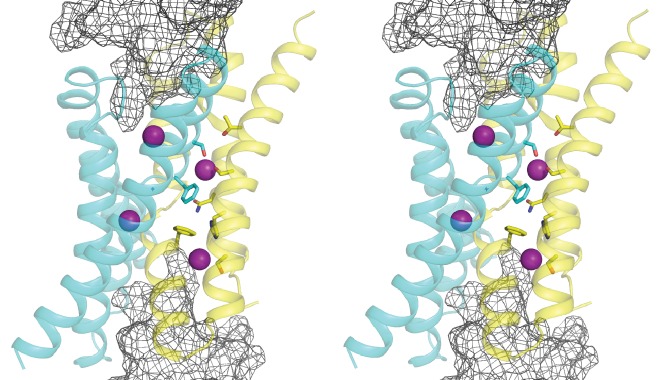
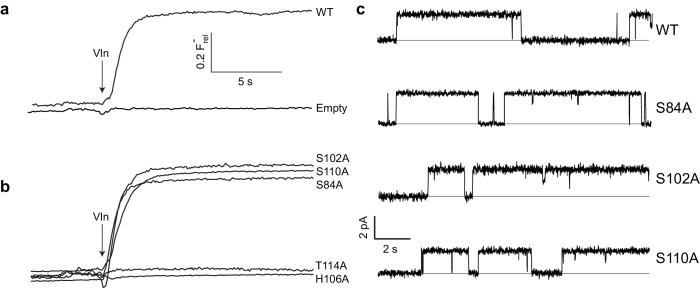
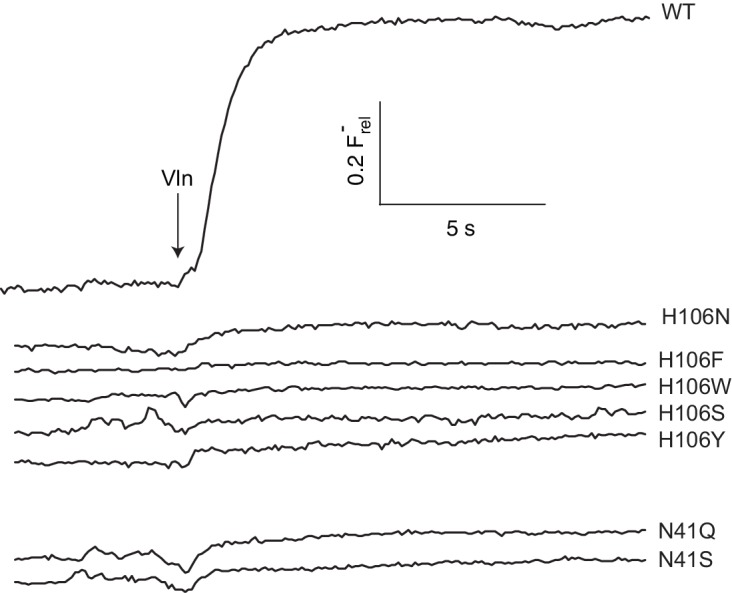
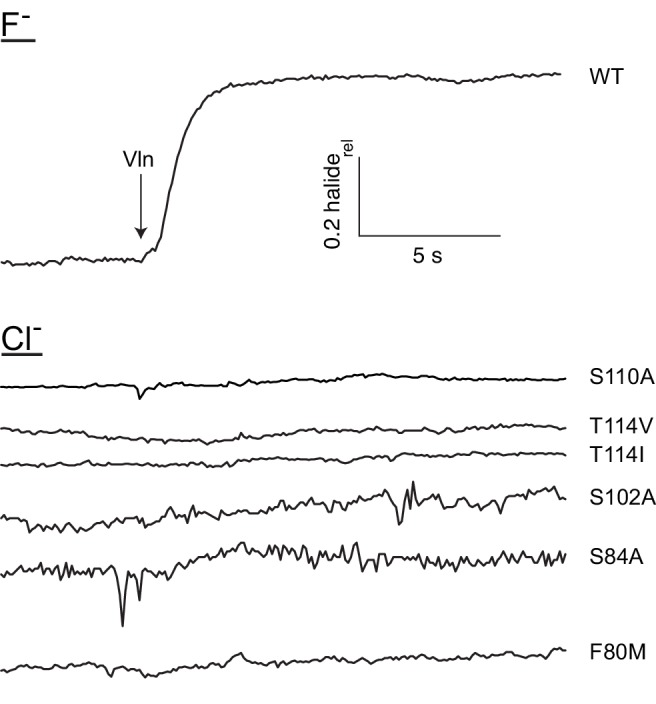
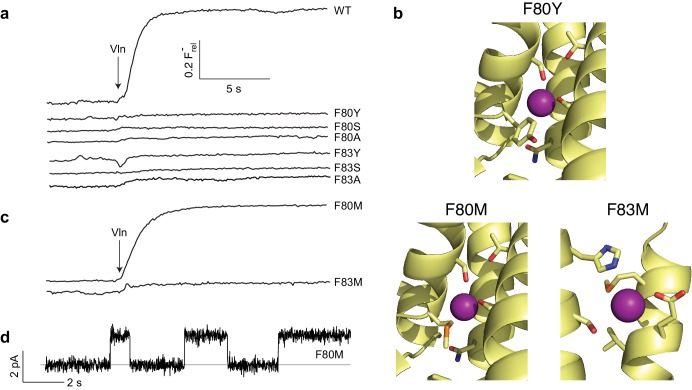
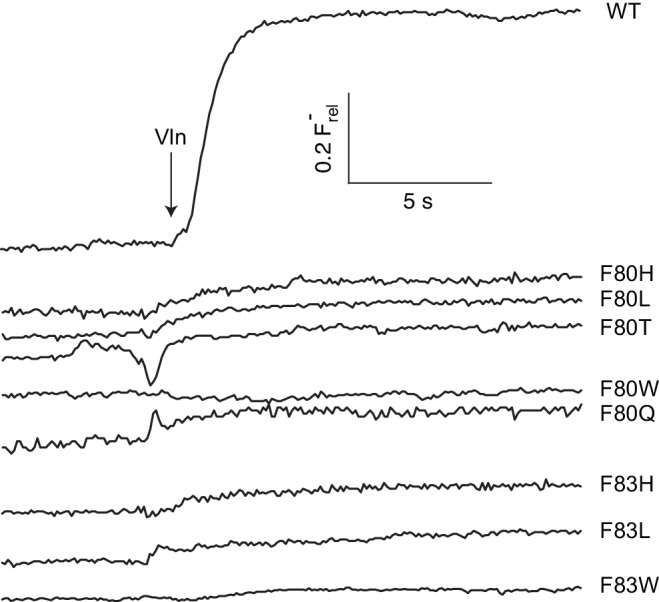
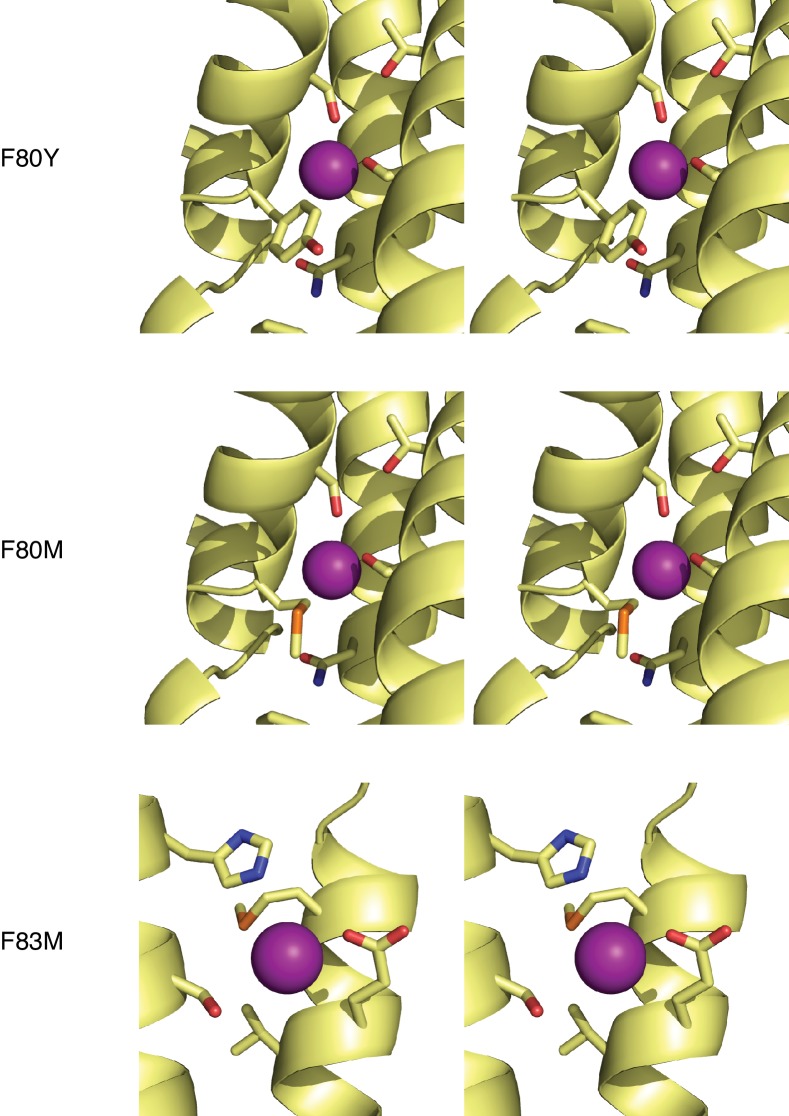
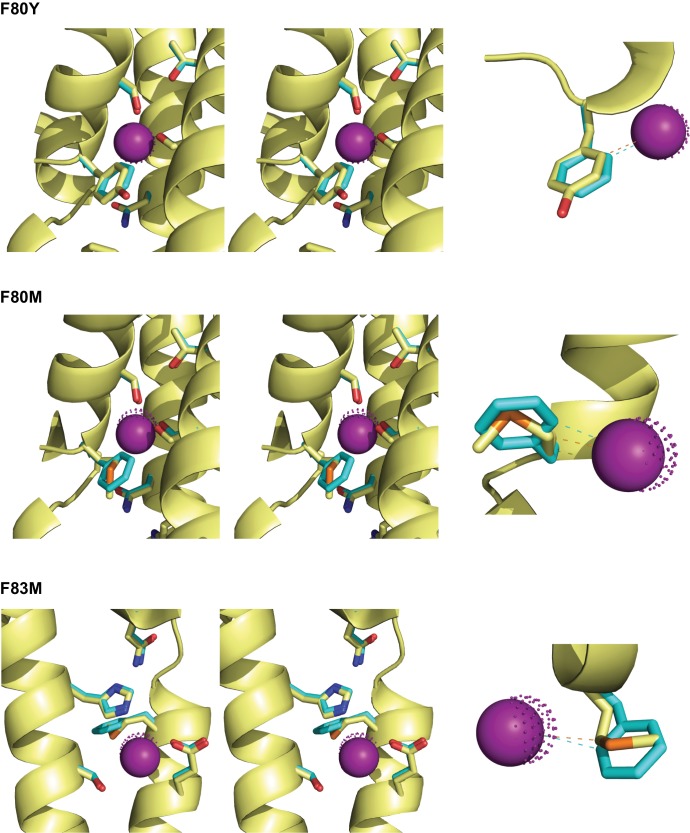
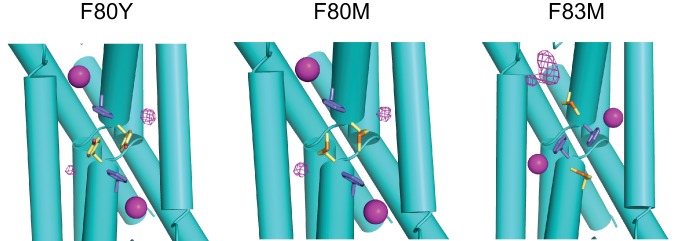
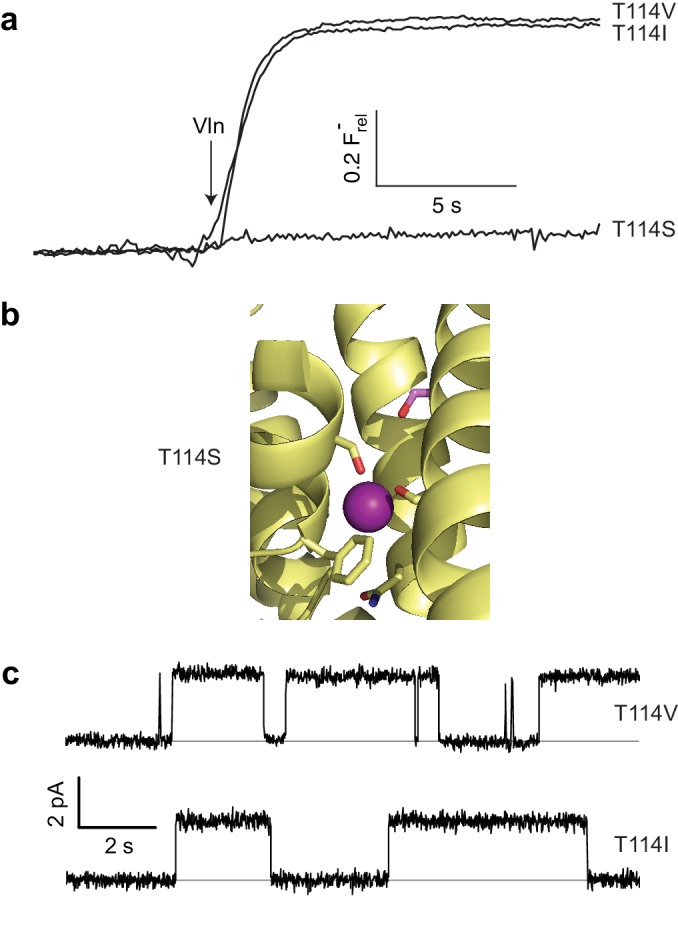
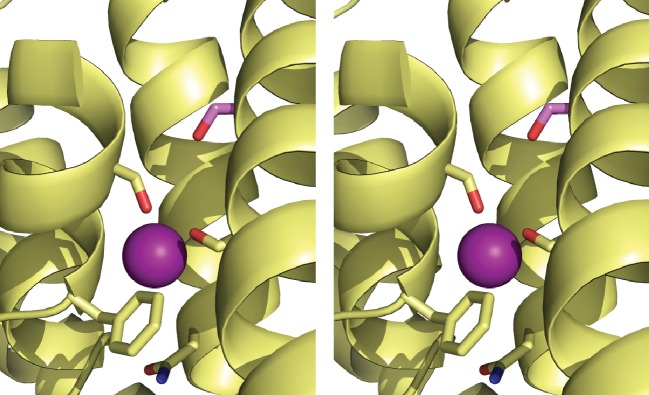
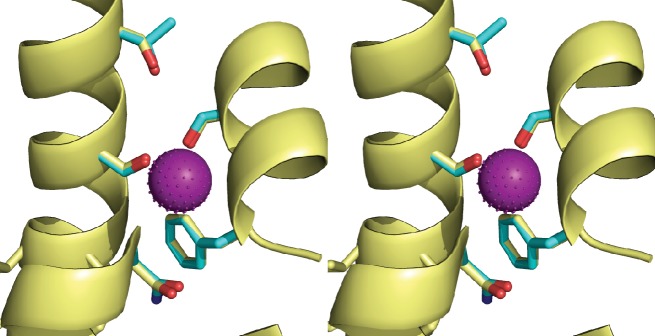
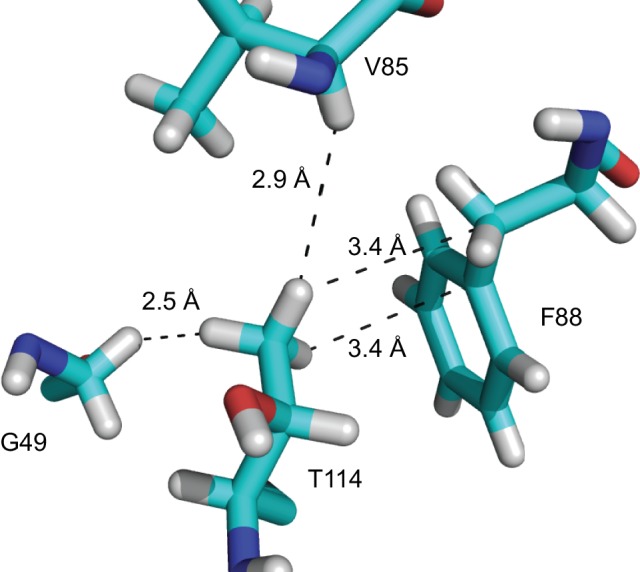
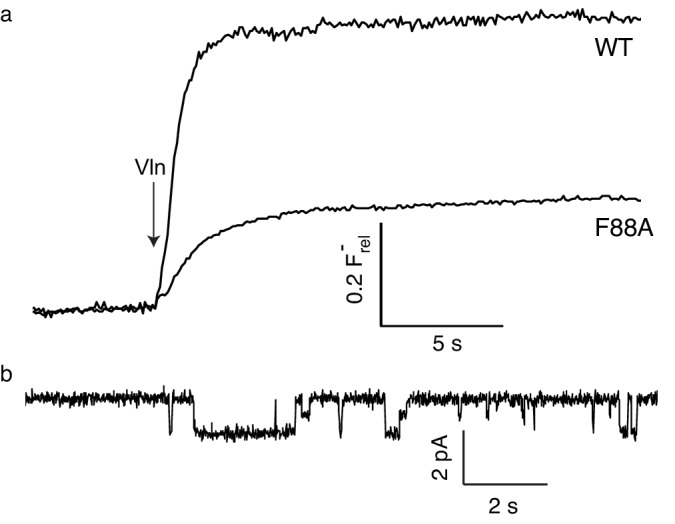
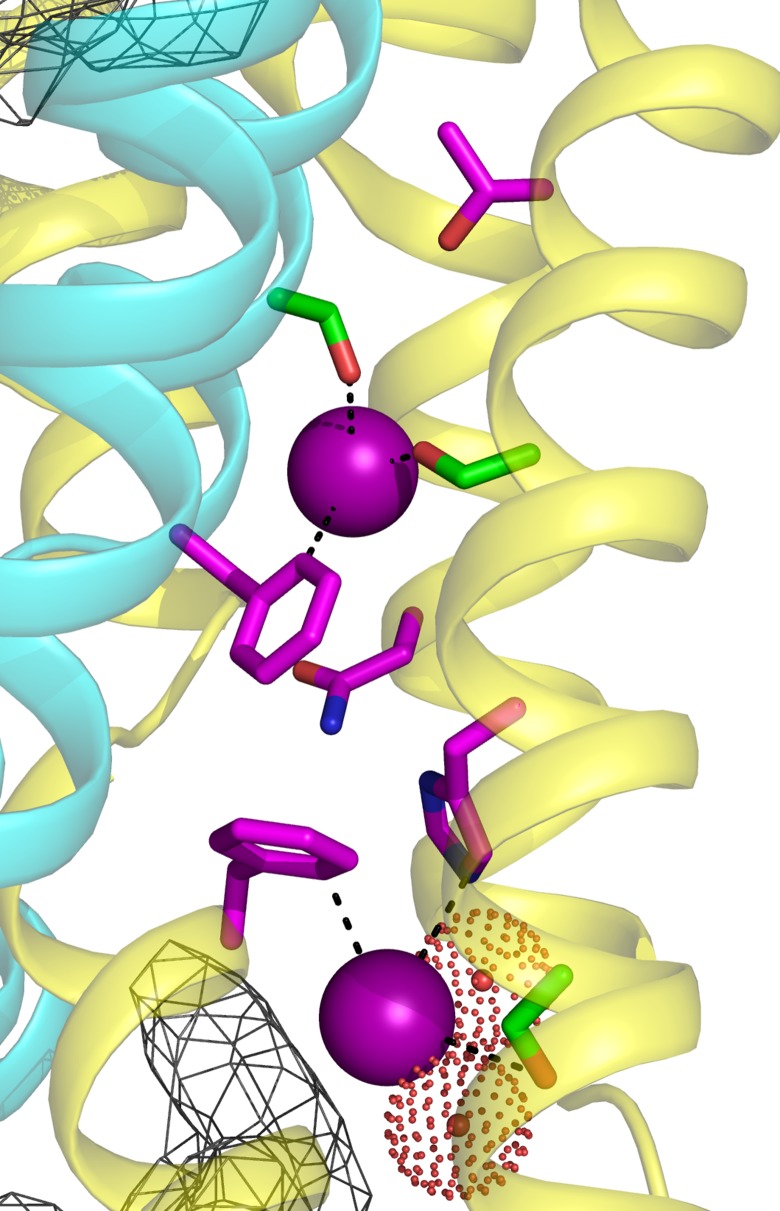
Fluoride ion channels of the Fluc family combat toxicity arising from accumulation of environmental F. Although crystal structures are known, the densely packed pore region has precluded delineation of the ion pathway. Here we chart out the Fluc pore and characterize its chemical requirements for transport. A ladder of H-bond donating residues creates a 'polar track' demarking the ion-conduction pathway. Surprisingly, while track polarity is well conserved, polarity is nonetheless functionally dispensable at several positions. A threonine at one end of the pore engages in vital interactions through its β-branched methyl group. Two critical central phenylalanines that directly coordinate F through a quadrupolar-ion interaction cannot be functionally substituted by aromatic, non-polar, or polar sidechains. The only functional replacement is methionine, which coordinates F through its partially positive γ-methylene in mimicry of phenylalanine's quadrupolar interaction. These results demonstrate the unusual chemical requirements for selectively transporting the strongly H-bonding F anion.
Fluc 家族的氟离子通道可抵御环境氟积累引起的毒性。尽管已经知道其晶体结构,但由于密集的孔区,仍然无法确定离子通道的位置。在这里,我们描绘了 Fluc 孔道,并描述了其对运输的化学要求。一排氢键供体残基形成了一条“极性轨道”,标志着离子传导途径。令人惊讶的是,虽然轨道极性得到了很好的保守,但在几个位置极性在功能上是可有可无的。孔道一端的一个苏氨酸通过其β支链甲基参与至关重要的相互作用。两个直接通过四极离子相互作用与 F 配位的关键中央苯丙氨酸不能被芳香族、非极性或极性侧链在功能上取代。唯一的功能替代是甲硫氨酸,它通过其部分正γ-亚甲基与 F 配位,模拟苯丙氨酸的四极离子相互作用。这些结果表明,选择性运输强氢键结合的 F 阴离子需要特殊的化学要求。