Program in Biophysics, University of Michigan, Ann Arbor, MI 48109, USA.
Department of Biochemistry, University of Oxford, Oxford OX1 3QU, UK.
Structure. 2018 Apr 3;26(4):635-639.e1. doi: 10.1016/j.str.2018.02.004. Epub 2018 Mar 8.
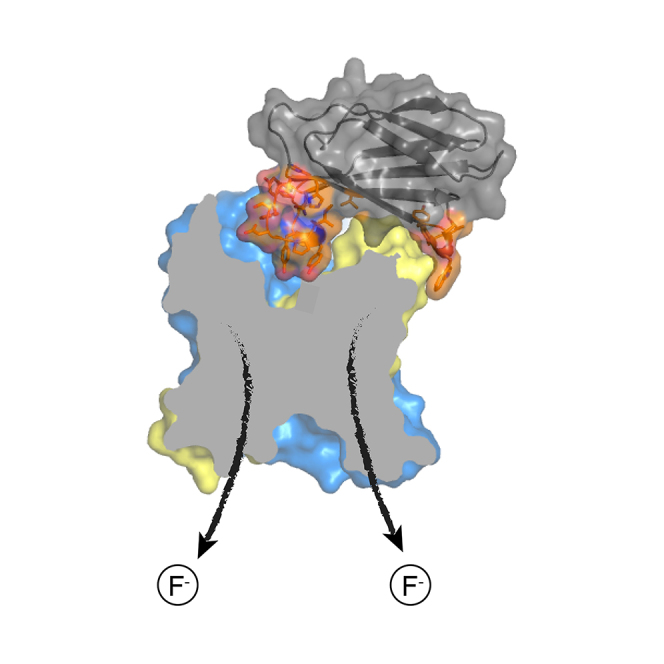
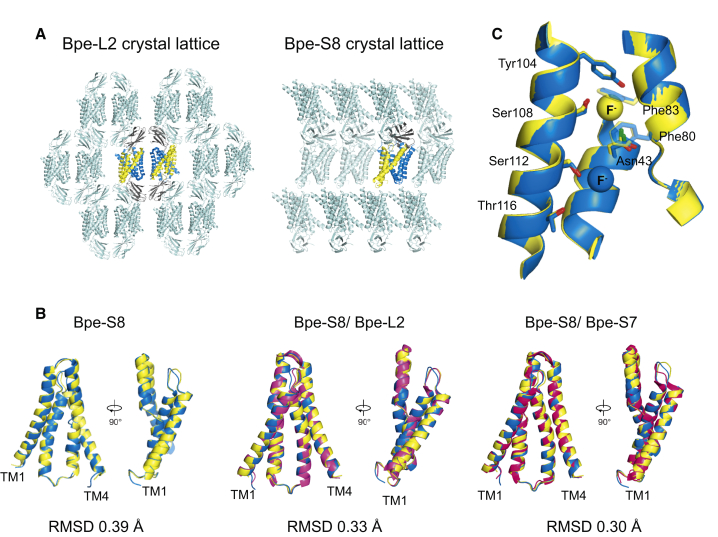
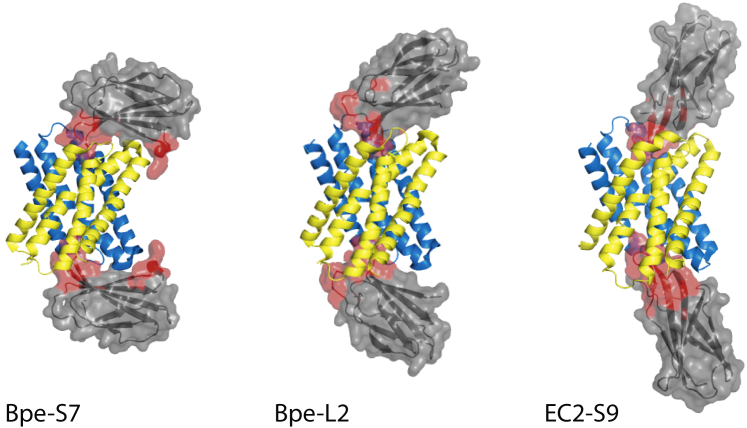
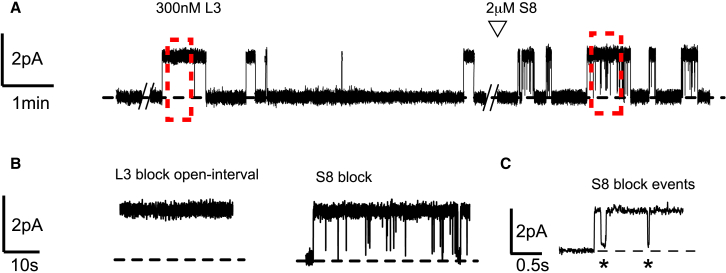
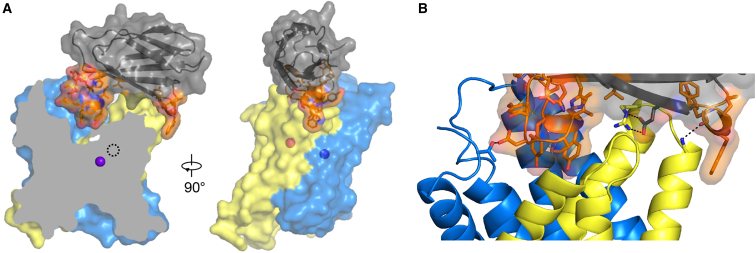
Crystallization of dual-topology fluoride (Fluc) channels requires small, soluble crystallization chaperones known as monobodies, which act as primary crystal lattice contacts. Previous structures of Flucs have been solved in the presence of monobodies that inhibit fluoride currents in single-channel electrophysiological recordings. These structures have revealed two-fold symmetric, doubly bound arrangements, with one monobody on each side of the membrane. The combined electrophysiological and structural observations raise the possibility that chaperone binding allosterically closes the channel, altering the structure from its conducting form. To address this, we identify and solve the structure with a different monobody that only partially blocks fluoride currents. The structure of the channel-monobody complex is asymmetric, with monobody bound to one side of the channel only. The channel conformation is nearly identical on the bound and uncomplexed sides, and to all previously solved structures, providing direct structural evidence that monobody binding does not induce local structural changes.
双拓扑氟化物 (Fluc) 通道的结晶需要小而可溶性的结晶伴侣,即单域抗体,它们作为主要的晶格接触点。先前的 Fluc 结构是在抑制单通道电生理记录中氟化物电流的单域抗体存在下解决的。这些结构揭示了具有两倍对称、双重结合的排列,膜的每一侧都有一个单域抗体。结合电生理和结构观察结果提出了这样一种可能性,即伴侣结合变构关闭通道,改变结构使其失去传导形式。为了解决这个问题,我们鉴定并解决了一个具有不同单域抗体的结构,该结构仅部分阻断氟化物电流。通道-单域抗体复合物的结构是不对称的,单域抗体仅结合在通道的一侧。结合侧和未复合侧的通道构象几乎相同,与所有先前解决的结构相同,提供了直接的结构证据,表明单域抗体结合不会诱导局部结构变化。