Oishi Katsutaka, Yamamoto Saori, Oike Hideaki, Ohkura Naoki, Taniguchi Masahiko
Biological Clock Research Group, Biomedical Research Institute, National Institute of Advanced Industrial Science and Technology (AIST), Tsukuba, Ibaraki, Japan.
Department of Applied Biological Science, Graduate School of Science and Technology, Tokyo University of Science, Noda, Chiba, Japan.
Biochem Biophys Rep. 2017 Jan 9;9:232-237. doi: 10.1016/j.bbrep.2016.12.008. eCollection 2017 Mar.
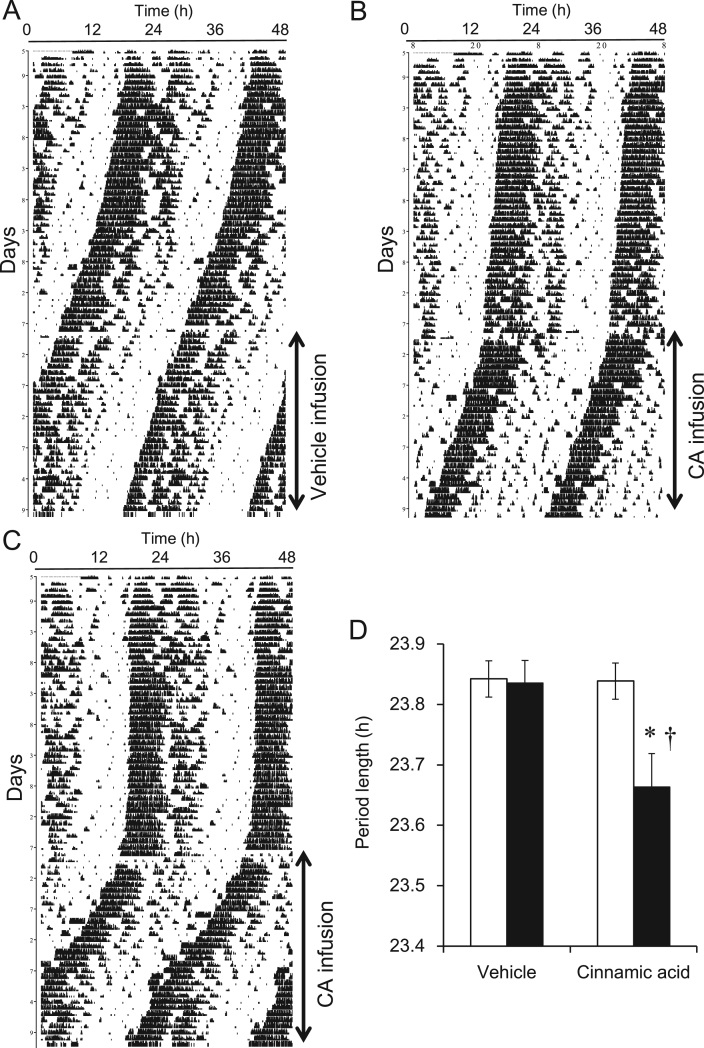
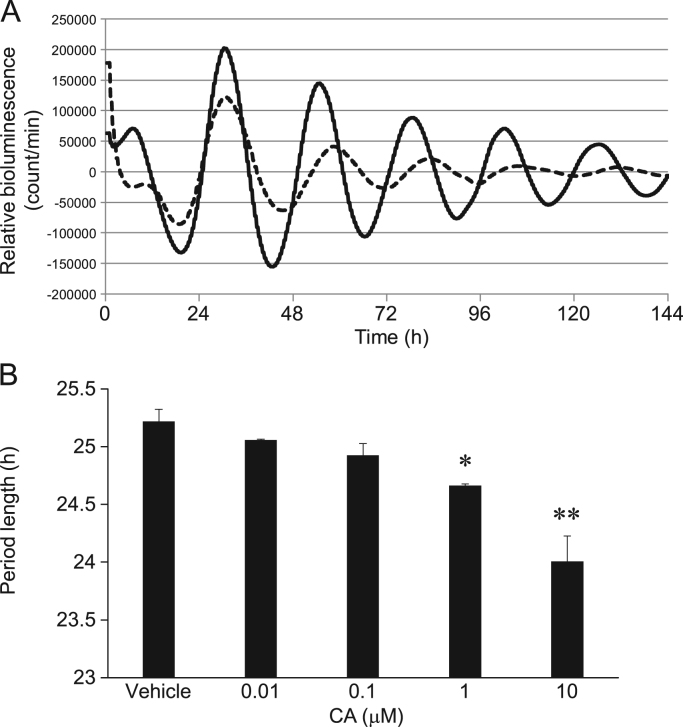
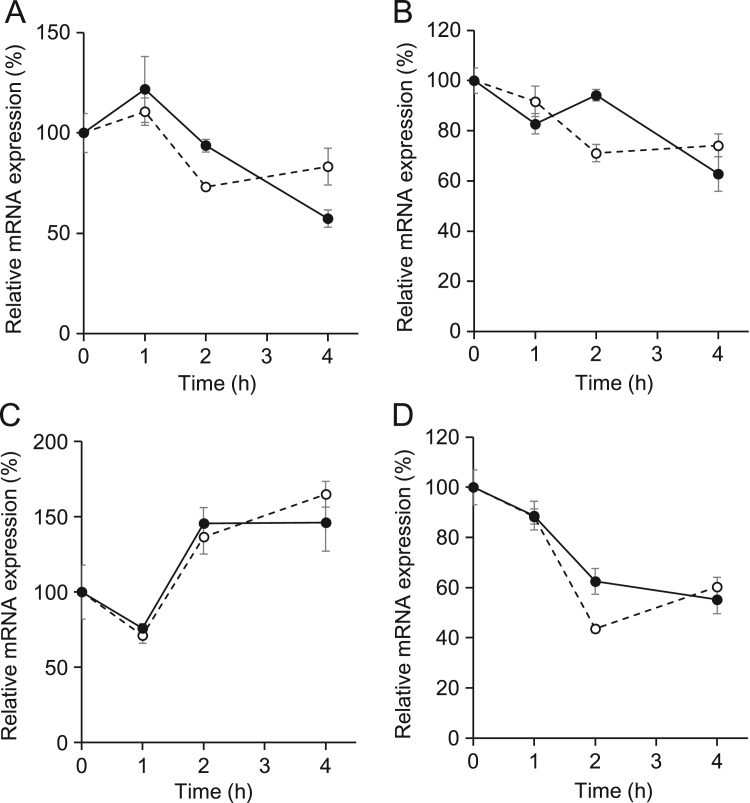
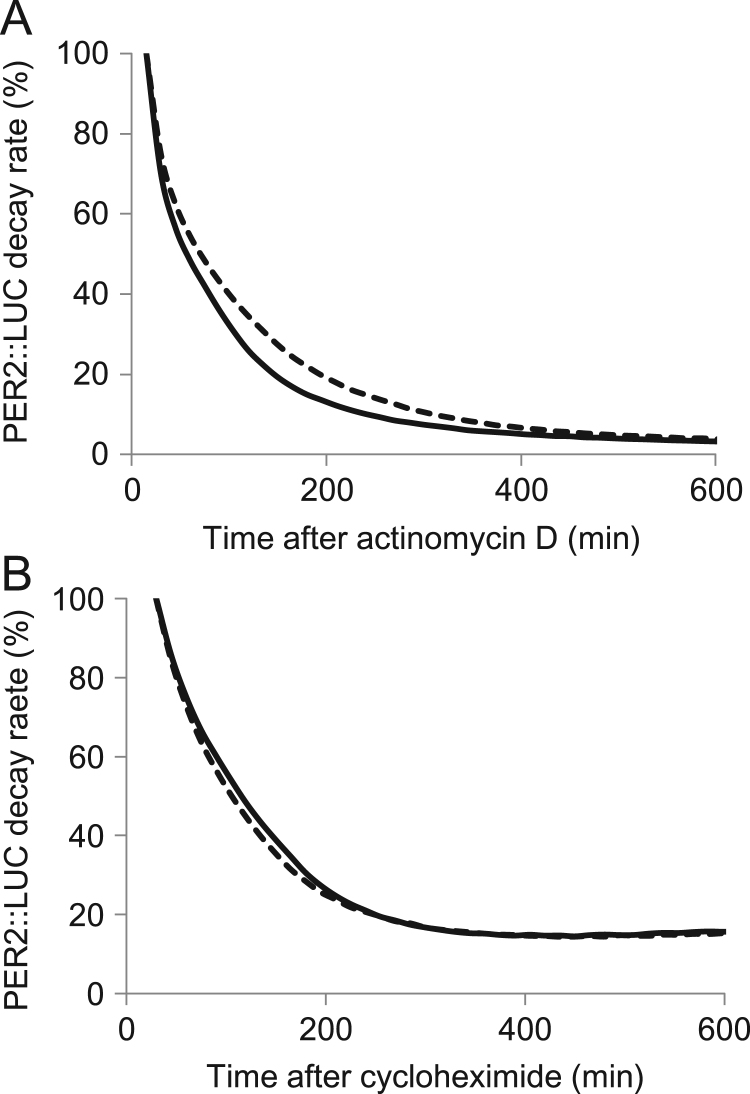
Cinnamic acid (CA) derivatives have recently received focus due to their anticancer, antioxidant, and antidiabetic properties. The present study aimed to determine the effects of cinnamic acid on the circadian clock, which is a cell-autonomous endogenous system that generates circadian rhythms that govern the behavior and physiology of most organisms. Cinnamic acid significantly shortened the circadian period of PER2::LUC expression in neuronal cells that differentiated from neuronal progenitor cells derived from PER2::LUC mouse embryos. Cinnamic acid did not induce the transient mRNA expression of clock genes such as and in neuronal cells, but significantly shortened the half-life of PER2::LUC protein in neuronal cells incubated with actinomycin D, suggested that CA post-transcriptionally affects the molecular clock by decreasing mRNA stability. A continuous infusion of CA into mice via an Alzet osmotic pump under constant darkness significantly shortened the free-running period of wheel-running rhythms. These findings suggest that CA shortens the circadian period of the molecular clock in mammals.
肉桂酸(CA)衍生物因其抗癌、抗氧化和抗糖尿病特性,近来受到关注。本研究旨在确定肉桂酸对生物钟的影响,生物钟是一种细胞自主的内源性系统,可产生昼夜节律,调节大多数生物体的行为和生理活动。肉桂酸显著缩短了从PER2::LUC小鼠胚胎来源的神经祖细胞分化而来的神经元细胞中PER2::LUC表达的昼夜周期。肉桂酸未诱导神经元细胞中诸如和等生物钟基因的瞬时mRNA表达,但在用放线菌素D孵育的神经元细胞中,显著缩短了PER2::LUC蛋白的半衰期,这表明CA通过降低mRNA稳定性在转录后影响分子钟。在持续黑暗条件下,通过Alzet渗透泵向小鼠连续输注CA,显著缩短了转轮节律的自由运行周期。这些发现表明,CA缩短了哺乳动物分子钟的昼夜周期。