Matus Valeria, Valenzuela J Guillermo, Hidalgo Patricia, Pozo L María, Panes Olga, Wozniak Aniela, Mezzano Diego, Pereira Jaime, Sáez Claudia G
Department of Hematology-Oncology, School of Medicine, Pontificia Universidad Católica de Chile, Santiago, Chile.
Department of Clinical Laboratory, School of Medicine, Pontificia Universidad Católica de Chile, Santiago, Chile.
PLoS One. 2017 Sep 28;12(9):e0185431. doi: 10.1371/journal.pone.0185431. eCollection 2017.
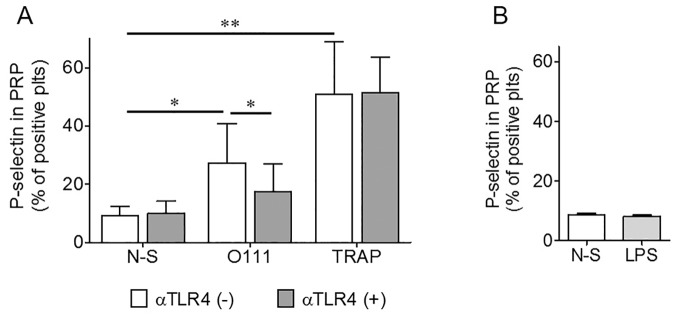
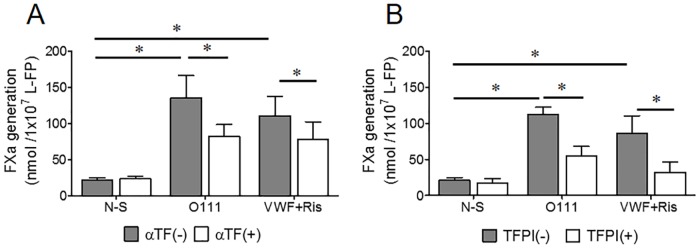
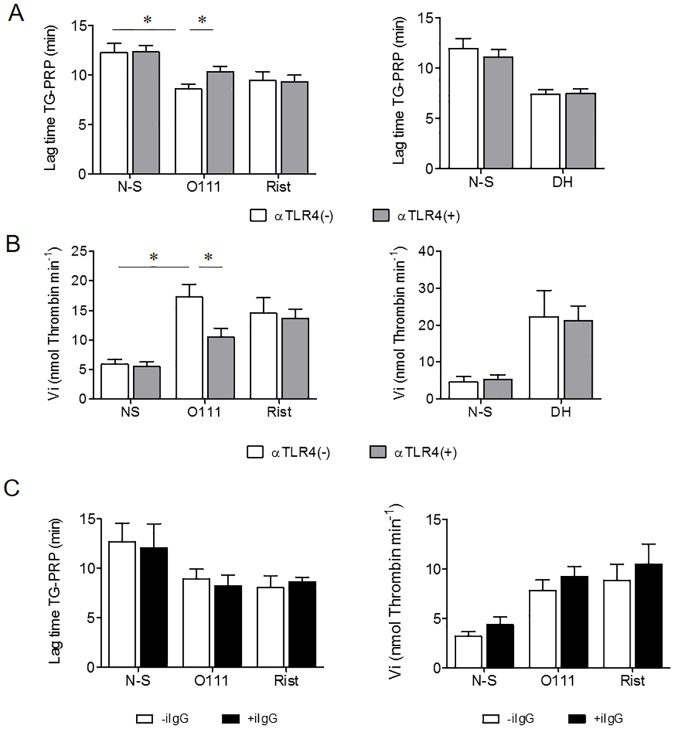
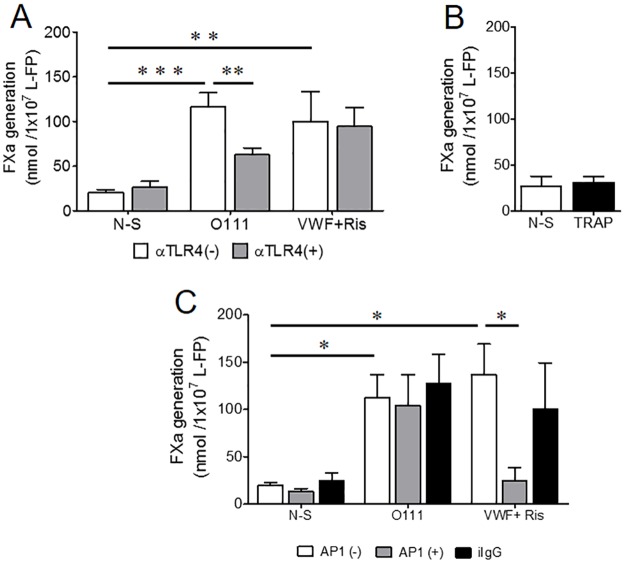
Platelets have a major role in clotting activation and contribute to the innate immune response during systemic infections. Human platelets contain tissue factor (TF) and express functional Toll-like receptor 4 (TLR4). However, the role of TLR4 in triggering the procoagulant properties of platelets, upon challenge with bacteria, is yet unknown. Our hypothesis is that E. coli O111-TLR4 interaction activates platelets and elicits their procoagulant activity. We demonstrated that the strain, but not ultrapure LPS, increased surface P-selectin expression, platelet dependent TF procoagulant activity (TF-PCA) and prompted a faster thrombin generation (TG). Blockade of TLR4 resulted in decreased platelet activation, TF-PCA and TG, revealing the participation of this immune receptor on the procoagulant response of platelets. Our results provide a novel mechanism by which individuals with bacterial infections would have an increased incidence of blood clots. Furthermore, the identification of platelet TF and TLR4 as regulators of the effect of E. coli O111 might represent a novel therapeutic target to reduce the devastating consequences of the hemostatic disorder during sepsis.
血小板在凝血激活中起主要作用,并在全身感染期间参与固有免疫反应。人血小板含有组织因子(TF)并表达功能性Toll样受体4(TLR4)。然而,在受到细菌攻击时,TLR4在触发血小板促凝特性中的作用尚不清楚。我们的假设是大肠杆菌O111与TLR4的相互作用激活血小板并引发其促凝活性。我们证明,该菌株而非超纯脂多糖可增加表面P-选择素表达、血小板依赖性TF促凝活性(TF-PCA),并促使凝血酶生成(TG)加快。阻断TLR4导致血小板活化、TF-PCA和TG降低,揭示了这种免疫受体参与血小板的促凝反应。我们的结果提供了一种新机制,通过该机制细菌感染个体的血栓形成发生率会增加。此外,将血小板TF和TLR4鉴定为大肠杆菌O111作用的调节因子可能代表一种新的治疗靶点,以减少脓毒症期间止血障碍的毁灭性后果。