Sewell Elizabeth K, Vezina Gilbert, Chang Taeun, Tsuchida Tammy, Harris Kari, Ridore Michelande, Glass Penny, Massaro An N
Division of Neonatology, Children's National Health Systems, Washington, District of Columbia.
Department of Pediatrics, The George Washington University School of Medicine and Health Sciences, Washington, District of Columbia.
Am J Perinatol. 2018 Feb;35(3):277-285. doi: 10.1055/s-0037-1607212. Epub 2017 Sep 28.
This study aims to evaluate the ability of (1) a novel amplitude-integrated electroencephalogram (aEEG) background evolution classification system; and (2) specific hour of life (HOL) cut points when observation of aEEG normalization and development of cycling can predict adverse neurological outcomes in infants with hypoxic-ischemic encephalopathy (HIE).
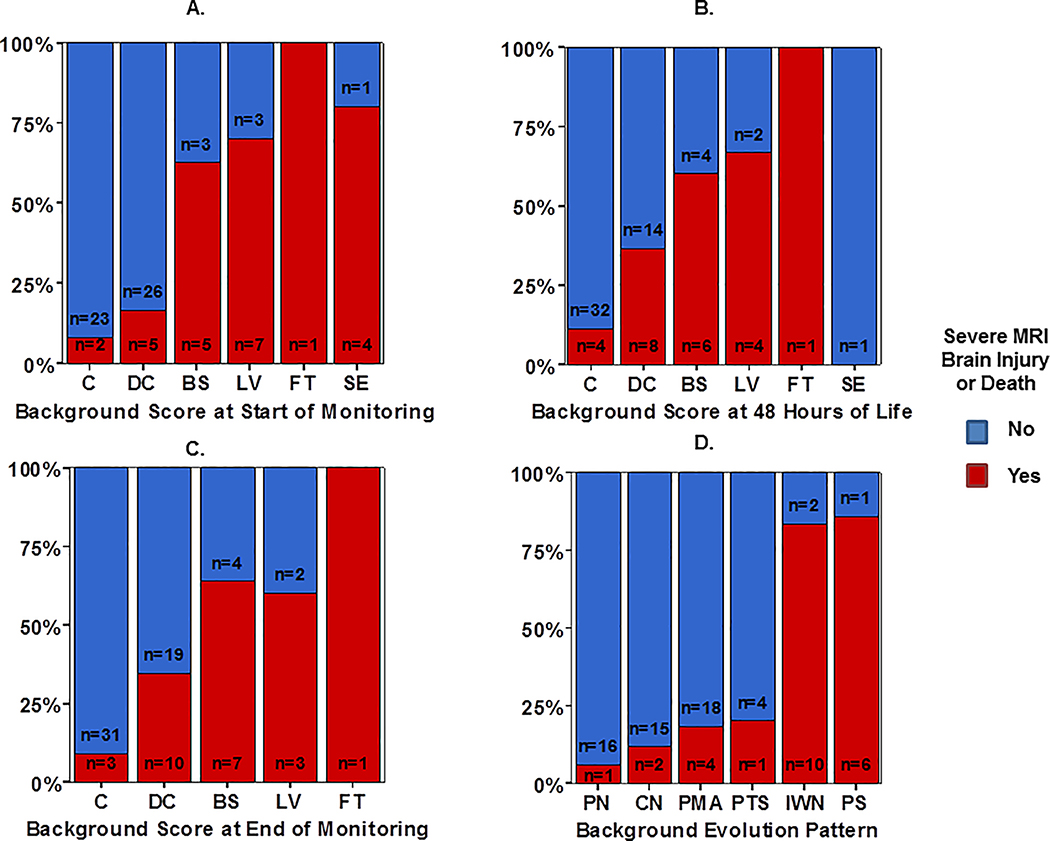
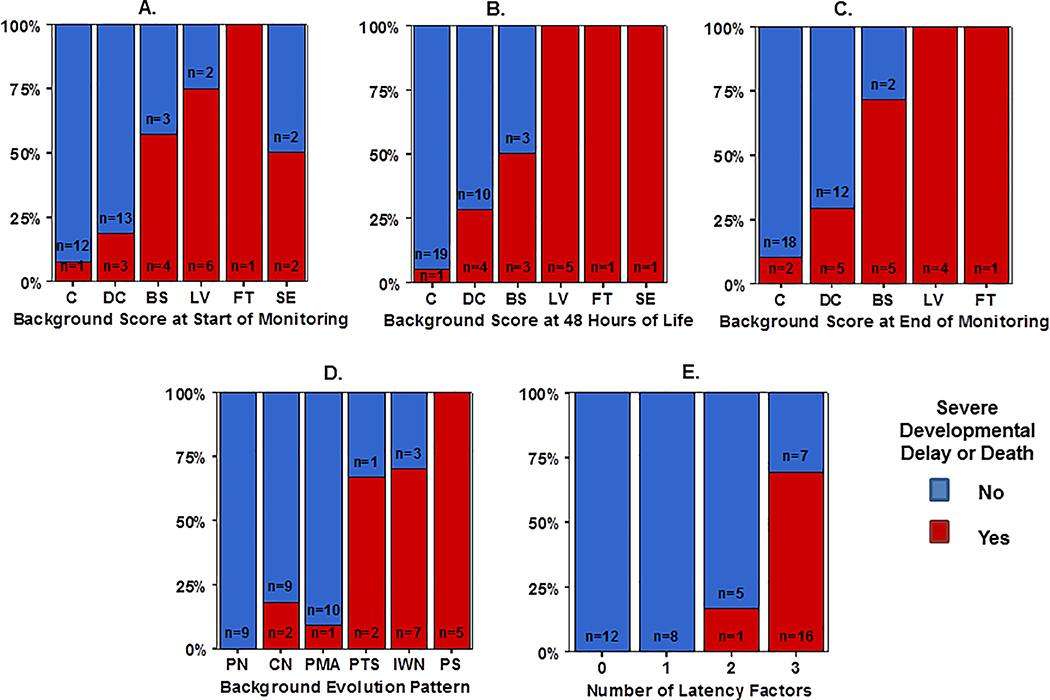
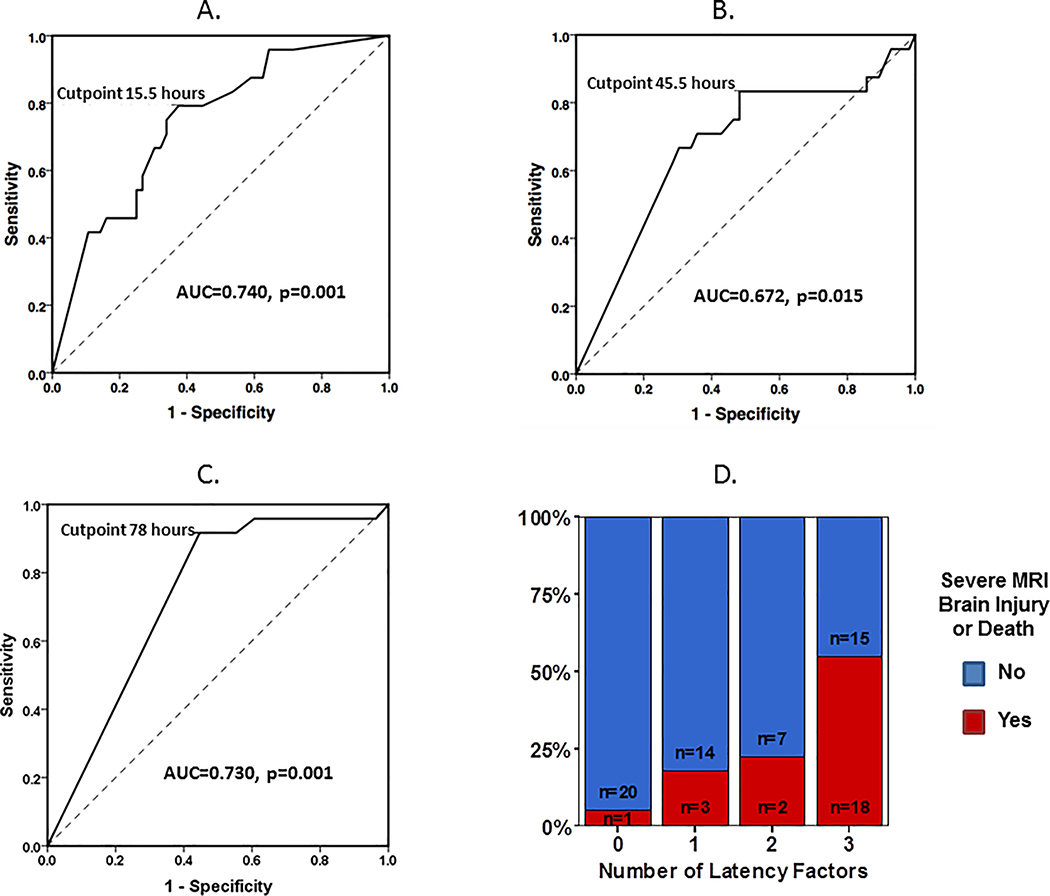
Continuous aEEG data of term neonates with HIE were reviewed for background pattern and aEEG cycling from start of monitoring through rewarming. Infants were classified by overall background evolution pattern. Adverse outcomes were defined as death or severe magnetic resonance imaging injury, as well as developmental outcomes in a subset of patients. aEEG characteristics were compared between outcome groups by multivariate regression models, likelihood ratios (LR), and receiver operating characteristic (ROC) curve analyses.
Overall, 80 infants receiving therapeutic hypothermia met the inclusion criteria. Background evolution pattern seemed to distinguish outcome groups more reliably than background pattern at discrete intervals in time (LR: 43.9, value < 0.001). Infants who did not reach discontinuous background by 15.5 HOL, cycling by 45.5 HOL, and normalization by 78 HOL were most likely to have adverse outcomes.
Evolution of aEEG in term neonates with HIE may be more useful for predicting outcome than evaluating aEEG at discrete intervals in time.
本研究旨在评估(1)一种新型的振幅整合脑电图(aEEG)背景演变分类系统;以及(2)特定的生命时刻(HOL)切点,即观察aEEG正常化和周期性变化能否预测缺氧缺血性脑病(HIE)患儿的不良神经学预后。
回顾了足月HIE新生儿从监测开始至复温期间的连续aEEG数据,以观察背景模式和aEEG的周期性变化。根据整体背景演变模式对婴儿进行分类。不良预后定义为死亡或严重的磁共振成像损伤,以及部分患者的发育预后。通过多变量回归模型、似然比(LR)和受试者工作特征(ROC)曲线分析比较了不同预后组之间的aEEG特征。
总体而言,80例接受治疗性低温的婴儿符合纳入标准。背景演变模式似乎比在离散时间间隔观察背景模式更能可靠地区分预后组(LR:43.9,P值<0.001)。在15.5个生命时刻未达到间断背景、在45.5个生命时刻未出现周期性变化以及在78个生命时刻未实现正常化的婴儿最有可能出现不良预后。
对于足月HIE新生儿,aEEG的演变可能比在离散时间间隔评估aEEG更有助于预测预后。