Chen Wanping, Chen Runfa, Liu Qingpei, He Yi, He Kun, Ding Xiaoli, Kang Lijing, Guo Xiaoxiao, Xie Nana, Zhou Youxiang, Lu Yuanyuan, Cox Russell J, Molnár István, Li Mu, Shao Yanchun, Chen Fusheng
Key Laboratory of Environment Correlative Dietology , College of Food Science and Technology , Huazhong Agricultural University , Wuhan , Hubei Province 430070 , China . Email:
Natural Products Center , The University of Arizona , 250 E. Valencia Rd. , Tucson , Arizona 85706 , USA . Email:
Chem Sci. 2017 Jul 1;8(7):4917-4925. doi: 10.1039/c7sc00475c. Epub 2017 Apr 24.
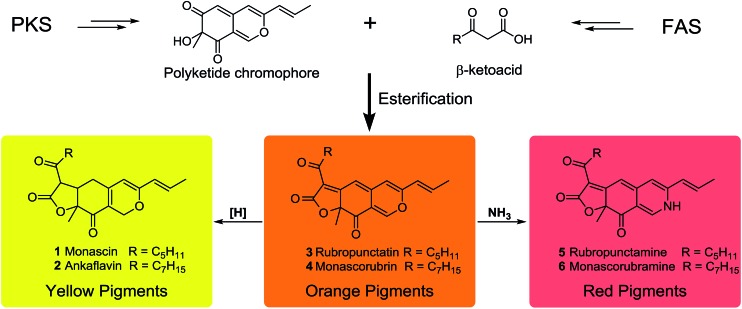
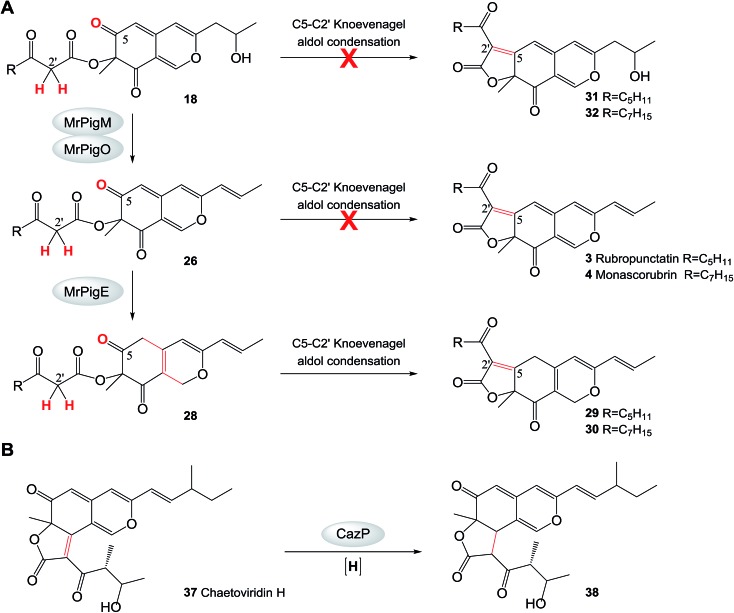
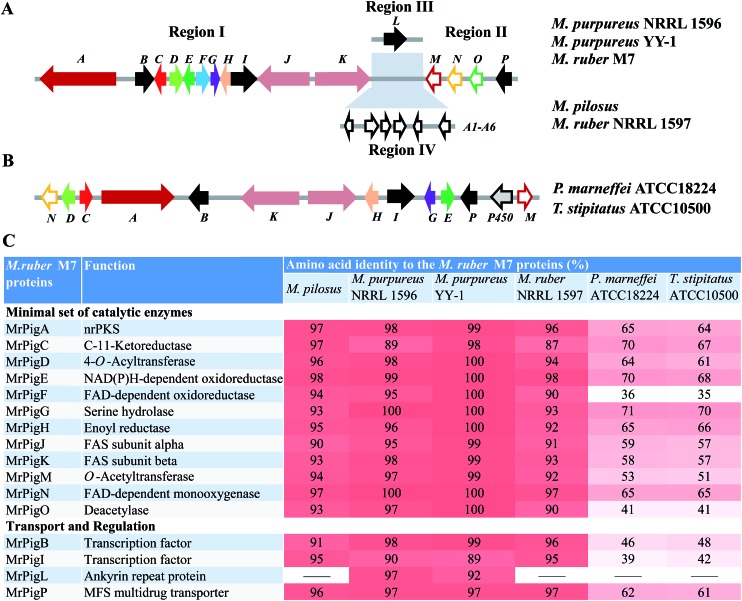
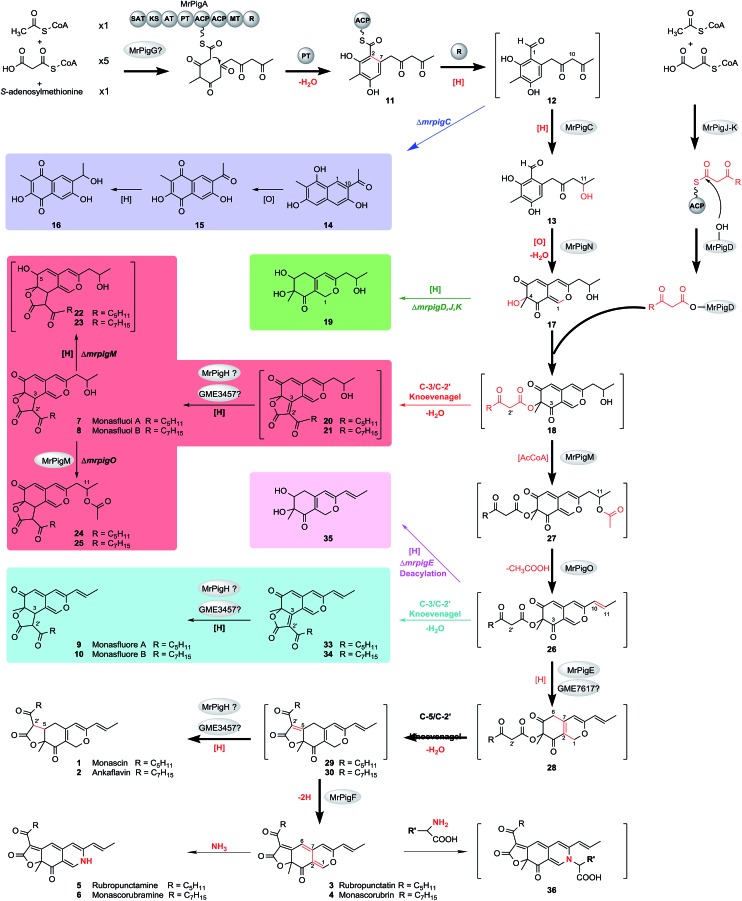
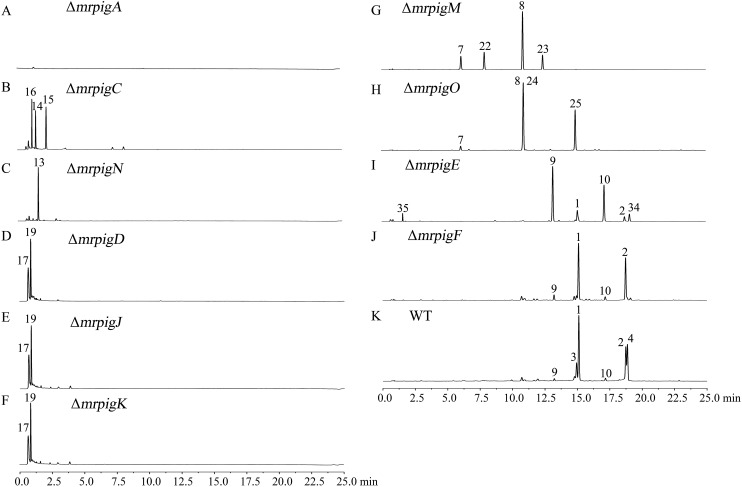
azaphilone pigments (MonAzPs) are very widely used as food colorants, but their biosynthetic pathway has remained poorly characterized for more than half a century. In this study, the individual steps of MonAzPs biosynthesis in M7 were elucidated by a combination of targeted gene knockouts, heterologous gene expression, and chemical and enzymatic reactions. This study describes the first rational engineering of MonAzPs biosynthesis and provides a roadmap for future pathway engineering efforts directed towards the selective production of the most valuable pigments and serves as a model for the biosynthesis of fungal azaphilones in general.
氮杂环庚三烯酮类色素(MonAzPs)作为食品着色剂被广泛应用,但半个多世纪以来,其生物合成途径一直未得到充分表征。在本研究中,通过靶向基因敲除、异源基因表达以及化学和酶促反应相结合的方法,阐明了M7中MonAzPs生物合成的各个步骤。本研究描述了MonAzPs生物合成的首次合理工程改造,并为未来旨在选择性生产最有价值色素的途径工程努力提供了路线图,总体上可作为真菌氮杂环庚三烯酮生物合成的模型。