Afzal Abuzar Muhammad, Rasool Muhammad Hidayat, Waseem Muhammad, Aslam Bilal
Department of Microbiology, Government College University, Faisalabad, 38000, Pakistan.
AMB Express. 2017 Sep 29;7(1):184. doi: 10.1186/s13568-017-0482-2.
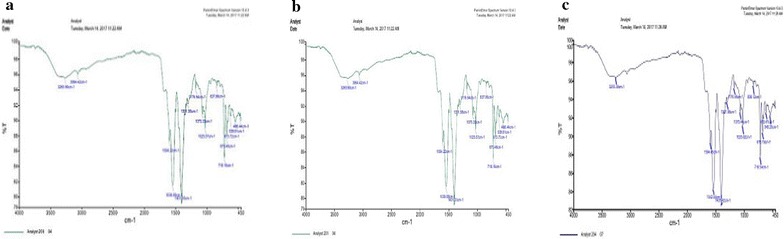
Heavy metal contamination now a day is one of the major global environmental concerns. Textile effluents of Faisalabad Pakistan are heavily contaminated with heavy metals and demands to explore native microorganisms as effective bioremediation tool. Study aimed to isolate heavy metal tolerant bacteria from textile effluents of Faisalabad Pakistan and to evaluate their biosorptive potential. Out of 30 collected samples 13 isolates having metal tolerance potential against Ni and Co were screened out. Maximum tolerable concentration and multi metal resistance was determined. A native bacterial strain showing maximum tolerance to Ni and Co and multi metal resistance against Ni, Co and Cr at different levels was selected and named as Abuzar Microbiology 1 (AMIC1). Molecular characterization confirmed it as Klebsiella variicola which was submitted in First fungal culture bank of Pakistan (FCBP-WB-0688). ICP-OES revealed that it reduced Ni (50, 49%) and Co (71, 68.6%) after 24 and 48 h, respectively. FT-IR was used to analyze functional groups and overall nature of chemical bonds. Changes in spectra of biomass were observed after absorption of Ni and Co by K. variicola. SEM revealed morphological changes in bacteria in response to metal stress. Both metals affected bacterial cell wall and created pores in it. However effect of Ni was more pronounced than Co. It was concluded that K. variicola, a native novel strain possessed significant heavy metal tolerance and bioremediation potential against Ni and Co. It may be used in future for development of bioremediation agents to detoxify textile effluents at industrial surroundings.
如今,重金属污染是全球主要的环境问题之一。巴基斯坦费萨拉巴德的纺织废水被重金属严重污染,因此需要探索本地微生物作为有效的生物修复工具。本研究旨在从巴基斯坦费萨拉巴德的纺织废水中分离出耐重金属细菌,并评估它们的生物吸附潜力。在收集的30个样本中,筛选出了13株对镍和钴具有金属耐受潜力的菌株。测定了最大耐受浓度和多金属抗性。选择了一株对镍和钴表现出最大耐受性且对不同水平的镍、钴和铬具有多金属抗性的本地细菌菌株,并将其命名为阿卜扎尔微生物1号(AMIC1)。分子鉴定证实它为肺炎克雷伯菌变栖亚种,已提交至巴基斯坦首个真菌培养库(FCBP-WB-0688)。电感耦合等离子体质谱法(ICP-OES)显示,24小时和48小时后,它分别使镍(50%,49%)和钴(71%,68.6%)含量降低。利用傅里叶变换红外光谱(FT-IR)分析官能团和化学键的整体性质。肺炎克雷伯菌变栖亚种吸收镍和钴后,观察到生物量光谱的变化。扫描电子显微镜(SEM)显示细菌在金属胁迫下的形态变化。两种金属都影响细菌细胞壁并在其中形成孔隙。然而,镍的影响比钴更明显。得出的结论是,肺炎克雷伯菌变栖亚种这种本地新菌株对镍和钴具有显著的重金属耐受性和生物修复潜力。未来它可用于开发生物修复剂,以去除工业环境中纺织废水中的毒素。