Wiggermann Neal, Smith Kathryn, Kumpar Dee
Neal Wiggermann, PhD, is Senior Engineer and Ergonomics Specialist, Hill-Rom, Batesville, Indiana. Kathryn Smith, BS, is Senior Biomedical Engineer, Hill-Rom, Batesville, Indiana. Dee Kumpar, MBA, BSN, RN, is Director of Safe Patient Handling and Mobility Market Development, Hill-Rom, Batesville, Indiana.
Nurs Res. 2017 Nov/Dec;66(6):483-489. doi: 10.1097/NNR.0000000000000242.
A bed that is too small to allow patients to turn from supine to side lying increases the difficulty of mobilizing patients, which can increase risk of musculoskeletal injury to caregivers, increase risk of pressure injuries to patients, and reduce patient comfort. Currently, no guidance is available for what patient sizes are accommodated by the standard 91cm (36 in.)-wide hospital bed, and no studies have evaluated the relationship between anthropometric attributes and space required to turn in bed.
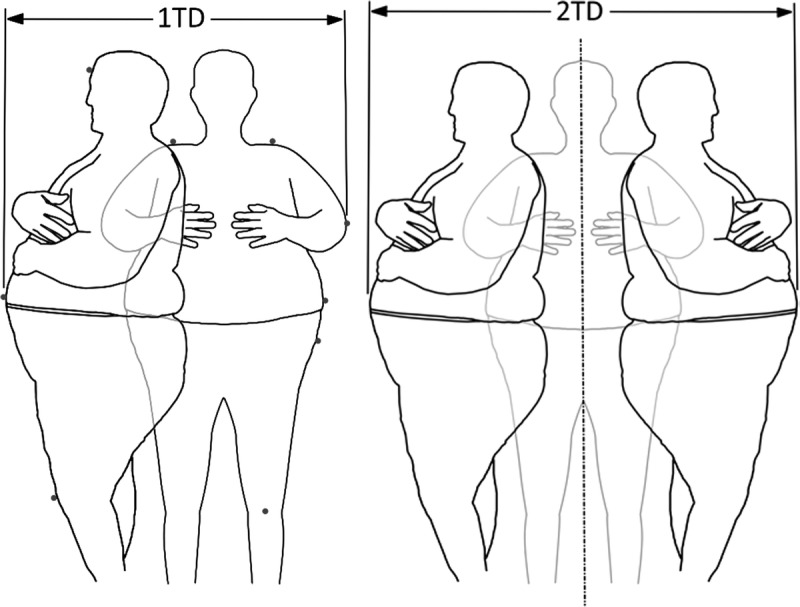
The purpose of this research was to determine how much space individuals occupy when turning from supine to side lying as predicted by their anthropometry (i.e., body dimensions) to establish guidance on selecting the appropriate bed size.
Forty-seven adult participants (24 female) with body mass index (BMI) from 20 to 76 kg/m participated in a laboratory study. Body dimensions were measured, and the envelope of space required to turn was determined using motion capture. Linear regressions estimated the relationship between anthropometric attributes and space occupied when turning.
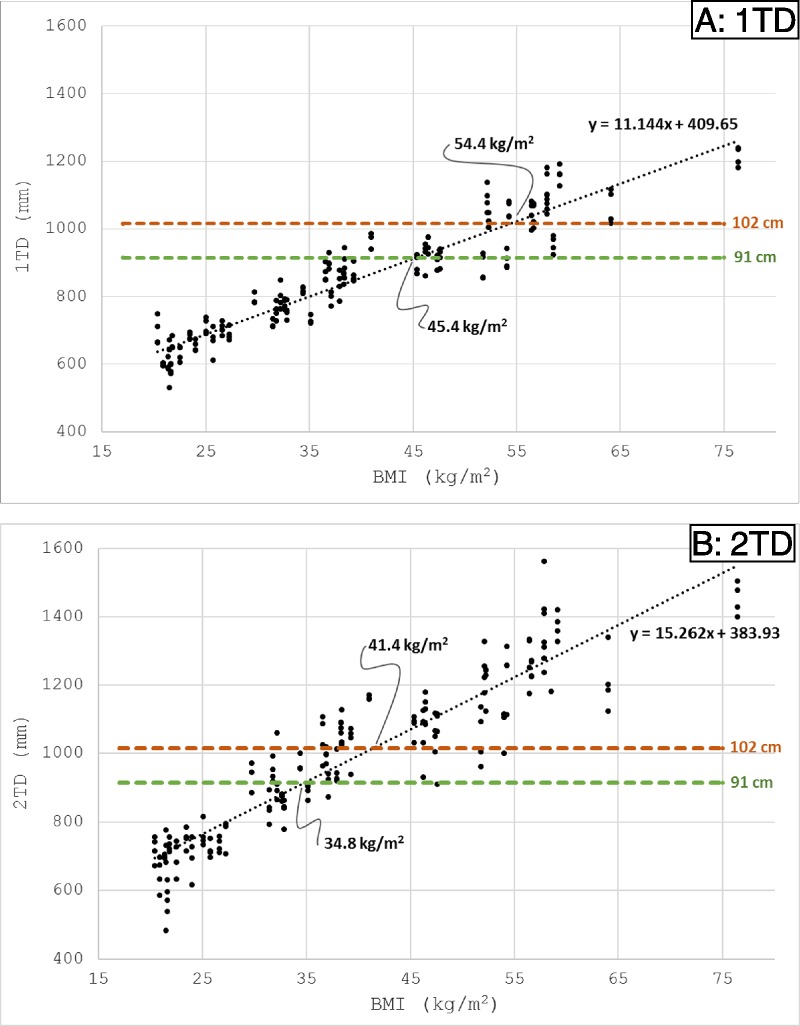
BMI was strongly correlated (R = .88) with the space required to turn. Based on the linear regressions, individuals with BMI up to 35 kg/m could turn left and right within 91 cm and individuals with BMI up to 45 kg/m could turn one direction within 91 cm.
BMI is a good predictor of the space required to turn from supine to lateral. Nurses should consider placing patients that are unable to laterally reposition themselves on a wider bed when BMI is greater than 35 kg/m and should consider placing all patients greater than 45 kg/m on a wider bed regardless of mobility. Hospital administrators can use historical demographic information about the BMI of their patient populations to plan facility-level equipment procurement for equipment that accommodates their patients.
一张过小而无法让患者从仰卧转为侧卧的病床会增加患者活动的难度,这可能会增加护理人员肌肉骨骼受伤的风险,增加患者发生压疮的风险,并降低患者的舒适度。目前,对于标准91厘米(36英寸)宽的医院病床能容纳何种体型的患者,尚无相关指导,也没有研究评估人体测量学属性与在床上翻身所需空间之间的关系。
本研究的目的是确定个体从仰卧转为侧卧时,根据其人体测量学数据(即身体尺寸)预测所需占据的空间大小,从而为选择合适的病床尺寸提供指导。
47名体重指数(BMI)在20至76千克/平方米之间的成年参与者(24名女性)参与了一项实验室研究。测量了身体尺寸,并使用动作捕捉技术确定了翻身所需的空间范围。线性回归分析估计了人体测量学属性与翻身时占据空间之间的关系。
BMI与翻身所需空间高度相关(R = 0.88)。根据线性回归分析,BMI高达35千克/平方米的个体能够在91厘米范围内左右翻身,BMI高达45千克/平方米的个体能够在91厘米范围内单向翻身。
BMI是预测从仰卧转为侧卧所需空间的良好指标。当BMI大于35千克/平方米时,护士应考虑将无法自行侧向翻身的患者安置在更宽的病床上;对于所有BMI大于45千克/平方米的患者,无论其活动能力如何,都应考虑安置在更宽的病床上。医院管理人员可以利用有关患者群体BMI的历史人口统计信息,规划设施层面的设备采购,以配备适合患者的设备。