School of Medicine, Dentistry and Nursing, University of Glasgow, Glasgow, UK.
NHS Lothian, Edinburgh, UK.
Obes Rev. 2020 Apr;21(4):e12986. doi: 10.1111/obr.12986. Epub 2020 Feb 4.
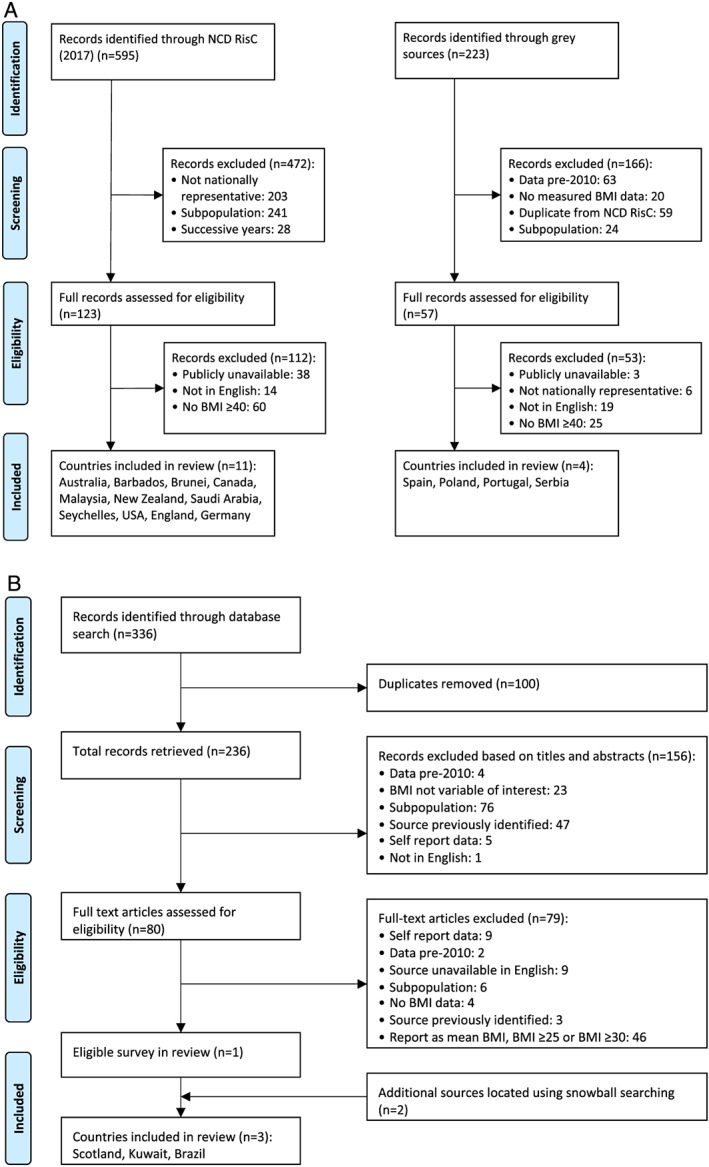
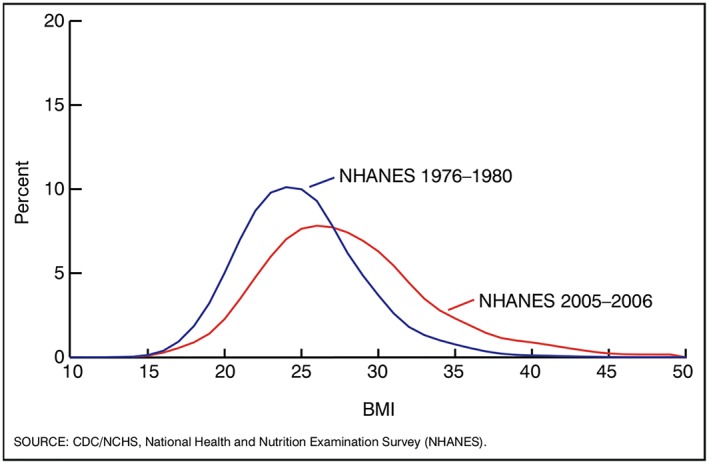
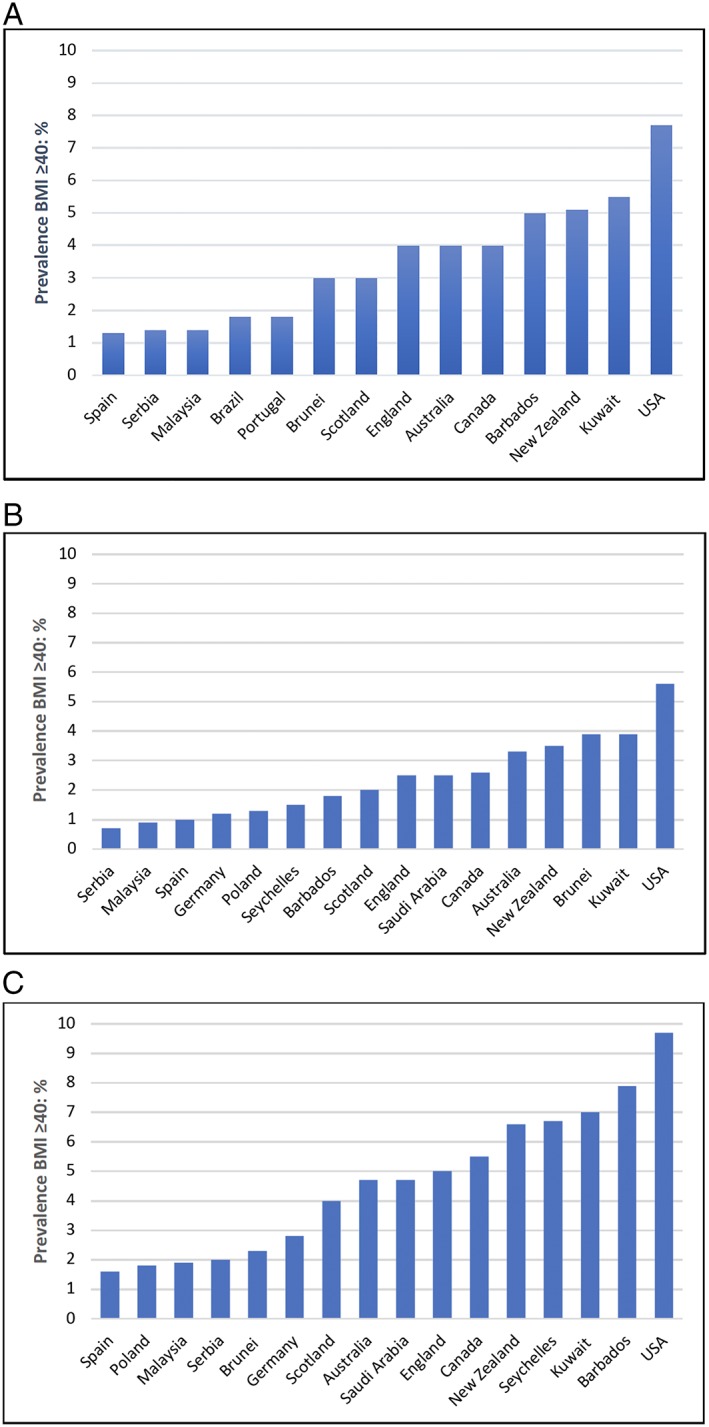
Whilst previously rare, some surveys indicate substantial increases in the population with body mass index (BMI) ≥40 kg/m since the 1980s. Clinicians report emerging care challenges for this population, often with high resource demands. Accurate prevalence data, gathered using reliable methods, are needed to inform health care practice, planning, and research. We searched digitally for English language sources with measured prevalence data on adult BMI ≥40 collected since 2010. The search strategy included sources identified from recent work by NCD-RisC (2017), grey sources, a literature search to find current sources, and digital snowball searching. Eighteen countries, across five continents, reported BMI ≥40 prevalence data in surveys since 2010: 12% of eligible national surveys examined. Prevalence of BMI ≥40 ranged from 1.3% (Spain) to 7.7% (USA) for all adults, 0.7% (Serbia) to 5.6% (USA) for men, and 1.8% (Poland) to 9.7% (USA) for women. Limited trend data covering recent decades support significant growth of BMI ≥40 population. Methodological limitations include small samples and data collection methods likely to exclude people with very high BMIs. BMI ≥40 data are not routinely reported in international surveys. Lack of data impairs surveillance of population trends, understanding of causation, and societal provision for individuals living with higher weights.
虽然以前很少见,但一些调查表明,自 20 世纪 80 年代以来,身体质量指数(BMI)≥40kg/m2 的人群显著增加。临床医生报告说,这一人群出现了新的护理挑战,通常需要大量资源。需要使用可靠方法收集的准确流行数据来为医疗保健实践、规划和研究提供信息。我们在网上搜索了自 2010 年以来使用经过测量的成人 BMI≥40 流行数据的英文来源。搜索策略包括 NCD-RisC(2017 年)最近的工作确定的来源、灰色来源、查找当前来源的文献搜索以及数字滚雪球搜索。自 2010 年以来,来自五个大陆的 18 个国家在调查中报告了 BMI≥40 的流行数据:检查了 12%的合格国家调查。所有成年人的 BMI≥40 的流行率从 1.3%(西班牙)到 7.7%(美国)不等,男性从 0.7%(塞尔维亚)到 5.6%(美国)不等,女性从 1.8%(波兰)到 9.7%(美国)不等。涵盖最近几十年的有限趋势数据支持 BMI≥40 人群的显著增长。方法学上的限制包括样本量小,以及可能排除非常高 BMI 人群的数据收集方法。BMI≥40 的数据在国际调查中没有常规报告。缺乏数据会损害对人口趋势的监测、对因果关系的理解以及为体重较高的个人提供的社会服务。