Gómez-Vilda Pedro, Mekyska Jiri, Ferrández José M, Palacios-Alonso Daniel, Gómez-Rodellar Andrés, Rodellar-Biarge Victoria, Galaz Zoltan, Smekal Zdenek, Eliasova Ilona, Kostalova Milena, Rektorova Irena
NeuVox Lab, Biomedical Technology Center, Universidad Politécnica de MadridMadrid, Spain.
Department of Telecommunications, Brno University of TechnologyBrno, Czechia.
Front Neuroinform. 2017 Aug 25;11:56. doi: 10.3389/fninf.2017.00056. eCollection 2017.
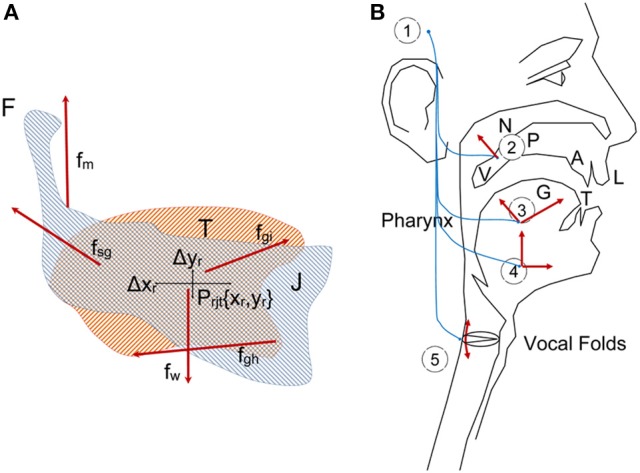
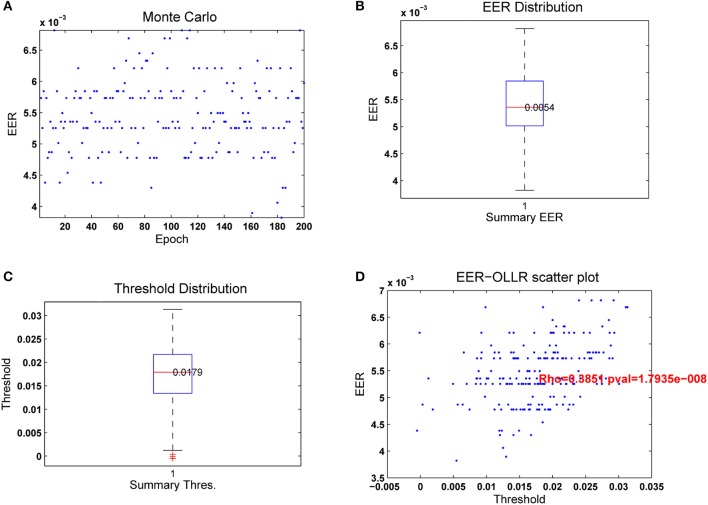
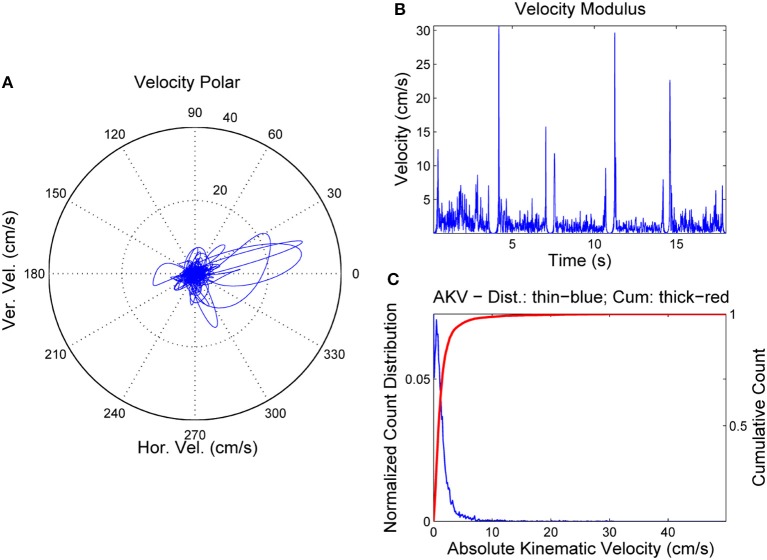
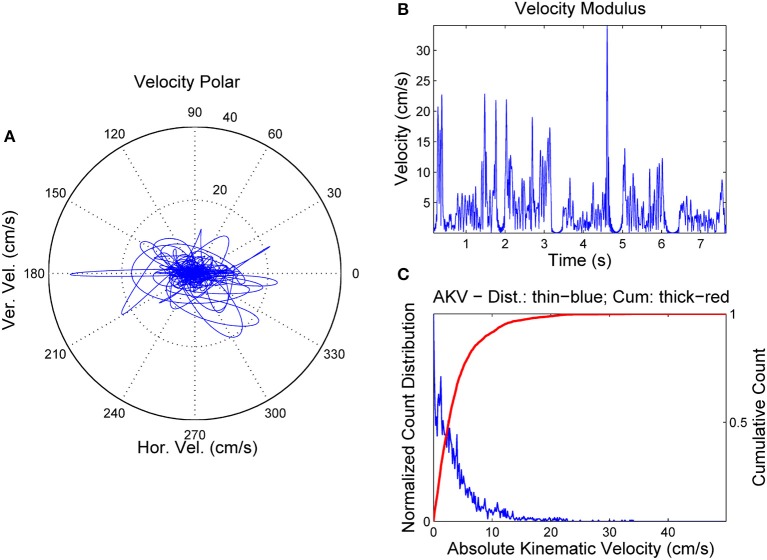
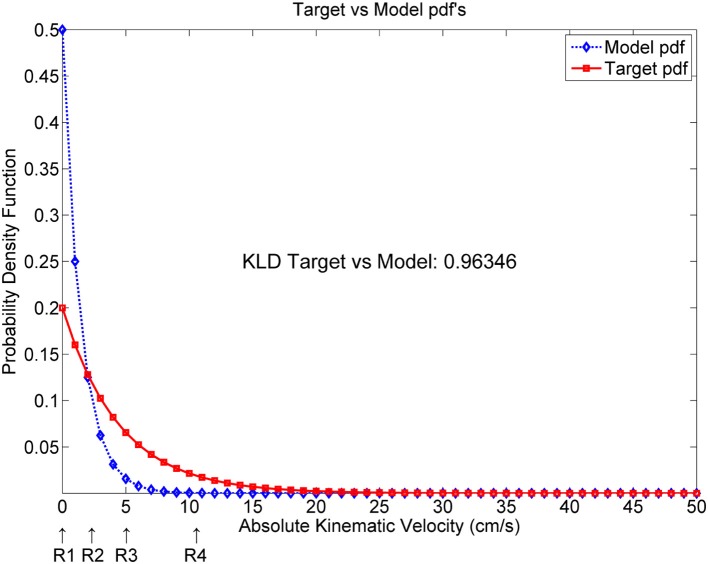
The research described is intended to give a description of articulation dynamics as a correlate of the kinematic behavior of the jaw-tongue biomechanical system, encoded as a probability distribution of an absolute joint velocity. This distribution may be used in detecting and grading speech from patients affected by neurodegenerative illnesses, as Parkinson Disease. The work hypothesis is that the probability density function of the absolute joint velocity includes information on the stability of phonation when applied to sustained vowels, as well as on fluency if applied to connected speech. A dataset of sustained vowels recorded from Parkinson Disease patients is contrasted with similar recordings from normative subjects. The probability distribution of the absolute kinematic velocity of the jaw-tongue system is extracted from each utterance. A Random Least Squares Feed-Forward Network (RLSFN) has been used as a binary classifier working on the pathological and normative datasets in a leave-one-out strategy. Monte Carlo simulations have been conducted to estimate the influence of the stochastic nature of the classifier. Two datasets for each gender were tested (males and females) including 26 normative and 53 pathological subjects in the male set, and 25 normative and 38 pathological in the female set. Male and female data subsets were tested in single runs, yielding equal error rates under 0.6% (Accuracy over 99.4%). Due to the stochastic nature of each experiment, Monte Carlo runs were conducted to test the reliability of the methodology. The average detection results after 200 Montecarlo runs of a 200 hyperplane hidden layer RLSFN are given in terms of Sensitivity (males: 0.9946, females: 0.9942), Specificity (males: 0.9944, females: 0.9941) and Accuracy (males: 0.9945, females: 0.9942). The area under the ROC curve is 0.9947 (males) and 0.9945 (females). The equal error rate is 0.0054 (males) and 0.0057 (females). The proposed methodology avails that the use of highly normalized descriptors as the probability distribution of kinematic variables of vowel articulation stability, which has some interesting properties in terms of information theory, boosts the potential of simple yet powerful classifiers in producing quite acceptable detection results in Parkinson Disease.
所描述的研究旨在描述发音动力学,将其作为颌 - 舌生物力学系统运动行为的一个相关因素,编码为绝对关节速度的概率分布。这种分布可用于检测和评估受神经退行性疾病(如帕金森病)影响的患者的语音。研究假设是,绝对关节速度的概率密度函数在应用于持续元音时包含有关发声稳定性的信息,在应用于连贯语音时包含有关流畅性的信息。从帕金森病患者记录的持续元音数据集与来自正常受试者的类似记录进行对比。从每个发声中提取颌 - 舌系统绝对运动速度的概率分布。随机最小二乘前馈网络(RLSFN)已被用作二分类器,以留一法策略处理病理和正常数据集。进行了蒙特卡罗模拟以估计分类器随机性质的影响。对每个性别的两个数据集进行了测试(男性和女性),男性组包括26名正常受试者和53名病理受试者,女性组包括25名正常受试者和38名病理受试者。男性和女性数据子集在单次运行中进行测试,错误率均低于0.6%(准确率超过99.4%)。由于每个实验的随机性质,进行了蒙特卡罗运行以测试该方法的可靠性。具有200个超平面隐藏层的RLSFN在200次蒙特卡罗运行后的平均检测结果以灵敏度(男性:0.9946,女性:0.9942)、特异性(男性:0.9944,女性:0.9941)和准确率(男性:0.9945,女性:0.9942)表示。ROC曲线下面积男性为0.9947,女性为0.9945。均等错误率男性为0.0054,女性为0.0057。所提出的方法利用了高度归一化的描述符,即元音发音稳定性运动学变量的概率分布,该分布在信息论方面具有一些有趣的特性,提高了简单而强大的分类器在帕金森病中产生相当可接受的检测结果的潜力。