Walladbegi Java, Gellerstedt Martin, Svanberg Anncarin, Jontell Mats
Department of Oral Medicine & Pathology, Institute of Odontology, The Sahlgrenska Academy, University of Gothenburg, Box 450, 405 30, Gothenburg, Sweden.
University West, School of Business, Economics and IT, University West, S-461 86, Trollhättan, Sweden.
Cancer Chemother Pharmacol. 2017 Nov;80(5):965-972. doi: 10.1007/s00280-017-3434-2. Epub 2017 Oct 3.
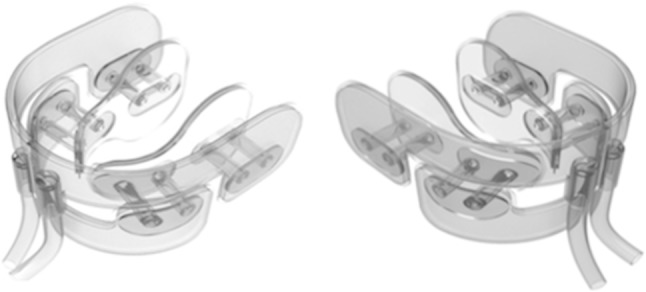
Most of the patients who receive myeloablative therapy prior to stem cell transplantation develop oral mucositis (OM). This adverse reaction manifests as oral mucosal erythema and ulcerations and may require high doses of morphine for pain alleviation. OM may also interfere with food intake and result in weight loss, a need for parenteral nutrition, and impaired quality of life. To date, there have been very few studies of evidence-based interventions for the prevention of OM. Cryotherapy, using ice chips, has been shown to reduce in an efficient manner the severity and extent of OM, although clinical applications are still limited due to several shortcomings, such as adverse tooth sensations, problems with infectious organisms in the water, nausea, and uneven cooling of the oral mucosa. The present proof-of-concept study was conducted to compare the tolerability, temperature reduction, and cooling distribution profiles of an intra-oral cooling device and ice chips in healthy volunteers who did not receive myeloablative treatment, and therefore, did not experience the symptoms of OM.
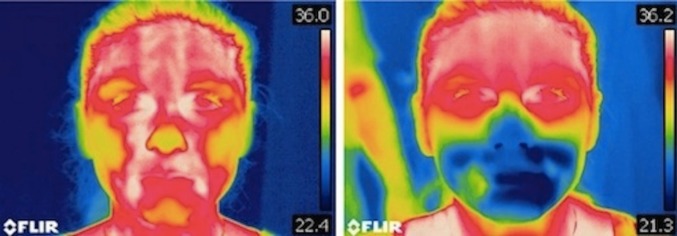
Twenty healthy volunteers used the cooling device and ice chips for a maximum of 60 min each, using a cross-over design. The baseline and final temperatures were measured at eight intra-oral locations using an infra-red thermographic camera. The thermographic images were analysed using two digital software packages. A questionnaire was used to assess the tolerability levels of the two interventions.
The intra-oral cooling device was significantly better tolerated than the ice-chips (p = 0.0118). The two interventions were equally effective regarding temperature reduction and cooling distribution.
The intra-oral cooling device shows superior tolerability in healthy volunteers. Furthermore, this study shows that temperature reduction and cooling distribution are achieved equally well using either method.
大多数在干细胞移植前接受清髓治疗的患者会发生口腔黏膜炎(OM)。这种不良反应表现为口腔黏膜红斑和溃疡,可能需要高剂量吗啡来缓解疼痛。OM还可能干扰食物摄入,导致体重减轻、需要肠外营养以及生活质量受损。迄今为止,针对预防OM的循证干预措施的研究非常少。使用碎冰进行冷冻疗法已被证明能有效减轻OM的严重程度和范围,不过由于存在一些缺点,如牙齿不适感、水中感染性生物问题、恶心以及口腔黏膜冷却不均匀等,其临床应用仍然有限。本概念验证研究旨在比较口腔内冷却装置和碎冰在未接受清髓治疗、因此未出现OM症状的健康志愿者中的耐受性、降温效果及冷却分布情况。
20名健康志愿者采用交叉设计,分别使用冷却装置和碎冰,每次最长使用60分钟。使用红外热成像相机在口腔内8个位置测量基线温度和最终温度。使用两个数字软件包分析热成像图像。通过问卷调查评估两种干预措施的耐受水平。
口腔内冷却装置的耐受性明显优于碎冰(p = 0.0118)。两种干预措施在降温及冷却分布方面效果相同。
口腔内冷却装置在健康志愿者中显示出更好的耐受性。此外,本研究表明两种方法在降温及冷却分布方面效果相当。