Institute of Chemistry and the Center for Nanoscience and Nanotechnology, The Hebrew University of Jerusalem, Jerusalem, 9190401, Israel.
Angew Chem Int Ed Engl. 2018 Apr 9;57(16):4274-4295. doi: 10.1002/anie.201708510. Epub 2018 Feb 27.
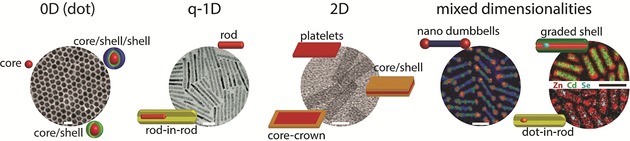
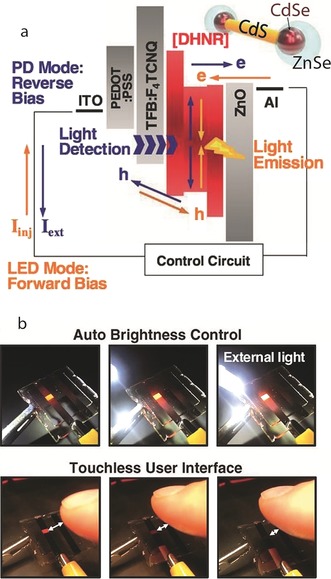
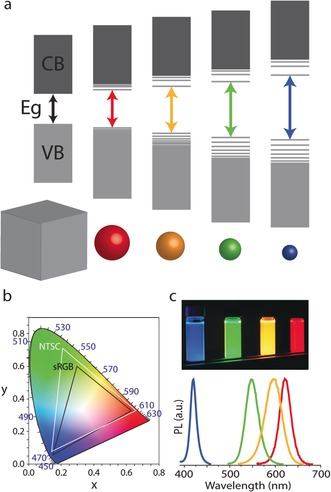
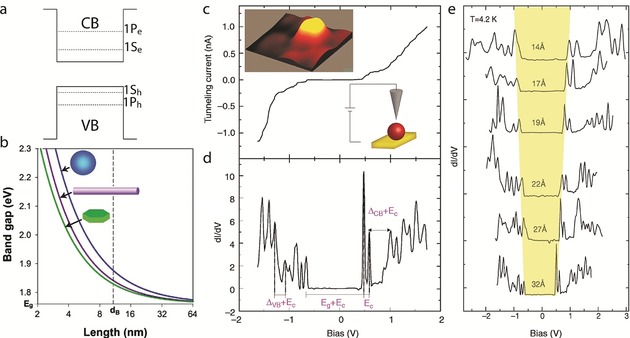
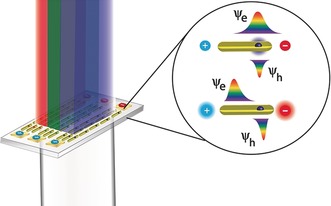
Colloidal semiconductor nanocrystals (SCNCs) or, more broadly, colloidal quantum nanostructures constitute outstanding model systems for investigating size and dimensionality effects. Their nanoscale dimensions lead to quantum confinement effects that enable tuning of their optical and electronic properties. Thus, emission color control with narrow photoluminescence spectra, wide absorbance spectra, and outstanding photostability, combined with their chemical processability through control of their surface chemistry leads to the emergence of SCNCs as outstanding materials for present and next-generation displays. In this Review, we present the fundamental chemical and physical properties of SCNCs, followed by a description of the advantages of different colloidal quantum nanostructures for display applications. The open challenges with respect to their optical activity are addressed. Both photoluminescent and electroluminescent display scenarios utilizing SCNCs are described.
胶体半导体纳米晶体(SCNCs)或更广泛地说,胶体量子纳米结构,是研究尺寸和维度效应的杰出模型系统。它们的纳米尺寸导致量子限制效应,从而能够调整其光学和电子特性。因此,通过控制其表面化学,实现窄荧光光谱、宽吸收光谱和出色的光稳定性的发射颜色控制,以及其化学可加工性,使得 SCNCs 成为当前和下一代显示器的杰出材料。在这篇综述中,我们介绍了 SCNCs 的基本化学和物理性质,接着描述了不同胶体量子纳米结构在显示应用中的优势。还讨论了它们光学活性方面的开放性挑战。描述了利用 SCNCs 的光致发光和电致发光显示场景。