Prouteau Manoël, Desfosses Ambroise, Sieben Christian, Bourgoint Clélia, Lydia Mozaffari Nour, Demurtas Davide, Mitra Alok K, Guichard Paul, Manley Suliana, Loewith Robbie
Department of Molecular Biology, University of Geneva, 30 quai Ernest-Ansermet, CH1211 Geneva, Switzerland.
Institute of Genetics and Genomics of Geneva (iGE3), University of Geneva, 30 quai Ernest-Ansermet, CH1211 Geneva, Switzerland.
Nature. 2017 Oct 12;550(7675):265-269. doi: 10.1038/nature24021. Epub 2017 Oct 4.
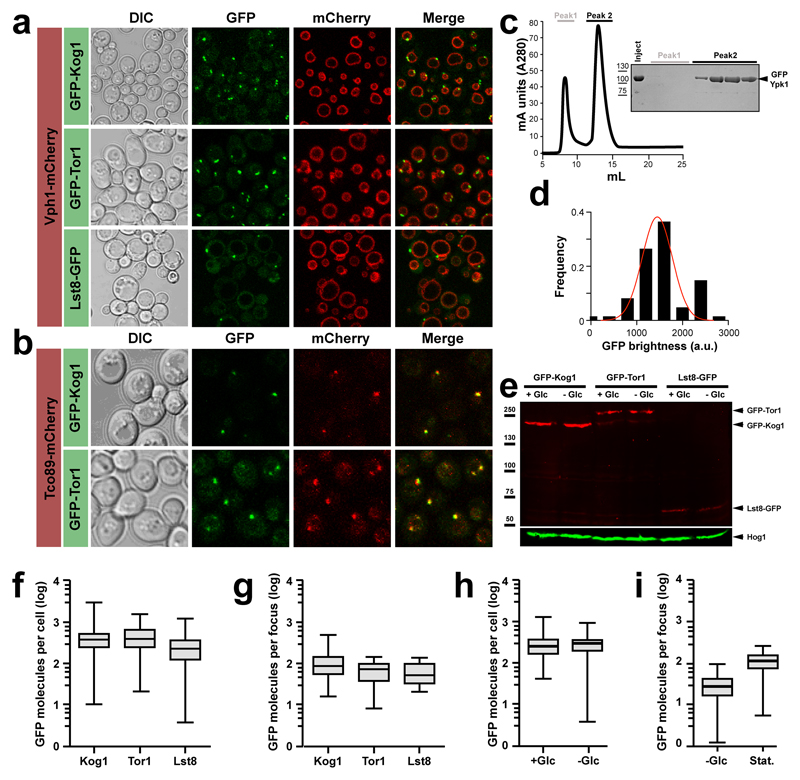
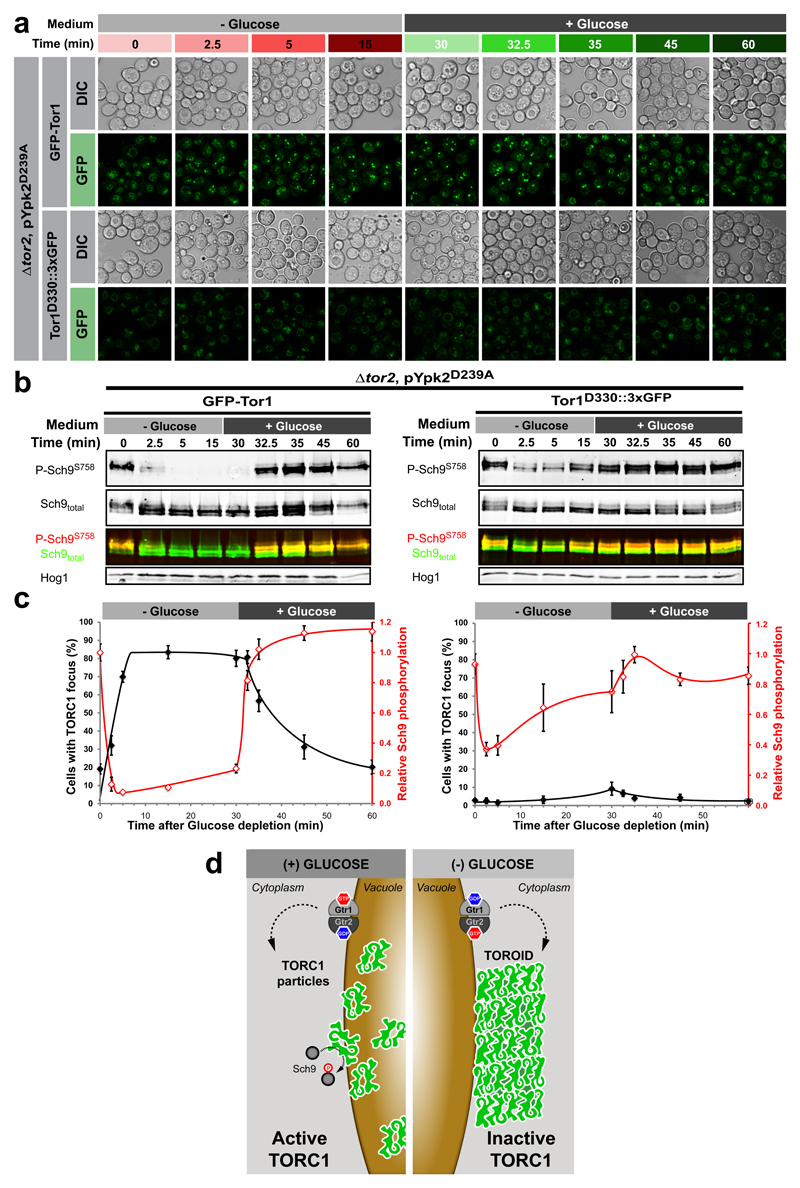
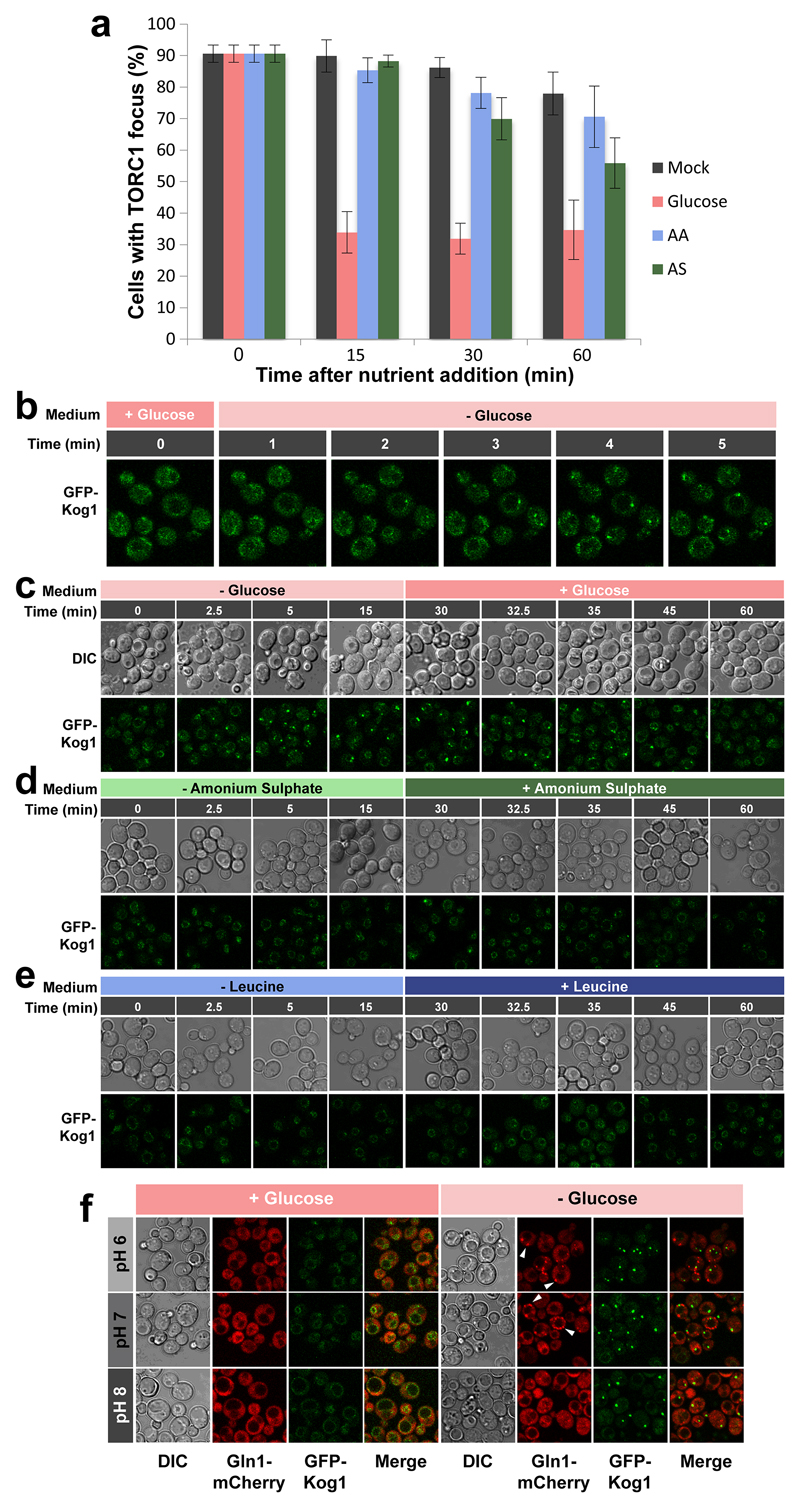
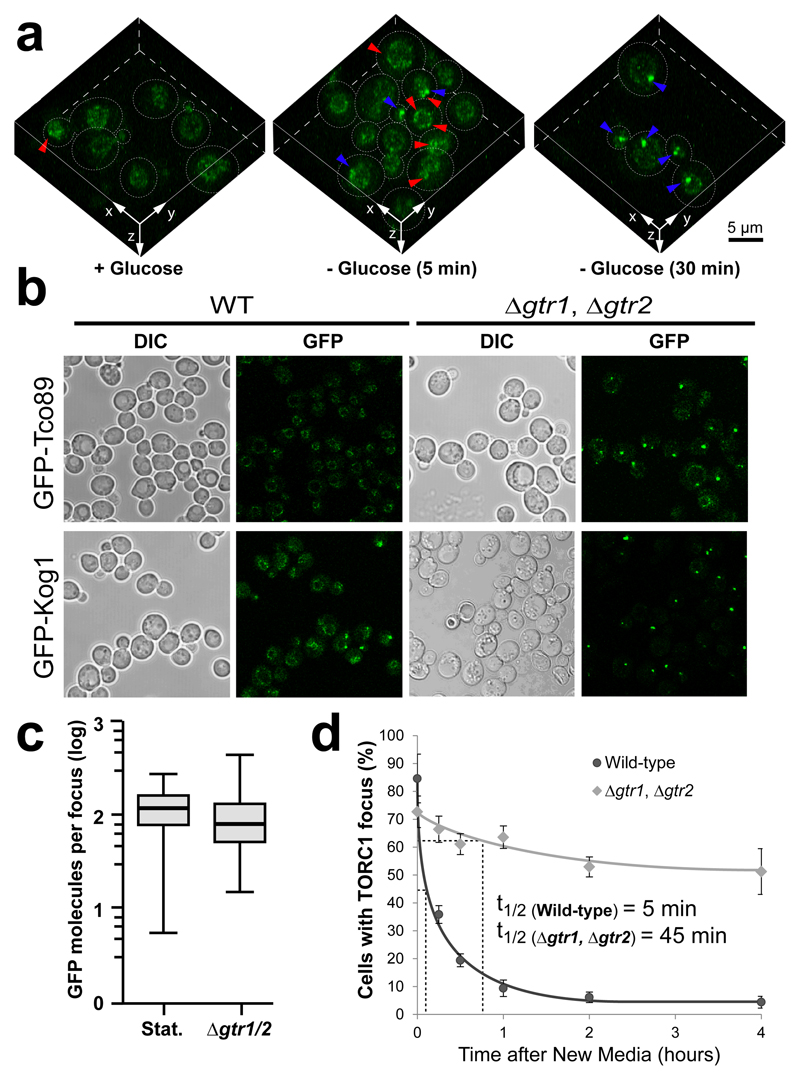
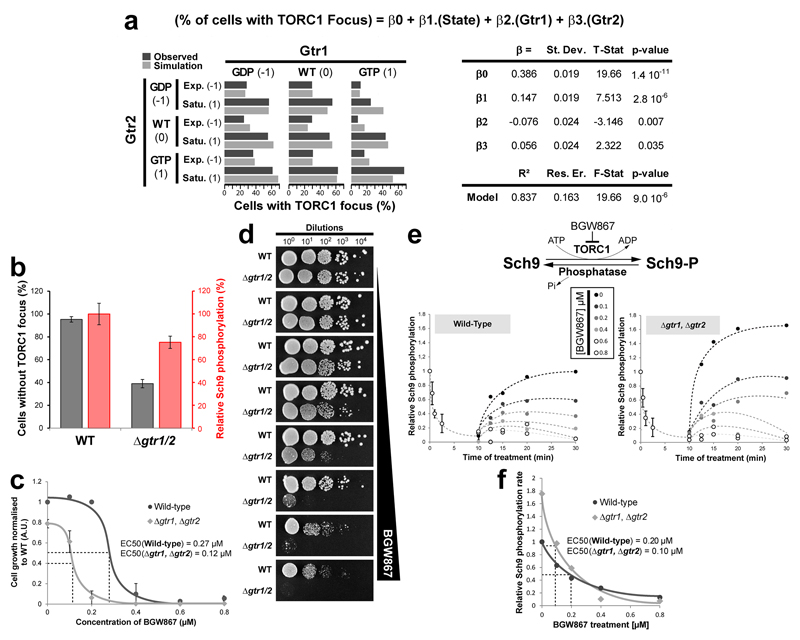
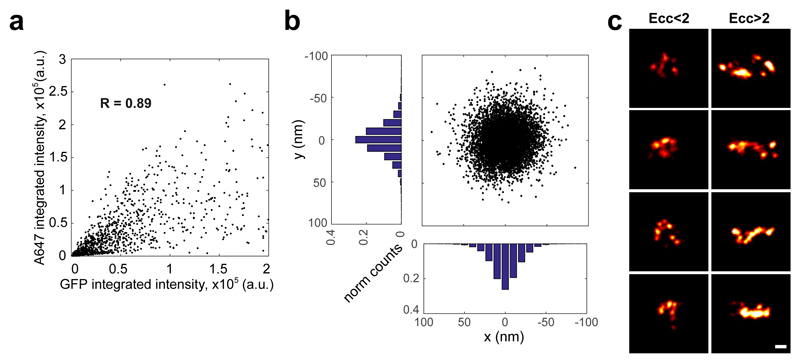
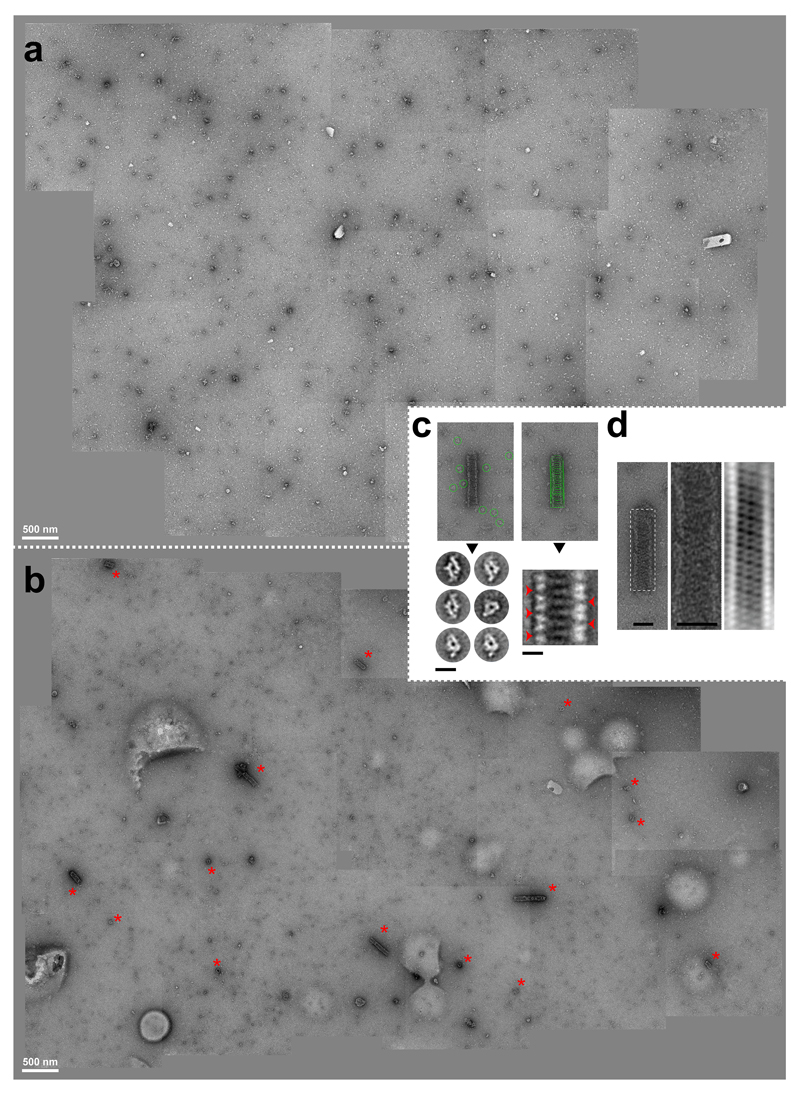
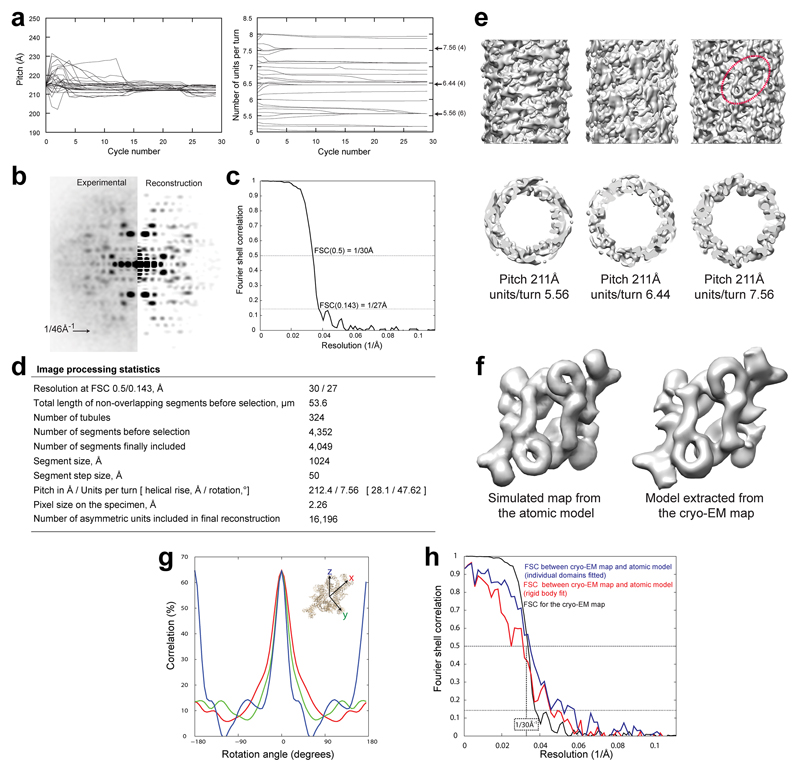
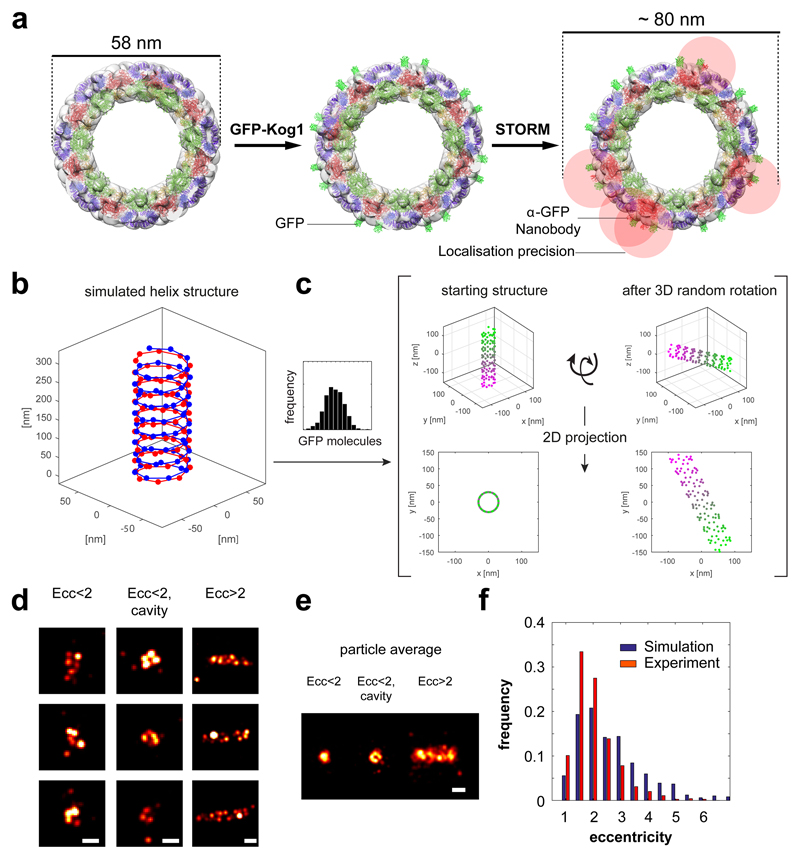
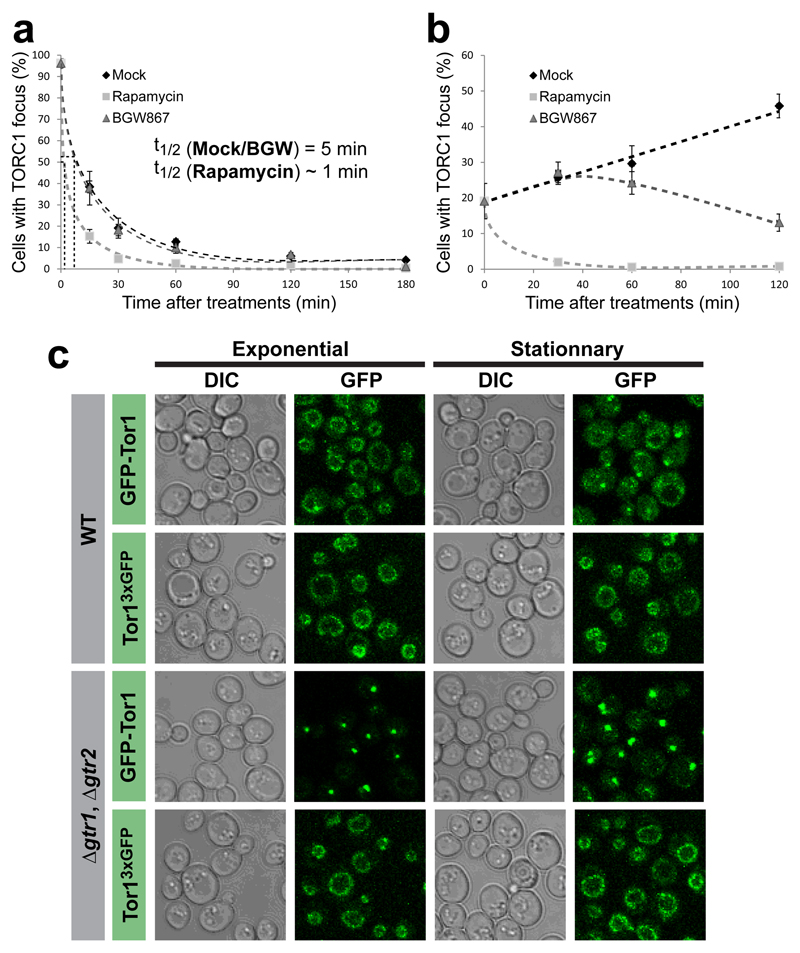
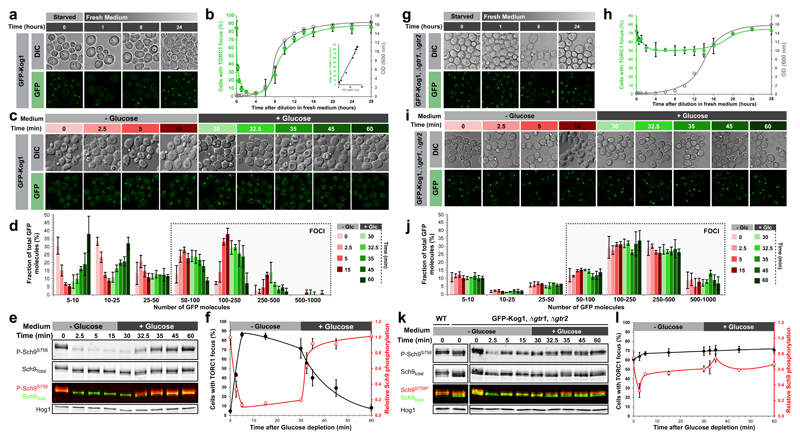
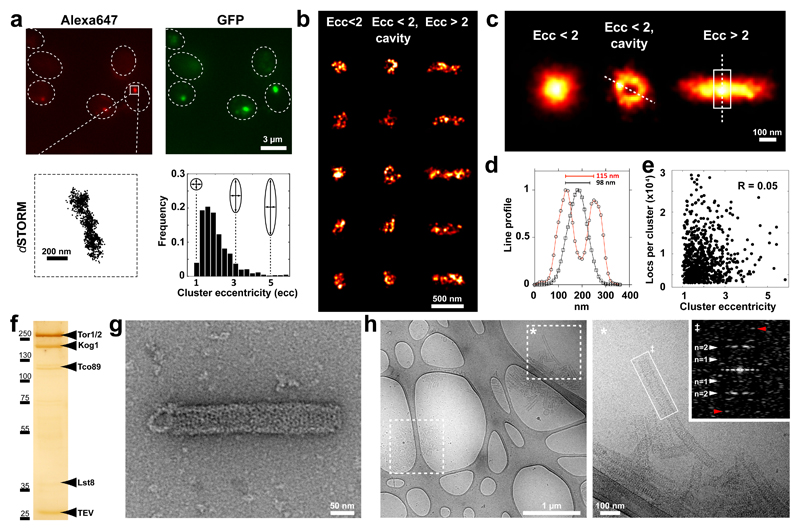
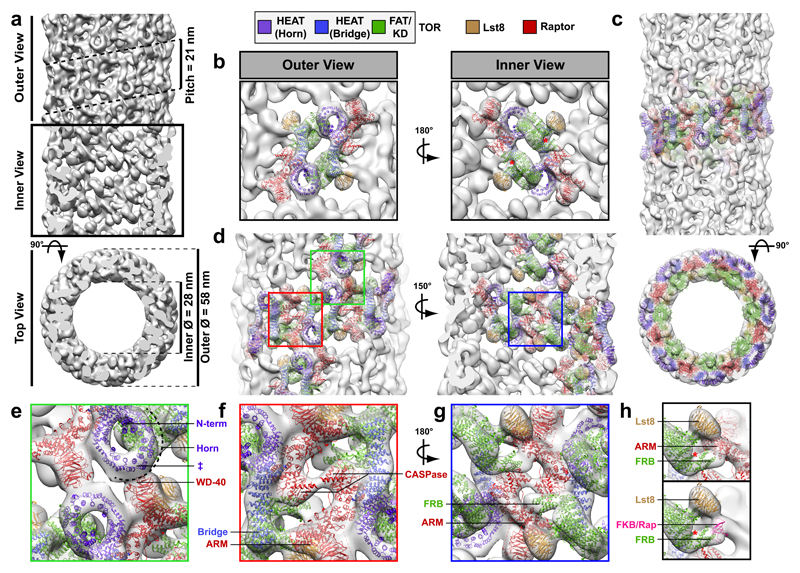
The target of rapamycin (TOR) is a eukaryotic serine/threonine protein kinase that functions in two distinct complexes, TORC1 and TORC2, to regulate growth and metabolism. GTPases, responding to signals generated by abiotic stressors, nutrients, and, in metazoans, growth factors, play an important but poorly understood role in TORC1 regulation. Here we report that, in budding yeast, glucose withdrawal (which leads to an acute loss of TORC1 kinase activity) triggers a similarly rapid Rag GTPase-dependent redistribution of TORC1 from being semi-uniform around the vacuolar membrane to a single, vacuole-associated cylindrical structure visible by super-resolution optical microscopy. Three-dimensional reconstructions of cryo-electron micrograph images of these purified cylinders demonstrate that TORC1 oligomerizes into a higher-level hollow helical assembly, which we name a TOROID (TORC1 organized in inhibited domain). Fitting of the recently described mammalian TORC1 structure into our helical map reveals that oligomerization leads to steric occlusion of the active site. Guided by the implications from our reconstruction, we present a TOR1 allele that prevents both TOROID formation and TORC1 inactivation in response to glucose withdrawal, demonstrating that oligomerization is necessary for TORC1 inactivation. Our results reveal a novel mechanism by which Rag GTPases regulate TORC1 activity and suggest that the reversible assembly and/or disassembly of higher-level structures may be an underappreciated mechanism for the regulation of protein kinases.
雷帕霉素靶蛋白(TOR)是一种真核丝氨酸/苏氨酸蛋白激酶,在两种不同的复合物TORC1和TORC2中发挥作用,以调节生长和代谢。GTP酶响应非生物应激源、营养物质以及后生动物中的生长因子产生的信号,在TORC1调节中发挥重要但尚未完全理解的作用。在这里,我们报告在出芽酵母中,葡萄糖剥夺(导致TORC1激酶活性急剧丧失)触发了TORC1类似的快速Rag GTP酶依赖性重新分布,从围绕液泡膜的半均匀分布转变为通过超分辨率光学显微镜可见的单个与液泡相关的圆柱形结构。对这些纯化圆柱体的冷冻电子显微镜图像进行三维重建表明,TORC1寡聚形成更高层次的空心螺旋组装体,我们将其命名为TOROID(在抑制域中组织的TORC1)。将最近描述的哺乳动物TORC1结构拟合到我们的螺旋图谱中发现,寡聚化导致活性位点的空间阻塞。根据我们重建的结果,我们提出了一个TOR1等位基因,它可以防止TOROID形成和TORC1因葡萄糖剥夺而失活,表明寡聚化是TORC1失活所必需的。我们的结果揭示了Rag GTP酶调节TORC1活性的一种新机制,并表明更高层次结构的可逆组装和/或拆卸可能是一种未被充分认识的蛋白激酶调节机制。