Sotgia Federica, Lisanti Michael P
Translational Medicine, School of Environment & Life Sciences, University of Salford, Greater Manchester, United Kingdom.
Oncotarget. 2017 Jul 28;8(40):68095-68107. doi: 10.18632/oncotarget.19677. eCollection 2017 Sep 15.
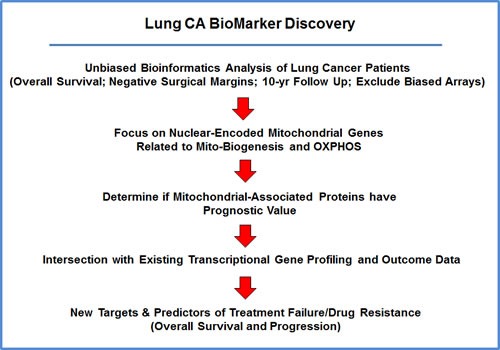
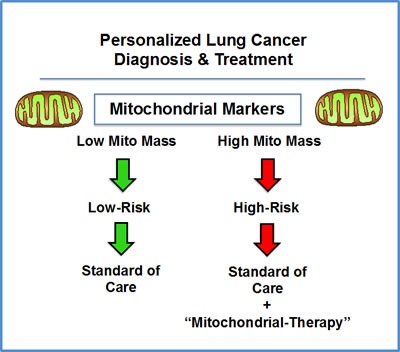
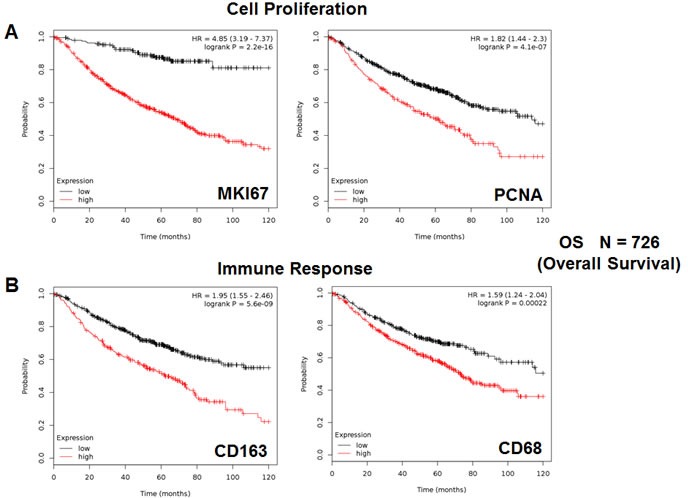
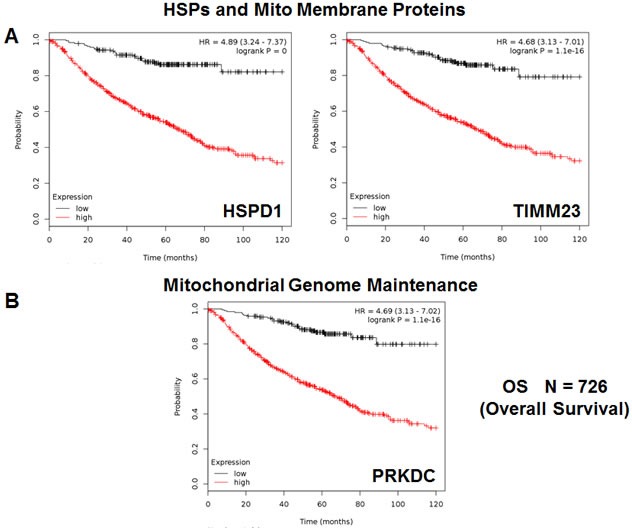
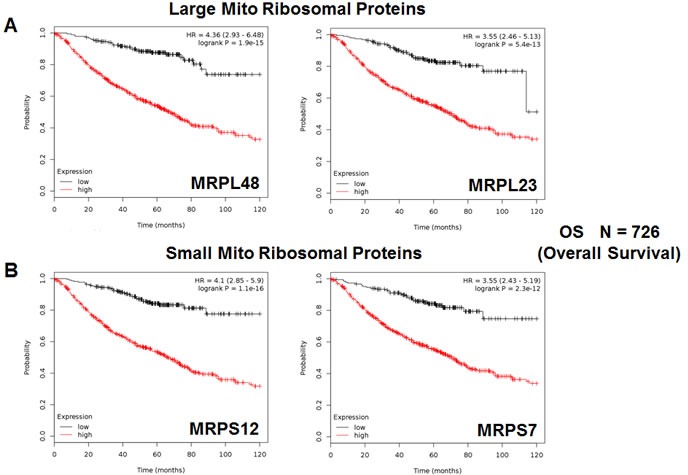
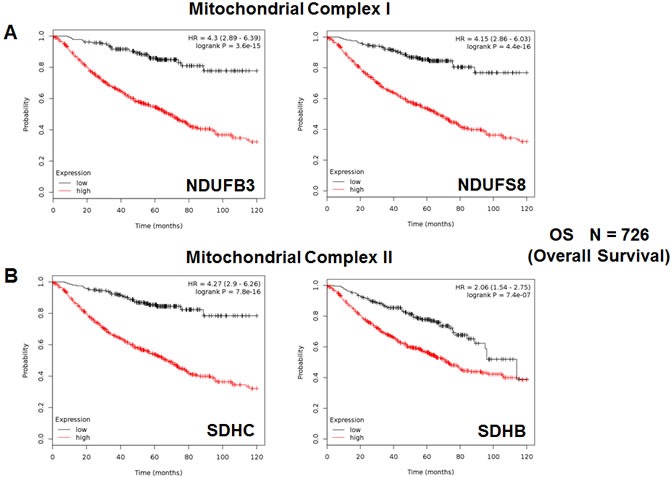
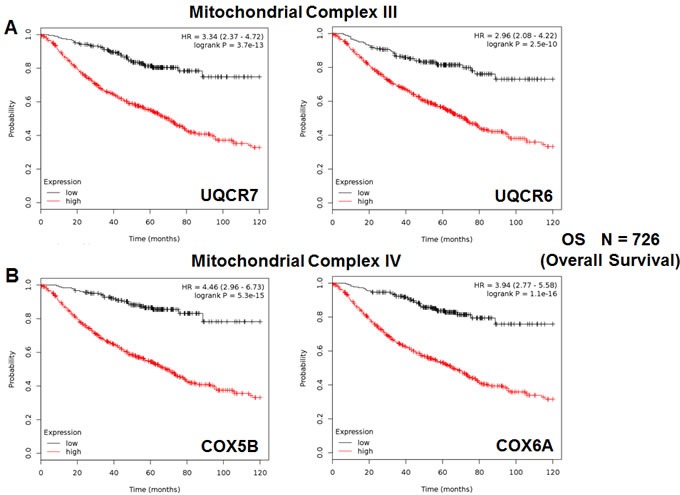
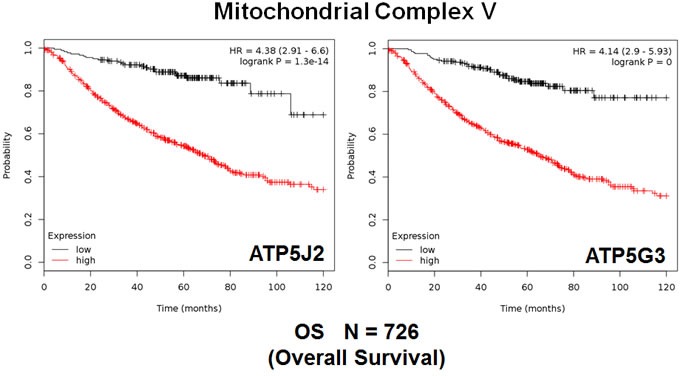
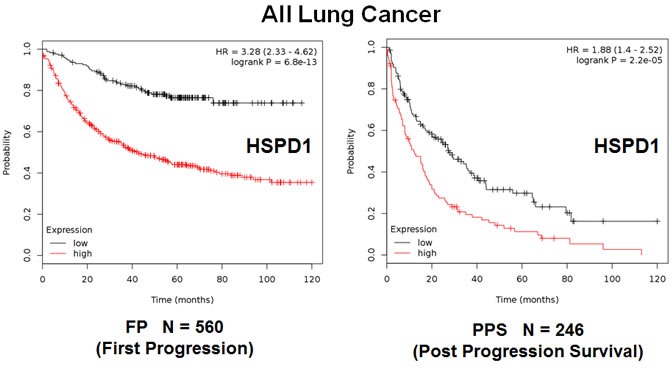
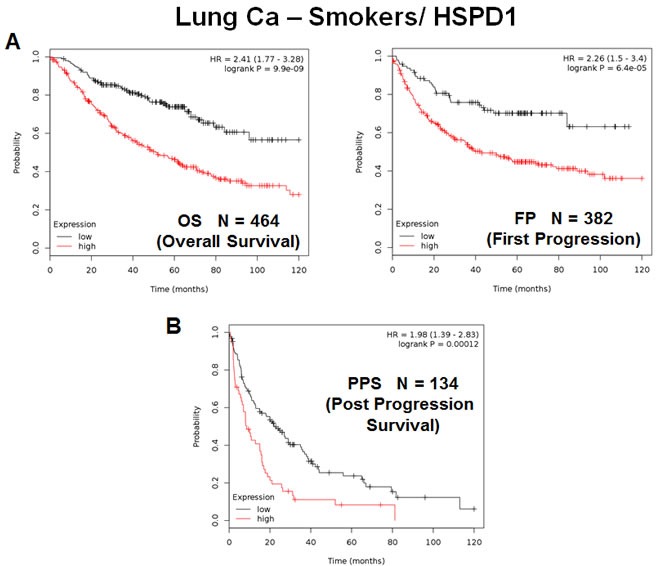
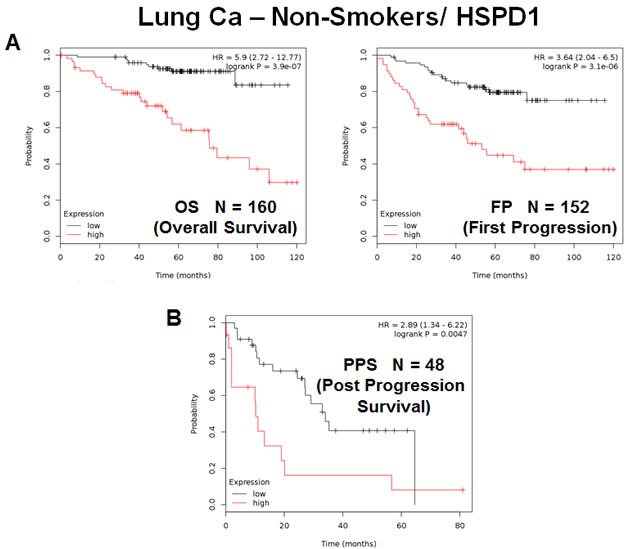
Here, we used an informatics-based approach to identify novel biomarkers of overall survival and tumor progression in non-small cell lung cancer (NSCLC) patients. We determined whether nuclear-encoded genes associated with mitochondrial biogenesis and function can be used to effectively predict clinical outcome in lung cancer. This strategy allowed us to directly provide validation of the prognostic value of these mitochondrial components in large, clinically-relevant, lung cancer patient populations. Towards this end, we used a group of 726 lung cancer patients, with negative surgical margins. Importantly, in this group of cancer patients, markers of cell proliferation (Ki67 and PCNA) were associated with poor overall survival, as would be expected. Similarly, key markers of inflammation (CD163 and CD68) also predicted poor clinical outcome in this patient population. Using this approach, we identified >180 new individual mitochondrial gene probes that effectively predicted significantly reduced overall survival, with hazard-ratios (HR) of up to 4.89 (p<1.0e-16). These nuclear-encoded mitochondrial genes included chaperones, membrane proteins as well as ribosomal proteins (MRPs) and components of the OXPHOS (I-V) complexes. In this analysis, HSPD1, a key marker of mitochondrial biogenesis, had the highest predictive value and was also effective in predicting tumor progression in both smokers and non-smokers alike. In fact, it had even higher predictive value in non-smokers (HR=5.9; p=3.9e-07). Based on this analysis, we conclude that mitochondrial biogenesis should be considered as a new therapeutic target, for the more effective treatment of human lung cancers. The mitochondrial biomarkers that we have identified could serve as new companion diagnostics to assist clinicians in more accurately predicting clinical outcomes in lung cancer patients, driving more personalized cancer therapy.
在此,我们采用基于信息学的方法来识别非小细胞肺癌(NSCLC)患者总生存期和肿瘤进展的新型生物标志物。我们确定与线粒体生物发生和功能相关的核编码基因是否可用于有效预测肺癌的临床结局。这一策略使我们能够直接在大量具有临床相关性的肺癌患者群体中验证这些线粒体成分的预后价值。为此,我们使用了一组726例手术切缘阴性的肺癌患者。重要的是,在这组癌症患者中,细胞增殖标志物(Ki67和PCNA)与较差的总生存期相关,这是预期的。同样,炎症关键标志物(CD163和CD68)在该患者群体中也预示着较差的临床结局。通过这种方法,我们鉴定出>180个新的个体线粒体基因探针,它们能有效预测总生存期显著缩短,风险比(HR)高达4.89(p<1.0e-16)。这些核编码的线粒体基因包括伴侣蛋白、膜蛋白以及核糖体蛋白(MRP)和氧化磷酸化(I-V)复合物的成分。在该分析中,线粒体生物发生的关键标志物HSPD1具有最高的预测价值,并且在预测吸烟者和非吸烟者的肿瘤进展方面均有效。事实上,它在非吸烟者中的预测价值更高(HR=5.9;p=3.9e-07)。基于此分析,我们得出结论,线粒体生物发生应被视为一个新的治疗靶点,以更有效地治疗人类肺癌。我们鉴定出的线粒体生物标志物可作为新的伴随诊断标志物,协助临床医生更准确地预测肺癌患者的临床结局,推动更个性化的癌症治疗。