Taube Navaraj William, García Núñez Carlos, Shakthivel Dhayalan, Vinciguerra Vincenzo, Labeau Fabrice, Gregory Duncan H, Dahiya Ravinder
Bendable Electronics and Sensing Technologies Group, School of Engineering, University of GlasgowGlasgow, United Kingdom.
ST MicroelectronicsCatania, Italy.
Front Neurosci. 2017 Sep 20;11:501. doi: 10.3389/fnins.2017.00501. eCollection 2017.
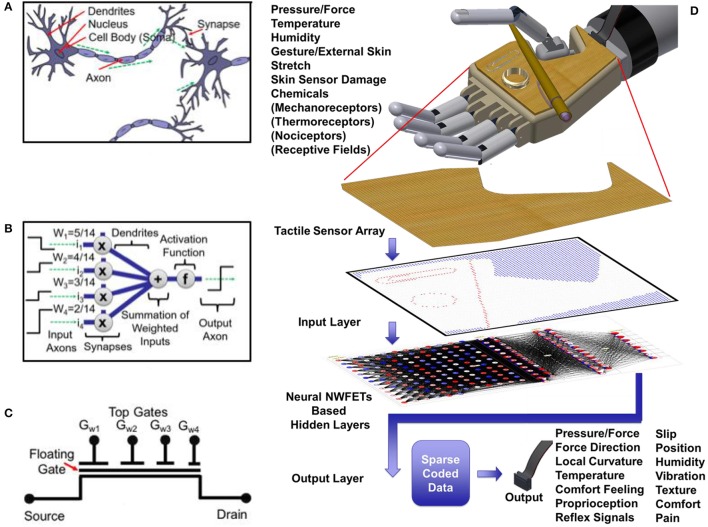
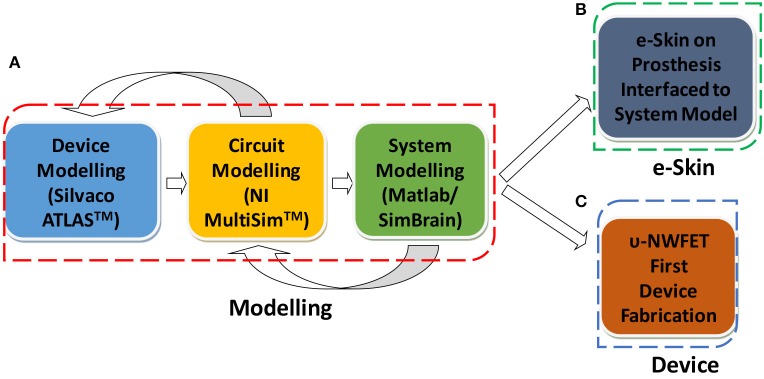
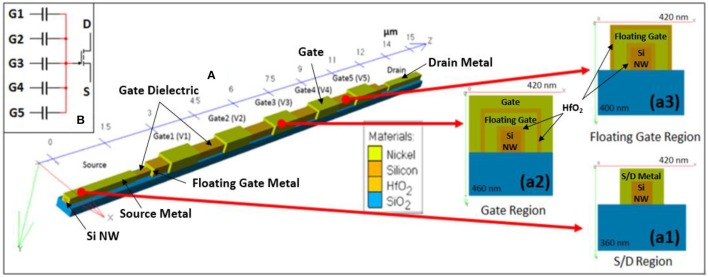
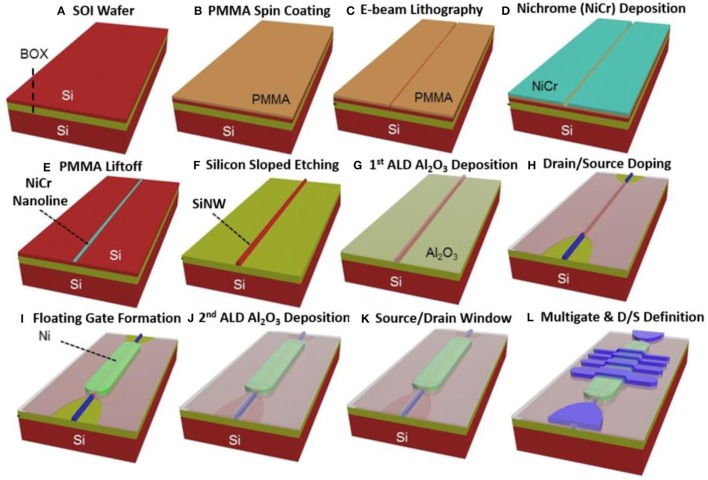
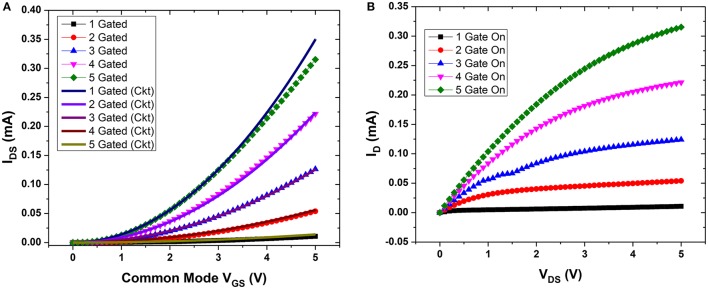
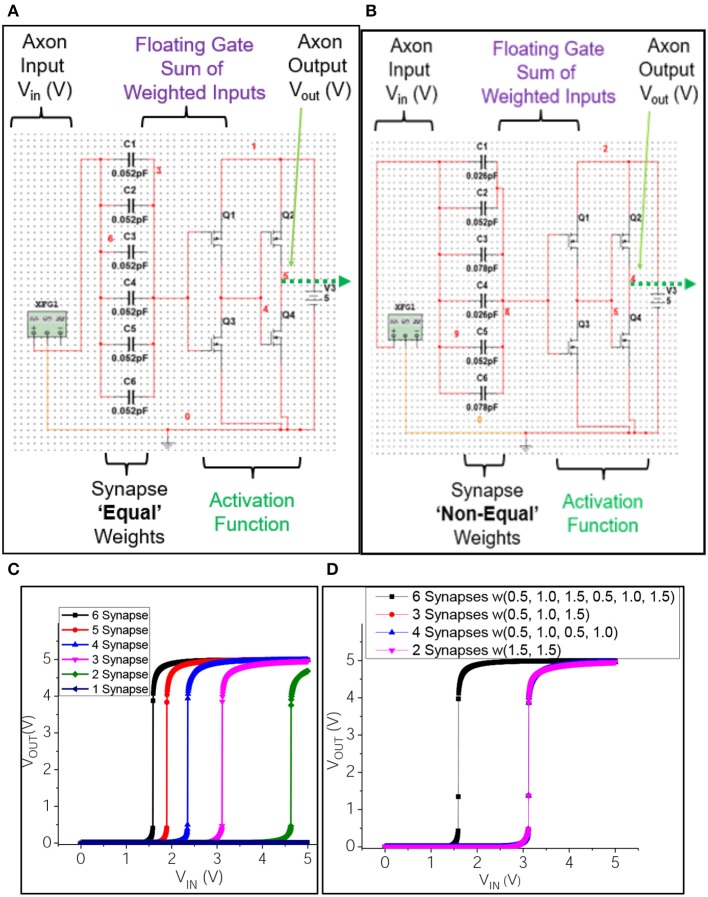
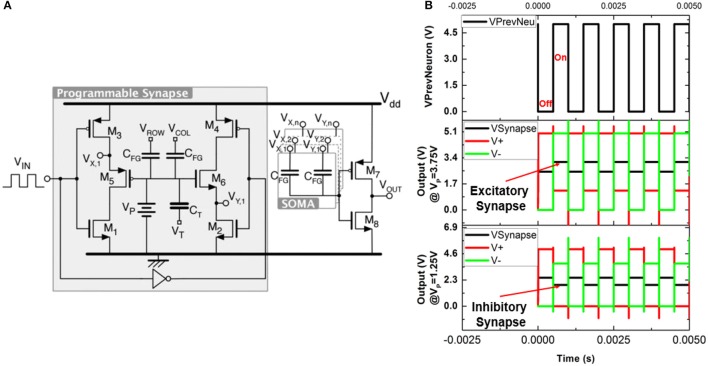
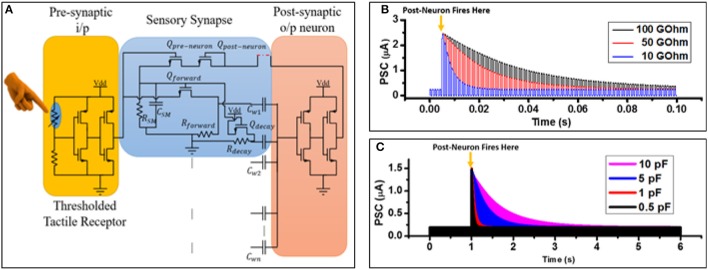
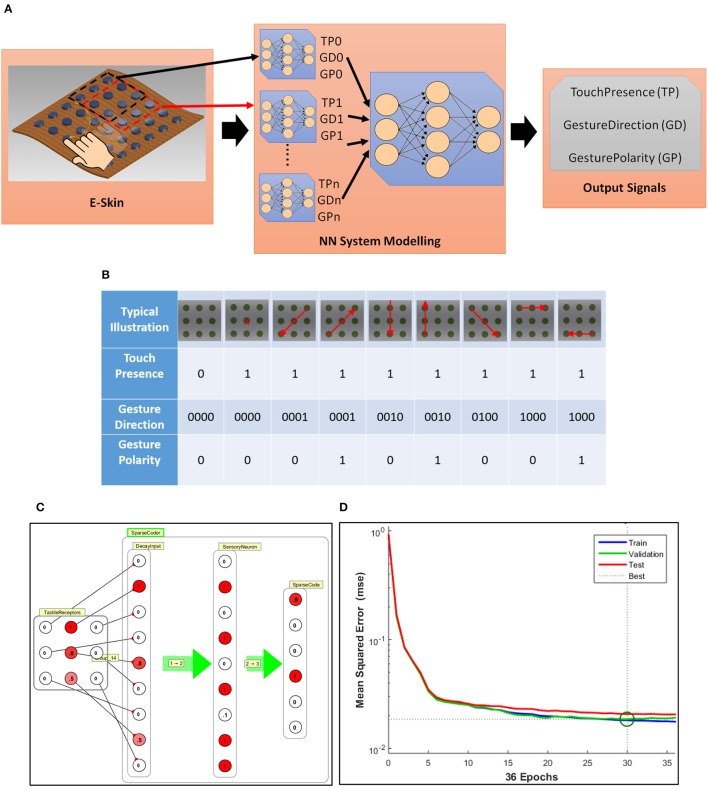
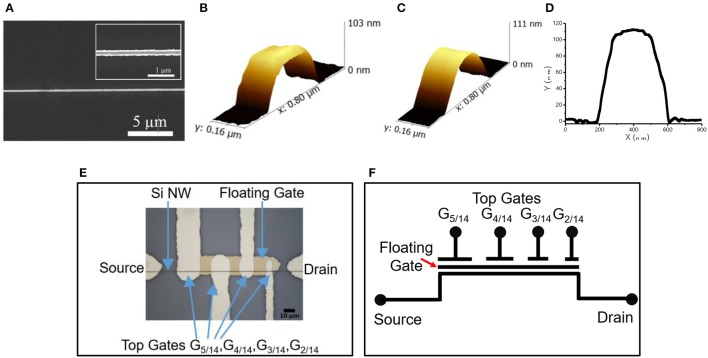
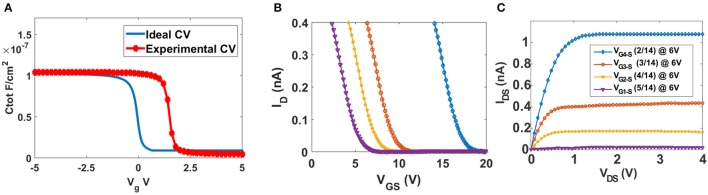
This paper presents novel Neural Nanowire Field Effect Transistors (υ-NWFETs) based hardware-implementable neural network (HNN) approach for tactile data processing in electronic skin (e-skin). The viability of Si nanowires (NWs) as the active material for υ-NWFETs in HNN is explored through modeling and demonstrated by fabricating the first device. Using υ-NWFETs to realize HNNs is an interesting approach as by printing NWs on large area flexible substrates it will be possible to develop a bendable tactile skin with distributed neural elements (for local data processing, as in biological skin) in the backplane. The modeling and simulation of υ-NWFET based devices show that the overlapping areas between individual gates and the floating gate determines the initial synaptic weights of the neural network - thus validating the working of υ-NWFETs as the building block for HNN. The simulation has been further extended to υ-NWFET based circuits and neuronal computation system and this has been validated by interfacing it with a transparent tactile skin prototype (comprising of 6 × 6 ITO based capacitive tactile sensors array) integrated on the palm of a 3D printed robotic hand. In this regard, a tactile data coding system is presented to detect touch gesture and the direction of touch. Following these simulation studies, a four-gated υ-NWFET is fabricated with Pt/Ti metal stack for gates, source and drain, Ni floating gate, and AlO high-k dielectric layer. The current-voltage characteristics of fabricated υ-NWFET devices confirm the dependence of turn-off voltages on the (synaptic) weight of each gate. The presented υ-NWFET approach is promising for a neuro-robotic tactile sensory system with distributed computing as well as numerous futuristic applications such as prosthetics, and electroceuticals.
本文提出了一种基于新型神经纳米线场效应晶体管(υ-NWFET)的硬件可实现神经网络(HNN)方法,用于电子皮肤(e-skin)中的触觉数据处理。通过建模探索了硅纳米线(NWs)作为HNN中υ-NWFET活性材料的可行性,并通过制造首个器件进行了演示。使用υ-NWFET实现HNN是一种有趣的方法,因为通过在大面积柔性基板上印刷NWs,有可能在背板中开发出具有分布式神经元件(用于局部数据处理,如生物皮肤)的可弯曲触觉皮肤。基于υ-NWFET的器件的建模和仿真表明,各个栅极与浮栅之间的重叠区域决定了神经网络的初始突触权重,从而验证了υ-NWFET作为HNN构建模块的工作原理。仿真进一步扩展到基于υ-NWFET的电路和神经元计算系统,并通过将其与集成在3D打印机器人手掌上的透明触觉皮肤原型(由6×6基于ITO的电容式触觉传感器阵列组成)接口进行了验证。在这方面,提出了一种触觉数据编码系统来检测触摸手势和触摸方向。在这些仿真研究之后,制造了一种四栅极υ-NWFET,其栅极、源极和漏极采用Pt/Ti金属堆叠,浮栅采用Ni,高k介质层采用AlO。所制造的υ-NWFET器件 的电流-电压特性证实了关断电压对每个栅极(突触)权重的依赖性。所提出的υ-NWFET方法对于具有分布式计算的神经机器人触觉传感系统以及众多未来应用(如假肢和电药物)具有广阔前景。