Cheng Weiwei, Lu Jing, Li Boxing, Lin Weishi, Zhang Zheng, Wei Xiao, Sun Chengming, Chi Mingguo, Bi Wei, Yang Bingjun, Jiang Aimin, Yuan Jing
College of Food Science, South China Agricultural UniversityGuangzhou, China.
Institute of Disease Control and Prevention, Academy of Military Medical SciencesBeijing, China.
Front Microbiol. 2017 Sep 20;8:1750. doi: 10.3389/fmicb.2017.01750. eCollection 2017.
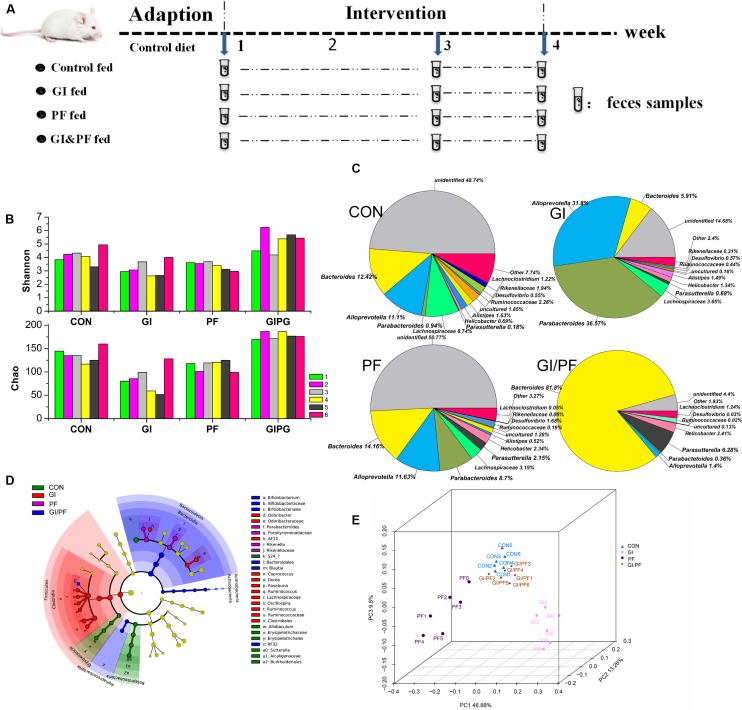
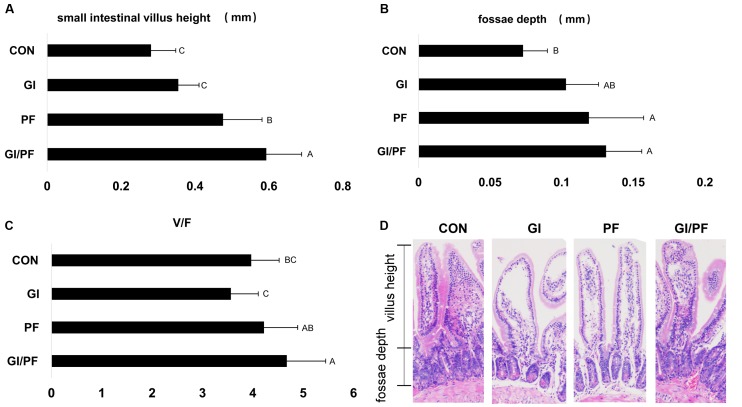
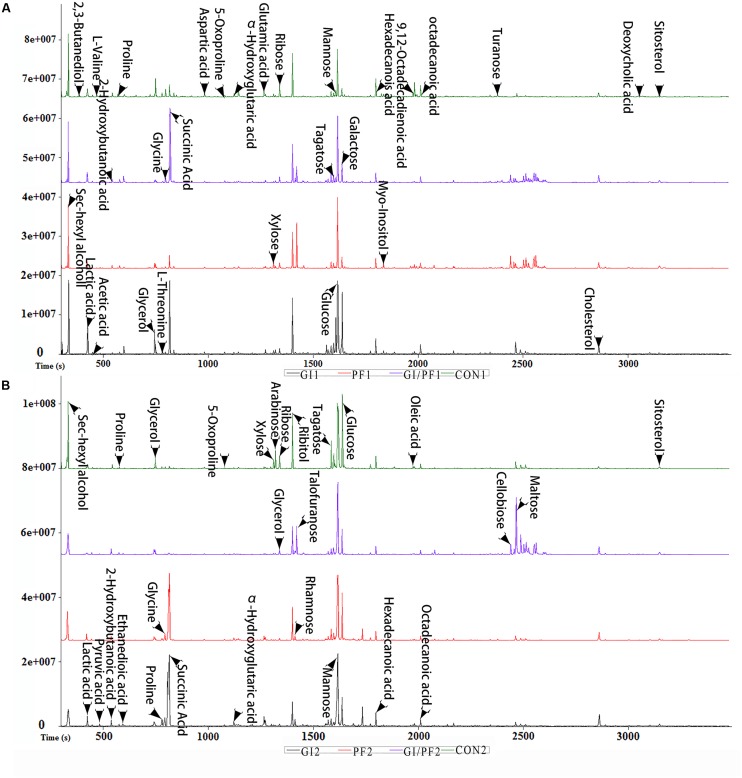
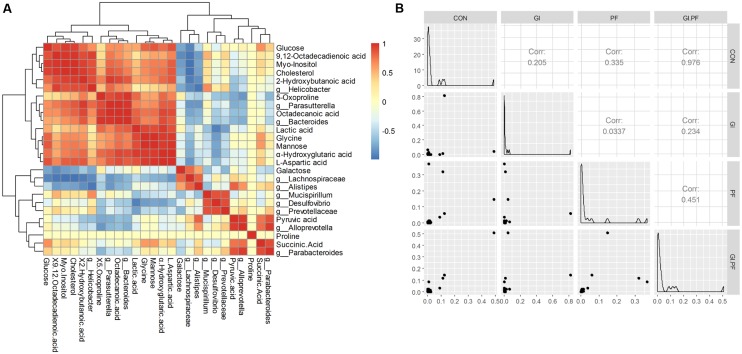
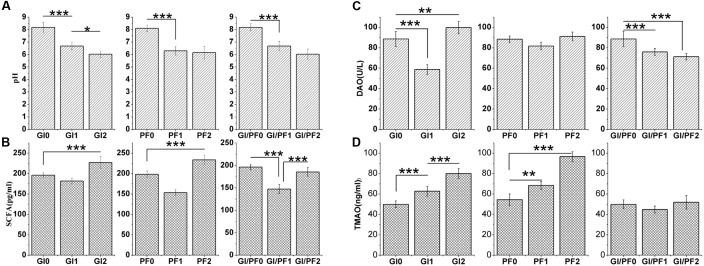
Functional oligosaccharides, known as prebiotics, and ordinary dietary fiber have important roles in modulating the structure of intestinal microbiota. To investigate their effects on the intestinal microecosystem, three kinds of diets containing different prebiotics were used to feed mice for 3 weeks, as follows: GI (galacto-oligosaccharides and inulin), PF (polydextrose and insoluble dietary fiber from bran), and a GI/PF mixture (GI and PF, 1:1), 16S rRNA gene sequencing and metabolic analysis of mice feces were then conducted. Compared to the control group, the different prebiotics diets had varying effects on the structure and diversity of intestinal microbiota. GI and PF supplementation led to significant changes in intestinal microbiota, including an increase of and a decrease of in the GI-fed, but those changes were opposite in PF fed group. Intriguing, in the GI/PF mixture-fed group, intestinal microbiota had the similar structure as the control groups, and flora diversity was upregulated. Fecal metabolic profiling showed that the diversity of intestinal microbiota was helpful in maintaining the stability of fecal metabolites. Our results showed that a single type of oligosaccharides or dietary fiber caused the reduction of bacteria species, and selectively promoted the growth of or bacteria, resulting in an increase in diamine oxidase (DAO) and/or trimethylamine N-oxide (TMAO) values which was detrimental to health. However, the flora diversity was improved and the DAO values was significantly decreased when the addition of nutritionally balanced GI/PF mixture. Thus, we suggested that maintaining microbiota diversity and the abundance of dominant bacteria in the intestine is extremely important for the health, and that the addition of a combination of oligosaccharides and dietary fiber helps maintain the health of the intestinal microecosystem.
功能性低聚糖,即益生元,和普通膳食纤维在调节肠道微生物群结构方面发挥着重要作用。为了研究它们对肠道微生态系统的影响,使用三种含有不同益生元的饮食喂养小鼠3周,具体如下:GI(低聚半乳糖和菊粉)、PF(聚葡萄糖和麸皮中的不溶性膳食纤维)以及GI/PF混合物(GI和PF,1:1),然后对小鼠粪便进行16S rRNA基因测序和代谢分析。与对照组相比,不同的益生元饮食对肠道微生物群的结构和多样性有不同影响。补充GI和PF导致肠道微生物群发生显著变化,在喂食GI的小鼠中, 增加而 减少,但在喂食PF的组中这些变化相反。有趣的是,在喂食GI/PF混合物的组中,肠道微生物群结构与对照组相似,菌群多样性上调。粪便代谢谱分析表明,肠道微生物群的多样性有助于维持粪便代谢产物的稳定性。我们的结果表明,单一类型的低聚糖或膳食纤维会导致细菌种类减少,并选择性地促进 或 细菌的生长,导致二胺氧化酶(DAO)和/或氧化三甲胺(TMAO)值升高,这对健康有害。然而,当添加营养均衡的GI/PF混合物时,菌群多样性得到改善,DAO值显著降低。因此,我们建议维持肠道微生物群的多样性和优势细菌的丰度对健康极为重要,并且添加低聚糖和膳食纤维的组合有助于维持肠道微生态系统的健康。