Peters Jeroen, van Dam Ruud, van Doorn Ronald, Katerere David, Berthiller Franz, Haasnoot Willem, Nielen Michel W F
RIKILT Wageningen University & Research (Institute of Food Safety), Wageningen, the Netherlands.
Innosieve Diagnostics BV, Wageningen, the Netherlands.
PLoS One. 2017 Oct 5;12(10):e0185887. doi: 10.1371/journal.pone.0185887. eCollection 2017.
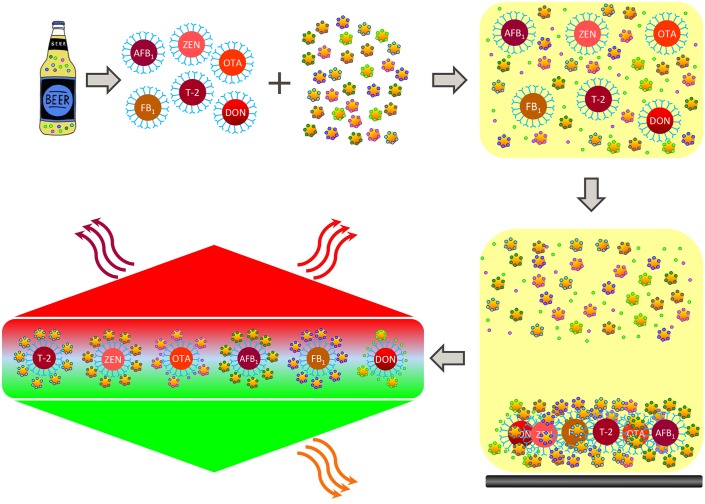
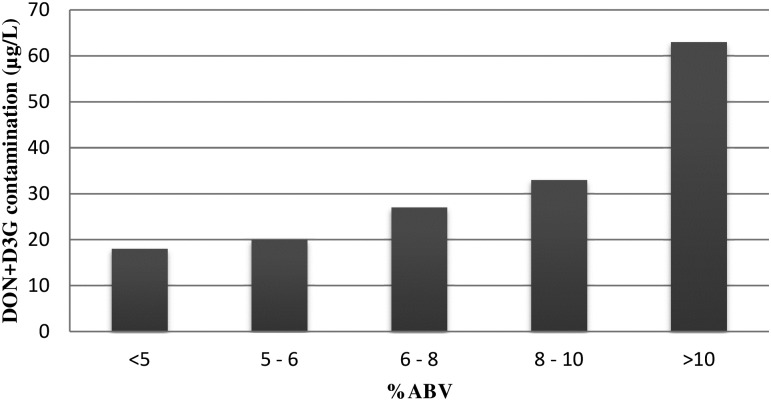
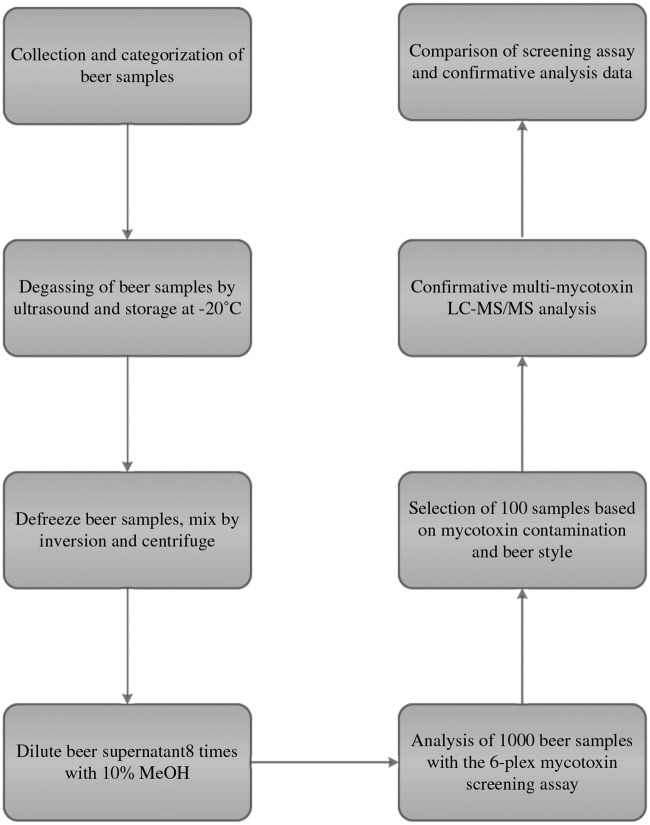
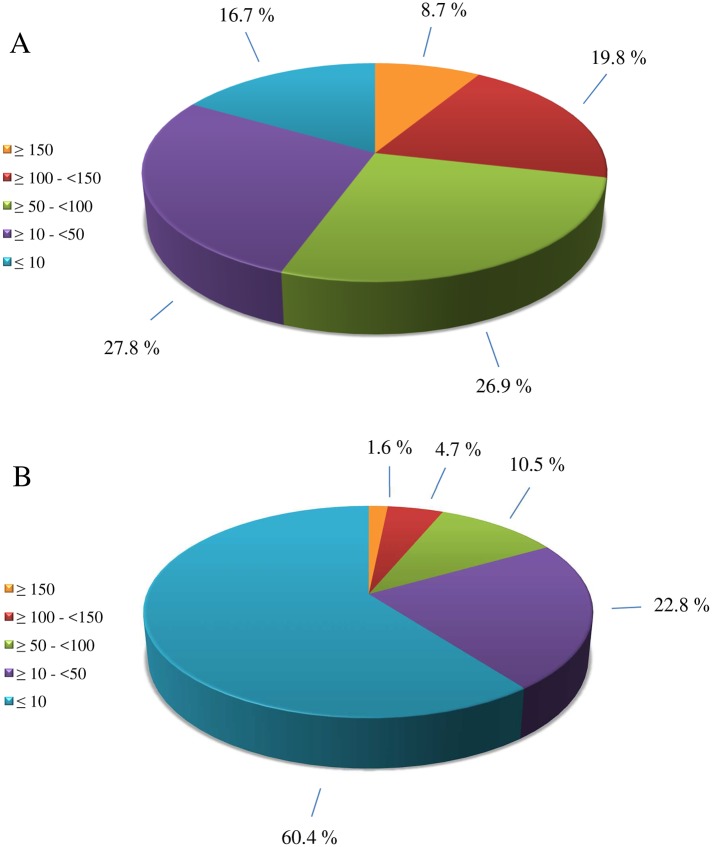
Currently beer is booming, mainly due to the steady rise of craft breweries worldwide. Previous surveys for occurrence of mycotoxins in beer, were mainly focussed on industrial produced beer. The present survey reports the presence of mycotoxins in craft beer and how this compares to industrial produced beer. More than 1000 beers were collected from 47 countries, of which 60% were craft beers. A selection of 1000 samples were screened for the presence of aflatoxin B1, ochratoxin A (OTA), zearalenone (ZEN), fumonisins (FBs), T-2 and HT-2 toxins (T-2 and HT-2) and deoxynivalenol (DON) using a mycotoxin 6-plex immunoassay. For confirmatory analysis, a liquid chromatography tandem mass spectrometry (LC-MS/MS) method was developed and applied. The 6-plex screening showed discrepancies with the LC-MS/MS analysis, possibly due to matrix interference and/or the presence of unknown mycotoxin metabolites. The major mycotoxins detected were DON and its plant metabolite deoxynivalenol-3-β-D-glucopyranoside (D3G). The 6-plex immunoassay reported the sum of DON and D3G (DON+D3G) contaminations ranging from 10 to 475 μg/L in 406 beers, of which 73% were craft beers. The popular craft beer style imperial stout, had the highest percentage of samples suspected positive (83%) with 29% of all imperial stout beers having DON+D3G contaminations above 100 μg/L. LC-MS/MS analysis showed that industrial pale lagers from Italy and Spain, predominantly contained FBs (3-69 μg/L). Besides FBs, African traditional beers also contained aflatoxins (0.1-1.2 μg/L). The presence of OTA, T-2, HT-2, ZEN, β-zearalenol, 3/15-acetyl-DON, nivalenol and the conjugated mycotoxin zearalenone 14-sulfate were confirmed in some beers. This study shows that in 27 craft beers, DON+D3G concentrations occurred above (or at) the Tolerable Daily Intake (TDI). Exceeding the TDI, may have a health impact. A better control of brewing malts for craft beer, should be put in place to circumvent this potential problem.
目前啤酒行业蓬勃发展,主要得益于全球精酿啤酒厂的稳步增加。以往关于啤酒中霉菌毒素存在情况的调查,主要集中在工业生产的啤酒上。本次调查报道了精酿啤酒中霉菌毒素的存在情况,以及与工业生产啤酒的对比情况。从47个国家收集了1000多种啤酒,其中60%是精酿啤酒。使用霉菌毒素6联免疫分析法,对1000个样本进行筛选,检测黄曲霉毒素B1、赭曲霉毒素A(OTA)、玉米赤霉烯酮(ZEN)、伏马菌素(FBs)、T-2毒素和HT-2毒素(T-2和HT-2)以及脱氧雪腐镰刀菌烯醇(DON)的存在情况。为进行确证分析,开发并应用了液相色谱串联质谱法(LC-MS/MS)。6联筛选结果与LC-MS/MS分析存在差异,可能是由于基质干扰和/或存在未知的霉菌毒素代谢物。检测到的主要霉菌毒素是DON及其植物代谢物脱氧雪腐镰刀菌烯醇-3-β-D-葡萄糖苷(D3G)。6联免疫分析法报告,406种啤酒中DON和D3G(DON+D3G)的污染总量在10至475μg/L之间,其中73%是精酿啤酒。流行的精酿啤酒风格帝国世涛,疑似阳性样本的比例最高(83%),所有帝国世涛啤酒中有29%的DON+D3G污染超过100μg/L。LC-MS/MS分析表明,来自意大利和西班牙的工业淡色拉格啤酒,主要含有FBs(3 - 69μg/L)。除了FBs,非洲传统啤酒还含有黄曲霉毒素(0.1 - 1.2μg/L)。在一些啤酒中还确认了OTA、T-2、HT-2、ZEN、β-玉米赤霉烯醇、3/15-乙酰-DON、雪腐镰刀菌烯醇和共轭霉菌毒素玉米赤霉烯酮14-硫酸盐的存在。这项研究表明,在27种精酿啤酒中,DON+D3G浓度超过(或达到)每日可耐受摄入量(TDI)。超过TDI可能会对健康产生影响。应该对精酿啤酒的酿造麦芽进行更好的控制,以规避这个潜在问题。