Department of Anaesthesiology and Intensive Care Medicine, Hannover Medical School, Hannover, Carl-Neuberg-Strasse 1, 30625, Hannover, Germany.
Department of Anaesthesiology, Friedrich-Alexander-University Erlangen-Nuremberg, Krankenhausstrasse 12, 91054, Erlangen, Germany.
Sci Rep. 2017 Oct 6;7(1):12775. doi: 10.1038/s41598-017-13054-3.
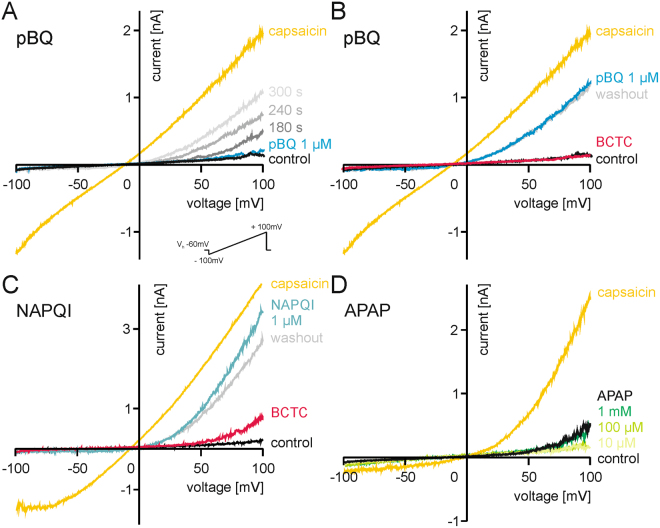
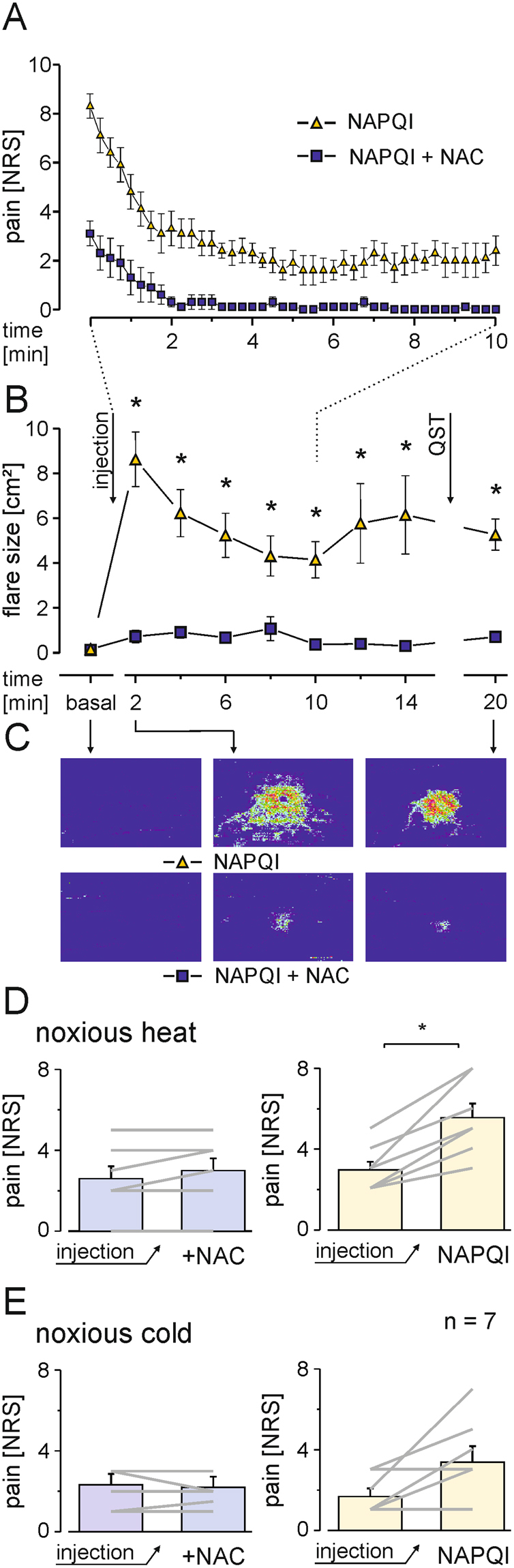
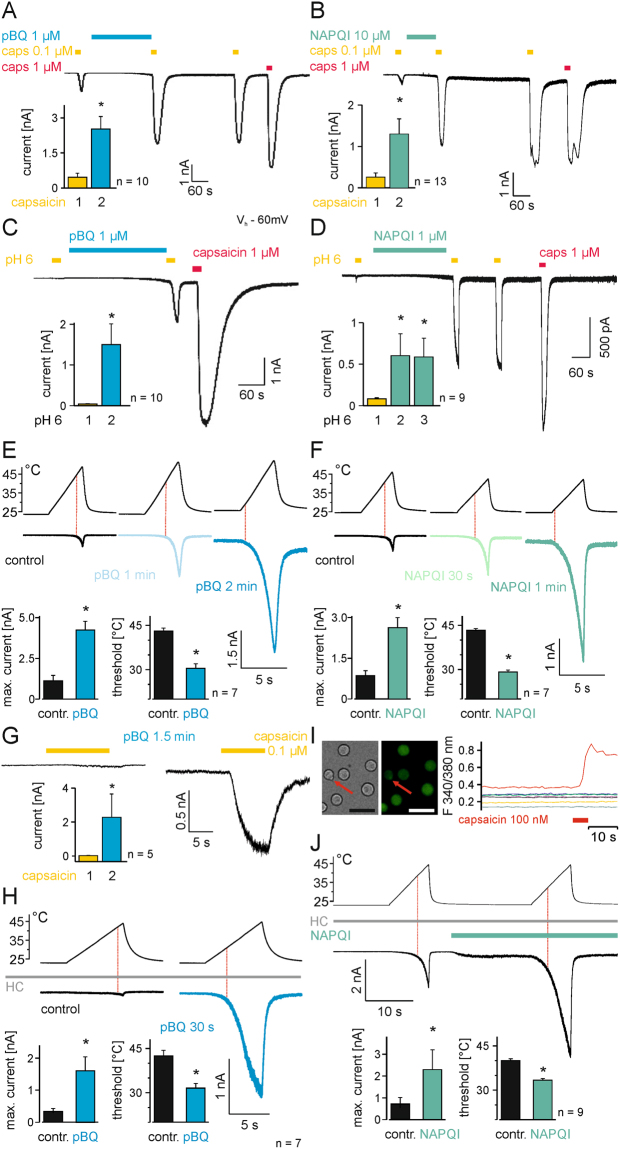
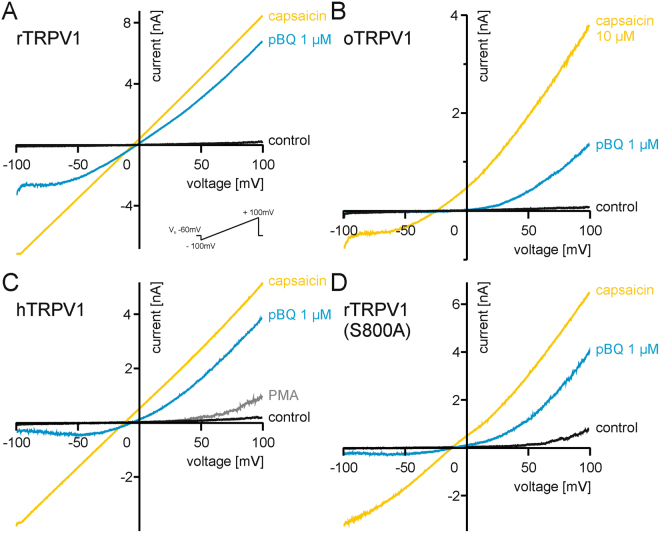
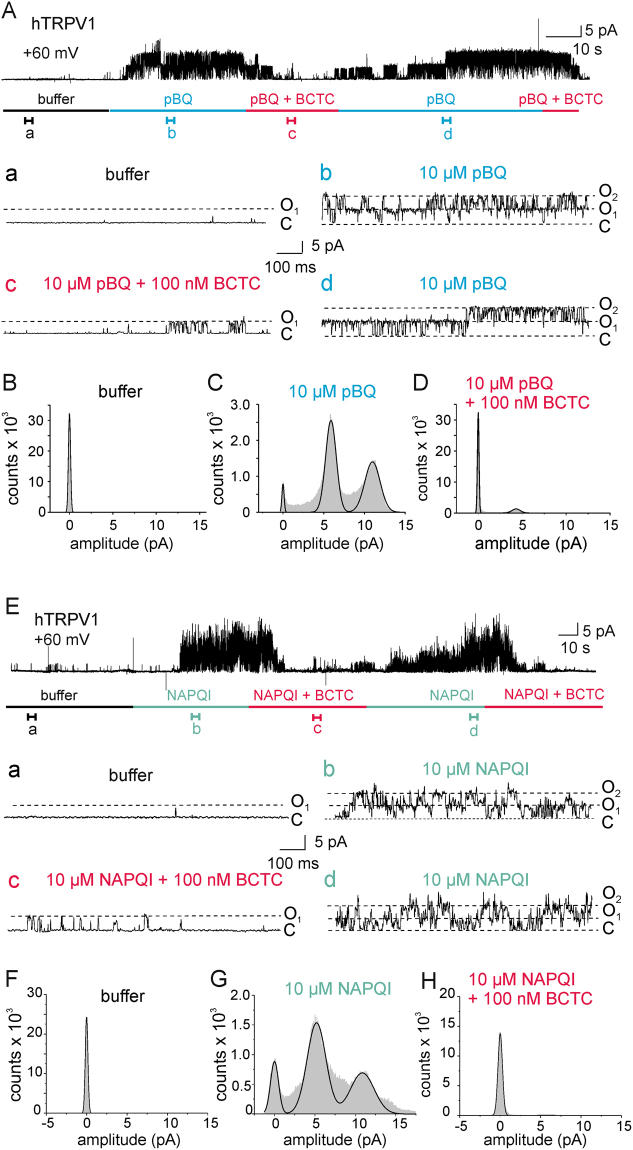
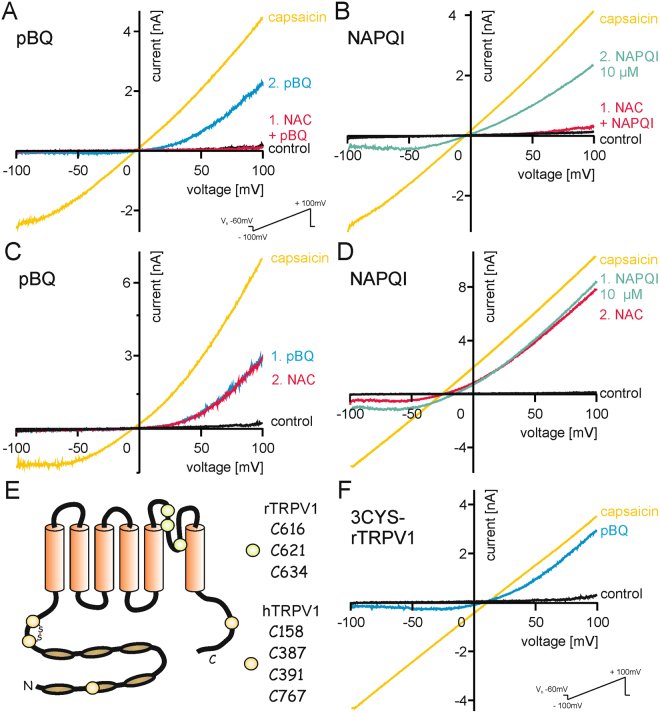
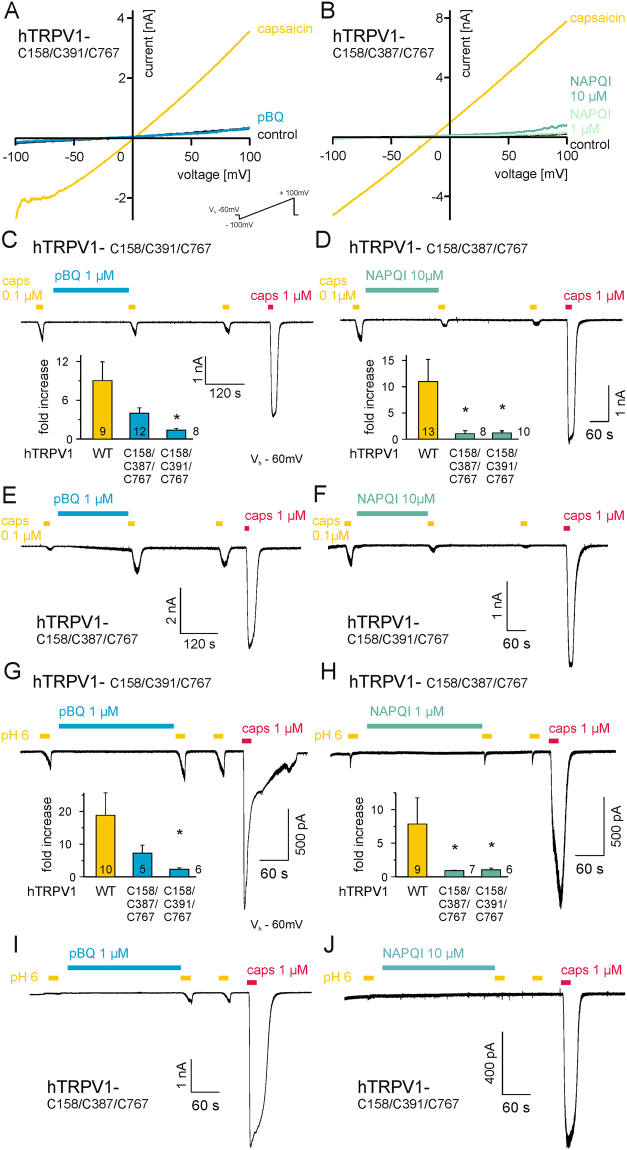
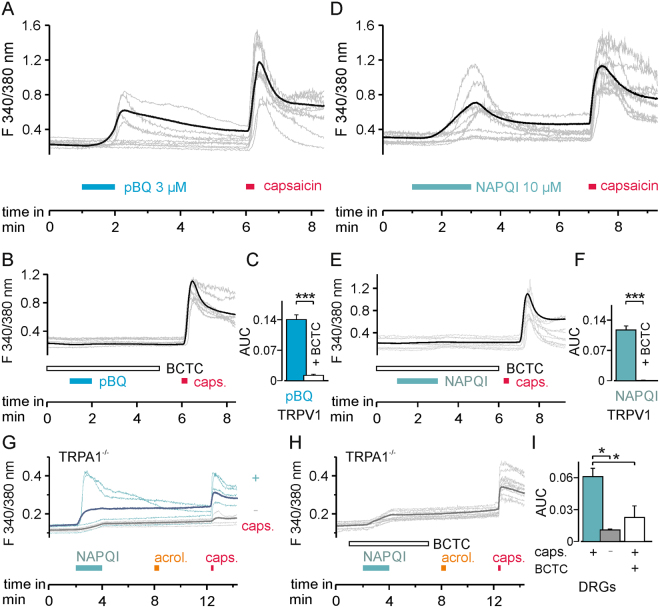
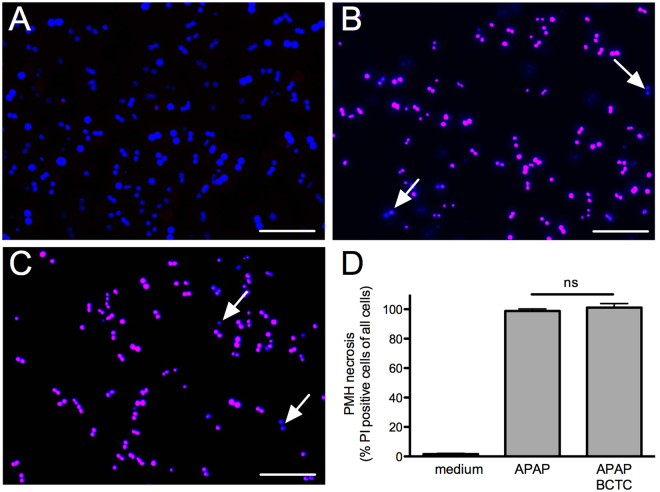
The irritant receptor TRPA1 was suggested to mediate analgesic, antipyretic but also pro-inflammatory effects of the non-opioid analgesic acetaminophen, presumably due to channel activation by the reactive metabolites parabenzoquinone (pBQ) and N-acetyl-parabenzoquinonimine (NAPQI). Here we explored the effects of these metabolites on the capsaicin receptor TRPV1, another redox-sensitive ion channel expressed in sensory neurons. Both pBQ and NAPQI, but not acetaminophen irreversibly activated and sensitized recombinant human and rodent TRPV1 channels expressed in HEK 293 cells. The reducing agents dithiothreitol and N-acetylcysteine abolished these effects when co-applied with the metabolites, and both pBQ and NAPQI failed to gate TRPV1 following substitution of the intracellular cysteines 158, 391 and 767. NAPQI evoked a TRPV1-dependent increase in intracellular calcium and a potentiation of heat-evoked currents in mouse spinal sensory neurons. Although TRPV1 is expressed in mouse hepatocytes, inhibition of TRPV1 did not alleviate acetaminophen-induced hepatotoxicity. Finally, intracutaneously applied NAPQI evoked burning pain and neurogenic inflammation in human volunteers. Our data demonstrate that pBQ and NAQPI activate and sensitize TRPV1 by interacting with intracellular cysteines. While TRPV1 does not seem to mediate acetaminophen-induced hepatotoxicity, our data identify TRPV1 as a target of acetaminophen with a potential relevance for acetaminophen-induced analgesia, antipyresia and inflammation.
TRPA1 受体被认为介导了非阿片类镇痛药对乙酰氨基酚的镇痛、解热作用,同时也介导了其致炎作用,这可能是由于其活性代谢物对苯醌(pBQ)和 N-乙酰对苯醌亚胺(NAPQI)激活了通道。在这里,我们研究了这些代谢物对辣椒素受体 TRPV1 的影响,TRPV1 是另一种在感觉神经元中表达的氧化还原敏感离子通道。pBQ 和 NAPQI 但不是对乙酰氨基酚可不可逆地激活和敏化表达于 HEK 293 细胞的重组人源和啮齿动物 TRPV1 通道。当与代谢物共同应用还原剂二硫苏糖醇和 N-乙酰半胱氨酸时,这些作用被消除,并且当取代细胞内半胱氨酸 158、391 和 767 时,pBQ 和 NAPQI 均不能使 TRPV1 门控。NAPQI 诱发了细胞内钙离子的 TRPV1 依赖性增加和热诱发电流在小鼠脊髓感觉神经元中的增强。虽然 TRPV1 在小鼠肝细胞中表达,但抑制 TRPV1 并不能减轻对乙酰氨基酚引起的肝毒性。最后,NAPQI 经皮应用可引起人类志愿者的烧灼感和神经源性炎症。我们的数据表明,pBQ 和 NAPQI 通过与细胞内半胱氨酸相互作用激活和敏化 TRPV1。虽然 TRPV1 似乎不介导对乙酰氨基酚引起的肝毒性,但我们的数据确定 TRPV1 是对乙酰氨基酚的靶点,这可能与对乙酰氨基酚引起的镇痛、解热和炎症有关。