Department of Biochemistry and Structural Biology, Center for Molecular Protein Science, Lund University, SE-221 00 Lund, Sweden.
Institute of Physiology and Pathophysiology, Friedrich-Alexander University Erlangen-Nürnberg, Universitätsstrasse 17, 91054 Erlangen, Germany.
Sci Rep. 2016 Jun 28;6:28763. doi: 10.1038/srep28763.
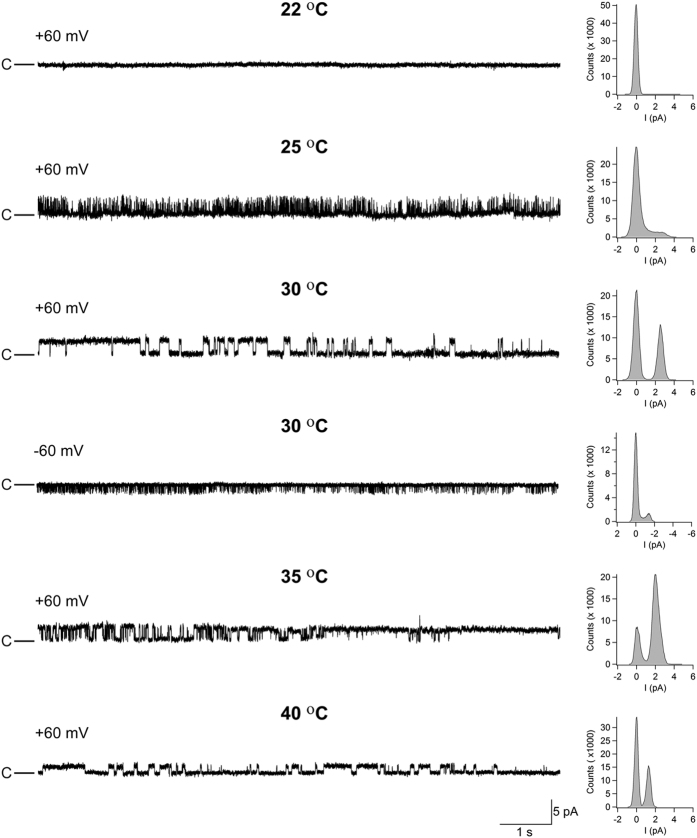
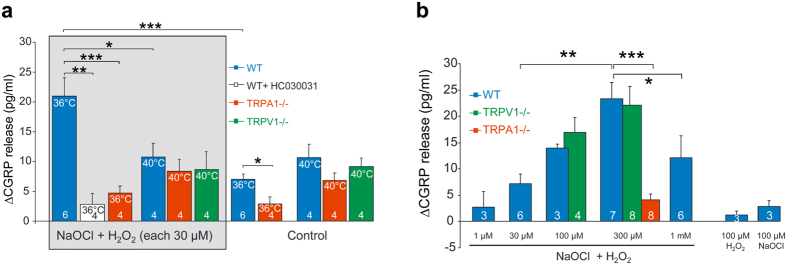
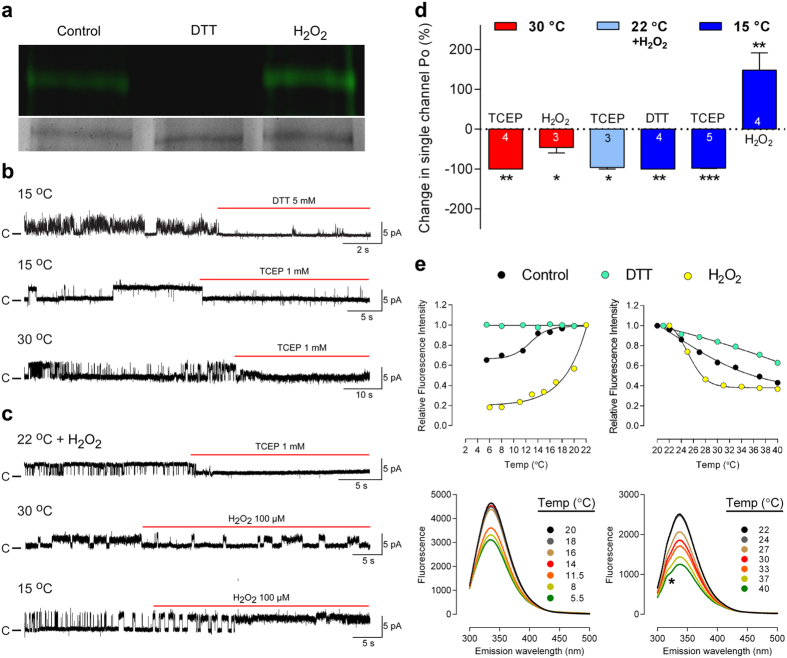
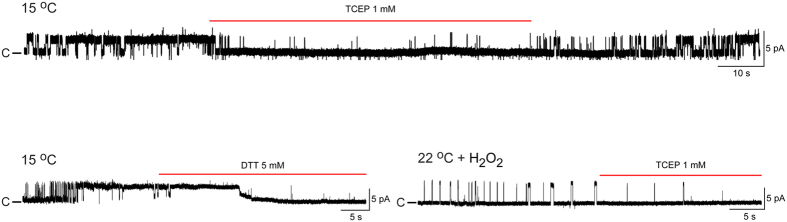
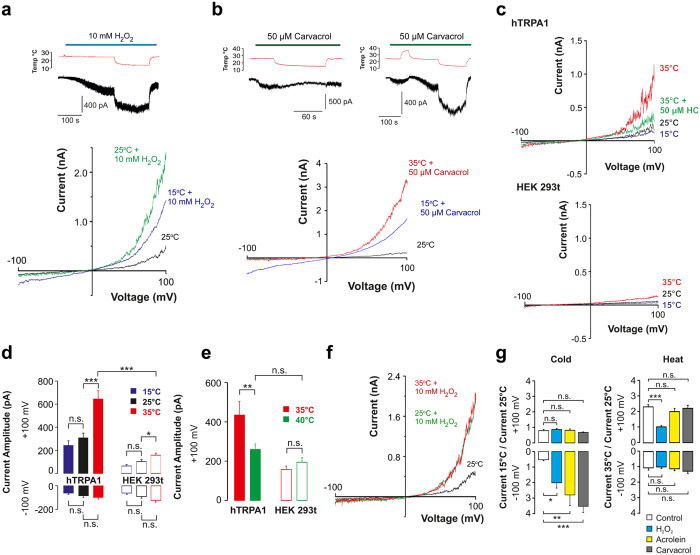
Thermosensitive Transient Receptor Potential (TRP) channels are believed to respond to either cold or heat. In the case of TRP subtype A1 (TRPA1), there seems to be a species-dependent divergence in temperature sensation as non-mammalian TRPA1 is heat-sensitive whereas mammalian TRPA1 is sensitive to cold. It has been speculated but never experimentally proven that TRPA1 and other temperature-sensitive ion channels have the inherent capability of responding to both cold and heat. Here we show that redox modification and ligands affect human TRPA1 (hTRPA1) cold and heat sensing properties in lipid bilayer and whole-cell patch-clamp recordings as well as heat-evoked TRPA1-dependent calcitonin gene-related peptide (CGRP) release from mouse trachea. Studies of purified hTRPA1 intrinsic tryptophan fluorescence, in the absence of lipid bilayer, consolidate hTRPA1 as an intrinsic bidirectional thermosensor that is modified by the redox state and ligands. Thus, the heat sensing property of TRPA1 is conserved in mammalians, in which TRPA1 may contribute to sensing warmth and uncomfortable heat in addition to noxious cold.
热敏瞬时受体电位 (TRP) 通道被认为对冷或热有反应。就 TRP 亚型 A1 (TRPA1) 而言,似乎存在温度感觉的物种依赖性分歧,因为非哺乳动物的 TRPA1 对热敏感,而哺乳动物的 TRPA1 对冷敏感。有人推测,但从未通过实验证明 TRPA1 和其他温度敏感离子通道具有对冷和热的固有反应能力。在这里,我们展示了氧化还原修饰和配体在脂质双层和全细胞膜片钳记录中以及热诱导的 TRPA1 依赖性降钙素基因相关肽 (CGRP) 从小鼠气管释放中对人 TRPA1 (hTRPA1) 冷和热感觉特性的影响。在没有脂质双层的情况下,对纯化的 hTRPA1 内在色氨酸荧光的研究证实了 hTRPA1 是一种内在的双向温度传感器,其氧化还原状态和配体可以对其进行修饰。因此,TRPA1 的热感觉特性在哺乳动物中是保守的,在哺乳动物中,TRPA1 可能有助于感知温暖和不适的热,除了有害的冷。