Höftberger Romana, Lassmann Hans
Institute of Neurology, Medical University of Vienna, Vienna, Austria.
Center for Brain Research, Medical University of Vienna, Vienna, Austria.
Handb Clin Neurol. 2017;145:263-283. doi: 10.1016/B978-0-12-802395-2.00019-5.
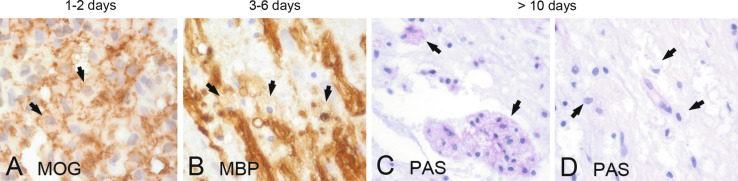
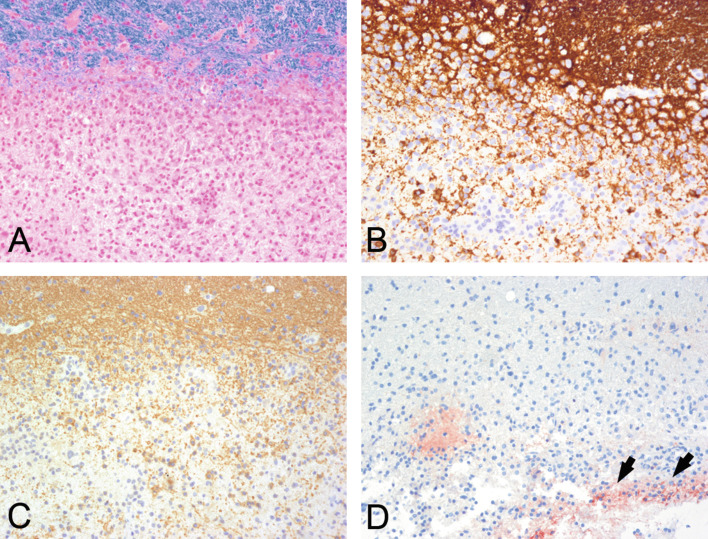
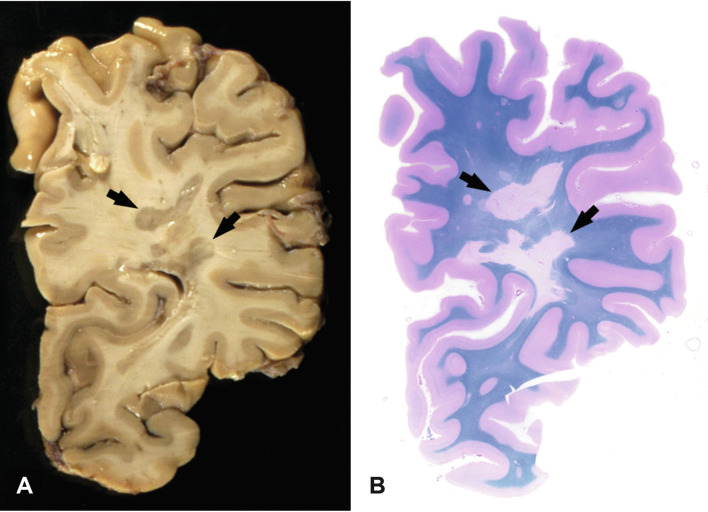
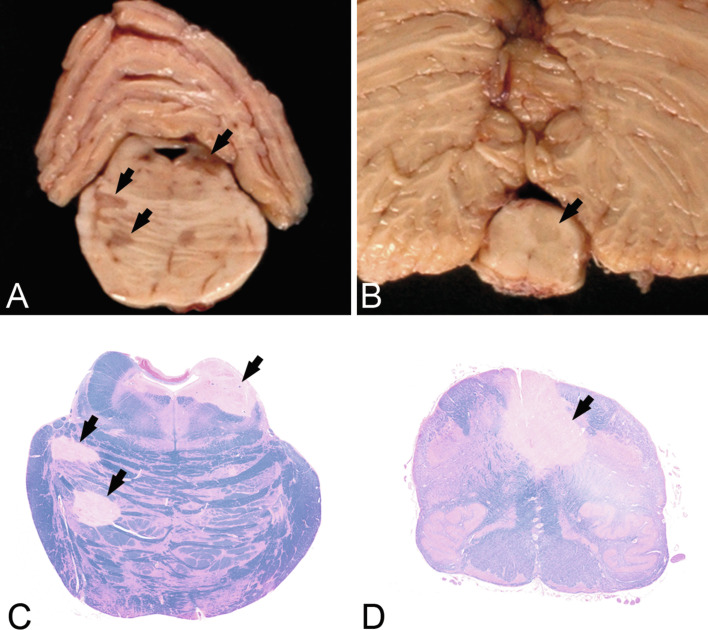
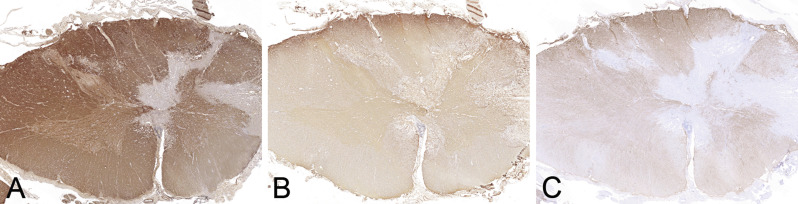
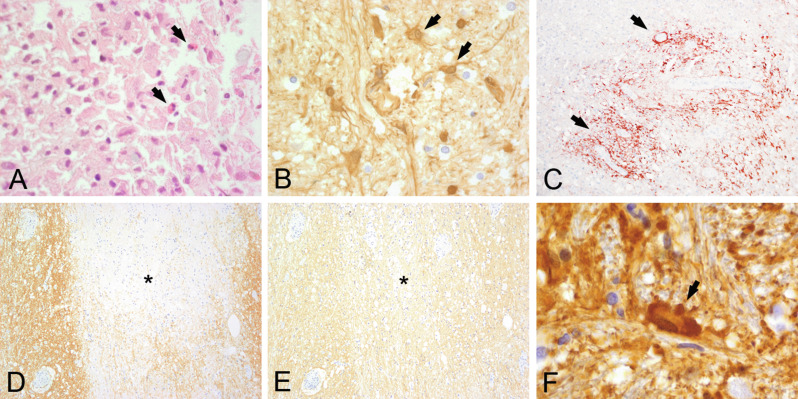
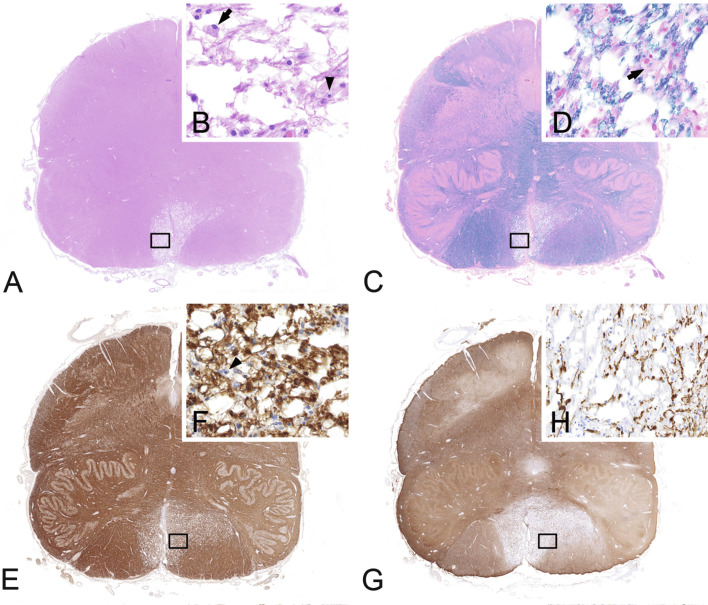
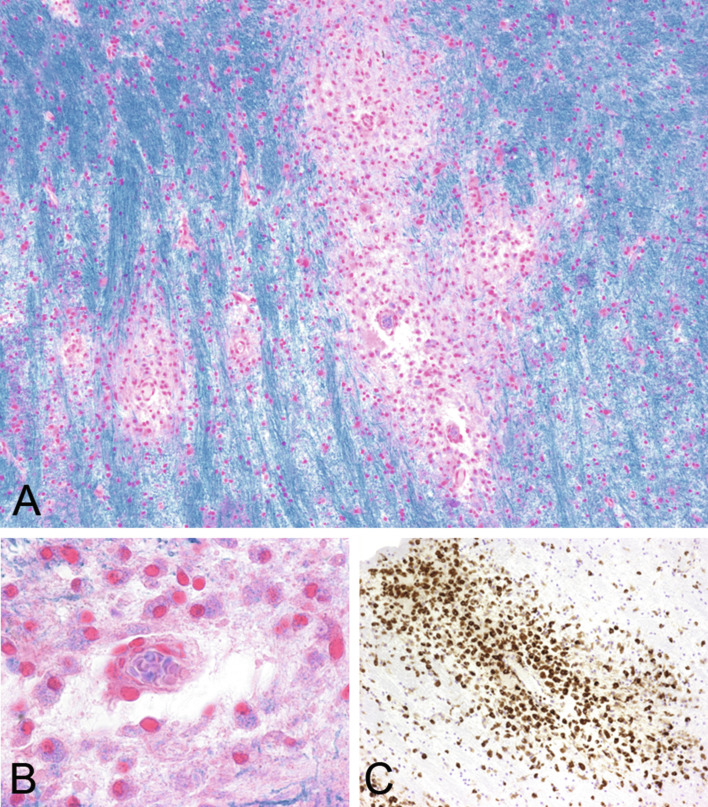
Inflammatory demyelinating diseases are a heterogeneous group of disorders, which occur against the background of an acute or chronic inflammatory process. The pathologic hallmark of multiple sclerosis (MS) is the presence of focal demyelinated lesions with partial axonal preservation and reactive astrogliosis. Demyelinated plaques are present in the white as well as gray matter, such as the cerebral or cerebellar cortex and brainstem nuclei. Activity of the disease process is reflected by the presence of lesions with ongoing myelin destruction. Axonal and neuronal destruction in the lesions is a major substrate for permanent neurologic deficit in MS patients. The MS pathology is qualitatively similar in different disease stages, such as relapsing remitting MS or secondary or primary progressive MS, but the prevalence of different lesion types differs quantitatively. Acute MS and Balo's type of concentric sclerosis appear to be variants of classic MS. In contrast, neuromyelitis optica (NMO) and spectrum disorders (NMOSD) are inflammatory diseases with primary injury of astrocytes, mediated by aquaporin-4 antibodies. Finally, we discuss the histopathology of other inflammatory demyelinating diseases such as acute disseminated encephalomyelitis and myelin oligodendrocyte glycoprotein antibody-associated demyelination. Knowledge of the heterogenous immunopathology in demyelinating diseases is important, to understand the clinical presentation and disease course and to find the optimal treatment for an individual patient.
炎性脱髓鞘疾病是一组异质性疾病,发生于急性或慢性炎症过程的背景之下。多发性硬化症(MS)的病理特征是存在局灶性脱髓鞘病变,伴有部分轴突保留和反应性星形胶质细胞增生。脱髓鞘斑块存在于白质和灰质中,如大脑或小脑皮质以及脑干核。疾病过程的活动通过存在持续髓鞘破坏的病变来反映。病变中的轴突和神经元破坏是MS患者永久性神经功能缺损的主要基础。MS的病理在不同疾病阶段在性质上相似,如复发缓解型MS或继发或原发进展型MS,但不同病变类型的患病率在数量上有所不同。急性MS和巴洛同心性硬化型似乎是经典MS的变体。相比之下,视神经脊髓炎(NMO)及其谱系疾病(NMOSD)是由水通道蛋白-4抗体介导的、以星形胶质细胞原发性损伤为特征的炎性疾病。最后,我们讨论其他炎性脱髓鞘疾病的组织病理学,如急性播散性脑脊髓炎和髓鞘少突胶质细胞糖蛋白抗体相关的脱髓鞘。了解脱髓鞘疾病中异质性免疫病理学对于理解临床表现和疾病进程以及为个体患者找到最佳治疗方法很重要。