Ren Xiaojun, Deng Ruijie, Wang Lida, Zhang Kaixiang, Li Jinghong
School of Chemistry and Chemical Engineering , Beijing Institute of Technology , Beijing 100081 , China.
Department of Chemistry , Key Laboratory of Bioorganic Phosphorus Chemistry & Chemical Biology , Tsinghua University , Beijing 100084 , China . Email:
Chem Sci. 2017 Aug 1;8(8):5692-5698. doi: 10.1039/c7sc01336a. Epub 2017 Jun 13.
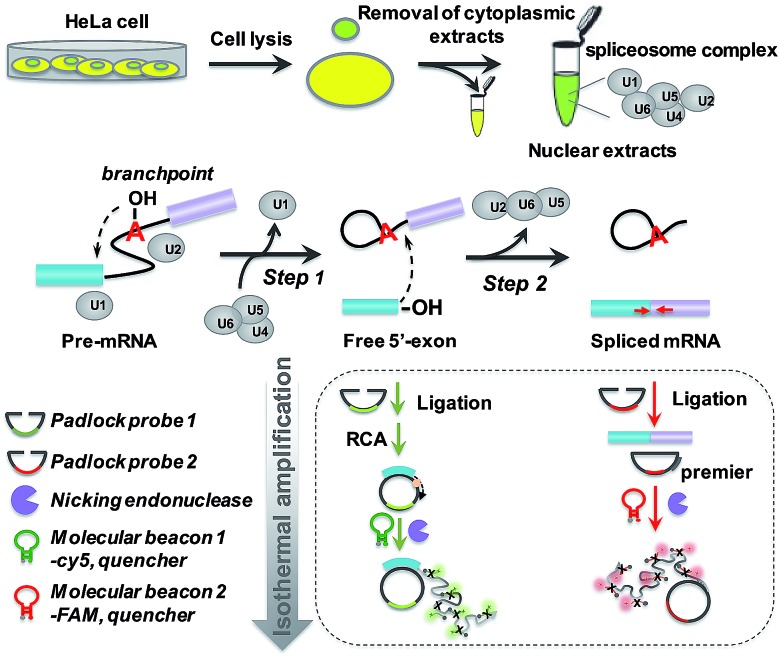
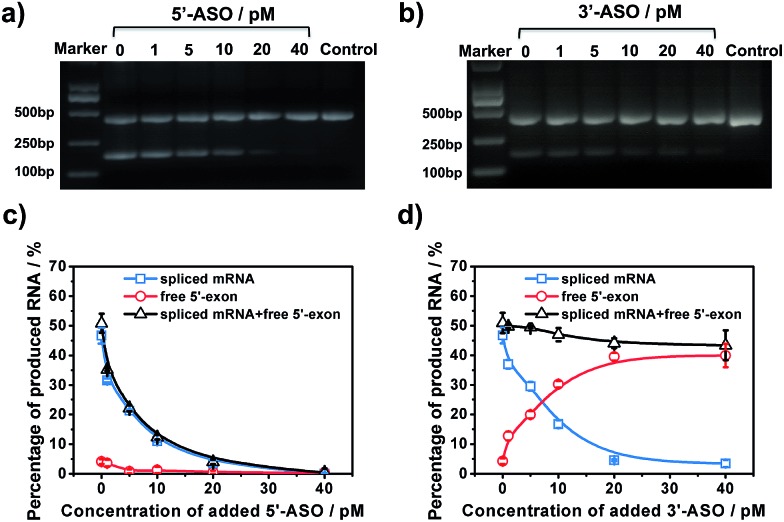
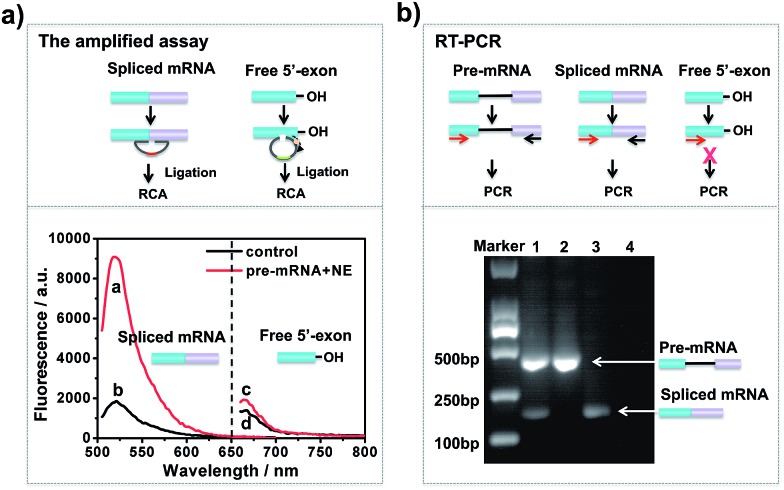
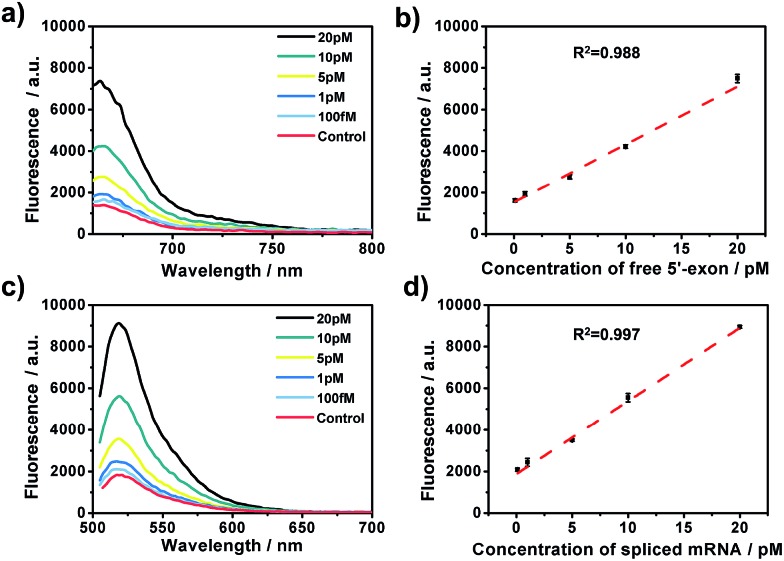
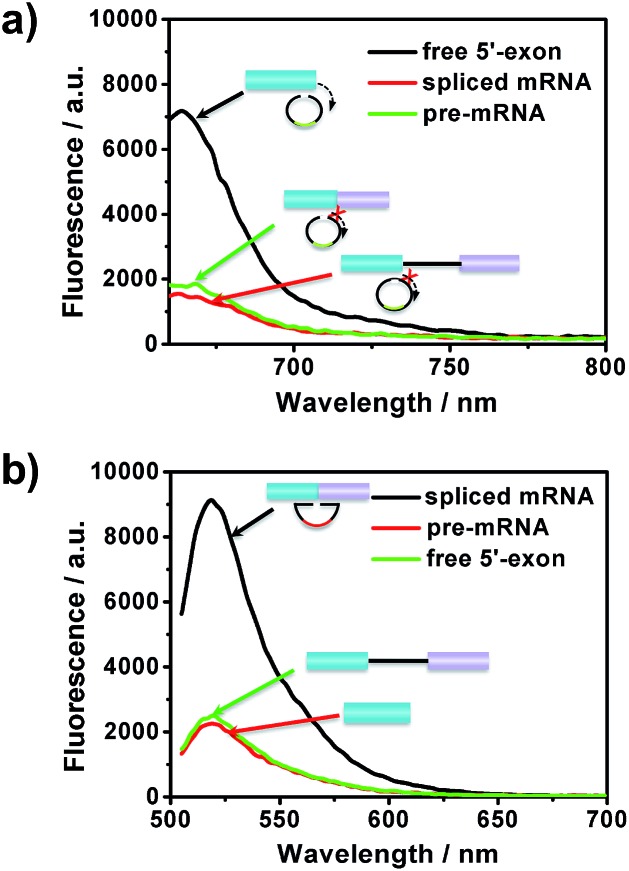
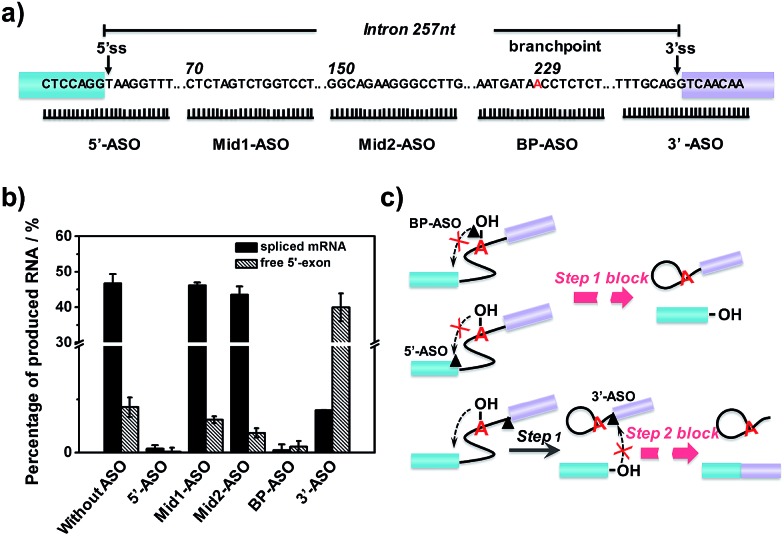
RNA splicing, which mainly involves two transesterification steps, is a fundamental process of gene expression and its abnormal regulation contributes to serious genetic diseases. Antisense oligonucleotides (ASOs) are genetic control tools that can be used to specifically control genes through alteration of the RNA splicing pathway. Despite intensive research, how ASOs or various other factors influence the multiple processes of RNA splicing still remains obscure. This is largely due to an inability to analyze the splicing efficiency of each step in the RNA splicing process with high sensitivity. We addressed this limitation by introducing a padlock probe-based isothermal amplification assay to achieve quantification of the specific products in different splicing steps. With this amplified assay, the roles that ASOs play in RNA splicing inhibition in the first and second steps could be distinguished. We identified that 5'-ASO could block RNA splicing by inhibiting the first step, while 3'-ASO could block RNA splicing by inhibiting the second step. This method provides a versatile tool for assisting efficient ASO design and discovering new splicing modulators and therapeutic drugs.
RNA剪接主要涉及两个转酯步骤,是基因表达的基本过程,其异常调控会导致严重的遗传疾病。反义寡核苷酸(ASO)是一种基因控制工具,可通过改变RNA剪接途径来特异性地控制基因。尽管进行了深入研究,但ASO或其他各种因素如何影响RNA剪接的多个过程仍不清楚。这主要是由于无法以高灵敏度分析RNA剪接过程中每个步骤的剪接效率。我们通过引入基于锁式探针的等温扩增测定法来解决这一局限性,以实现对不同剪接步骤中特定产物的定量。通过这种扩增测定法,可以区分ASO在第一步和第二步RNA剪接抑制中所起的作用。我们发现5'-ASO可通过抑制第一步来阻断RNA剪接,而3'-ASO可通过抑制第二步来阻断RNA剪接。该方法为协助高效ASO设计以及发现新的剪接调节剂和治疗药物提供了一种通用工具。