Laboratory of Phytopathology, Wageningen University, Wageningen 6708 PB, the Netherlands.
Bioinformatics Group, Wageningen University, Wageningen 6708 PB, the Netherlands.
Mol Plant Pathol. 2018 Jun;19(6):1403-1413. doi: 10.1111/mpp.12623. Epub 2018 Jan 30.
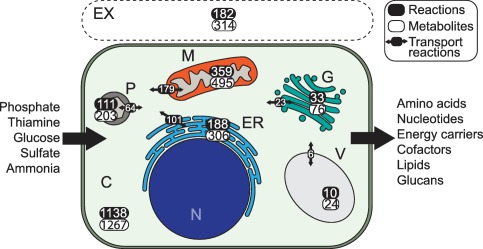
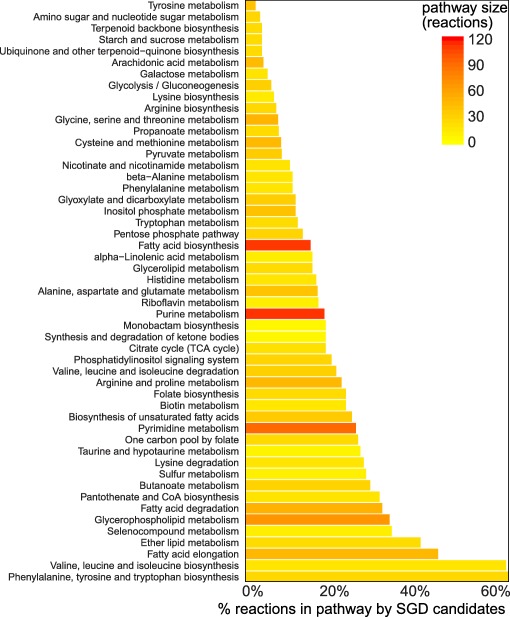
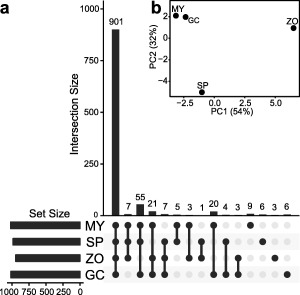
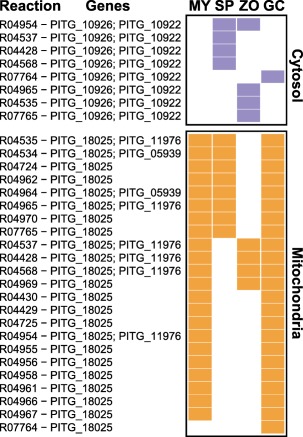
Genome-scale metabolic models (GEMs) provide a functional view of the complex network of biochemical reactions in the living cell. Initially mainly applied to reconstruct the metabolism of model organisms, the availability of increasingly sophisticated reconstruction methods and more extensive biochemical databases now make it possible to reconstruct GEMs for less well-characterized organisms, and have the potential to unravel the metabolism in pathogen-host systems. Here, we present a GEM for the oomycete plant pathogen Phytophthora infestans as a first step towards an integrative model with its host. We predict the biochemical reactions in different cellular compartments and investigate the gene-protein-reaction associations in this model to obtain an impression of the biochemical capabilities of P. infestans. Furthermore, we generate life stage-specific models to place the transcriptomic changes of the genes encoding metabolic enzymes into a functional context. In sporangia and zoospores, there is an overall down-regulation, most strikingly reflected in the fatty acid biosynthesis pathway. To investigate the robustness of the GEM, we simulate gene deletions to predict which enzymes are essential for in vitro growth. This model is an essential first step towards an understanding of P. infestans and its interactions with plants as a system, which will help to formulate new hypotheses on infection mechanisms and disease prevention.
基因组规模代谢模型 (GEMs) 提供了活细胞中复杂生化反应网络的功能视图。最初主要应用于重建模式生物的代谢,现在越来越复杂的重建方法和更广泛的生化数据库的可用性使得为研究较少的生物进行 GEM 重建成为可能,并有可能揭示病原体-宿主系统中的代谢。在这里,我们提出了一个卵菌植物病原体致病疫霉的 GEM,作为与宿主进行整合模型的第一步。我们预测了不同细胞区室中的生化反应,并研究了该模型中的基因-蛋白-反应关联,以了解致病疫霉的生化能力。此外,我们生成了特定生命阶段的模型,将编码代谢酶的基因的转录组变化置于功能背景下。在游动孢子和游动孢子中,整体下调,最明显的是在脂肪酸生物合成途径中。为了研究 GEM 的稳健性,我们模拟基因缺失以预测哪些酶对于体外生长是必需的。该模型是理解致病疫霉及其与植物相互作用作为一个系统的重要第一步,这将有助于形成关于感染机制和疾病预防的新假设。