Disney Claire E R, Pillai Supriya, Green Martin A
Australian Centre for Advanced Photovoltaics, University of New South Wales, Sydney, NSW, 2052, Australia.
Sci Rep. 2017 Oct 9;7(1):12826. doi: 10.1038/s41598-017-12896-1.
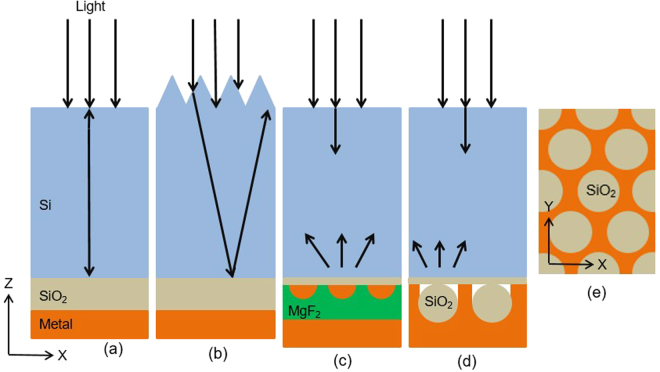
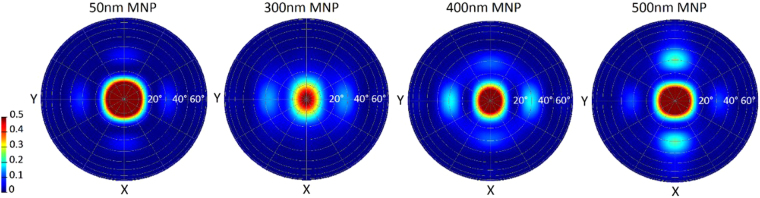
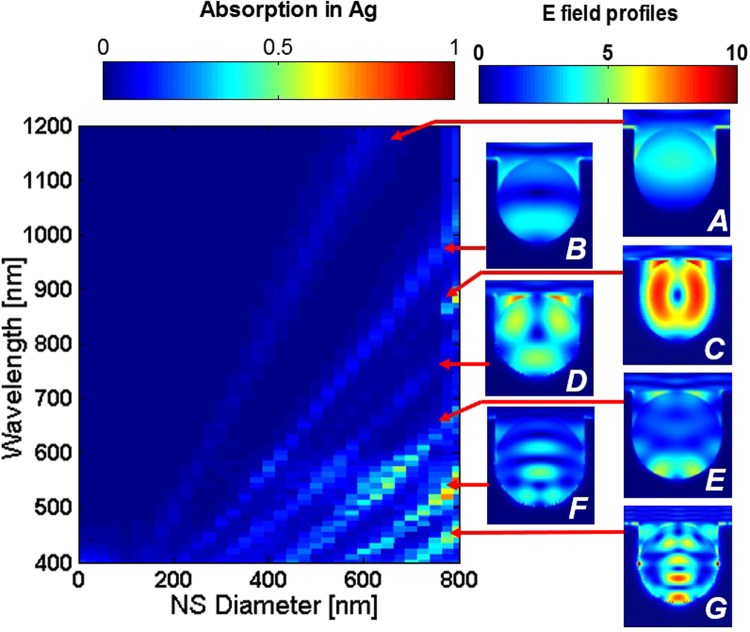
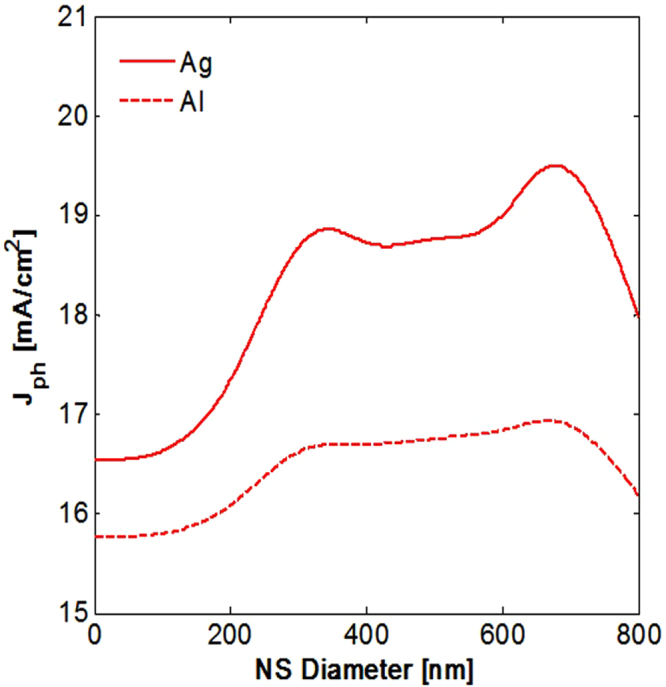
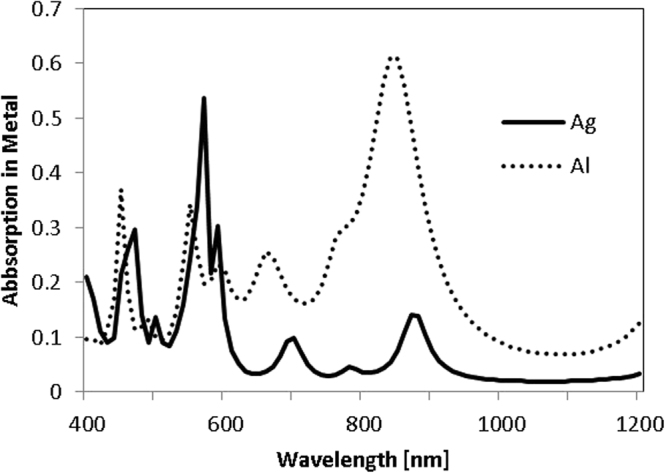
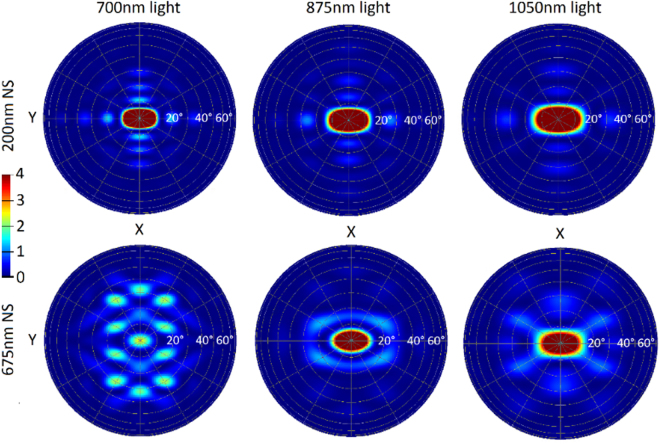
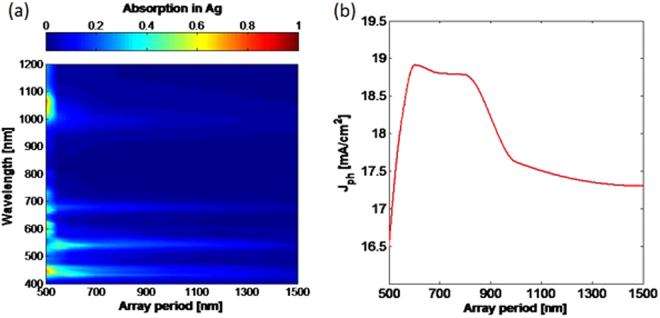
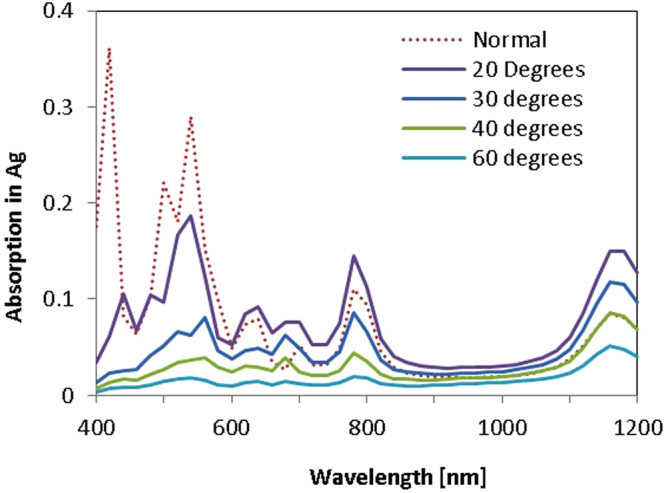
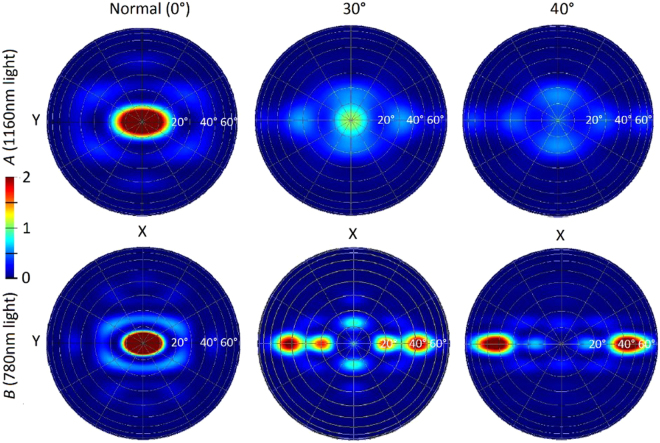
Significant photocurrent enhancement has been demonstrated using plasmonic light-trapping structures comprising nanostructured metallic features at the rear of the cell. These structures have conversely been identified as suffering heightened parasitic absorption into the metal at certain resonant wavelengths severely mitigating benefits of light trapping. In this study, we undertook simulations exploring the relationship between enhanced absorption into the solar cell, and parasitic losses in the metal. These simulations reveal that resonant wavelengths associated with high parasitic losses in the metal could also be associated with high absorption enhancement in the solar cell. We identify mechanisms linking these parasitic losses and absorption enhancements, but found that by ensuring correct design, the light trapping structures will have a positive impact on the overall solar cell performance. Our results clearly show that the large angle scattering provided by the plasmonic nanostructures is the reason for the enhanced absorption observed in the solar cells.
使用包含位于电池背面的纳米结构化金属特征的等离子体光捕获结构已证明了显著的光电流增强。相反,这些结构已被确定在某些共振波长下会遭受进入金属的寄生吸收增加,严重削弱了光捕获的益处。在本研究中,我们进行了模拟,探索太阳能电池中增强吸收与金属中的寄生损耗之间的关系。这些模拟表明,与金属中高寄生损耗相关的共振波长也可能与太阳能电池中的高吸收增强相关。我们确定了将这些寄生损耗与吸收增强联系起来的机制,但发现通过确保正确的设计,光捕获结构将对太阳能电池的整体性能产生积极影响。我们的结果清楚地表明,等离子体纳米结构提供的大角度散射是太阳能电池中观察到的吸收增强的原因。