Vallejos Stella, Pizu Rova Nade Z da, Čechal Jan, Gràcia Isabel, Cané Carles
Instituto de Microelectrónica de Barcelona (IMB-CNM, CSIC); SIX Research Centre, Brno University of Technology;
Institute of Physics of Material, Academy of Science of Czech Republic.
J Vis Exp. 2017 Sep 14(127):56127. doi: 10.3791/56127.
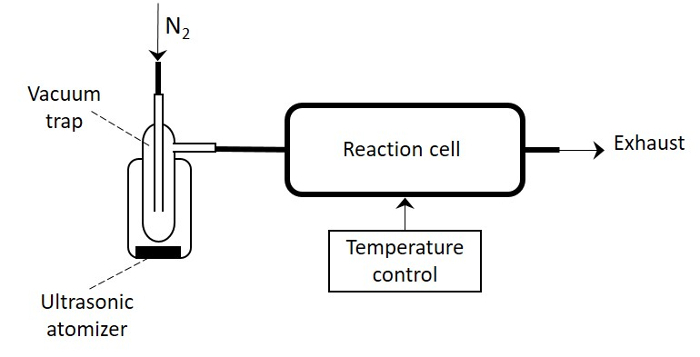
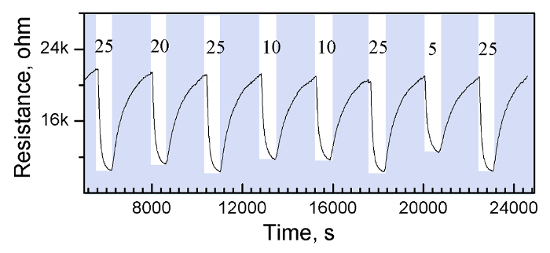
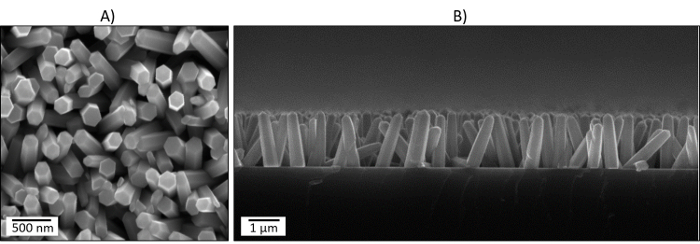
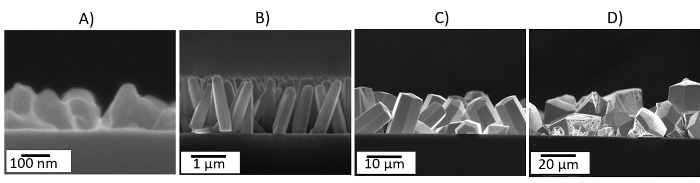
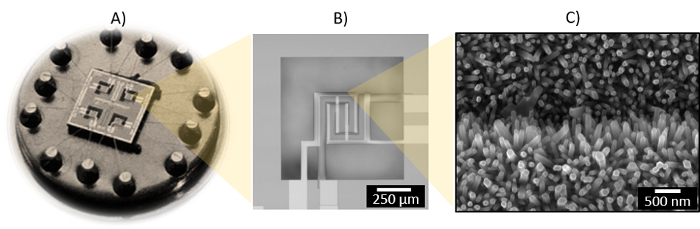
Whilst columnar zinc oxide (ZnO) structures in the form of rods or wires have been synthesized previously by different liquid- or vapor-phase routes, their high cost production and/or incompatibility with microfabrication technologies, due to the use of pre-deposited catalyst-seeds and/or high processing temperatures exceeding 900 °C, represent a drawback for a widespread use of these methods. Here, however, we report the synthesis of ZnO rods via a non-catalyzed vapor-solid mechanism enabled by using an aerosol-assisted chemical vapor deposition (CVD) method at 400 °C with zinc chloride (ZnCl2) as the precursor and ethanol as the carrier solvent. This method provides both single-step formation of ZnO rods and the possibility of their direct integration with various substrate types, including silicon, silicon-based micromachined platforms, quartz, or high heat resistant polymers. This potentially facilitates the use of this method at a large-scale, due to its compatibility with state-of-the-art microfabrication processes for device manufacture. This report also describes the properties of these structures (e.g., morphology, crystalline phase, optical band gap, chemical composition, electrical resistance) and validates its gas sensing functionality towards carbon monoxide.
虽然此前已经通过不同的液相或气相路线合成了棒状或线状的柱状氧化锌(ZnO)结构,但由于使用预先沉积的催化剂种子和/或超过900°C的高加工温度,它们的高成本生产和/或与微加工技术的不兼容性,成为这些方法广泛应用的一个缺点。然而,在此我们报告了通过非催化气固机制合成ZnO棒,该机制通过在400°C下使用气溶胶辅助化学气相沉积(CVD)方法实现,以氯化锌(ZnCl2)作为前驱体,乙醇作为载运溶剂。这种方法既提供了ZnO棒的一步形成,又提供了将它们直接与各种衬底类型集成的可能性,包括硅、基于硅的微加工平台、石英或高耐热聚合物。由于其与用于器件制造的先进微加工工艺的兼容性,这有可能促进该方法的大规模使用。本报告还描述了这些结构的特性(例如,形态、晶相、光学带隙、化学成分、电阻),并验证了其对一氧化碳的气敏功能。