Bolandparvaz Shahram, Yadollahi Mahnaz, Abbasi Hamid Reza, Anvar Mehrdad
Trauma Research Center, Shiraz University of Medical Sciences, Shiraz, Iran.
Medicine (Baltimore). 2017 Oct;96(41):e7812. doi: 10.1097/MD.0000000000007812.
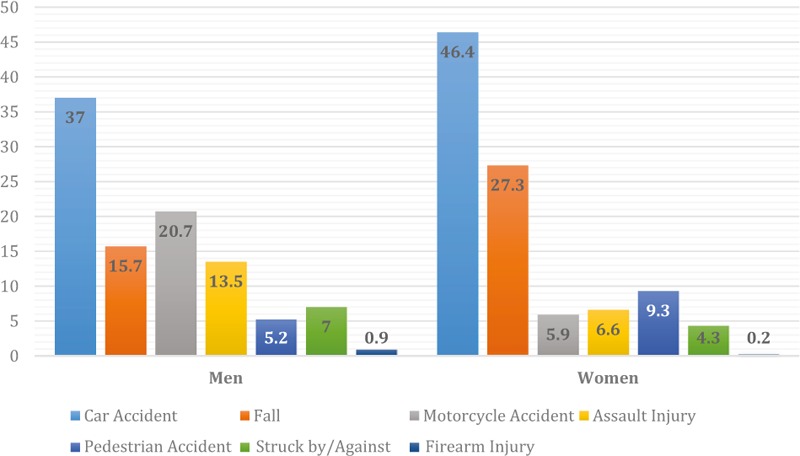
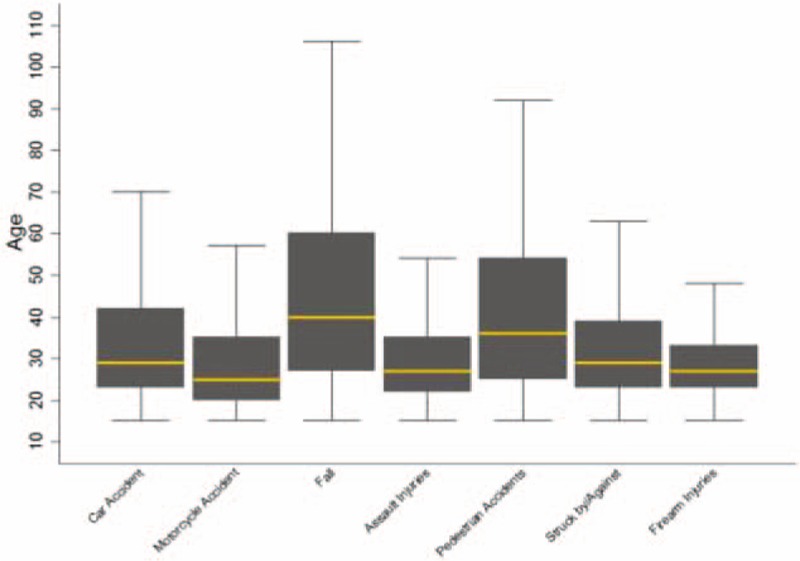
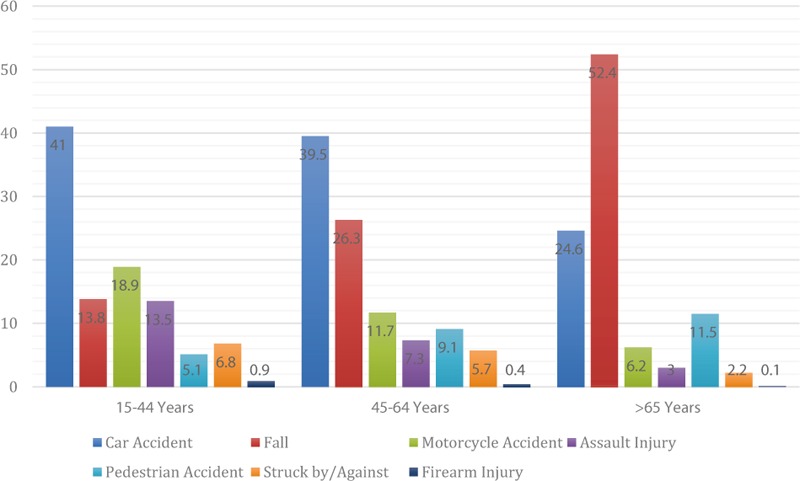
Administrative data from trauma referral centers are useful sources while studying epidemiologic aspects of injuries. We aimed to provide a hospital-based view of injuries in Shiraz considering victims' age and gender, using administrative data from trauma research center.A cross-sectional registry-based study of adult trauma patients (age ≥15 years) sustaining injury through traffic accidents, violence, and unintentional incidents was conducted. Information was retrieved from 3 hospital administrative databases. Data on demographics, injury mechanisms, injured body regions, and injury descriptions; outcomes of hospitalization; and development of nosocomial infections were recorded. Injury Severity Score (ISS) was calculated by crosswalking from ICD-10 (International Classification of Diseases) injury diagnosis codes to AIS-98 (Abbreviated Injury Scale) severity codes. Patients were compared based on age groups and gender differences.A total of 47,295 trauma patients with a median age of 30 (interquartile range: 24-44 years) were studied, of whom 73.1% were male and the remaining 26.9% were female (M/F = 2.7:1.0). The most common injury mechanisms in the male group were car and motorcycle accidents whereas females were mostly victims of falls and pedestrian accidents (P < .01). As age increased, a shift from transportation-related to unintentionally caused injuries occurred. Overall, young men had their most severe injuries on head, whereas elderly women suffered more severe extremity injuries. Injury severity was similar between men and women; however, elderly had a significantly higher ISS. Although incidence of nosocomial infections was independent of victims' age and gender, elderly men had a significantly higher mortality rate.Based on administrative data from our trauma center, male gender and age >65 years are associated with increased risk of injury incidence, prolonged hospitalizations, and in-hospital death following trauma. Development of a regional trauma surveillance system may provide further opportunities for studying injuries and evaluating preventive actions.
在研究损伤的流行病学特征时,创伤转诊中心的管理数据是有用的信息来源。我们旨在利用创伤研究中心的管理数据,从受害者的年龄和性别角度,提供设拉子地区基于医院的损伤情况。
我们对因交通事故、暴力和意外事件而受伤的成年创伤患者(年龄≥15岁)进行了一项基于登记的横断面研究。信息从3个医院管理数据库中获取。记录了人口统计学数据、损伤机制、受伤身体部位、损伤描述、住院结局以及医院感染的发生情况。损伤严重度评分(ISS)通过将国际疾病分类第十版(ICD - 10)损伤诊断编码与简明损伤定级标准第九版(AIS - 98)严重度编码进行对照转换来计算。根据年龄组和性别差异对患者进行比较。
共研究了47295例创伤患者,中位年龄为30岁(四分位间距:24 - 44岁),其中73.1%为男性,其余26.9%为女性(男/女 = 2.7:1.0)。男性组最常见的损伤机制是汽车和摩托车事故,而女性大多是跌倒和行人事故的受害者(P < 0.01)。随着年龄增长,损伤原因从与交通相关转向意外导致。总体而言,年轻男性头部损伤最严重,而老年女性四肢损伤更严重。男性和女性的损伤严重程度相似;然而,老年人的ISS显著更高。虽然医院感染的发生率与受害者的年龄和性别无关,但老年男性的死亡率显著更高。
根据我们创伤中心的管理数据,男性性别和年龄>65岁与创伤后损伤发生率增加、住院时间延长和院内死亡风险增加相关。建立区域创伤监测系统可能为研究损伤和评估预防措施提供更多机会。