Fels Ursula, Gevaert Kris, Van Damme Petra
VIB-UGent Center for Medical Biotechnology, Albert Baertsoenkaai 3, B-9000 Ghent, Belgium.
Department of Biochemistry, Ghent University, B-9000 Ghent, Belgium.
Proteomes. 2017 Oct 11;5(4):26. doi: 10.3390/proteomes5040026.
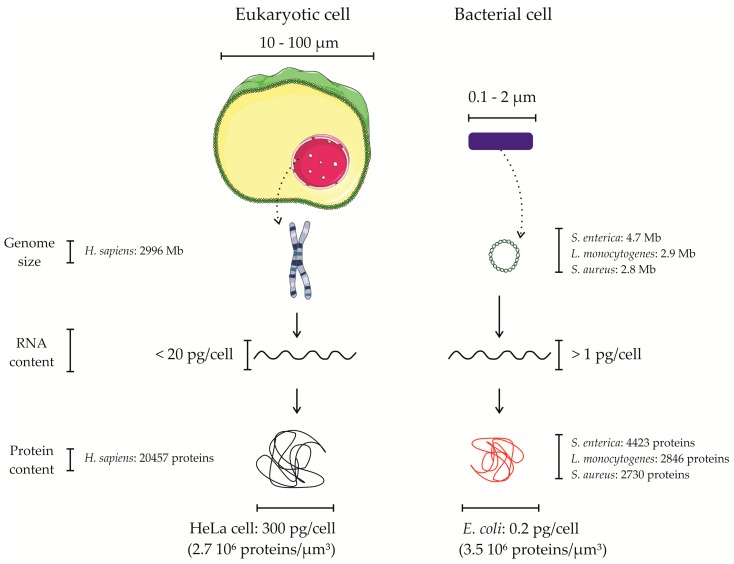
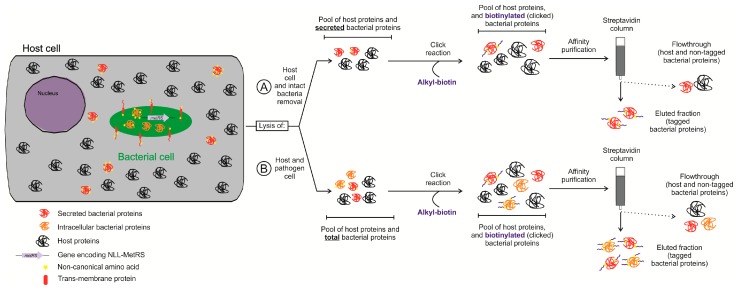
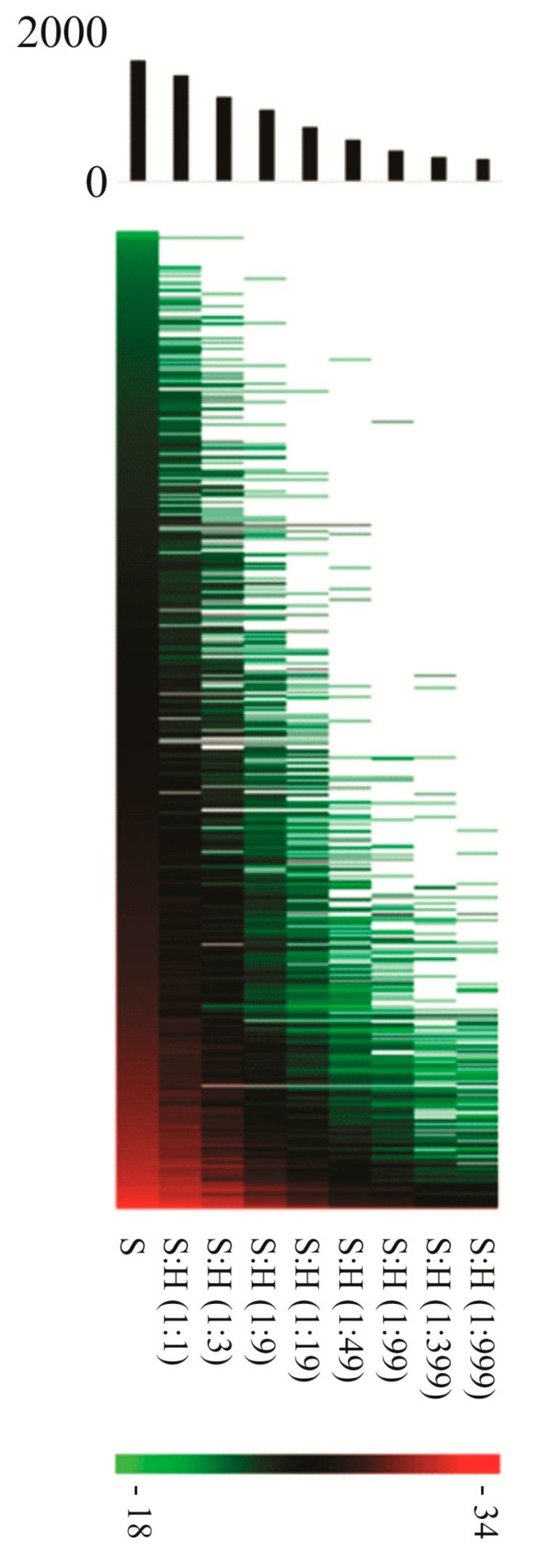
By providing useful tools to study host-pathogen interactions, next-generation omics has recently enabled the study of gene expression changes in both pathogen and infected host simultaneously. However, since great discriminative power is required to study pathogen and host simultaneously throughout the infection process, the depth of quantitative gene expression profiling has proven to be unsatisfactory when focusing on bacterial pathogens, thus preferentially requiring specific strategies or the development of novel methodologies based on complementary omics approaches. In this review, we focus on the difficulties encountered when making use of proteogenomics approaches to study bacterial pathogenesis. In addition, we review different omics strategies (i.e., transcriptomics, proteomics and secretomics) and their applications for studying interactions of pathogens with their host.
通过提供研究宿主-病原体相互作用的有用工具,新一代组学技术最近使得能够同时研究病原体和受感染宿主中的基因表达变化。然而,由于在整个感染过程中同时研究病原体和宿主需要强大的鉴别能力,在聚焦于细菌病原体时,定量基因表达谱分析的深度已被证明并不理想,因此优先需要基于互补组学方法的特定策略或新方法的开发。在本综述中,我们聚焦于利用蛋白质基因组学方法研究细菌致病机制时遇到的困难。此外,我们还综述了不同的组学策略(即转录组学、蛋白质组学和分泌组学)及其在研究病原体与宿主相互作用中的应用。