Department of Computational and Analytical Sciences, Rothamsted Research, Harpenden, Herts, United Kingdom.
Wheat Pathogenomics Team, Department of BioInteractions and Crop Protection, Rothamsted Research, Harpenden, Herts, United Kingdom.
PLoS Pathog. 2017 Oct 11;13(10):e1006672. doi: 10.1371/journal.ppat.1006672. eCollection 2017 Oct.
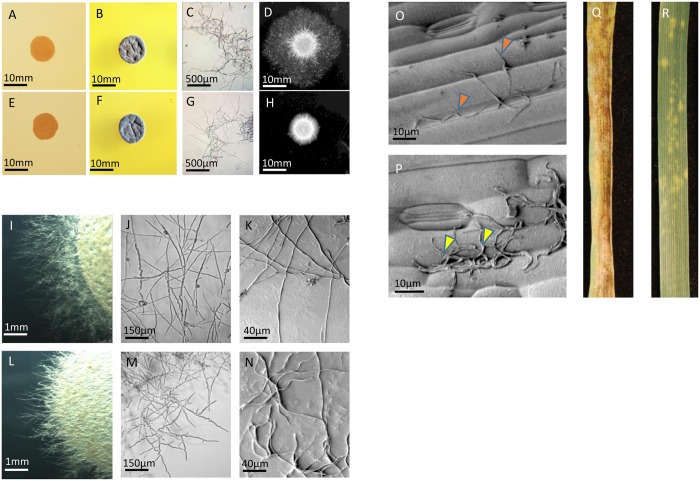
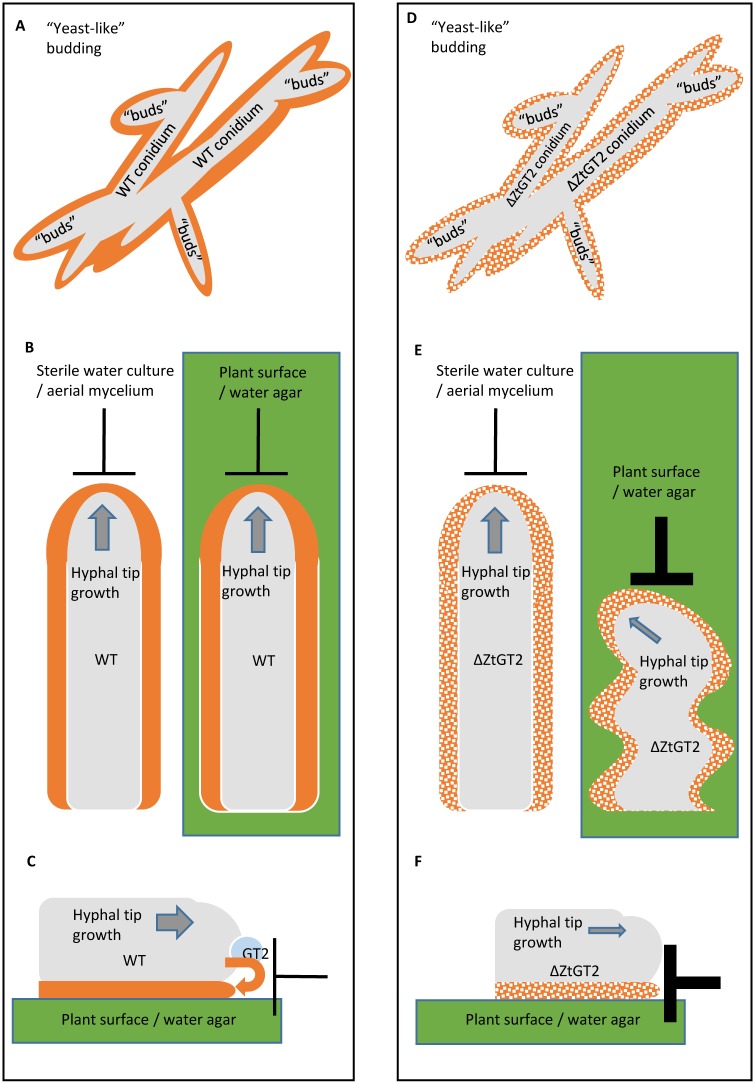
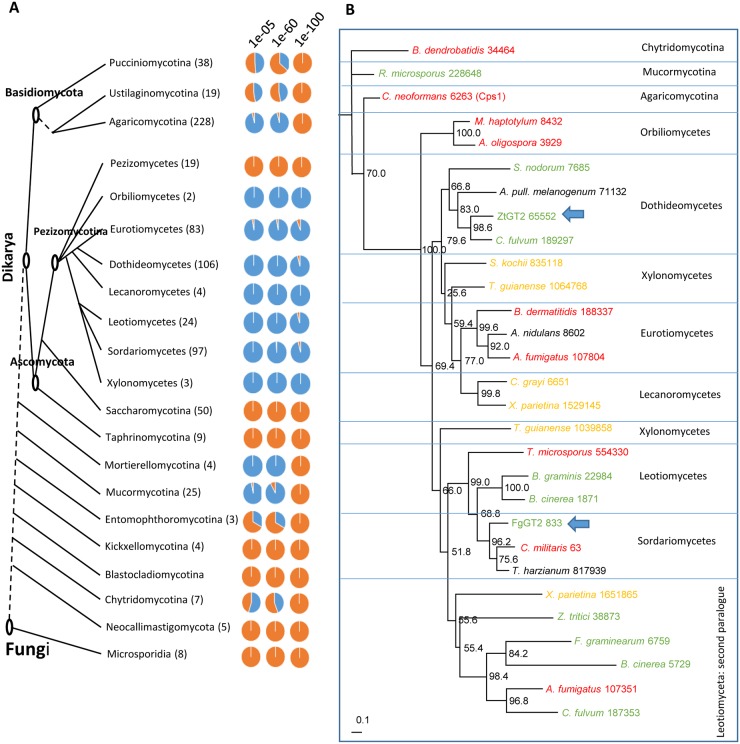
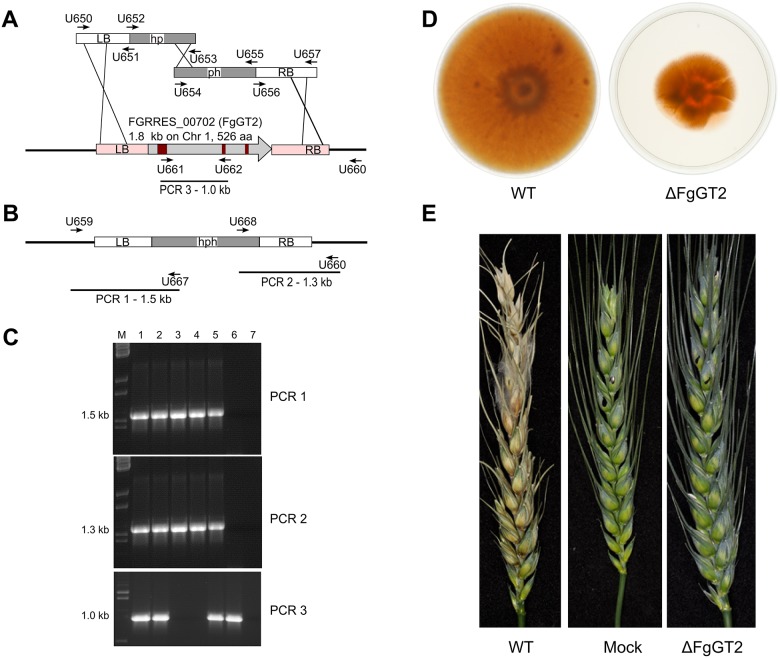
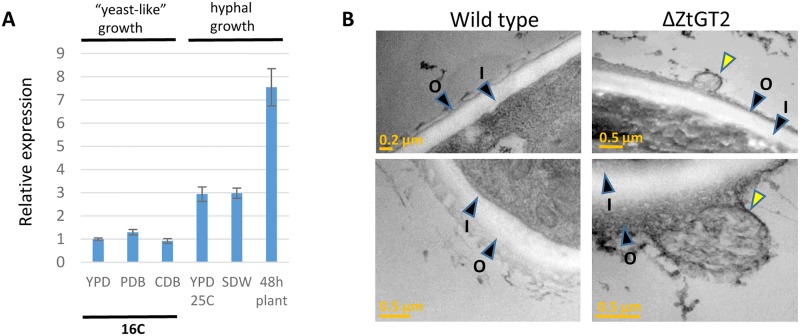
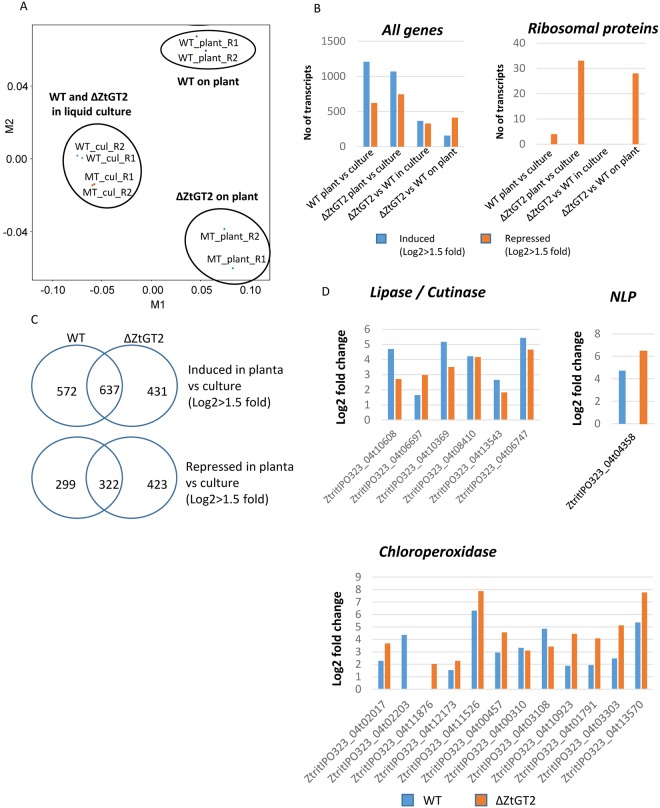
Pathogenic fungi must extend filamentous hyphae across solid surfaces to cause diseases of plants. However, the full inventory of genes which support this is incomplete and many may be currently concealed due to their essentiality for the hyphal growth form. During a random T-DNA mutagenesis screen performed on the pleomorphic wheat (Triticum aestivum) pathogen Zymoseptoria tritici, we acquired a mutant unable to extend hyphae specifically when on solid surfaces. In contrast "yeast-like" growth, and all other growth forms, were unaffected. The inability to extend surface hyphae resulted in a complete loss of virulence on plants. The affected gene encoded a predicted type 2 glycosyltransferase (ZtGT2). Analysis of >800 genomes from taxonomically diverse fungi highlighted a generally widespread, but discontinuous, distribution of ZtGT2 orthologues, and a complete absence of any similar proteins in non-filamentous ascomycete yeasts. Deletion mutants of the ZtGT2 orthologue in the taxonomically un-related fungus Fusarium graminearum were also severely impaired in hyphal growth and non-pathogenic on wheat ears. ZtGT2 expression increased during filamentous growth and electron microscopy on deletion mutants (ΔZtGT2) suggested the protein functions to maintain the outermost surface of the fungal cell wall. Despite this, adhesion to leaf surfaces was unaffected in ΔZtGT2 mutants and global RNAseq-based gene expression profiling highlighted that surface-sensing and protein secretion was also largely unaffected. However, ΔZtGT2 mutants constitutively overexpressed several transmembrane and secreted proteins, including an important LysM-domain chitin-binding virulence effector, Zt3LysM. ZtGT2 likely functions in the synthesis of a currently unknown, potentially minor but widespread, extracellular or outer cell wall polysaccharide which plays a key role in facilitating many interactions between plants and fungi by enabling hyphal growth on solid matrices.
致病真菌必须在固体表面上延伸丝状菌丝才能引起植物疾病。然而,支持这一过程的完整基因清单并不完整,由于它们对菌丝生长形态的必要性,许多基因可能目前被隐藏了。在对多态性小麦(Triticum aestivum)病原体玉蜀黍平脐蠕孢(Zymoseptoria tritici)进行的随机 T-DNA 诱变筛选过程中,我们获得了一个突变体,该突变体在固体表面上无法特定地延伸菌丝。相比之下,“酵母样”生长和所有其他生长形式都没有受到影响。无法延伸表面菌丝导致在植物上完全丧失毒力。受影响的基因编码一种预测的 2 型糖基转移酶(ZtGT2)。对来自分类上多样化的真菌的 >800 个基因组的分析突出显示,ZtGT2 同源物普遍广泛分布,但不连续,在非丝状子囊菌酵母中完全不存在任何类似的蛋白质。在分类上不相关的真菌禾谷镰刀菌中,ZtGT2 同源物的缺失突变体在菌丝生长和对小麦耳的非致病性方面也受到严重损害。ZtGT2 的表达在丝状生长过程中增加,并且对缺失突变体(ΔZtGT2)的电子显微镜观察表明该蛋白的功能是维持真菌细胞壁的最外层。尽管如此,在ΔZtGT2 突变体中,对叶片表面的粘附不受影响,基于全局 RNAseq 的基因表达谱分析突出表明,表面感应和蛋白质分泌也基本不受影响。然而,ΔZtGT2 突变体持续过表达几种跨膜和分泌蛋白,包括重要的 LysM 结构域几丁质结合毒力效应子 Zt3LysM。ZtGT2 可能在合成一种目前未知的、可能较少但广泛存在的细胞外或细胞壁多糖中起作用,该多糖在促进植物和真菌之间的许多相互作用中起着关键作用,使菌丝能够在固体基质上生长。