Abu Aboud Omran, Habib Samy L, Trott Josephine, Stewart Benjamin, Liang Sitai, Chaudhari Abhijit J, Sutcliffe Julie, Weiss Robert H
Division of Nephrology, Department of Internal Medicine, University of California, Davis, Davis, California.
South Texas Veterans Health Care System and Cellular and Structural Biology Department, University of Texas Health Science Center, San Antonio, Texas.
Cancer Res. 2017 Dec 1;77(23):6746-6758. doi: 10.1158/0008-5472.CAN-17-0930. Epub 2017 Oct 11.
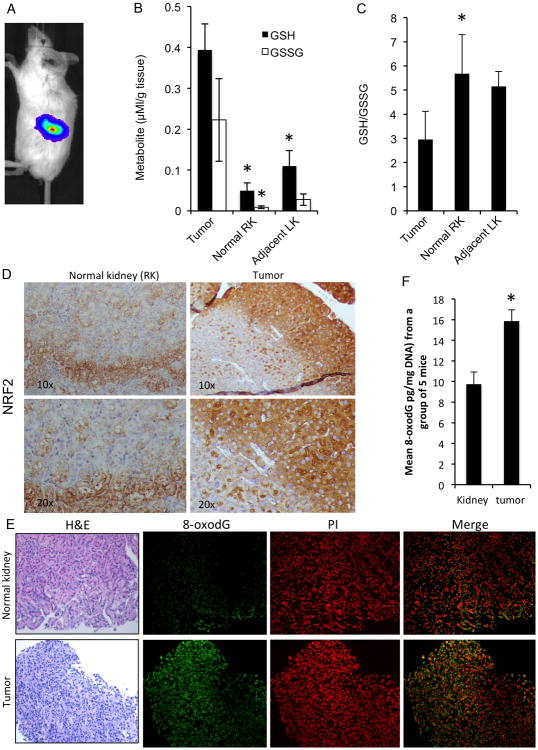
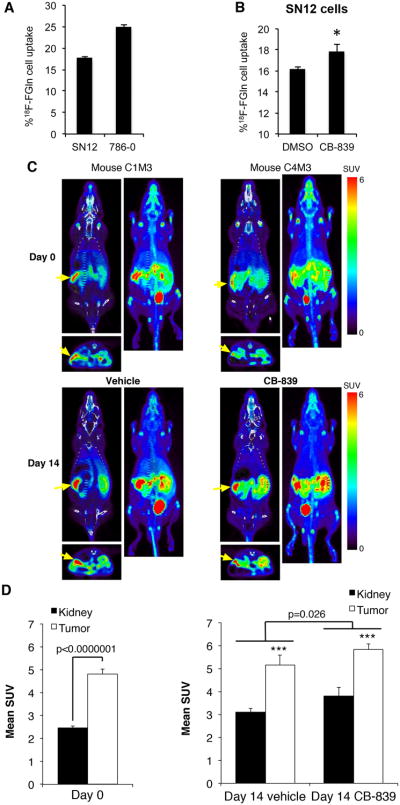
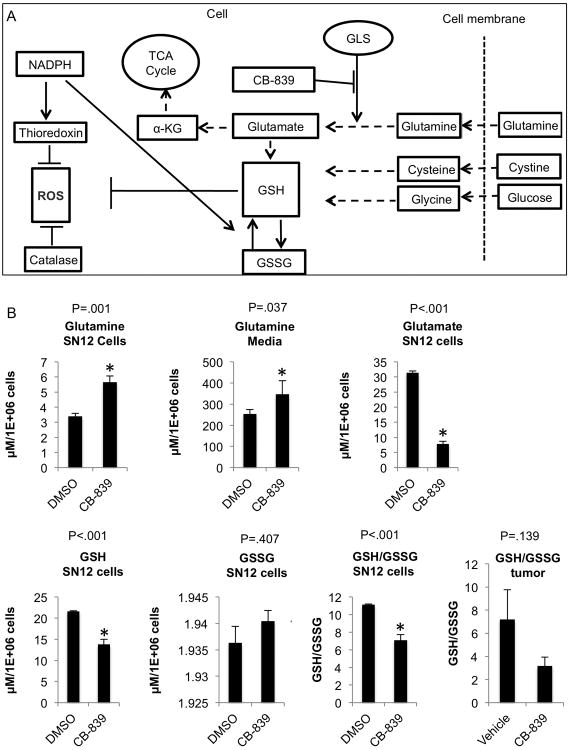
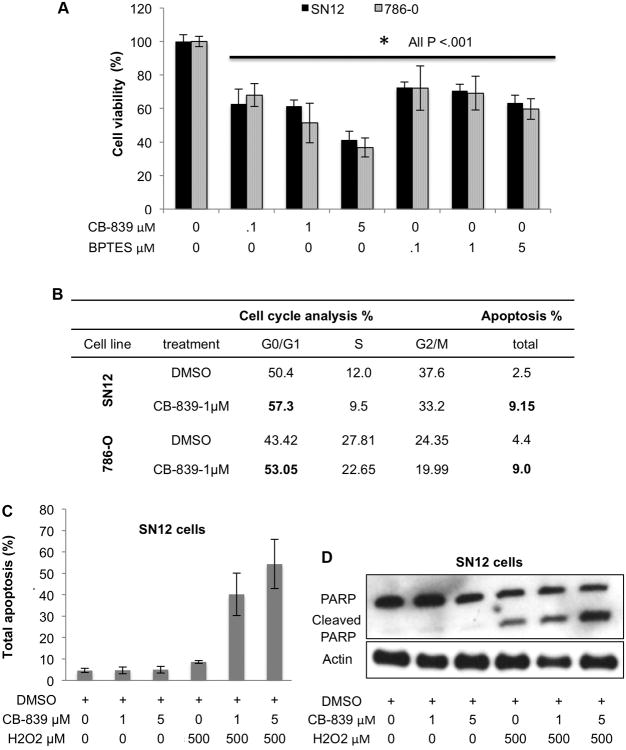
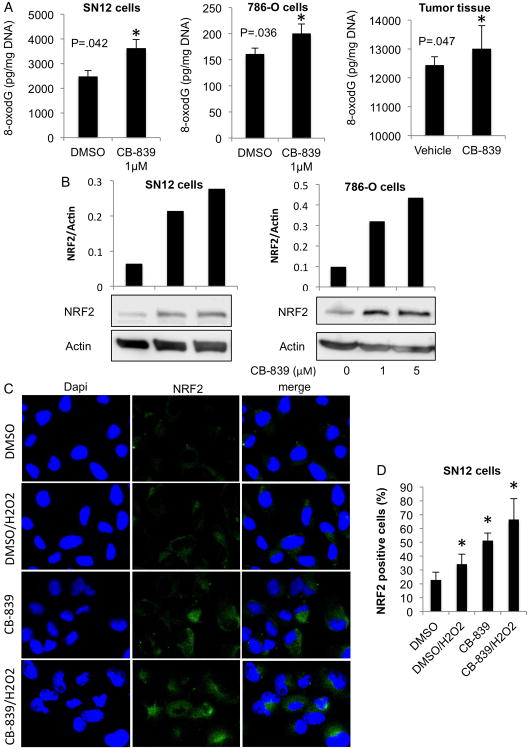
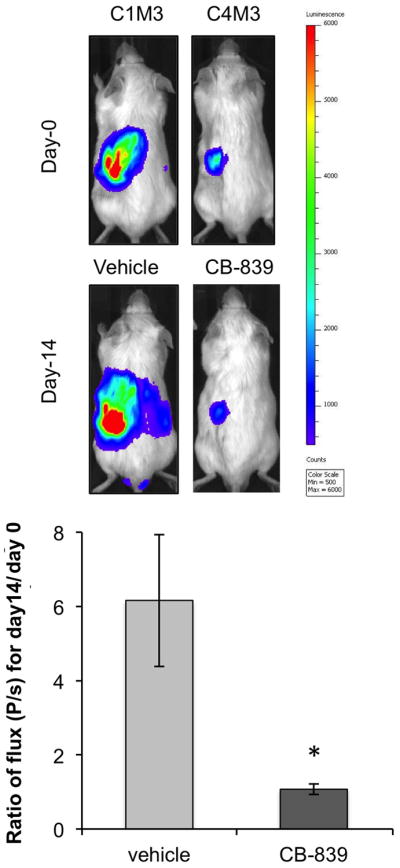
Many cancers appear to activate intrinsic antioxidant systems as a means to counteract oxidative stress. Some cancers, such as clear cell renal cell carcinoma (ccRCC), require exogenous glutamine for growth and exhibit reprogrammed glutamine metabolism, at least in part due to the glutathione pathway, an efficient cellular buffering system that counteracts reactive oxygen species and other oxidants. We show here that ccRCC xenograft tumors under the renal capsule exhibit enhanced oxidative stress compared with adjacent normal tissue and the contralateral kidney. Upon glutaminase inhibition with CB-839 or BPTES, the RCC cell lines SN12PM-6-1 (SN12) and 786-O exhibited decreased survival and pronounced apoptosis associated with a decreased GSH/GSSG ratio, augmented nuclear factor erythroid-related factor 2, and increased 8-oxo-7,8-dihydro-2'-deoxyguanosine, a marker of DNA damage. SN12 tumor xenografts showed decreased growth when treated with CB-839. Furthermore, PET imaging confirmed that ccRCC tumors exhibited increased tumoral uptake of F-(2,4)4-fluoroglutamine compared with the kidney in the orthotopic mouse model. This technique can be utilized to follow changes in ccRCC metabolism Further development of these paradigms will lead to new treatment options with glutaminase inhibitors and the utility of PET to identify and manage patients with ccRCC who are likely to respond to glutaminase inhibitors in the clinic. .
许多癌症似乎会激活内在抗氧化系统,以此作为对抗氧化应激的一种手段。一些癌症,如透明细胞肾细胞癌(ccRCC),生长需要外源性谷氨酰胺,并表现出重新编程的谷氨酰胺代谢,至少部分原因是谷胱甘肽途径,这是一种有效的细胞缓冲系统,可对抗活性氧和其他氧化剂。我们在此表明,肾包膜下的ccRCC异种移植瘤与相邻正常组织及对侧肾脏相比,表现出增强的氧化应激。在用CB - 839或BPTES抑制谷氨酰胺酶后,RCC细胞系SN12PM - 6 - 1(SN12)和786 - O的存活率降低,并出现明显凋亡,这与谷胱甘肽/氧化型谷胱甘肽比值降低、核因子红细胞相关因子2增加以及8 - 氧代 - 7,8 - 二氢 - 2'-脱氧鸟苷增加有关,8 - 氧代 - 7,8 - 二氢 - 2'-脱氧鸟苷是DNA损伤的标志物。用CB - 839处理后,SN12肿瘤异种移植瘤的生长减缓。此外,PET成像证实,在原位小鼠模型中,ccRCC肿瘤与肾脏相比,对F -(2,4)4 - 氟谷氨酰胺的肿瘤摄取增加。该技术可用于追踪ccRCC代谢的变化。这些模式的进一步发展将带来谷氨酰胺酶抑制剂的新治疗选择,以及PET在临床中识别和管理可能对谷氨酰胺酶抑制剂有反应的ccRCC患者的应用。