Qiao Wenjie, Medina Vicente, Falk Bryce W
Department of Plant Pathology, University of California, Davis, Davis, CA, United States.
Department of Crop and Forest Sciences, University of Lleida, Lleida, Spain.
Front Plant Sci. 2017 Sep 27;8:1672. doi: 10.3389/fpls.2017.01672. eCollection 2017.
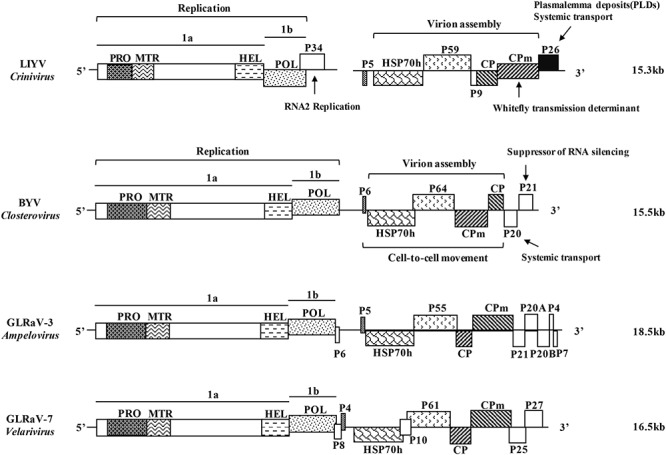
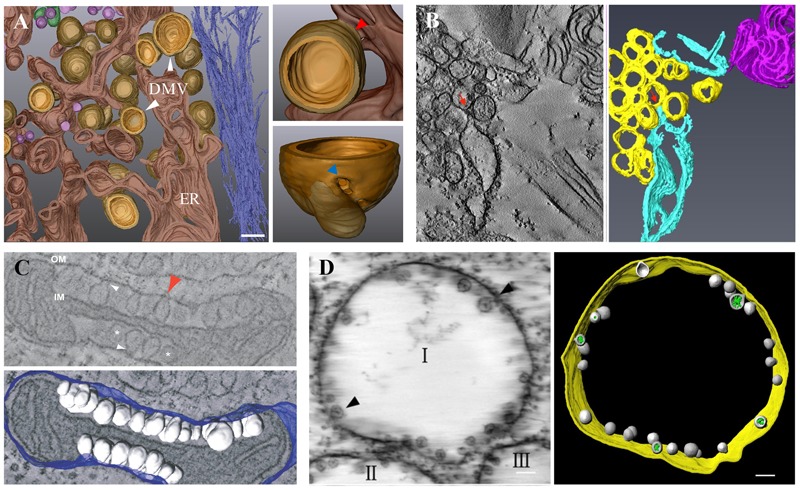
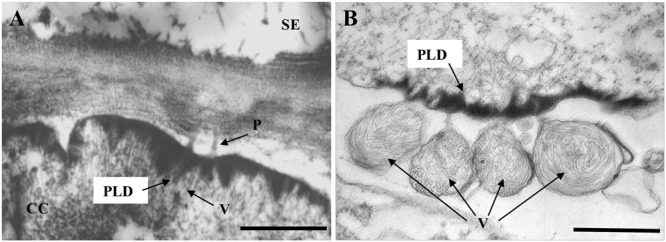
(LIYV) is the type member of the genus in the family . Like many other positive-strand RNA viruses, LIYV infections induce a number of cytopathic changes in plant cells, of which the two most characteristic are: -type inclusion bodies composed of vesicles derived from cytoplasmic membranes; and conical plasmalemma deposits (PLDs) located at the plasmalemma over plasmodesmata pit fields. The former are not only found in various closterovirus infections, but similar structures are known as 'viral factories' or viroplasms in cells infected with diverse types of animal and plant viruses. These are generally sites of virus replication, virion assembly and in some cases are involved in cell-to-cell transport. By contrast, PLDs induced by the LIYV-encoded P26 non-virion protein are not involved in replication but are speculated to have roles in virus intercellular movement. These deposits often harbor LIYV virions arranged to be perpendicular to the plasma membrane over plasmodesmata, and our recent studies show that P26 is required for LIYV systemic plant infection. The functional mechanism of how LIYV P26 facilitates intercellular movement remains unclear, however, research on other plant viruses provides some insights on the possible ways of viral intercellular movement through targeting and modifying plasmodesmata via interactions between plant cellular components and viral-encoded factors. In summary, beginning with LIYV, we review the studies that have uncovered the biological determinants giving rise to these cytopathological effects and their importance in viral replication, virion assembly and intercellular movement during the plant infection by closteroviruses, and compare these findings with those for other positive-strand RNA viruses.
番茄褪绿病毒(LIYV)是 科 属的类型成员。与许多其他正链RNA病毒一样,LIYV感染会在植物细胞中引发多种细胞病变变化,其中最具特征性的两种变化是:由源自细胞质膜的囊泡组成的 - 型包涵体;以及位于胞间连丝凹陷处质膜上的锥形质膜沉积物(PLDs)。前者不仅在各种长线形病毒感染中可见,而且在感染多种动植物病毒的细胞中,类似结构被称为“病毒工厂”或病毒质。这些通常是病毒复制、病毒粒子组装的场所,在某些情况下还参与细胞间运输。相比之下,由LIYV编码的非病毒粒子蛋白P26诱导的PLDs不参与复制,但推测在病毒细胞间移动中起作用。这些沉积物通常含有排列成垂直于胞间连丝处质膜的LIYV病毒粒子,我们最近的研究表明P26是LIYV在植物体内系统感染所必需的。然而,LIYV P26促进细胞间移动的功能机制仍不清楚,不过,对其他植物病毒的研究为病毒通过植物细胞成分与病毒编码因子之间的相互作用靶向和修饰胞间连丝从而实现细胞间移动的可能方式提供了一些见解。总之,从LIYV开始,我们综述了揭示导致这些细胞病理效应的生物学决定因素及其在长线形病毒感染植物过程中病毒复制、病毒粒子组装和细胞间移动中的重要性的研究,并将这些发现与其他正链RNA病毒的发现进行了比较。