Wu Li-An, Li Wei-En, Lin Ding-Zheng, Chen Yih-Fan
Institute of Biophotonics, National Yang-Ming University, Taipei, 112, Taiwan.
Material and Chemical Research Laboratory, Industrial Technology Research Institute, Hsinchu, 310, Taiwan.
Sci Rep. 2017 Oct 12;7(1):13066. doi: 10.1038/s41598-017-13577-9.
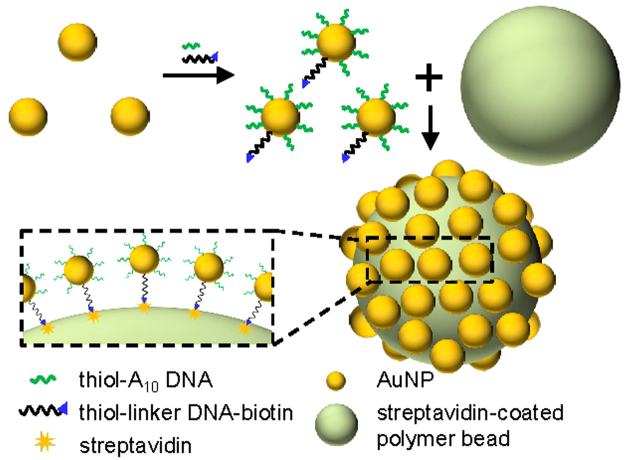
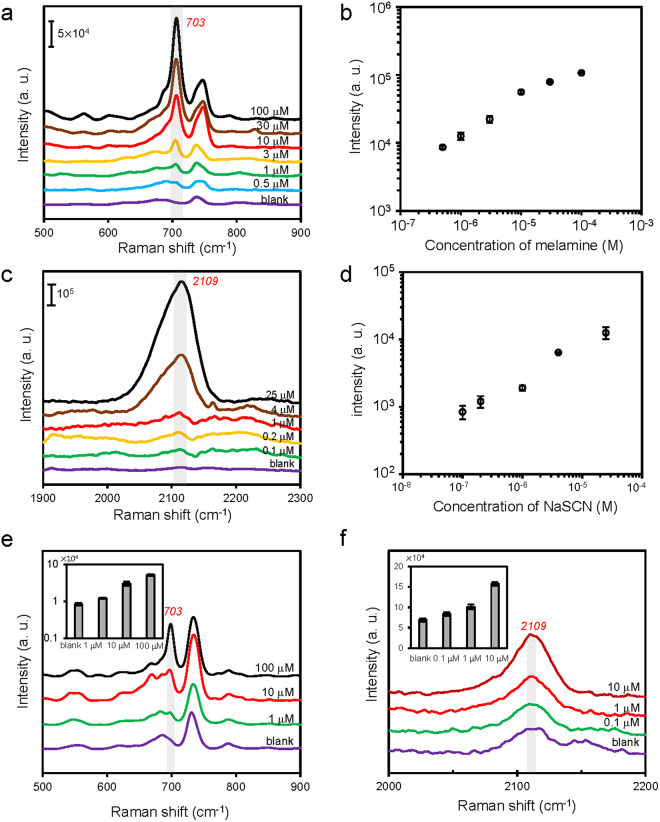
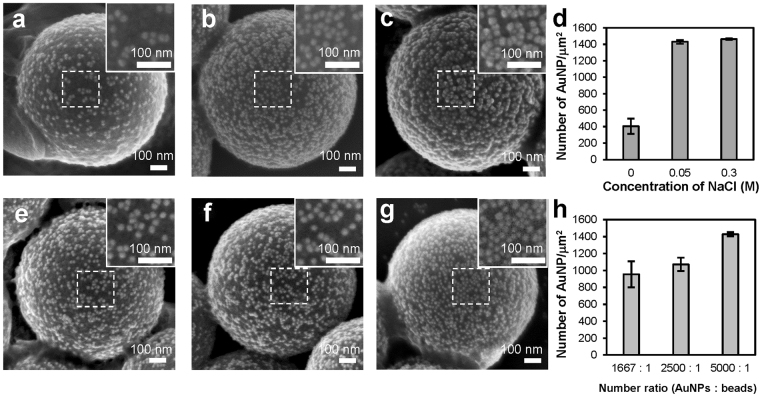
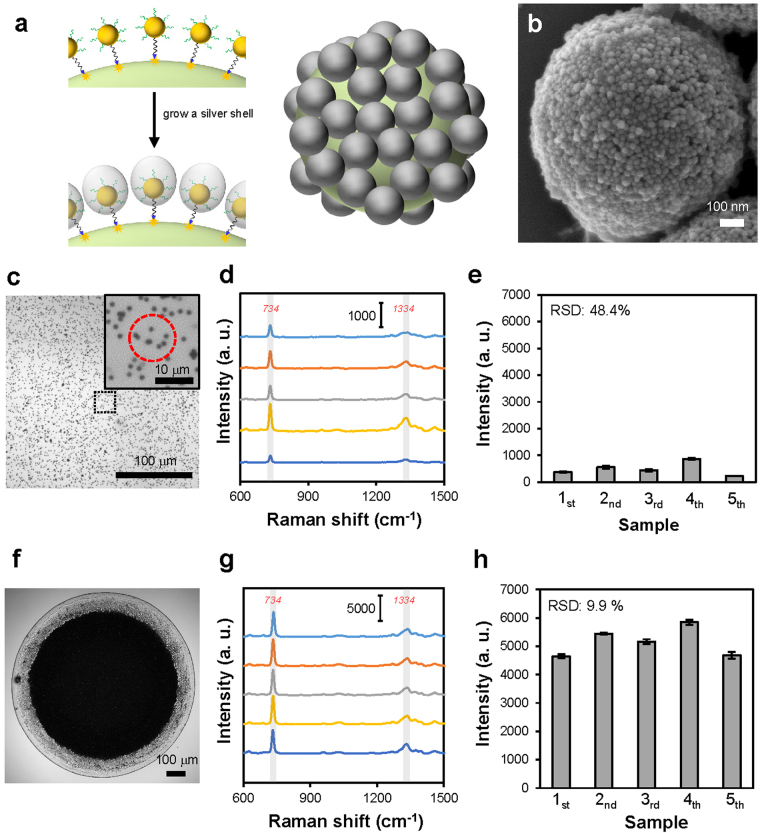
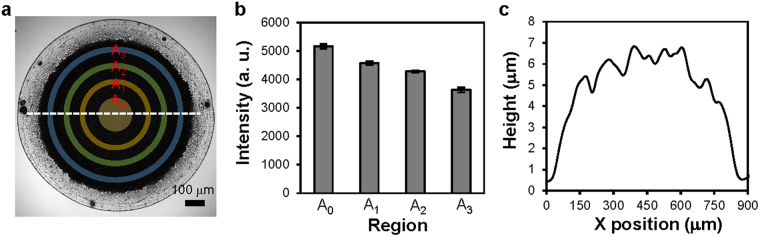
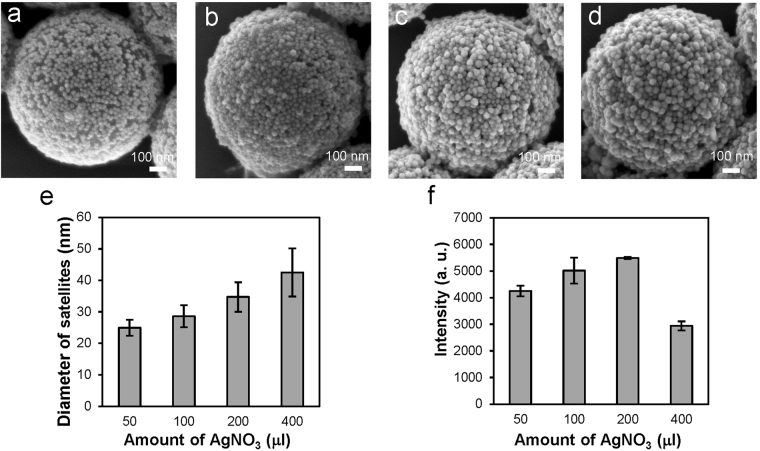
We demonstrate three-dimensional surface-enhanced Raman spectroscopy (SERS) substrates formed by accumulating plasmonic nanostructures that are synthesized using a DNA-assisted assembly method. We densely immobilize Au nanoparticles (AuNPs) on polymer beads to form core-satellite nanostructures for detecting molecules by SERS. The experimental parameters affecting the AuNP immobilization, including salt concentration and the number ratio of the AuNPs to the polymer beads, are tested to achieve a high density of the immobilized AuNPs. To create electromagnetic hot spots for sensitive SERS sensing, we add a Ag shell to the AuNPs to reduce the interparticle distance further, and we carefully adjust the thickness of the shell to optimize the SERS effects. In addition, to obtain sensitive and reproducible SERS results, instead of using the core-satellite nanostructures dispersed in solution directly, we prepare SERS substrates consisting of closely packed nanostructures by drying nanostructure-containing droplets on hydrophobic surfaces. The densely distributed small and well-controlled nanogaps on the accumulated nanostructures function as three-dimensional SERS hot spots. Our results show that the SERS spectra obtained using the substrates are much stronger and more reproducible than that obtained using the nanostructures dispersed in solution. Sensitive detection of melamine and sodium thiocyanate (NaSCN) are achieved using the SERS substrates.
我们展示了通过积累使用DNA辅助组装方法合成的等离子体纳米结构形成的三维表面增强拉曼光谱(SERS)基底。我们将金纳米颗粒(AuNP)密集固定在聚合物珠上,以形成用于通过SERS检测分子的核-卫星纳米结构。测试了影响AuNP固定的实验参数,包括盐浓度以及AuNP与聚合物珠的数量比,以实现高密度的固定AuNP。为了创建用于灵敏SERS传感的电磁热点,我们在AuNP上添加了银壳以进一步减小颗粒间距离,并仔细调整壳的厚度以优化SERS效果。此外,为了获得灵敏且可重复的SERS结果,我们不是直接使用分散在溶液中的核-卫星纳米结构,而是通过在疏水表面上干燥含纳米结构的液滴来制备由紧密堆积的纳米结构组成的SERS基底。积累的纳米结构上密集分布的小且可控的纳米间隙用作三维SERS热点。我们的结果表明,使用这些基底获得的SERS光谱比使用分散在溶液中的纳米结构获得的光谱要强得多且更可重复。使用这些SERS基底实现了对三聚氰胺和硫氰酸钠(NaSCN)的灵敏检测。