Dressano Keini, Ceciliato Paulo H O, Silva Aparecida L, Guerrero-Abad Juan Carlos, Bergonci Tábata, Ortiz-Morea Fausto Andrés, Bürger Marco, Silva-Filho Marcio C, Moura Daniel S
Laboratório de Bioquímica de Proteínas, Departamento de Ciências Biológicas, Escola Superior de Agricultura Luiz de Queiroz, Universidade de São Paulo (ESALQ/USP), Piracicaba, SP, Brazil.
Plant Biology Laboratory, The Salk Institute for Biological Studies, La Jolla, California, United States of America.
PLoS Genet. 2017 Oct 13;13(10):e1007053. doi: 10.1371/journal.pgen.1007053. eCollection 2017 Oct.
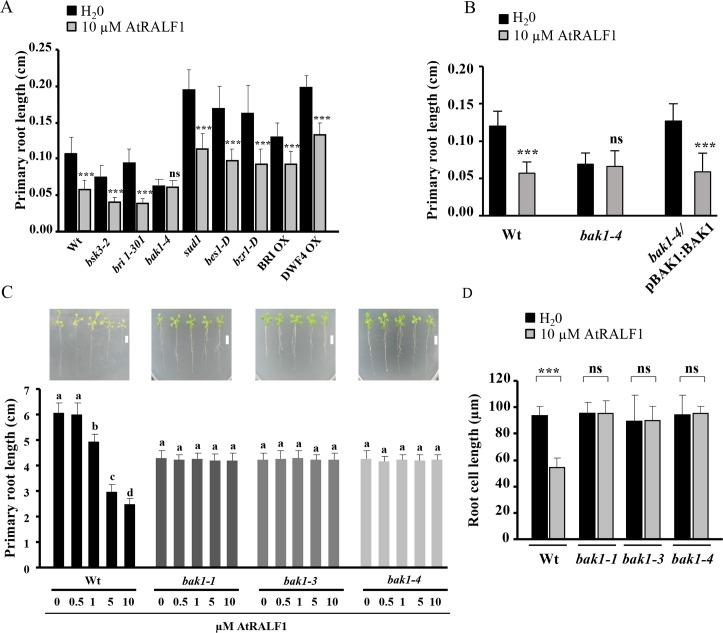
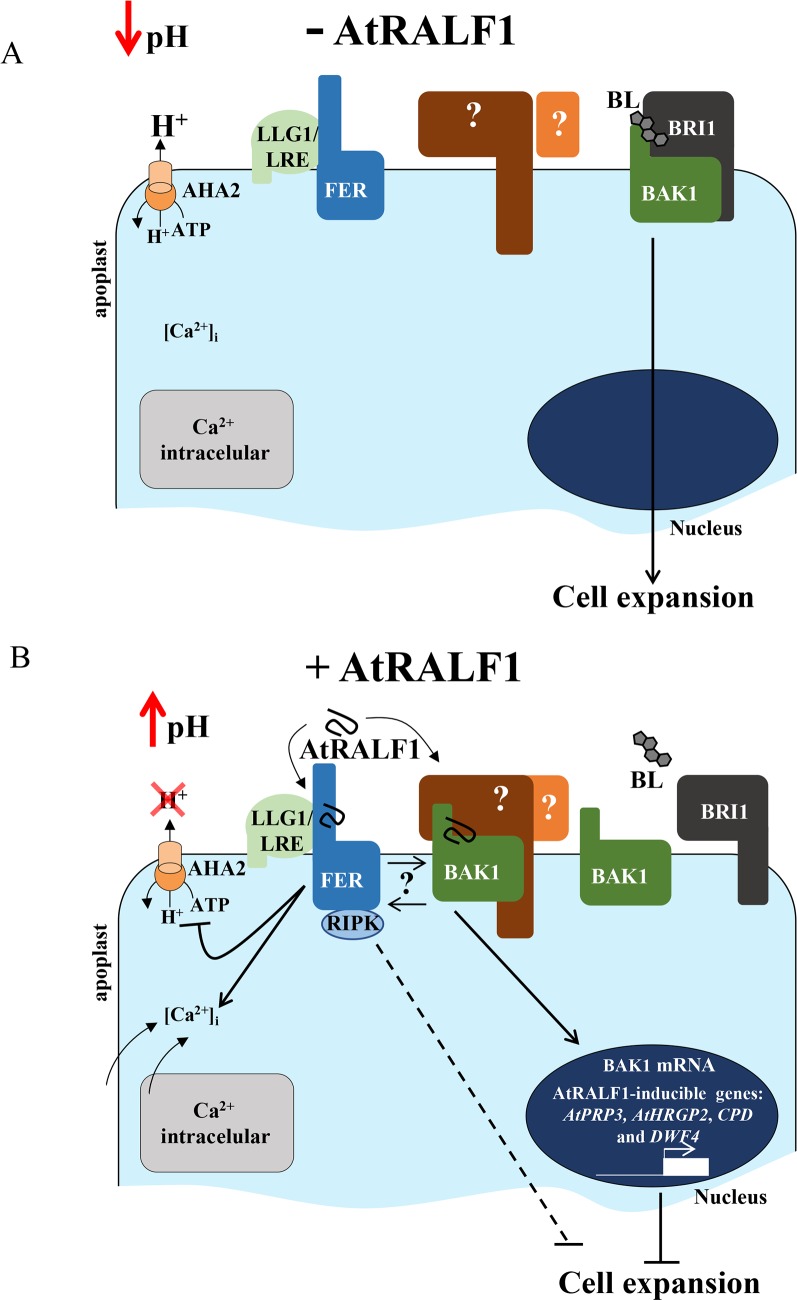
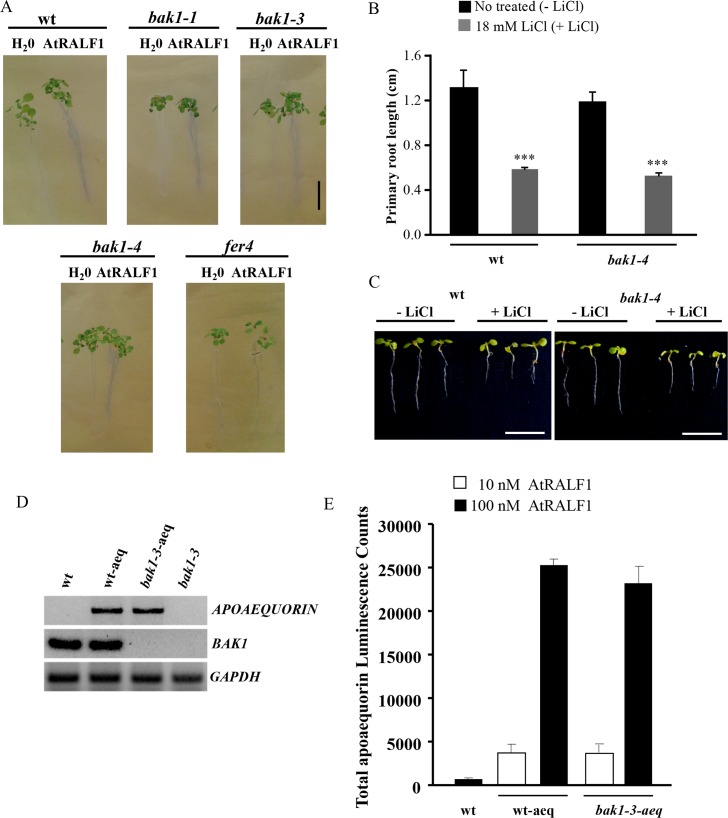
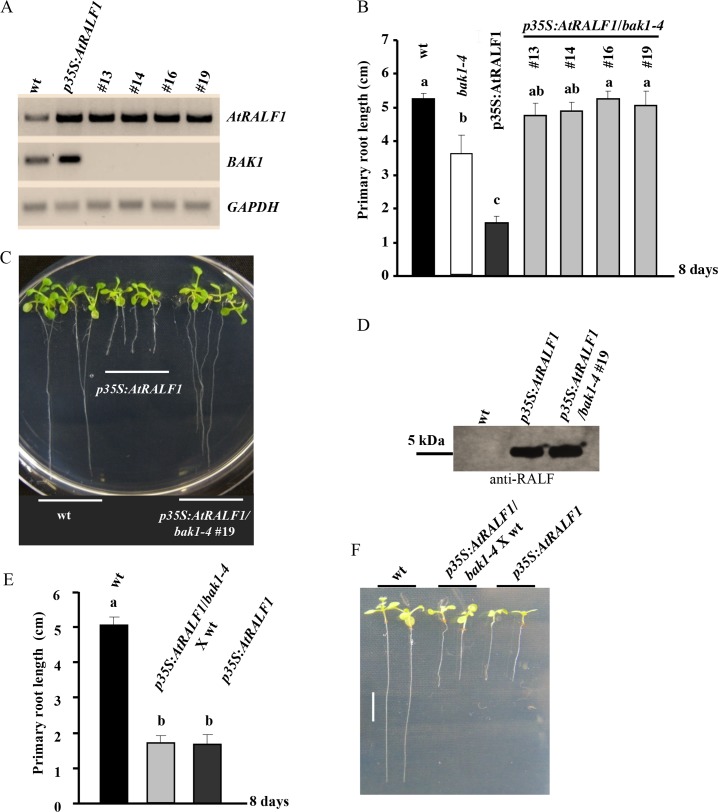
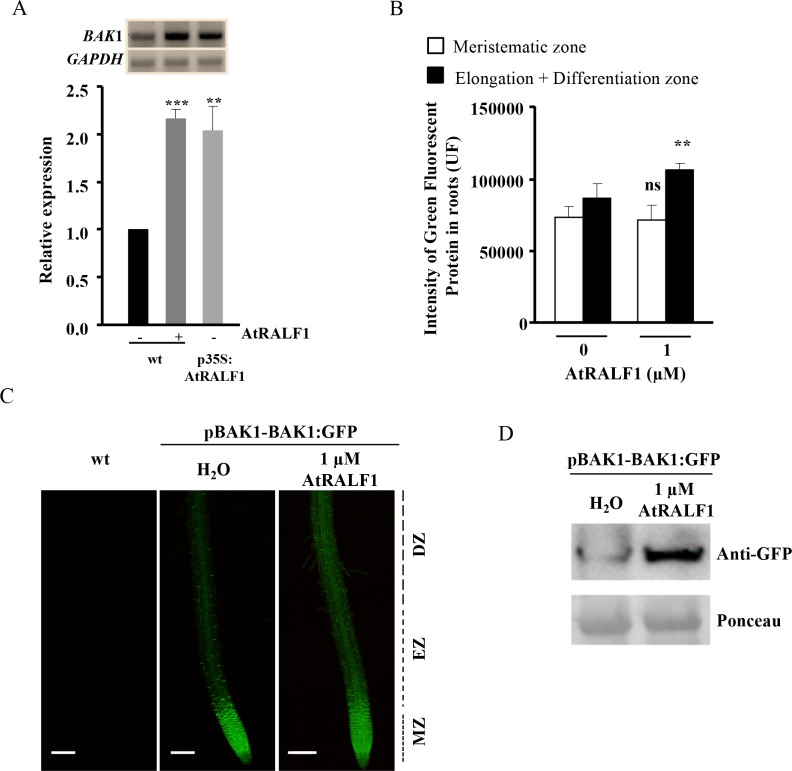
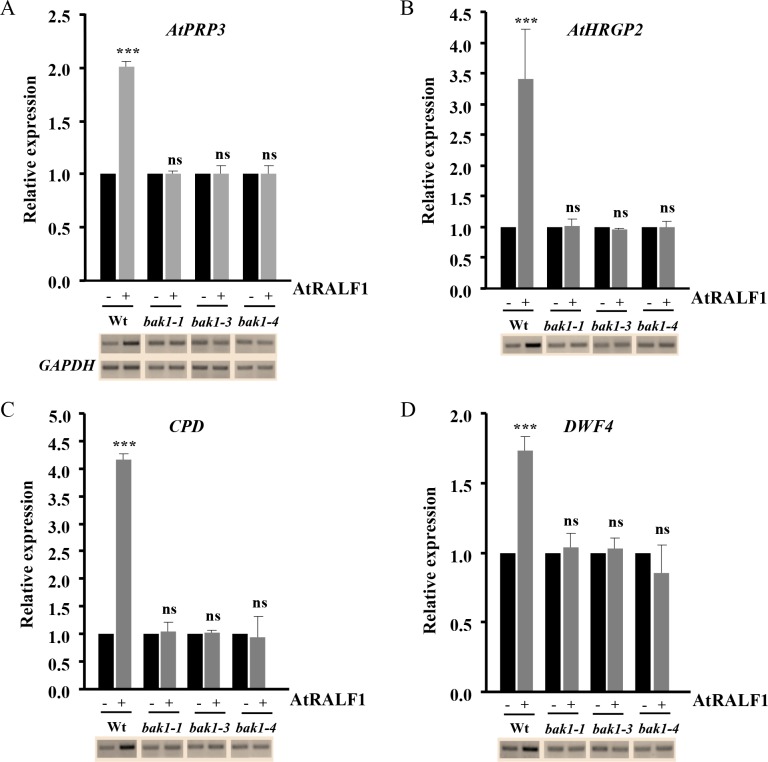
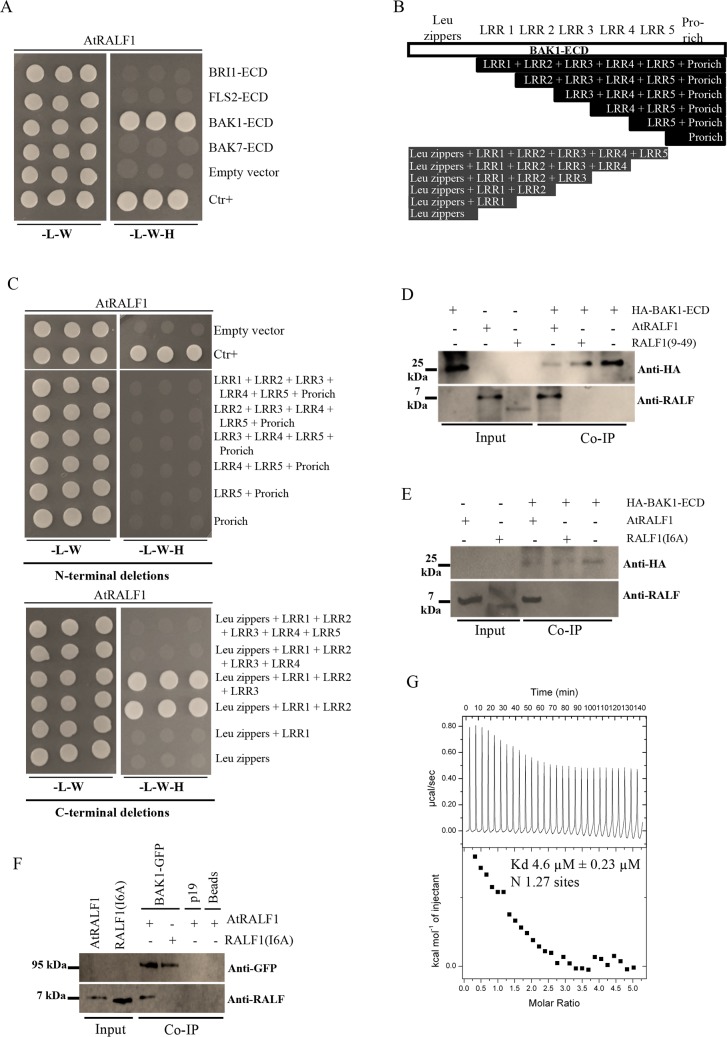
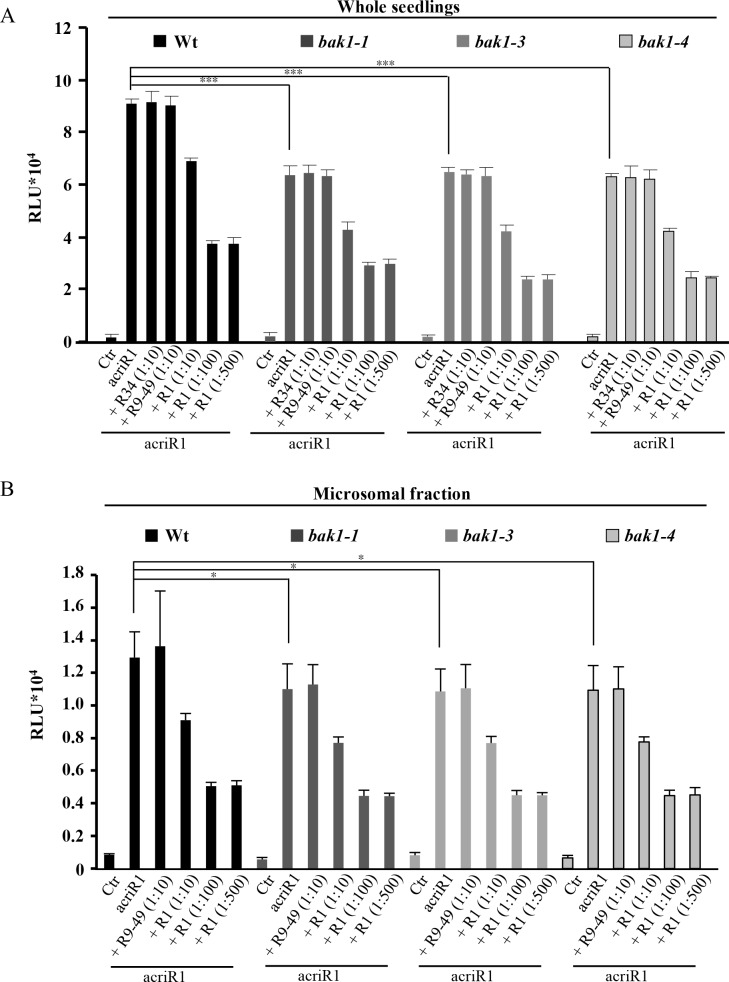
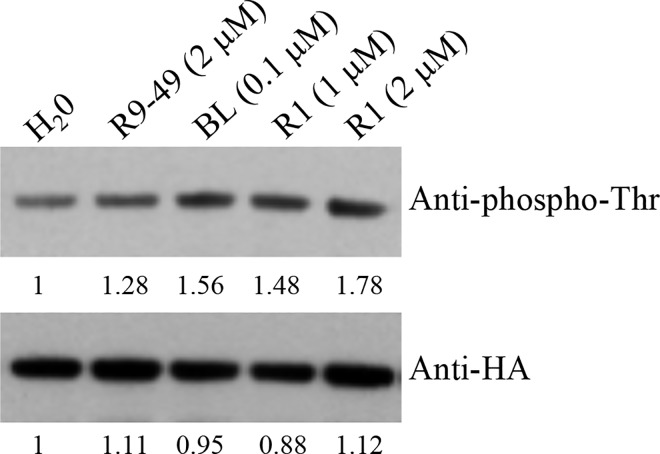
The rapid alkalinization factor (RALF) peptide negatively regulates cell expansion, and an antagonistic relationship has been demonstrated between AtRALF1, a root-specific RALF isoform in Arabidopsis, and brassinosteroids (BRs). An evaluation of the response of BR signaling mutants to AtRALF1 revealed that BRI1-associated receptor kinase1 (bak1) mutants are insensitive to AtRALF1 root growth inhibition activity. BAK1 was essential for the induction of AtRALF1-responsive genes but showed no effect on the mobilization of Ca2+ and alkalinization responses. Homozygous plants accumulating AtRALF1 and lacking the BAK1 gene did not exhibit the characteristic semi-dwarf phenotype of AtRALF1-overexpressors. Biochemical evidence indicates that AtRALF1 and BAK1 physically interact with a Kd of 4.6 μM and acridinium-labeled AtRALF1 was used to demonstrate that part of the specific binding of AtRALF1 to intact seedlings and to a microsomal fraction derived from the roots of Arabidopsis plants is BAK1-dependent. Moreover, AtRALF1 induces an increase in BAK1 phosphorylation, suggesting that the binding of AtRALF1 to BAK1 is functional. These findings show that BAK1 contains an additional AtRALF1 binding site, indicating that this protein may be part of a AtRALF1-containing complex as a co-receptor, and it is required for the negative regulation of cell expansion.
快速碱化因子(RALF)肽对细胞扩张起负调控作用,并且在拟南芥根特异性RALF亚型AtRALF1与油菜素类固醇(BRs)之间已证实存在拮抗关系。对BR信号突变体对AtRALF1的反应进行评估发现,BRI1相关受体激酶1(bak1)突变体对AtRALF1抑制根生长的活性不敏感。BAK1对于诱导AtRALF1反应基因至关重要,但对Ca2+动员和碱化反应没有影响。积累AtRALF1且缺乏BAK1基因的纯合植物未表现出AtRALF1过表达体的典型半矮化表型。生化证据表明,AtRALF1与BAK1发生物理相互作用,解离常数为4.6μM,并且用吖啶鎓标记的AtRALF1来证明AtRALF1与完整幼苗以及源自拟南芥植物根的微粒体部分的特异性结合部分是依赖BAK1的。此外,AtRALF1诱导BAK1磷酸化增加,表明AtRALF1与BAK1的结合具有功能性。这些发现表明BAK1含有一个额外的AtRALF1结合位点,这表明该蛋白可能作为共受体是含AtRALF1复合物的一部分,并且它是细胞扩张负调控所必需的。