Meng Xiangzong, Chen Xin, Mang Hyunggon, Liu Chenglong, Yu Xiao, Gao Xiquan, Torii Keiko U, He Ping, Shan Libo
Department of Biochemistry and Biophysics and Institute for Plant Genomics and Biotechnology, Texas A&M University, College Station, TX 77843, USA.
Department of Plant Pathology and Microbiology and Institute for Plant Genomics and Biotechnology, Texas A&M University, College Station, TX 77843, USA.
Curr Biol. 2015 Sep 21;25(18):2361-72. doi: 10.1016/j.cub.2015.07.068. Epub 2015 Aug 27.
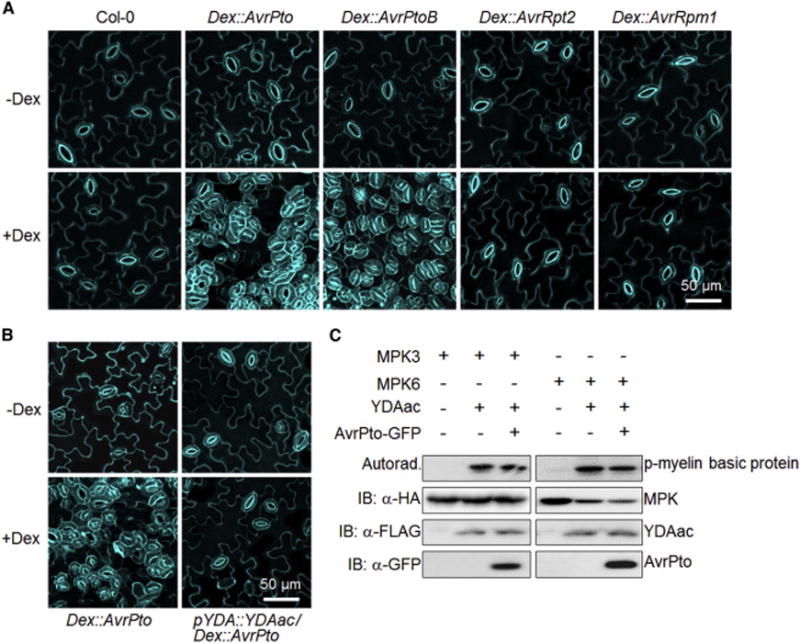
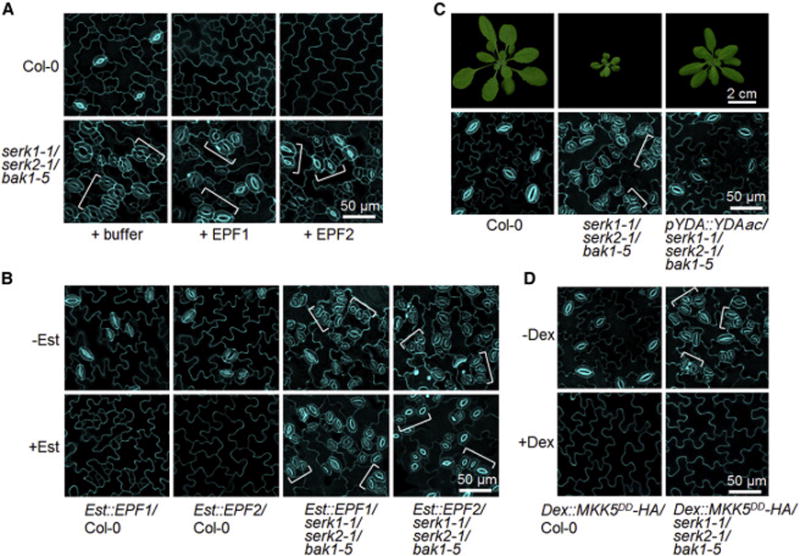
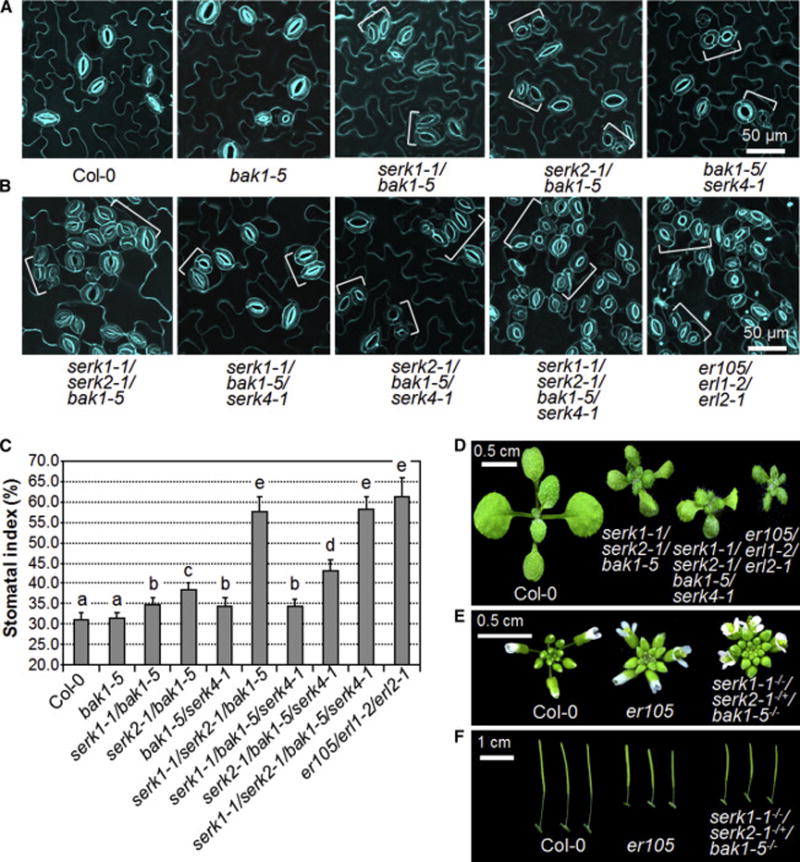
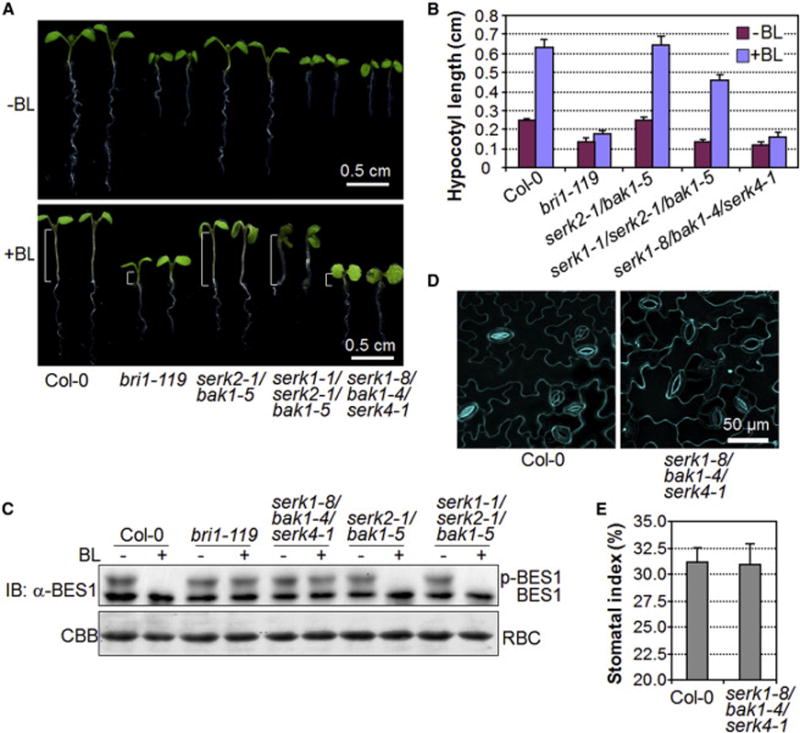
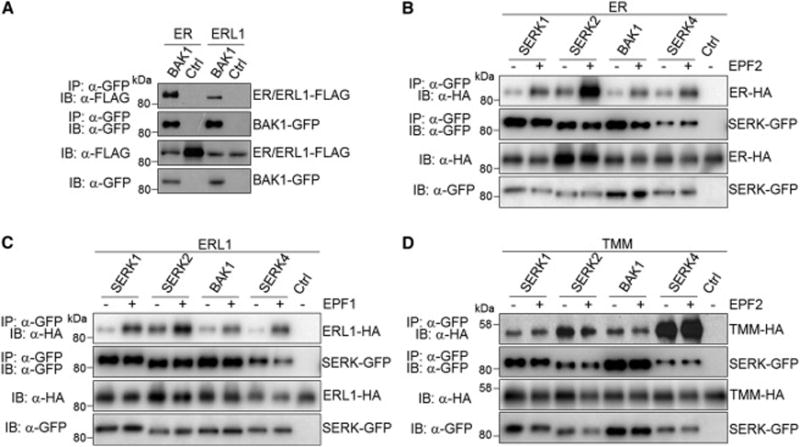
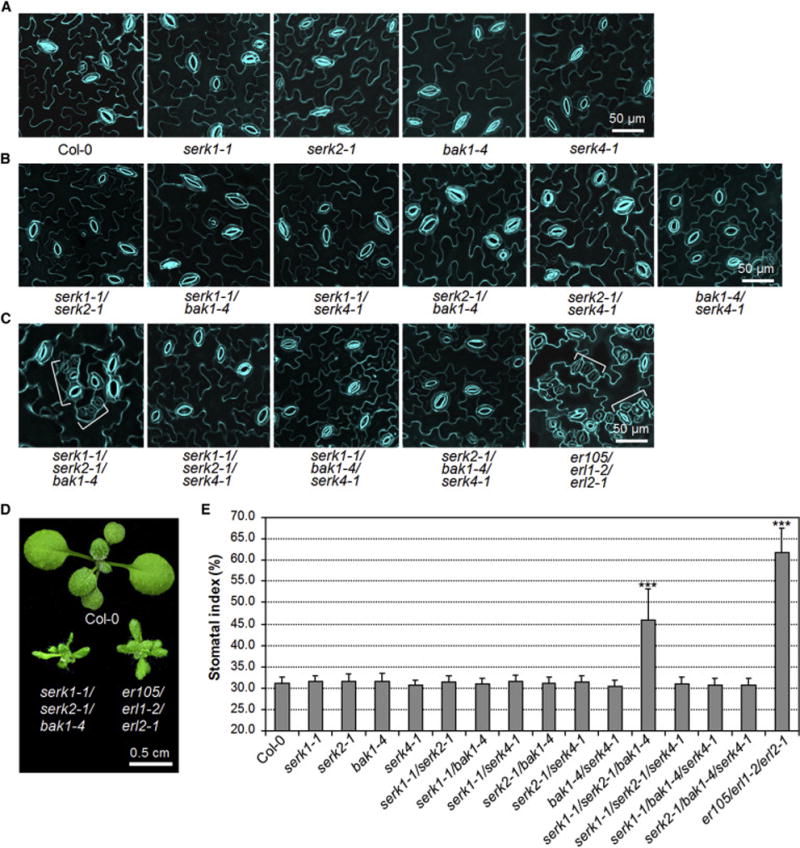
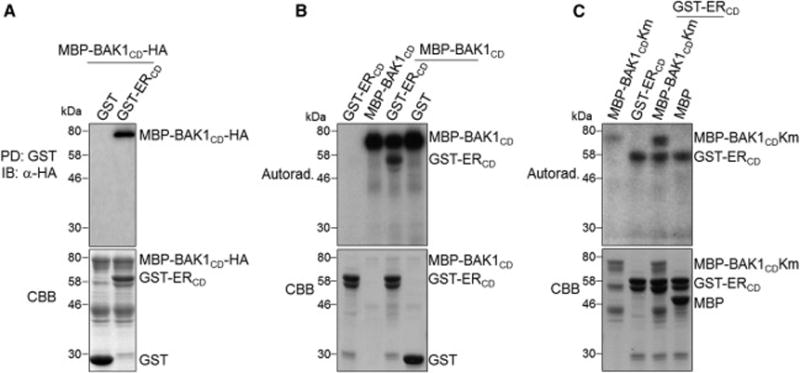
Plants use cell-surface-resident receptor-like kinases (RLKs) to sense diverse extrinsic and intrinsic cues and elicit distinct biological responses. In Arabidopsis, ERECTA family RLKs recognize EPIDERMAL PATTERNING FACTORS (EPFs) to specify stomatal patterning. However, little is known about the molecular link between ERECTA activation and intracellular signaling. We report here that the SOMATIC EMBRYOGENESIS RECEPTOR KINASE (SERK) family RLKs regulate stomatal patterning downstream of EPF ligands and upstream of a MAP kinase cascade. EPF ligands induce the heteromerization of ERECTA and SERK family RLKs. SERK and ERECTA family RLKs transphosphorylate each other. In addition, SERKs associate with the receptor-like protein (RLP) TMM, a signal modulator of stomata development, in a ligand-independent manner, suggesting that ERECTA, SERKs, and TMM form a multiprotein receptorsome consisting of different RLKs and RLP perceiving peptide ligands to regulate stomatal patterning. In contrast to the differential requirement of individual SERK members in plant immunity, cell-death control, and brassinosteroid (BR) signaling, all four functional SERKs are essential but have unequal genetic contributions to stomatal patterning, with descending order of importance from SERK3/BAK1 to SERK2 to SERK1 to SERK4. Although BR signaling connects stomatal development via multiple components, the function of SERKs in stomatal patterning is uncoupled from their involvement in BR signaling. Our results reveal that the SERK family is a shared key module in diverse Arabidopsis signaling receptorsomes and that different combinatorial codes of individual SERK members regulate distinct functions.
植物利用定位于细胞表面的类受体激酶(RLKs)来感知各种外在和内在信号,并引发不同的生物学反应。在拟南芥中,ERECTA家族的RLKs识别表皮模式因子(EPFs)以确定气孔模式。然而,关于ERECTA激活与细胞内信号传导之间的分子联系,我们所知甚少。我们在此报告,体细胞胚胎发生受体激酶(SERK)家族的RLKs在EPF配体下游和丝裂原活化蛋白激酶(MAP)级联上游调节气孔模式。EPF配体诱导ERECTA和SERK家族RLKs的异源二聚化。SERK和ERECTA家族的RLKs相互转磷酸化。此外,SERKs以不依赖配体的方式与类受体蛋白(RLP)TMM(气孔发育的信号调节剂)结合,这表明ERECTA、SERKs和TMM形成了一个多蛋白受体复合体,由不同的RLKs和RLP感知肽配体来调节气孔模式。与单个SERK成员在植物免疫、细胞死亡控制和油菜素类固醇(BR)信号传导中的不同需求相反,所有四个功能性SERKs都是必不可少的,但对气孔模式的遗传贡献并不相同,从SERK3/BAK1到SERK2到SERK1再到SERK4,其重要性依次递减。虽然BR信号通过多个组分连接气孔发育,但SERKs在气孔模式形成中的功能与其参与BR信号传导无关。我们的结果表明,SERK家族是拟南芥多种信号受体复合体中的一个共享关键模块,并且单个SERK成员的不同组合编码调节不同的功能。