Institute of Plant and Microbial Biology, Zurich-Basel Plant Science Center, University of Zurich, 8008 Zurich, Switzerland.
The Sainsbury Laboratory, University of East Anglia, Norwich Research Park, NR4 7UH Norwich, UK.
Plant Physiol. 2021 Oct 5;187(2):996-1010. doi: 10.1093/plphys/kiab308.
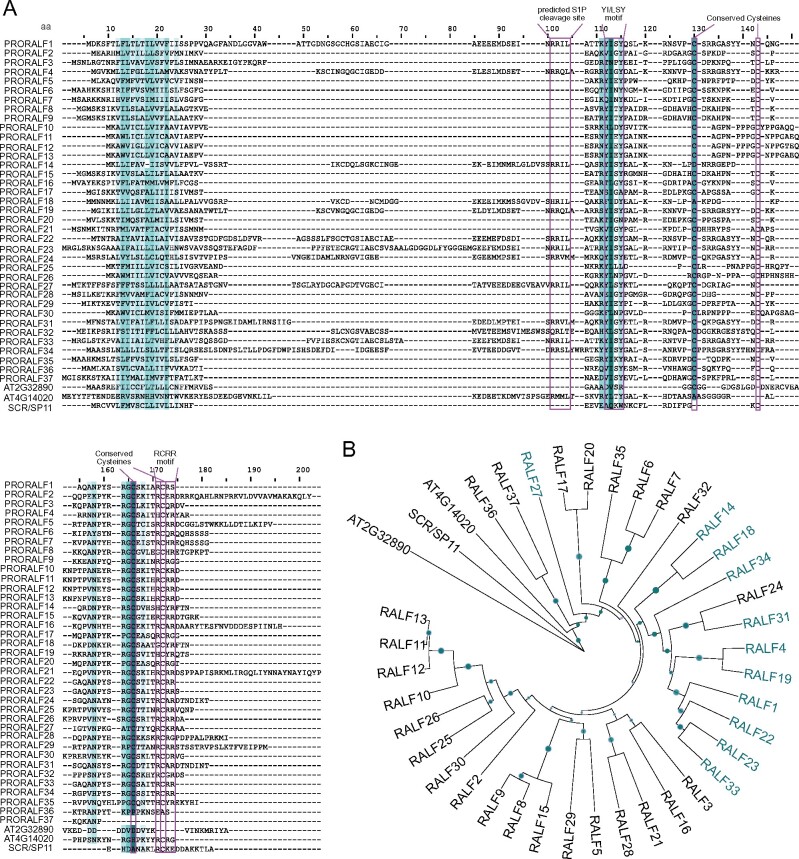
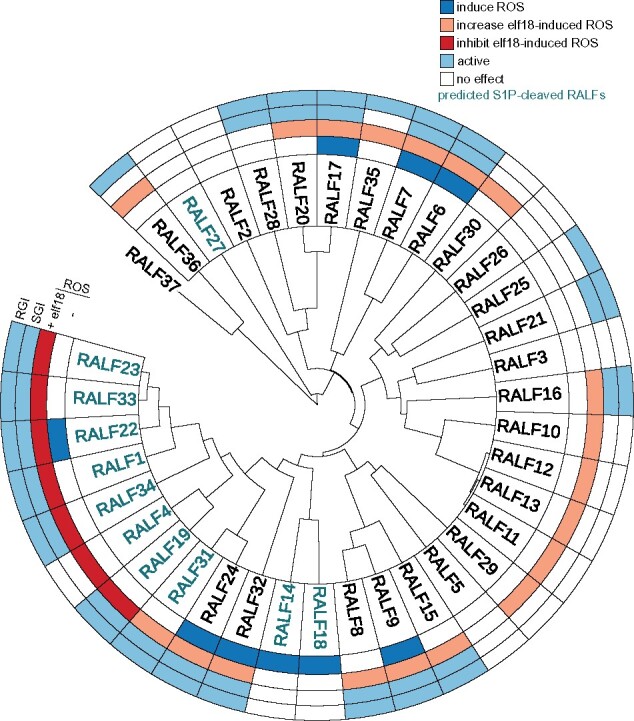
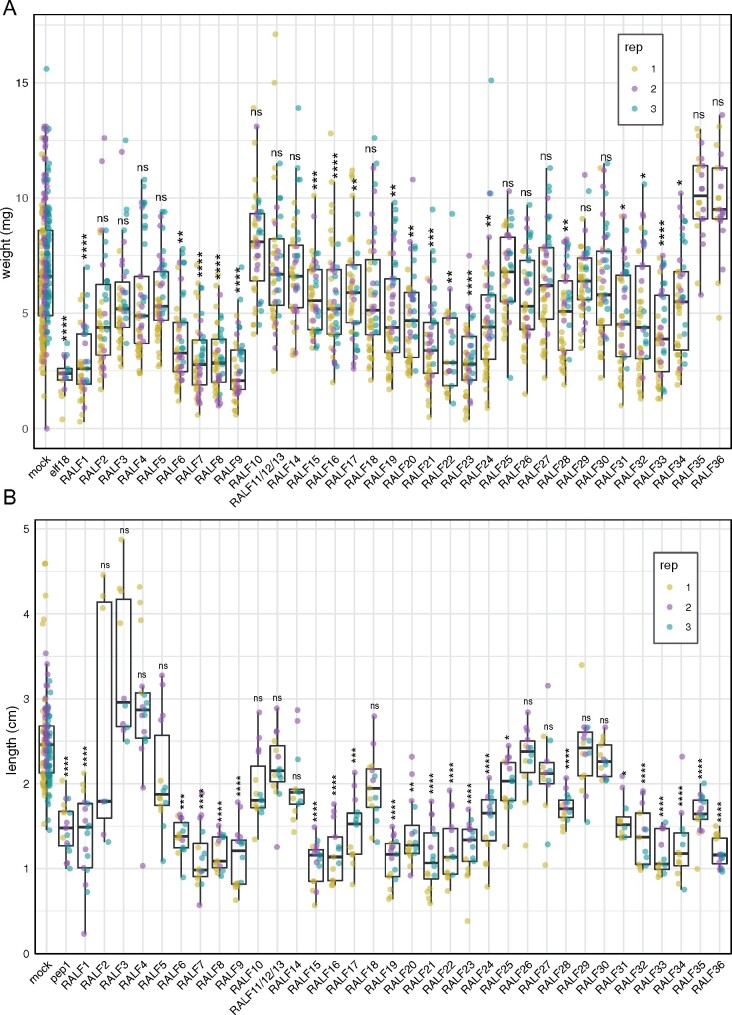
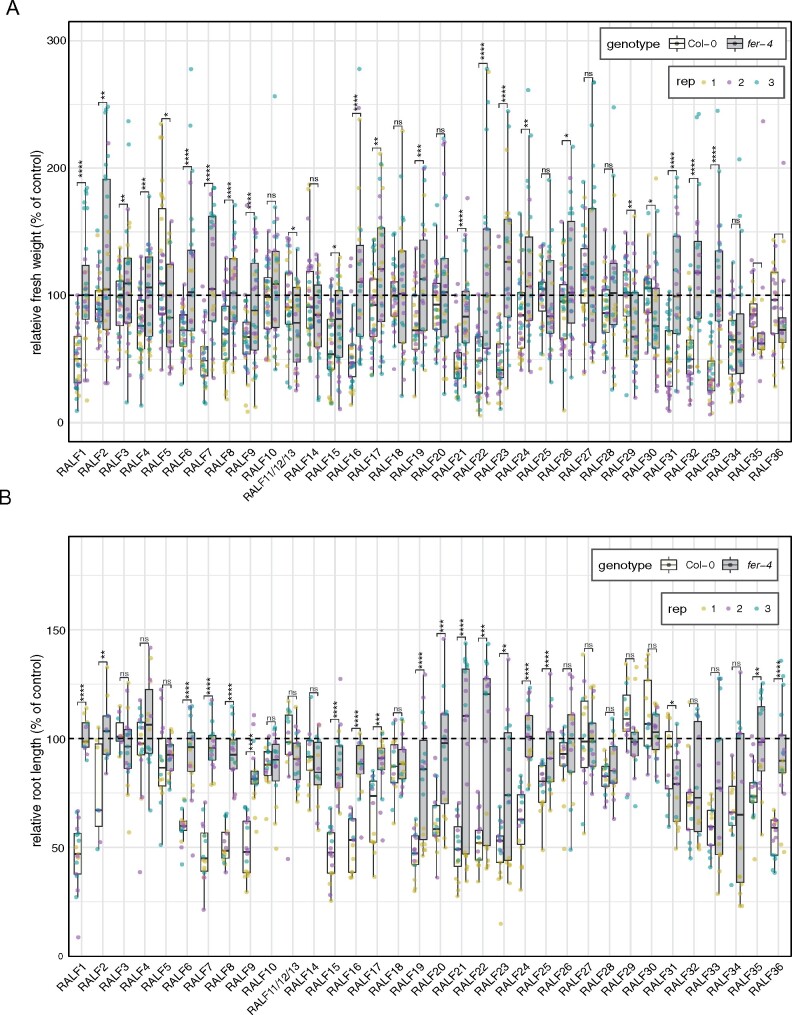
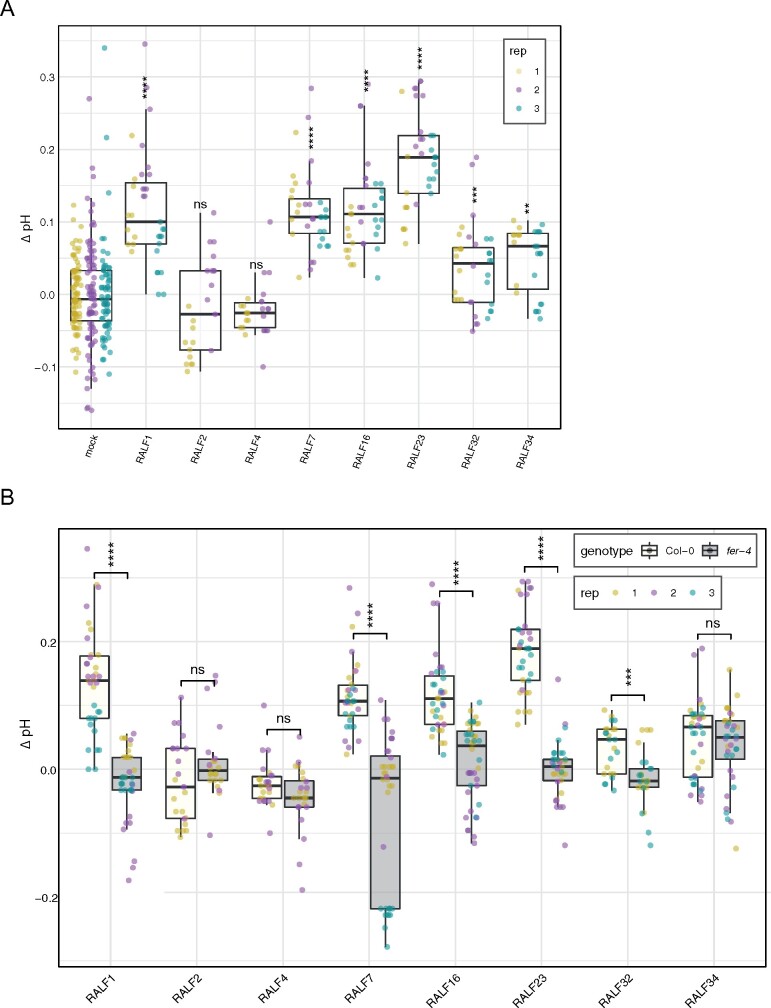
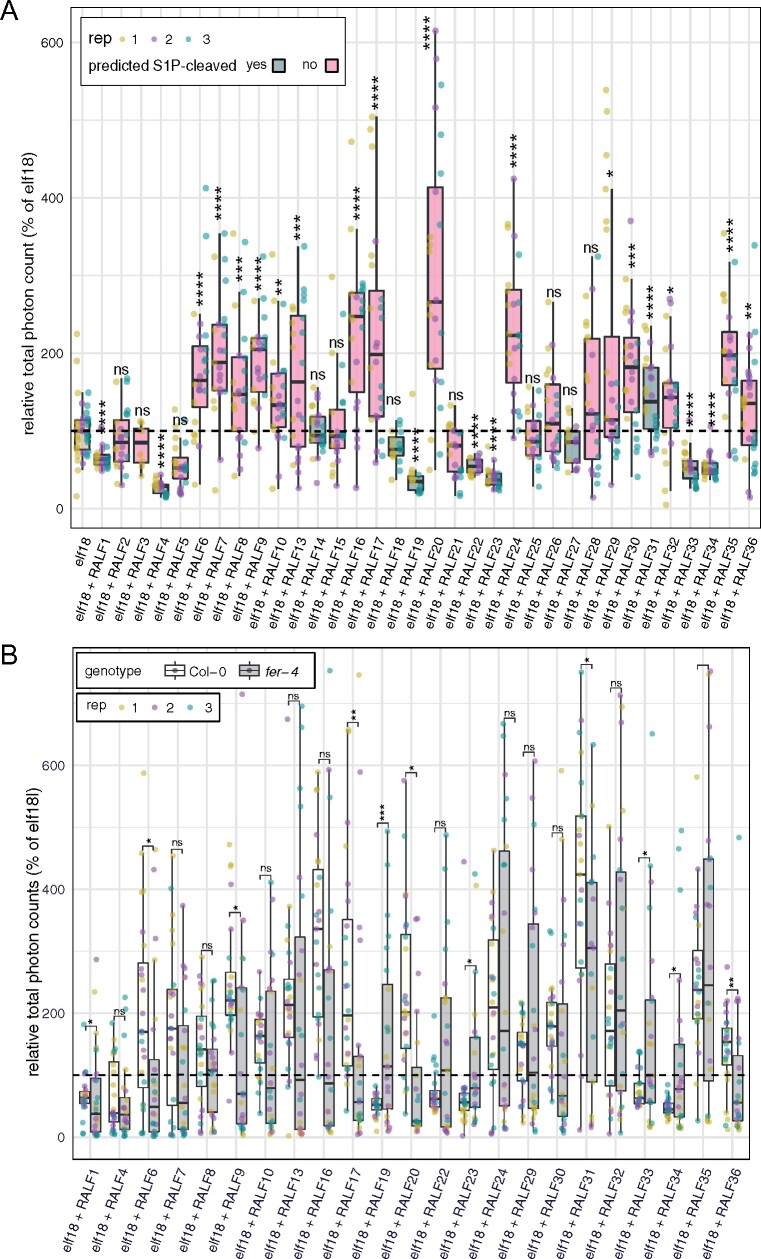
Plant peptide hormones are important players that control various aspects of the lives of plants. RAPID ALKALINIZATION FACTOR (RALF) peptides have recently emerged as important players in multiple physiological processes. Numerous studies have increased our understanding of the evolutionary processes that shaped the RALF family of peptides. Nevertheless, to date, there is no comprehensive, family-wide functional study on RALF peptides. Here, we analyzed the phylogeny of the proposed multigenic RALF peptide family in the model plant Arabidopsis (Arabidopsis thaliana), ecotype Col-0, and tested a variety of physiological responses triggered by RALFs. Our phylogenetic analysis reveals that two of the previously proposed RALF peptides are not genuine RALF peptides, which leads us to propose a revision to the consensus AtRALF peptide family annotation. We show that the majority of AtRALF peptides, when applied exogenously as synthetic peptides, induce seedling or root growth inhibition and modulate reactive oxygen species (ROS) production in Arabidopsis. Moreover, our findings suggest that alkalinization and growth inhibition are, generally, coupled characteristics of RALF peptides. Additionally, we show that for the majority of the peptides, these responses are genetically dependent on FERONIA, suggesting a pivotal role for this receptor kinase in the perception of multiple RALF peptides.
植物肽激素是控制植物生命各个方面的重要参与者。快速碱化因子(RALF)肽最近作为多种生理过程中的重要参与者出现。大量研究增加了我们对塑造 RALF 肽家族的进化过程的理解。然而,迄今为止,还没有对 RALF 肽进行全面的、全家族范围的功能研究。在这里,我们分析了拟南芥(Arabidopsis thaliana)模式植物 Col-0 生态型中拟多基因 RALF 肽家族的系统发育,并测试了 RALFs 引发的多种生理反应。我们的系统发育分析表明,以前提出的两种 RALF 肽不是真正的 RALF 肽,这导致我们提出对共识 AtRALF 肽家族注释进行修订。我们表明,大多数 AtRALF 肽作为合成肽外源性施用时,会诱导幼苗或根生长抑制,并调节拟南芥中活性氧(ROS)的产生。此外,我们的研究结果表明,一般来说,碱化和生长抑制是 RALF 肽的共同特征。此外,我们表明,对于大多数肽,这些反应在遗传上依赖于 FERONIA,这表明该受体激酶在感知多种 RALF 肽中起着关键作用。