Williams Andrew R, Krych Lukasz, Fauzan Ahmad Hajar, Nejsum Peter, Skovgaard Kerstin, Nielsen Dennis S, Thamsborg Stig M
Department of Veterinary and Animal Sciences, Faculty of Health and Medical Sciences, University of Copenhagen, Frederiksberg, Denmark.
Department of Food Sciences, Faculty of Science, University of Copenhagen, Frederiksberg, Denmark.
PLoS One. 2017 Oct 13;12(10):e0186546. doi: 10.1371/journal.pone.0186546. eCollection 2017.
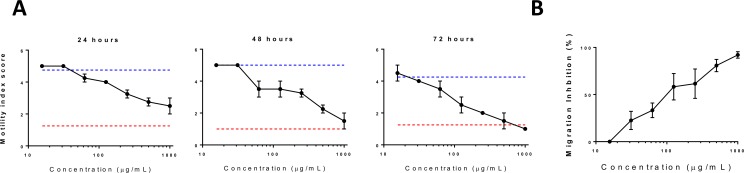
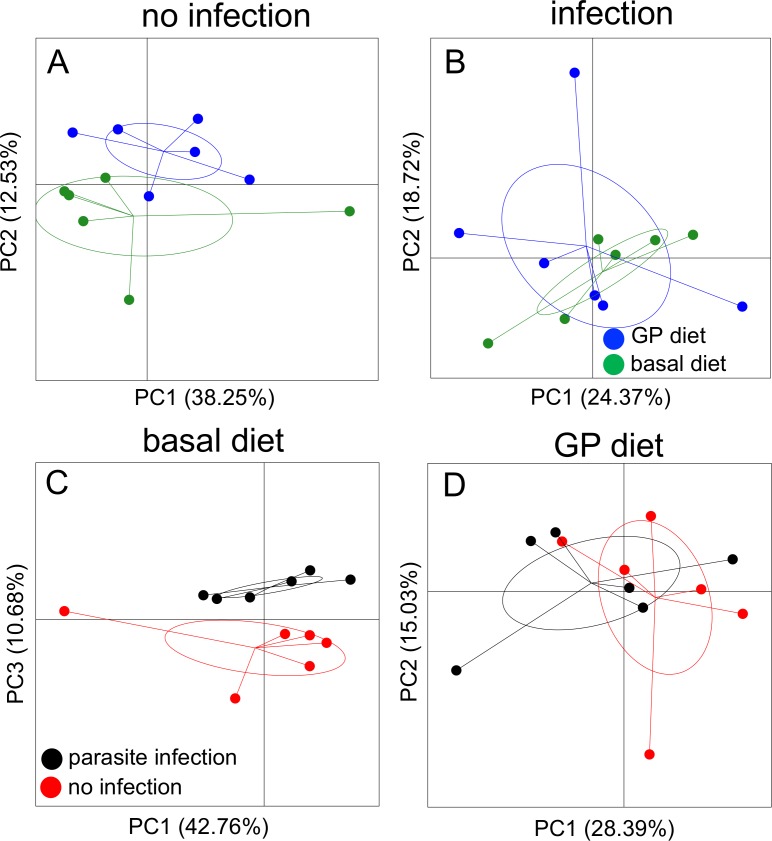
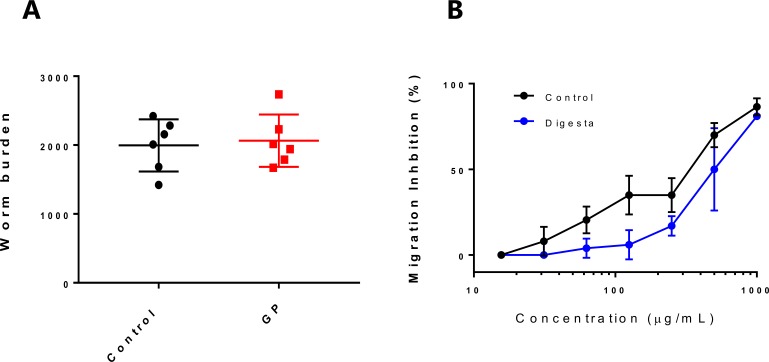
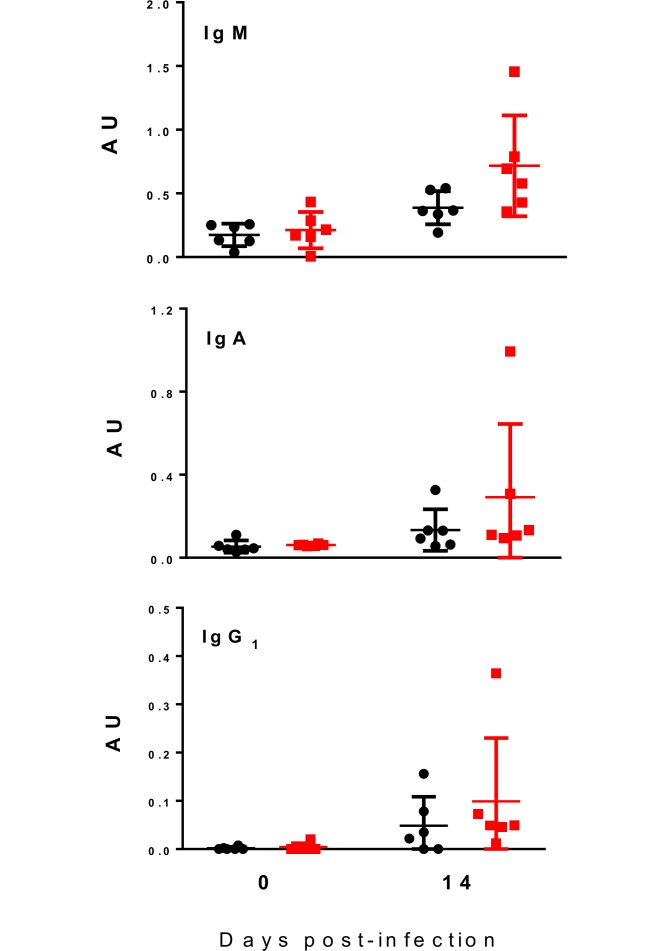
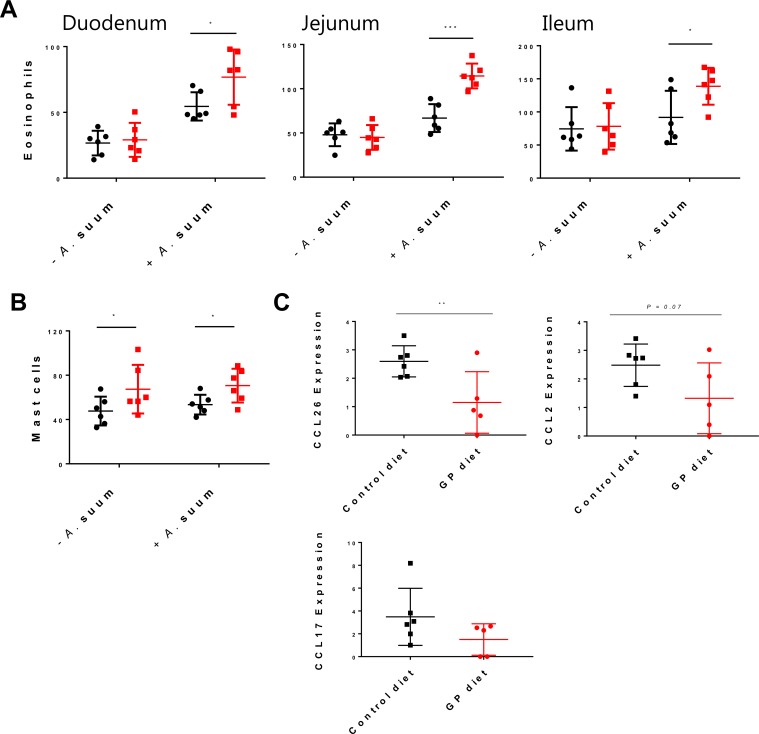
Polyphenols are a class of bioactive plant secondary metabolites that are thought to have beneficial effects on gut health, such as modulation of mucosal immune and inflammatory responses and regulation of parasite burdens. Here, we examined the interactions between a polyphenol-rich diet supplement and infection with the enteric nematode Ascaris suum in pigs. Pigs were fed either a basal diet or the same diet supplemented with grape pomace (GP), an industrial by-product rich in polyphenols such as oligomeric proanthocyanidins. Half of the animals in each group were then inoculated with A. suum for 14 days to assess parasite establishment, acquisition of local and systemic immune responses and effects on the gut microbiome. Despite in vitro anthelmintic activity of GP-extracts, numbers of parasite larvae in the intestine were not altered by GP-supplementation. However, the bioactive diet significantly increased numbers of eosinophils induced by A. suum infection in the duodenum, jejunum and ileum, and modulated gene expression in the jejunal mucosa of infected pigs. Both GP-supplementation and A. suum infection induced significant and apparently similar changes in the composition of the prokaryotic gut microbiota, and both also decreased concentrations of isobutyric and isovaleric acid (branched-chain short chain fatty acids) in the colon. Our results demonstrate that while a polyphenol-enriched diet in pigs may not directly influence A. suum establishment, it significantly modulates the subsequent host response to helminth infection. Our results suggest an influence of diet on immune function which may potentially be exploited to enhance immunity to helminths.
多酚是一类具有生物活性的植物次生代谢产物,被认为对肠道健康有益,例如调节黏膜免疫和炎症反应以及控制寄生虫负荷。在此,我们研究了富含多酚的饮食补充剂与猪肠道线虫猪蛔虫感染之间的相互作用。给猪喂食基础日粮或添加葡萄渣(GP)的相同日粮,葡萄渣是一种富含多酚(如低聚原花青素)的工业副产品。然后每组一半的动物接种猪蛔虫14天,以评估寄生虫的定植、局部和全身免疫反应的获得以及对肠道微生物群的影响。尽管GP提取物具有体外驱虫活性,但补充GP并未改变肠道内寄生虫幼虫的数量。然而,这种具有生物活性的日粮显著增加了猪蛔虫感染诱导的十二指肠、空肠和回肠中的嗜酸性粒细胞数量,并调节了感染猪空肠黏膜中的基因表达。补充GP和猪蛔虫感染均在原核肠道微生物群的组成上引起了显著且明显相似的变化,并且两者还降低了结肠中异丁酸和异戊酸(支链短链脂肪酸)的浓度。我们的结果表明,虽然猪的富含多酚的饮食可能不会直接影响猪蛔虫的定植,但它会显著调节宿主随后对蠕虫感染的反应。我们的结果表明饮食对免疫功能有影响,这可能潜在地被利用来增强对蠕虫的免疫力。