Lam Hilaire C, Liu Heng-Jia, Baglini Christian V, Filippakis Harilaos, Alesi Nicola, Nijmeh Julie, Du Heng, Lope Alicia Llorente, Cottrill Katherine A, Handen Adam, Asara John M, Kwiatkowski David J, Ben-Sahra Issam, Oldham William M, Chan Stephen Y, Henske Elizabeth P
Department of Medicine, Pulmonary and Critical Care Medicine, Brigham and Women's Hospital and Harvard Medical School, Boston, MA, USA.
Department of Medicine, Division of Cardiology, Center for Pulmonary Vascular Biology and Medicine, Pittsburgh Heart, Lung, Blood, and Vascular Medicine Institute, University of Pittsburgh School of Medicine and University of Pittsburgh Medical Center, Pittsburgh, PA, USA.
Oncotarget. 2017 Aug 4;8(39):64714-64727. doi: 10.18632/oncotarget.19947. eCollection 2017 Sep 12.
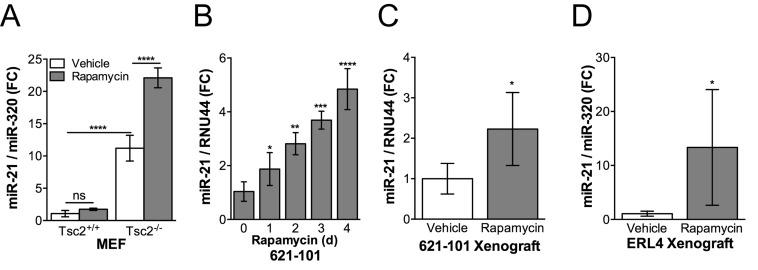
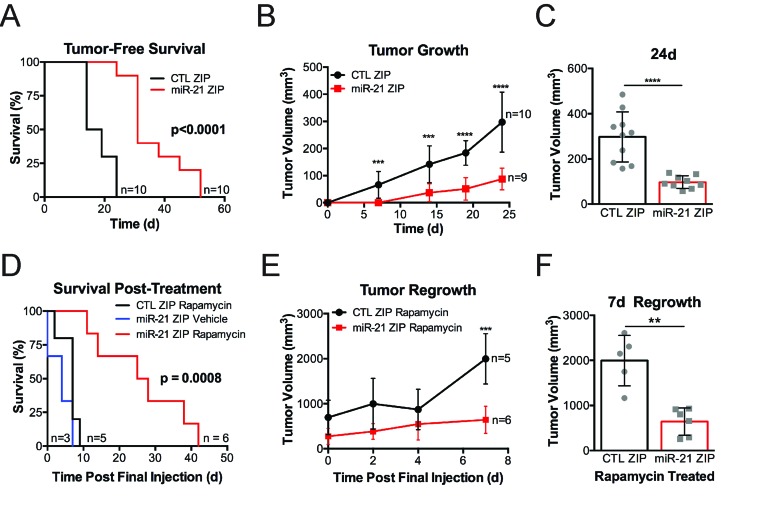
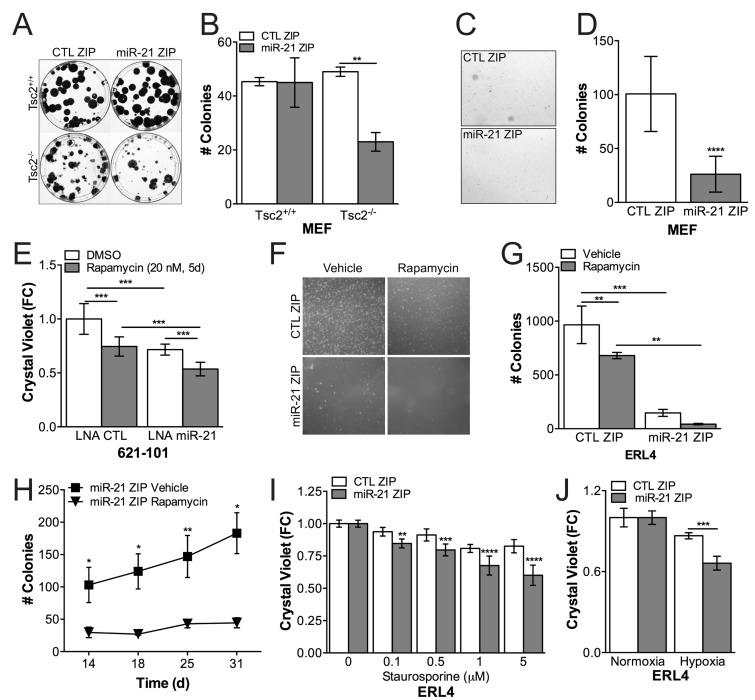
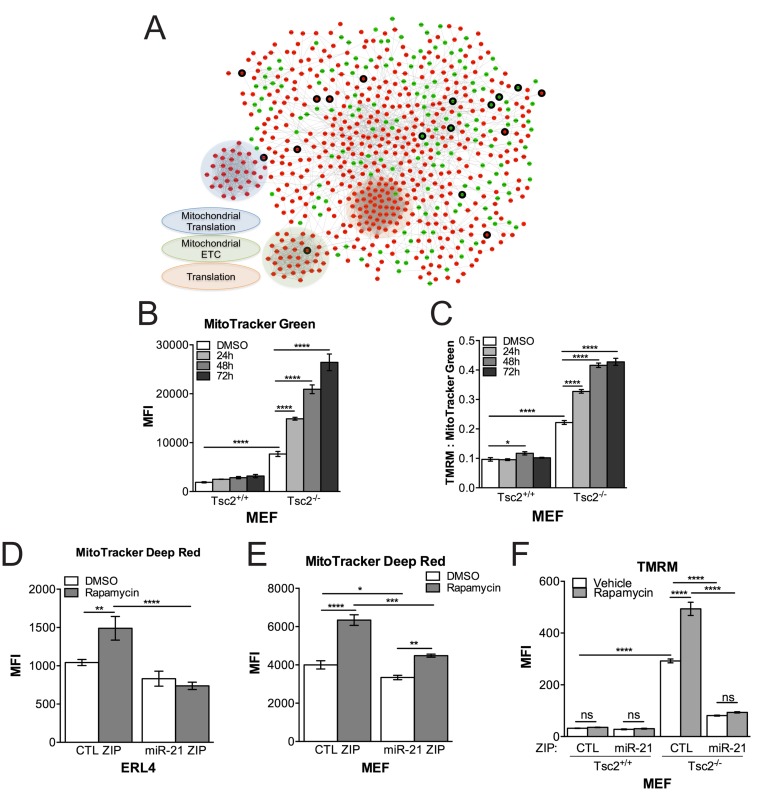
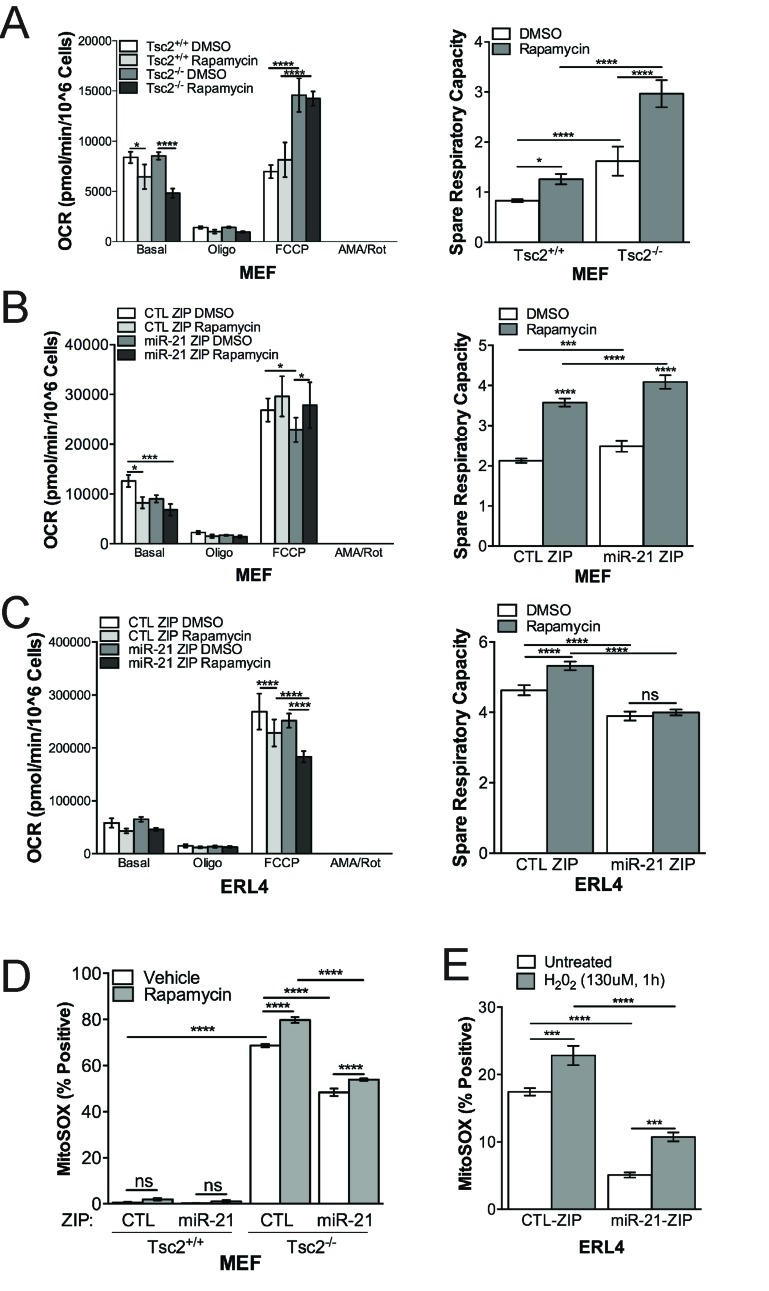
mTORC1 hyperactivation drives the multi-organ hamartomatous disease tuberous sclerosis complex (TSC). Rapamycin inhibits mTORC1, inducing partial tumor responses; however, the tumors regrow following treatment cessation. We discovered that the oncogenic miRNA, miR-21, is increased in Tsc2-deficient cells and, surprisingly, further increased by rapamycin. To determine the impact of miR-21 in TSC, we inhibited miR-21 . miR-21 inhibition significantly repressed the tumorigenic potential of Tsc2-deficient cells and increased apoptosis sensitivity. Tsc2-deficient cells' clonogenic and anchorage independent growth were reduced by ∼50% (<0.01) and ∼75% (<0.0001), respectively, and combined rapamycin treatment decreased soft agar growth by ∼90% (<0.0001). miR-21 inhibition also increased sensitivity to apoptosis. Through a network biology-driven integration of RNAseq data, we discovered that miR-21 promotes mitochondrial adaptation and homeostasis in Tsc2-deficient cells. miR-21 inhibition reduced mitochondrial polarization and function in Tsc2-deficient cells, with and without co-treatment with rapamycin. Importantly, miR-21 inhibition limited Tsc2-deficient tumor growth , reducing tumor size by approximately 3-fold (<0.0001). When combined with rapamcyin, miR-21 inhibition showed even more striking efficacy, both during treatment and after treatment cessation, with a 4-fold increase in median survival following rapamycin cessation (=0.0008). We conclude that miR-21 promotes mTORC1-driven tumorigenesis a mechanism that involves the mitochondria, and that miR-21 is a potential therapeutic target for TSC-associated hamartomas and other mTORC1-driven tumors, with the potential for synergistic efficacy when combined with rapalogs.
mTORC1的过度激活会引发多器官错构瘤疾病结节性硬化症(TSC)。雷帕霉素可抑制mTORC1,诱导部分肿瘤反应;然而,在停止治疗后肿瘤会复发。我们发现,致癌性miRNA miR-21在Tsc2缺陷细胞中增加,且令人惊讶的是,雷帕霉素会使其进一步增加。为了确定miR-21在TSC中的作用,我们抑制了miR-21。抑制miR-21可显著抑制Tsc2缺陷细胞的致瘤潜力,并增加凋亡敏感性。Tsc2缺陷细胞的克隆形成能力和不依赖贴壁生长能力分别降低了约50%(<0.01)和约75%(<0.0001),联合雷帕霉素治疗使软琼脂生长降低了约90%(<0.0001)。抑制miR-21还增加了对凋亡的敏感性。通过基于网络生物学的RNAseq数据整合,我们发现miR-21促进Tsc2缺陷细胞中的线粒体适应和稳态。无论有无与雷帕霉素联合处理,抑制miR-21均可降低Tsc2缺陷细胞中的线粒体极化和功能。重要的是,抑制miR-21可限制Tsc2缺陷肿瘤的生长,使肿瘤大小减少约3倍(<0.0001)。当与雷帕霉素联合使用时,抑制miR-21在治疗期间和停止治疗后均显示出更显著的疗效,雷帕霉素停止使用后中位生存期增加了4倍(=0.0008)。我们得出结论,miR-21促进mTORC1驱动的肿瘤发生,这一机制涉及线粒体,并且miR-21是TSC相关错构瘤和其他mTORC1驱动肿瘤的潜在治疗靶点,与雷帕霉素类似物联合使用时具有协同疗效的潜力。