Wang Shimin, Li Zhi'an, Hu Guoming
Department of Nephrology, Shaoxing People's Hospital, Shaoxing Hospital of Zhejiang University, 312000, Zhejiang, China.
Department of Surgical Oncology, Shaoxing Second Hospital, 312000, Zhejiang, China.
Oncotarget. 2017 Jun 29;8(39):66382-66391. doi: 10.18632/oncotarget.18807. eCollection 2017 Sep 12.
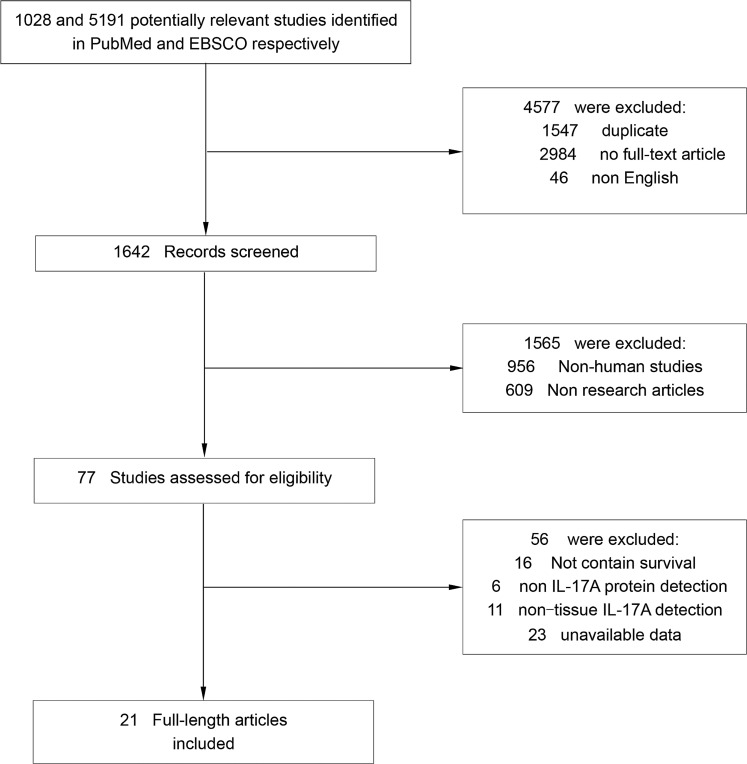
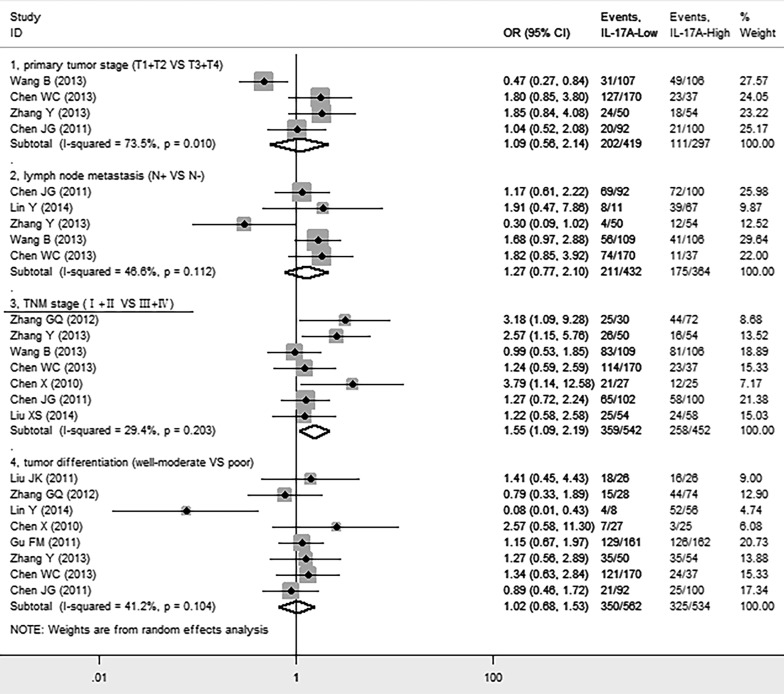
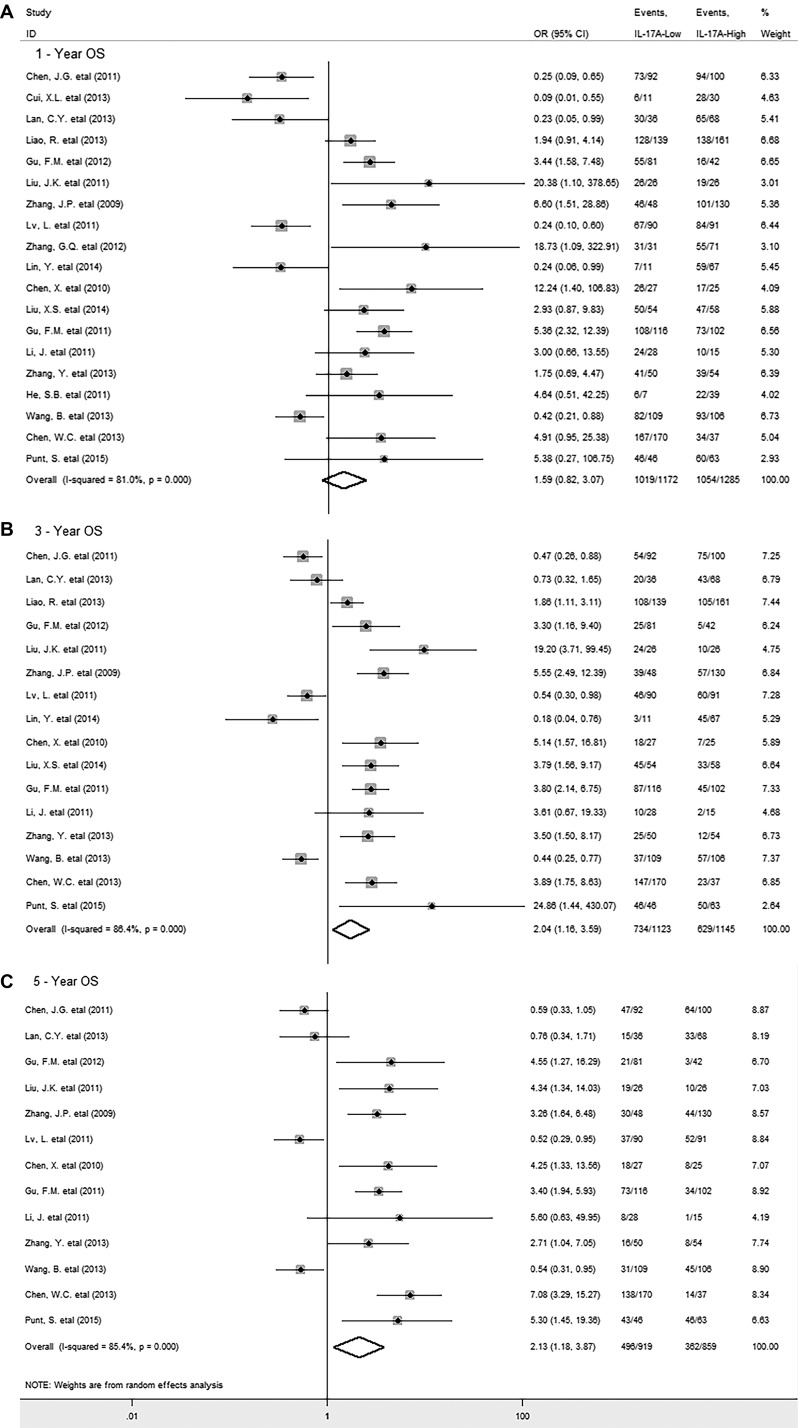
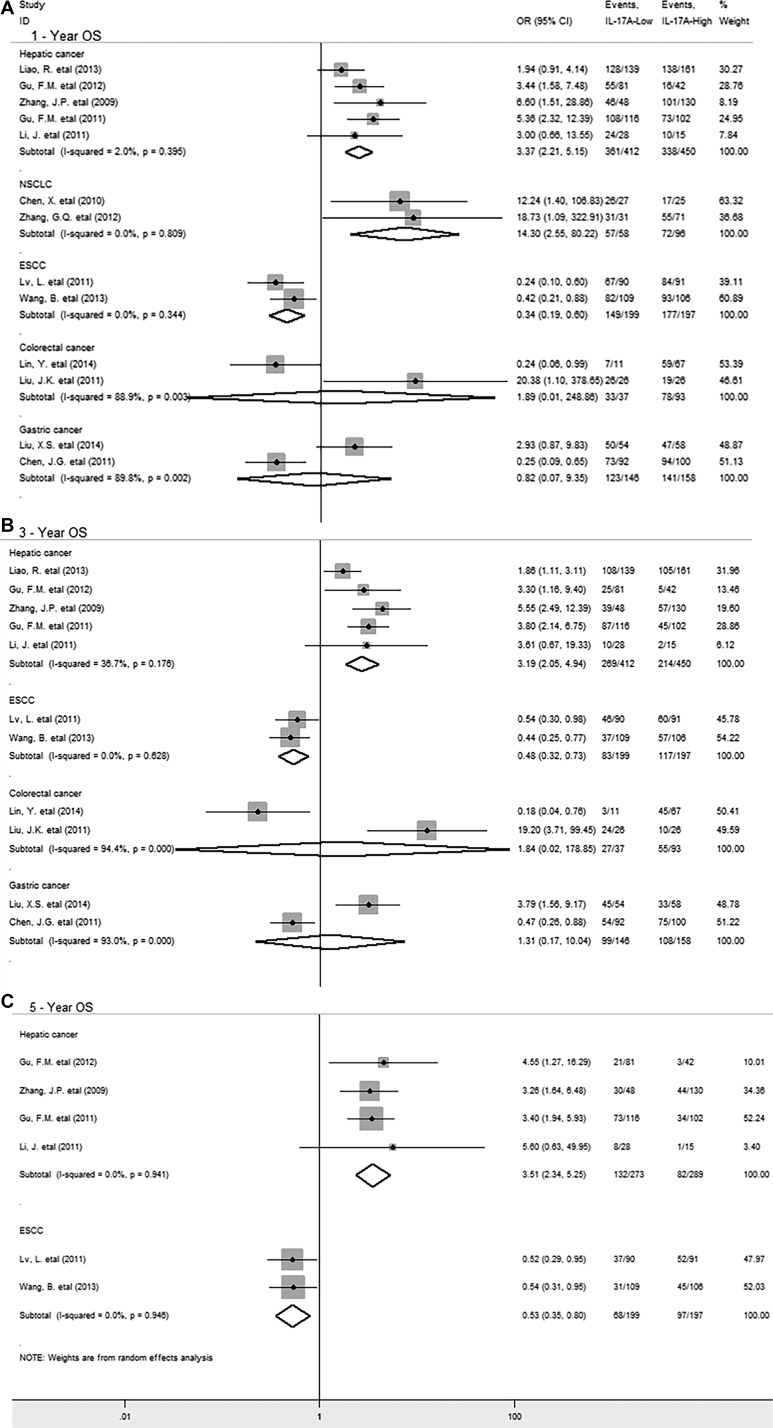
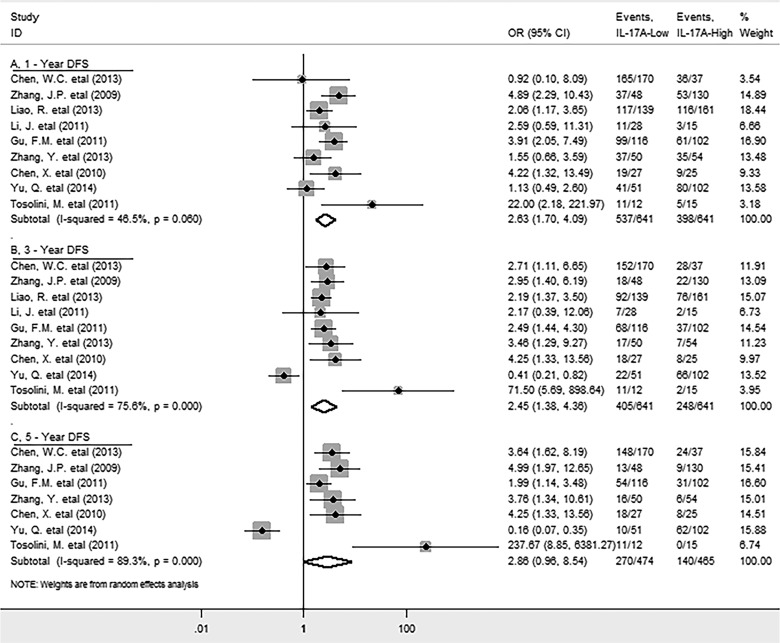
IL-17A is an important proinflammatory cytokine which is frequently elevated in tumor microenvironment. However, the role of intratumoral IL-17A in solid tumors remains controversial. Herein, we conducted a meta-analysis to assess the prognostic impact of intratumoral IL-17A in patients with solid tumor. PubMed and EBSCO were searched to identify the studies evaluating the associations between intratumoral IL-17A measured by immunohistochemistry (IHC) and overall survival (OS) and disease-free survival (DFS) in solid tumors. A total of 2972 patients with solid tumor from 21 published studies were incorporated into this meta-analysis. We found that high level of intratumoral IL-17A was significantly associated with worse 3-year, 5-year OS and 1-year, 3-year DFS, but not with 1-year OS or 5-year DFS in solid tumors. In addition, in stratified analyses by cancer types, IL-17A overexpression was significantly associated with worse OS in hepatic carcinoma, but with improved OS in esophageal squamous cell carcinoma (ESCC). Furthermore, high IL-17A expression positively correlated with advanced TNM stage. In conclusion, High expression of intratumoral IL-17A leads to an unfavorable clinical outcome in majority of solid tumors, implicating IL-17A is a valuable biomarker for prognostic prediction of human solid malignances and targeting it may have a potential for effective treatment.
白细胞介素-17A(IL-17A)是一种重要的促炎细胞因子,在肿瘤微环境中常升高。然而,肿瘤内IL-17A在实体瘤中的作用仍存在争议。在此,我们进行了一项荟萃分析,以评估肿瘤内IL-17A对实体瘤患者的预后影响。通过检索PubMed和EBSCO来确定评估免疫组织化学(IHC)检测的肿瘤内IL-17A与实体瘤总生存期(OS)和无病生存期(DFS)之间关联的研究。本荟萃分析纳入了来自21项已发表研究的共2972例实体瘤患者。我们发现,肿瘤内IL-17A水平高与实体瘤患者较差的3年、5年总生存期以及1年、3年无病生存期显著相关,但与1年总生存期或5年无病生存期无关。此外,在按癌症类型进行的分层分析中,IL-17A过表达与肝癌患者较差的总生存期显著相关,但与食管鳞状细胞癌(ESCC)患者总生存期改善相关。此外,高IL-17A表达与晚期TNM分期呈正相关。总之,肿瘤内IL-17A高表达在大多数实体瘤中导致不良临床结局,这表明IL-17A是人类实体恶性肿瘤预后预测的有价值生物标志物,针对它进行靶向治疗可能具有有效治疗的潜力。