Ikewuchi Jude Chigozie, Ikewuchi Catherine Chidinma, Igboh Ngozi Mercy, Mark-Balm Telema
Department of Biochemistry, Faculty of Science, University of Port Harcourt, P.M.B. 5323, Port Harcourt, Nigeria.
Department of Biochemistry, Faculty of Science, Abia State University, P.M.B. 2000, Uturu, Nigeria.
EXCLI J. 2011 Dec 12;10:312-321. eCollection 2011.
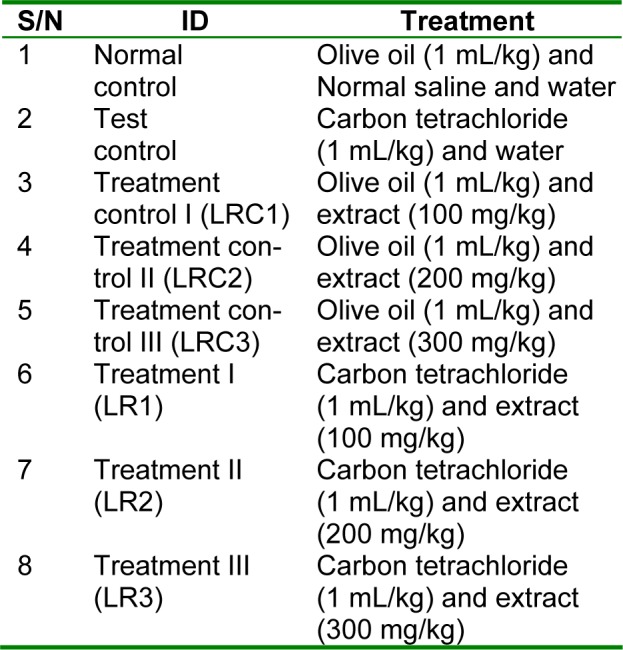
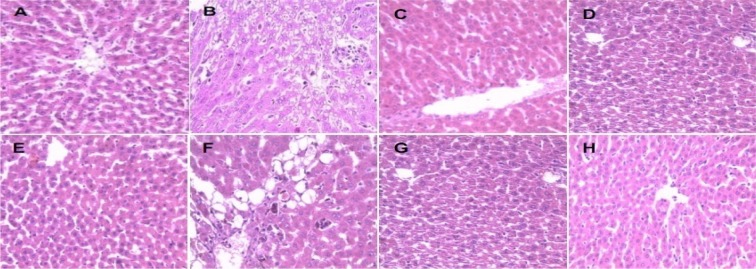
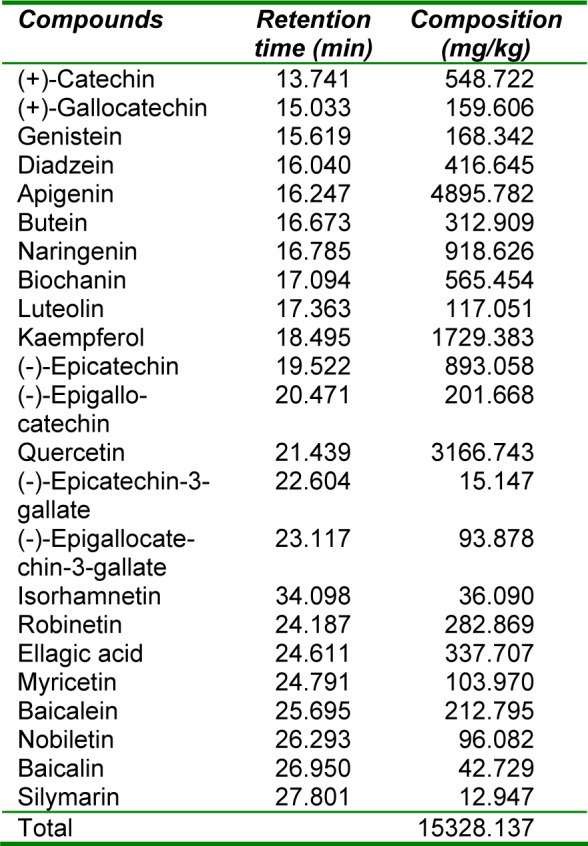
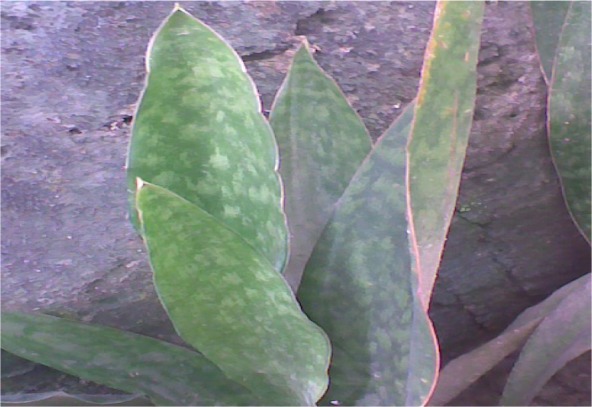
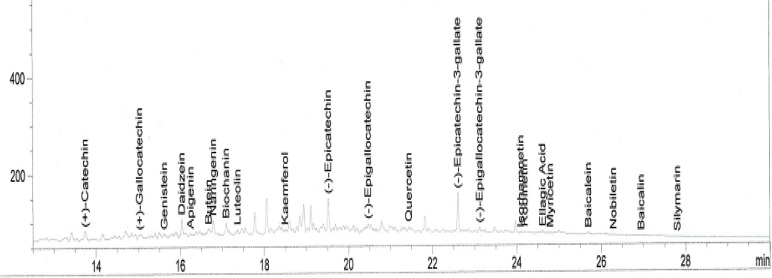
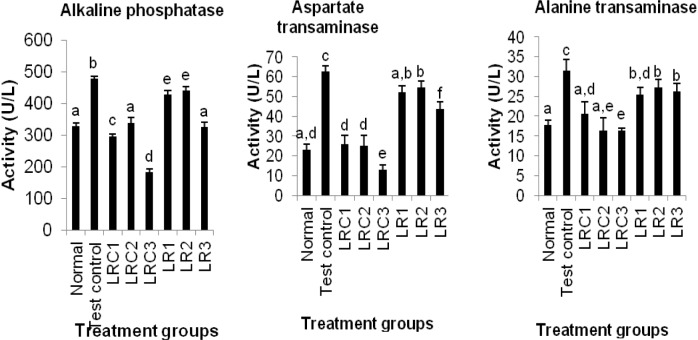
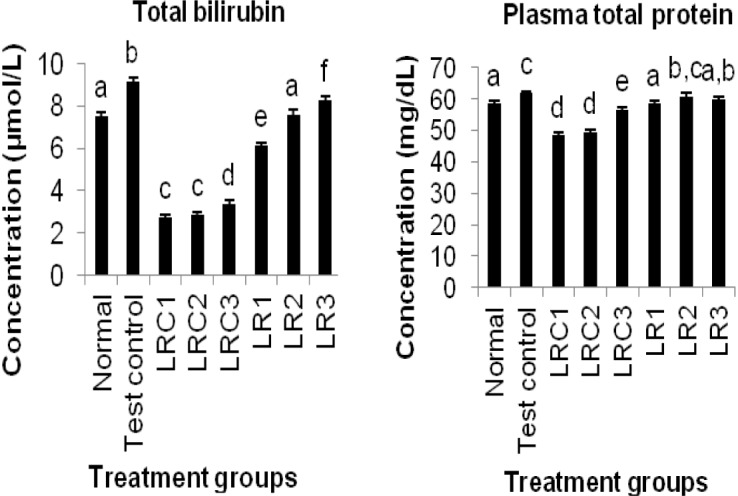
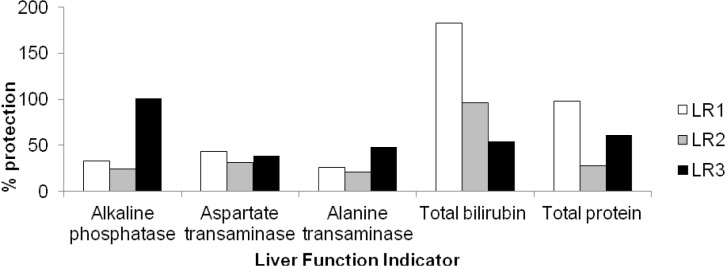
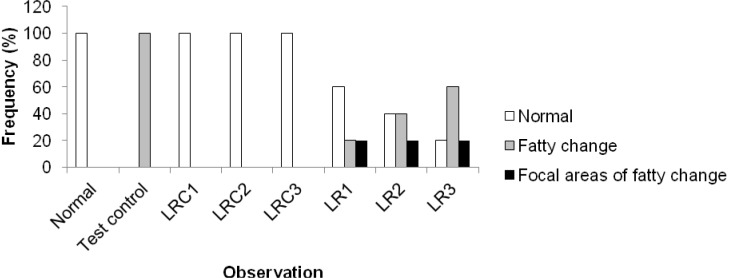
The ability of an aqueous extract of the rhizomes of to protect against carbon tetrachloride induced liver injury was investigated in Wistar albino rats. The carbon tetrachloride was prepared 1:5 (v:v) in olive oil, and administered subcutaneously at 1 mL/kg body weight. The extract was administered to both normal and carbon tetrachloride treated rats at 100, 200 and 300 mg/kg. On gas chromatographic analysis of the extract, twenty nine known flavonoids were detected, consisting mainly of 31.94 % apigenin, 20.66 % quercetin, 11.28 % kaempferol, 5.99 % naringenin, 5.83 % (-)-epicatechin, 3.69 % biochanin, 3.58 % (+)-catechin, 2.72 % diadzein, 2.20 % ellagic acid, 2.04 % butein. Compared to test control, the treatment dose dependently produced significantly (<0.05) lower alkaline phosphatase, aspartate transaminase and alanine transaminase activities. The plasma total bilirubin and total protein levels of the test animals were lower though not significantly. The hepatic histopathological studies showed that carbon tetrachloride caused fatty degeneration of hepatocytes, which was inhibited by pre-treatment with the extract; thus, confirming the results of the biochemical studies. The results of this study indicated that treatment with the plant extracts protects the liver against carbon tetrachloride induced hepatotoxicity. This supports the use of in traditional health care for managing liver problems.
在Wistar白化大鼠中研究了[植物名称]根茎水提取物预防四氯化碳诱导的肝损伤的能力。四氯化碳按1:5(体积比)溶于橄榄油中,以1 mL/kg体重皮下注射给药。提取物以100、200和300 mg/kg的剂量分别给予正常大鼠和经四氯化碳处理的大鼠。对提取物进行气相色谱分析,检测到29种已知的黄酮类化合物,主要包括31.94%的芹菜素、20.66%的槲皮素、11.28%的山奈酚、5.99%的柚皮素、5.83%的(-)-表儿茶素、3.69%的鹰嘴豆芽素、3.58%的(+)-儿茶素、2.72%的大豆苷元、2.20%的鞣花酸、2.04%的布枯素。与试验对照组相比,治疗剂量依赖性地使碱性磷酸酶、天冬氨酸转氨酶和丙氨酸转氨酶活性显著降低(<0.05)。试验动物的血浆总胆红素和总蛋白水平较低,但差异不显著。肝脏组织病理学研究表明,四氯化碳导致肝细胞脂肪变性,而提取物预处理可抑制这种变性;因此,证实了生化研究结果。本研究结果表明,用该植物提取物治疗可保护肝脏免受四氯化碳诱导的肝毒性。这支持了[植物名称]在传统医疗保健中用于管理肝脏问题的应用。