Liu Xiaozhi, Ren Wenbo, Jiang Zhongmin, Su Zhiguo, Ma Xiaofang, Li Yanxia, Jiang Rongcai, Zhang Jianning, Yang Xinyu
Department of Neurosurgery, Tianjin Medical University General Hospital, Tianjin 300052, P.R. China.
Department of Neurology, The Fifth Central Hospital of Tianjin, Tianjin 300450, P.R. China.
Int J Mol Med. 2017 Dec;40(6):1631-1638. doi: 10.3892/ijmm.2017.3167. Epub 2017 Sep 29.
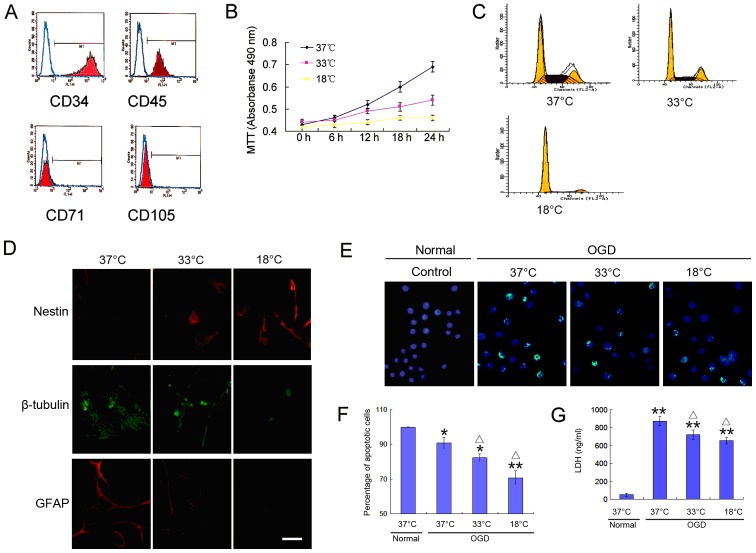
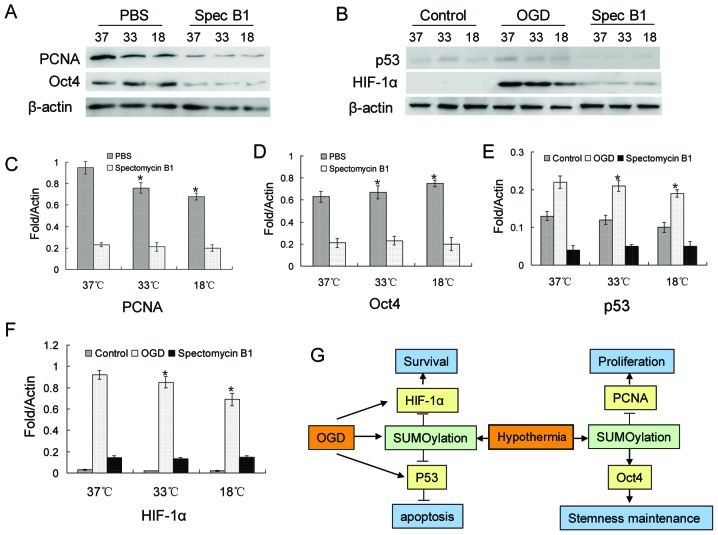
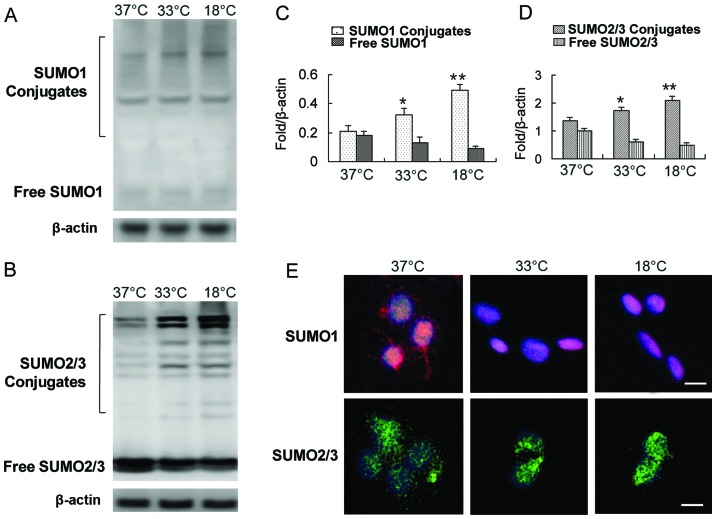
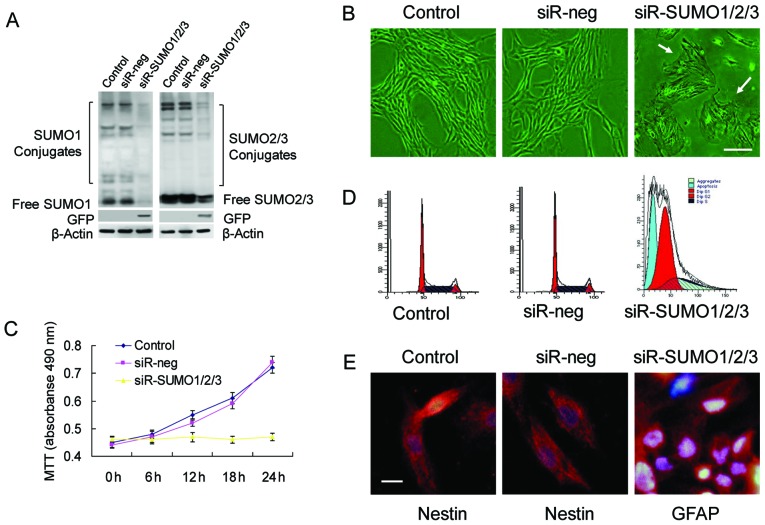
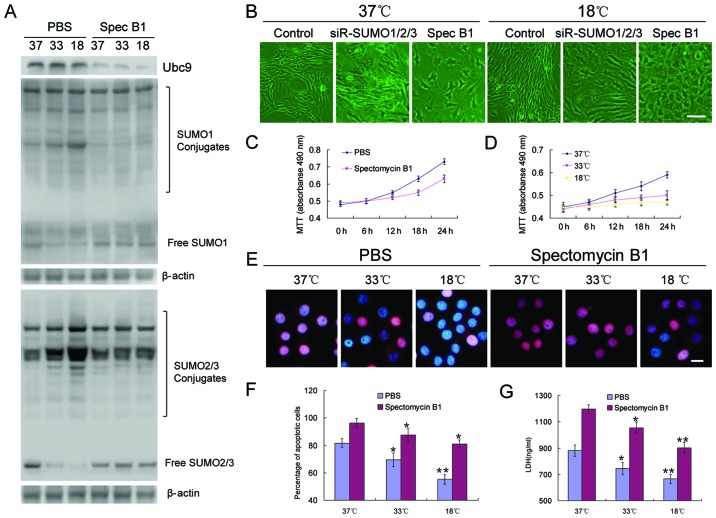
Hypothermia therapy has a positive effect on patients with severe brain injury. Recent studies have shown that mild hypothermia increases the survival of bone marrow-derived mesenchymal stem cells (BMSCs) in a hypoxic environment; however, the underlying mechanisms are not yet fully understood. Small ubiquitin-like modifiers (SUMOs) are sensitive to temperature stress reactions and are considered to exert a protective effect. In this study, we examined the protective effects of hypothermia on BMSCs in terms of SUMO protein modification. First, we found that mild hypothermia inhibited the proliferation and differentiation of BMSCs and increased cell tolerance to a hypoxic environment. Second, hypothermia significantly increased the levels of SUMO modification of multiple proteins in BMSCs. The knockdown of SUMO1/2/3 induced the rapid aging of the BMSCs, while the inhibition of the SUMO-conjugating enzyme, Ubc9, reduced cell proliferation and increased the proportion of BMSCs differentiating into nerve cells. Moreover, the tolerance of BMSCs to the hypoxic environment was significantly decreased. Lastly, we investigated 4 reported SUMO target proteins, anti-proliferating cell nuclear antigen, octamer-binding transcription factor 4, p53 and hypoxia-inducible factor-1α, to confirm that SUMO modification was indeed involved in maintaining the proliferation, inhibiting differentiation and enhancing the resistance of BMSCs against adverse conditions. Taken together, our results indicate that the SUMO pathway is involved in the response to hypothermic stress, and that SUMOylation may be an important protective mechanism against hypothermia for the survival of BMSCs under unfavorable conditions.
低温疗法对重度脑损伤患者具有积极作用。最近的研究表明,轻度低温可提高骨髓间充质干细胞(BMSC)在缺氧环境中的存活率;然而,其潜在机制尚未完全明确。小泛素样修饰物(SUMO)对温度应激反应敏感,被认为具有保护作用。在本研究中,我们从SUMO蛋白修饰的角度研究了低温对BMSC的保护作用。首先,我们发现轻度低温抑制了BMSC的增殖和分化,并提高了细胞对缺氧环境的耐受性。其次,低温显著增加了BMSC中多种蛋白的SUMO修饰水平。敲低SUMO1/2/3会诱导BMSC快速老化,而抑制SUMO结合酶Ubc9则会降低细胞增殖,并增加BMSC分化为神经细胞的比例。此外,BMSC对缺氧环境的耐受性显著降低。最后,我们研究了4种已报道的SUMO靶蛋白,即抗增殖细胞核抗原、八聚体结合转录因子4、p53和缺氧诱导因子-1α,以确认SUMO修饰确实参与维持BMSC的增殖、抑制分化并增强其对不利条件的抵抗力。综上所述,我们的结果表明SUMO通路参与了对低温应激的反应,并且SUMO化可能是BMSC在不利条件下生存的一种重要的抗低温保护机制。