El-Gendy Atef M, Wasfy Momtaz O, Mansour Adel M, Oyofo Buhari, Yousry Marwa M, Klena John D
United States Naval Medical Research, Egypt.
Central Public Health Laboratories, Egypt.
Afr J Lab Med. 2013 Jul 26;2(1):34. doi: 10.4102/ajlm.v2i1.34. eCollection 2013.
The genus spp. is a common cause of human acute bacterial enteritis and travellers' diarrhoea worldwide.
To determine whether multiple serial isolations of spp., when obtained from a single child, represented the same or a different organism.
In a birth cohort study conducted in Egypt, numerous children showed serial isolations of spp. Of these, 13 children were selected from different households based on the successive isolation of six or more isolates from stool samples.
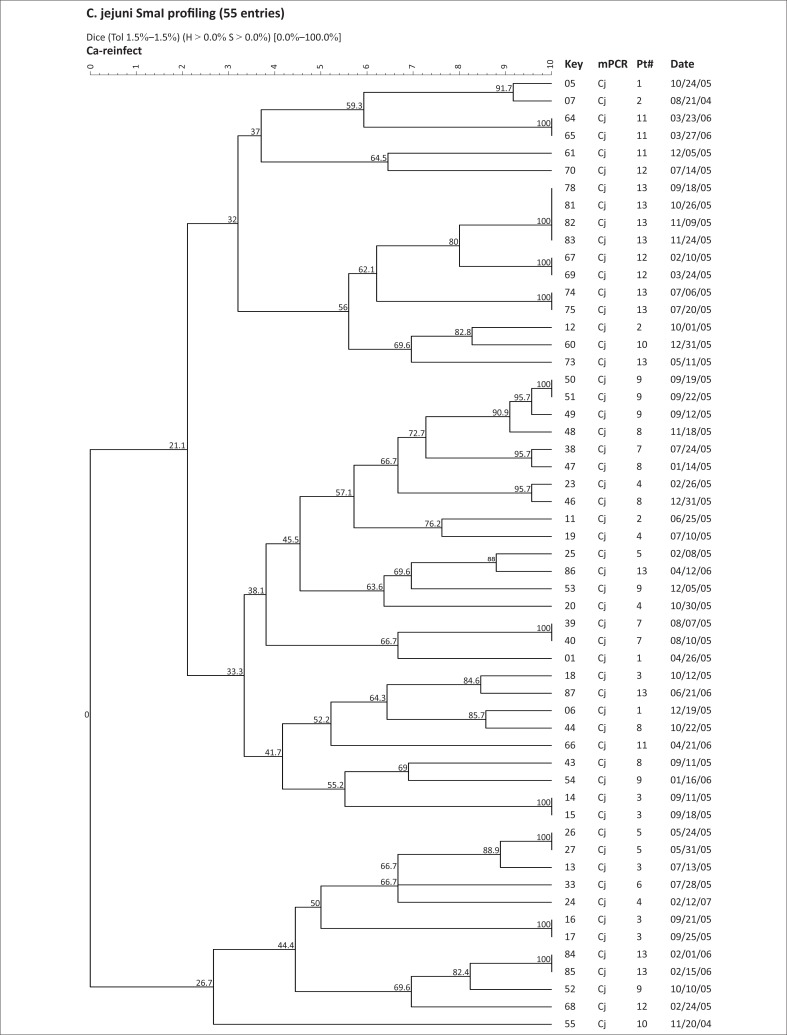
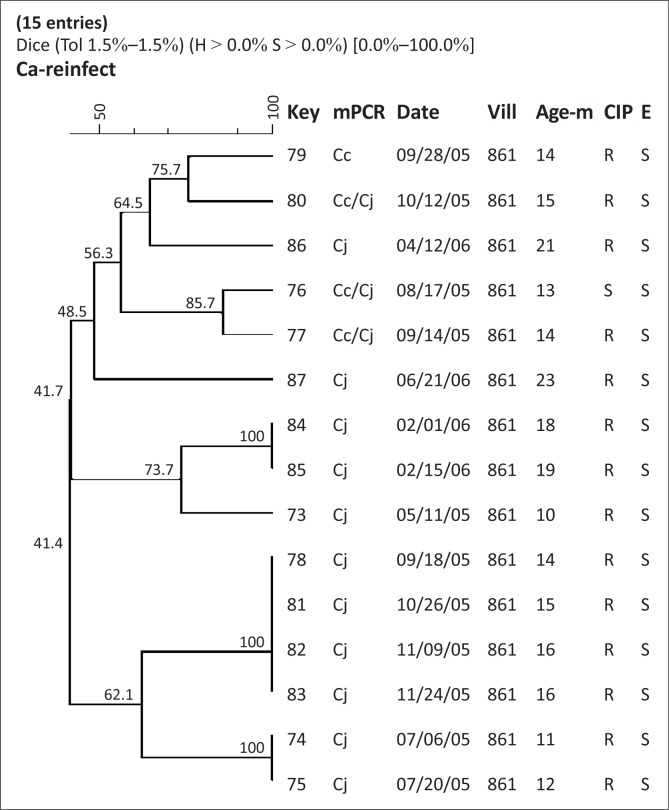
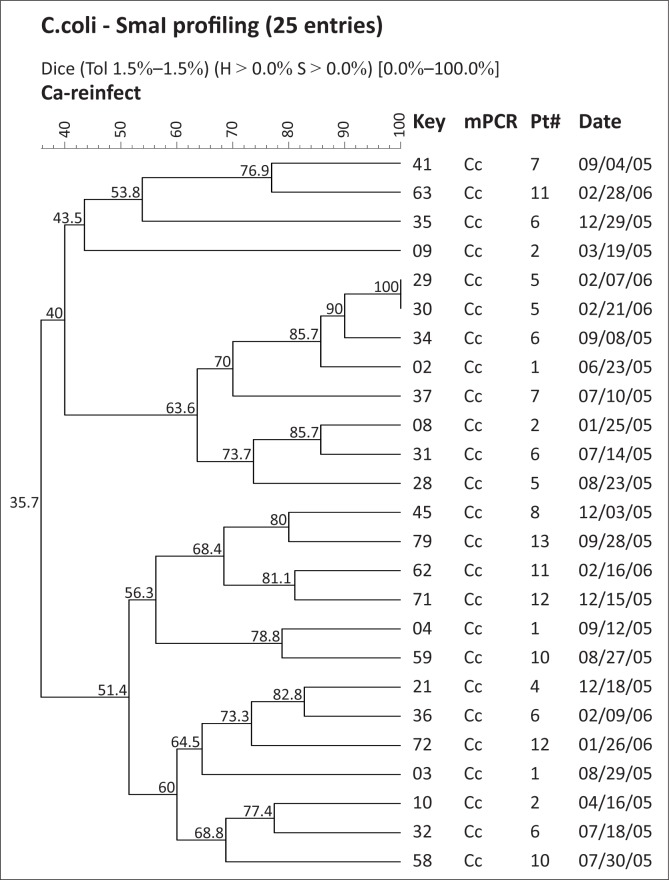
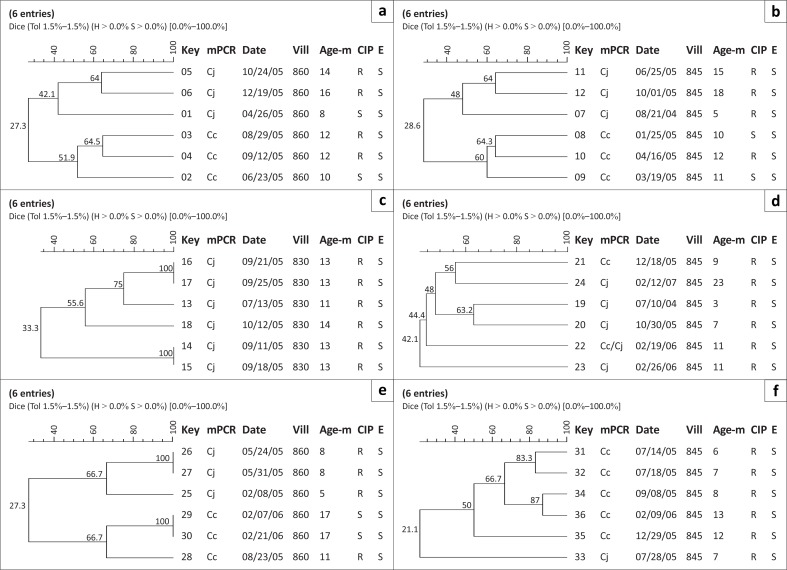
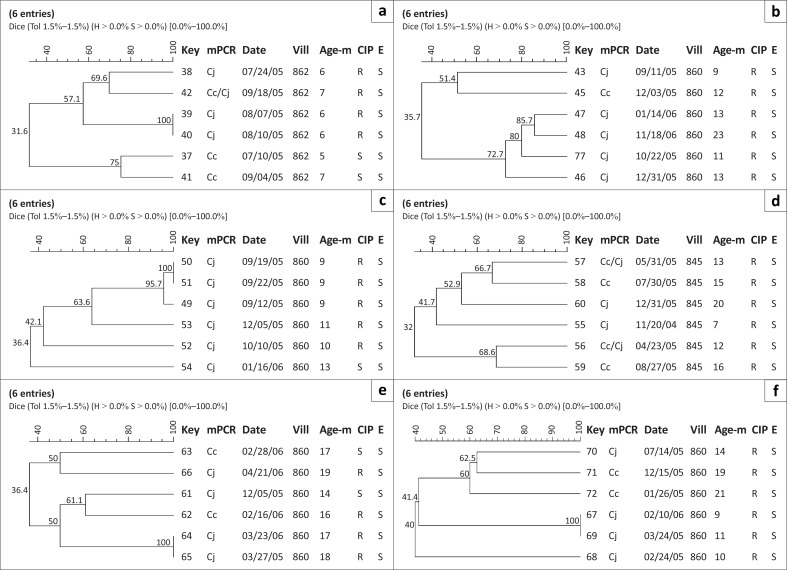
Eighty isolates were recovered and identified as either ( = 25) or ( = 55). Pulsed-field gel electrophoresis (PFGE) revealed the presence of 38 unique and 24 profiles at a similarity level of ≥ 90%. Although no serially-identical isolates were detected in six children, others demonstrated at least one identical couple of isolates; all identified serially between one to six weeks. Two children demonstrated > 80% similar couples of isolates that appeared seven months apart. PFGE could be a useful tool for differentiating reinfection, relapse and convalescent excretion phases.
Our data suggest that infection in children is a complex process; children are exposed to multiple species in endemic environments and strains of the same bacterium appear to be shed serially between one to six weeks after the first exposure. Isolates that persisted for longer periods were relatively less similar, as shown from the results of this study.
属细菌是全球人类急性细菌性肠炎和旅行者腹泻的常见病因。
确定从单个儿童身上多次连续分离出的 属细菌代表的是同一生物体还是不同生物体。
在埃及进行的一项出生队列研究中,许多儿童出现了 属细菌的连续分离。其中,根据从粪便样本中连续分离出六个或更多 菌株,从不同家庭中挑选出13名儿童。
共回收并鉴定出80株菌株,其中 菌株25株, 菌株55株。脉冲场凝胶电泳(PFGE)显示,在相似度≥90%的水平上,存在38种独特的 菌株谱和24种 菌株谱。虽然在6名儿童中未检测到序列相同的分离株,但其他儿童至少有一对相同的分离株;所有分离株均在1至6周内连续鉴定。两名儿童出现了相似度>80%的分离株对,它们相隔7个月出现。PFGE可能是区分再感染、复发和恢复期排泄阶段的有用工具。
我们的数据表明,儿童感染 是一个复杂的过程;儿童在地方性流行环境中接触多种菌株,同一细菌的菌株似乎在首次接触后1至6周内连续排出。如本研究结果所示,持续时间较长的分离株相似度相对较低。