• 文献检索
  • 文档翻译
  • 深度研究
  • 学术资讯
  • Suppr Zotero 插件Zotero 插件
  • 邀请有礼
  • 套餐&价格
  • 历史记录
应用&插件
Suppr Zotero 插件Zotero 插件浏览器插件Mac 客户端Windows 客户端微信小程序
定价
高级版会员购买积分包购买API积分包
服务
文献检索文档翻译深度研究API 文档MCP 服务
关于我们
关于 Suppr公司介绍联系我们用户协议隐私条款
关注我们

Suppr 超能文献

核心技术专利:CN118964589B侵权必究
粤ICP备2023148730 号-1Suppr @ 2026

文献检索

告别复杂PubMed语法,用中文像聊天一样搜索,搜遍4000万医学文献。AI智能推荐,让科研检索更轻松。

立即免费搜索

文件翻译

保留排版,准确专业,支持PDF/Word/PPT等文件格式,支持 12+语言互译。

免费翻译文档

深度研究

AI帮你快速写综述,25分钟生成高质量综述,智能提取关键信息,辅助科研写作。

立即免费体验

嗜酸性粒细胞增多与慢性阻塞性肺疾病的临床结局:一项荟萃分析。

Eosinophilia and clinical outcome of chronic obstructive pulmonary disease: a meta-analysis.

机构信息

Department of Anesthesia and Intensive Care, The Chinese University of Hong Kong, Hong kong Special Administrative Region, China.

Department of Rehabilitation Sciences, The Hong Kong Polytechnic University, Hong Kong Special Administrative Region, China.

出版信息

Sci Rep. 2017 Oct 18;7(1):13451. doi: 10.1038/s41598-017-13745-x.

DOI:10.1038/s41598-017-13745-x
PMID:29044160
原文链接:https://pmc.ncbi.nlm.nih.gov/articles/PMC5647332/
Abstract

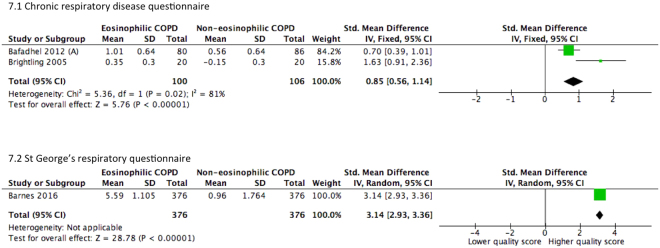
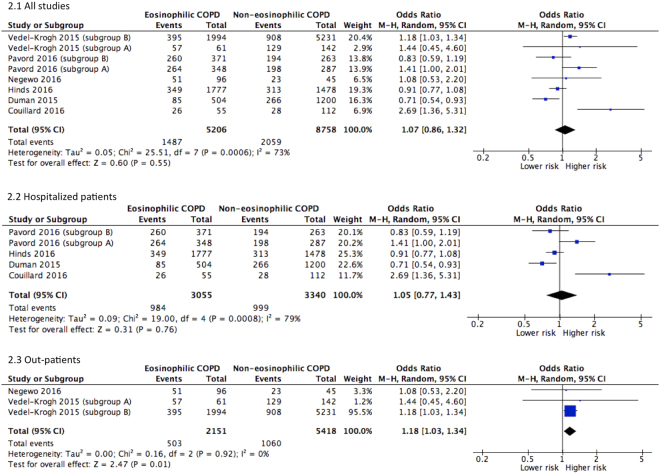
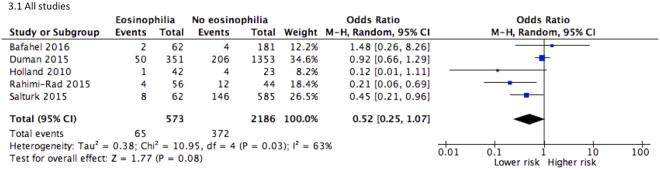
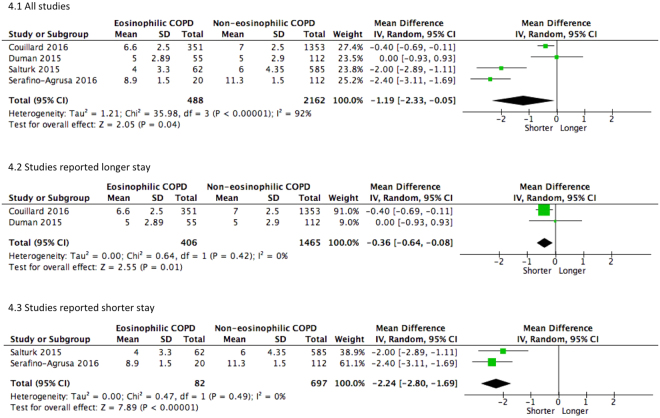
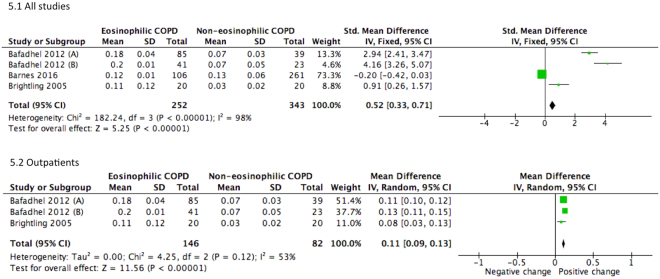
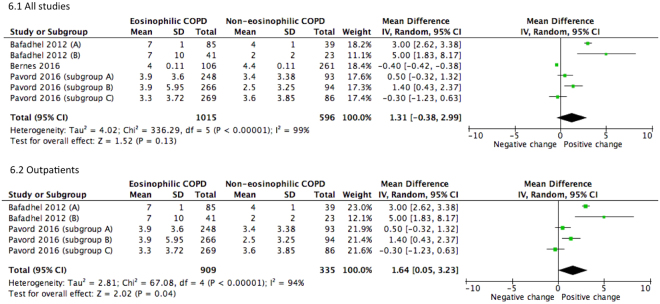
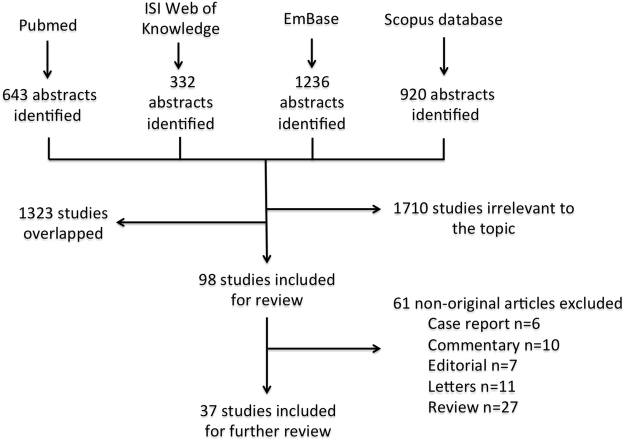
Numerous studies have investigated the association between eosinophilia and clinical outcome of patients with chronic obstructive pulmonary disease (COPD) but the evidence is conflicting. We conducted a pooled analysis of outcome measures comparing eosinophilic and non-eosinophilic COPD patients. We searched articles indexed in four databases using Medical Subject Heading or Title and Abstract words including COAD, COPD, eosinophil, eosinophilia, eosinopenia from inception to December 2016. Observational studies and randomized controlled trials with parallel groups comparing COPD patients with and without eosinophilia were included. Comparing to the non-eosinophilic group, those with eosinophilic COPD had a similar risk for exacerbation in 12 months [Odds ratio = 1.07, 95% confidence interval (CI) 0.86-1.32, P = 0.55] and in-hospital mortality [OR = 0.52, 95% CI 0.25-1.07]. Eosinophilia was associated with reduced length of hospital stay (P = 0.04). Subsequent to therapeutic interventions, eosinophilic outpatients performed better in pulmonary function tests [Mean Difference = 1.64, 95% CI 0.05-3.23, P < 0.001]. Inclusion of hospitalized patients nullified the effect. Improvement of quality of life was observed in eosinophilic subjects [Standardized Mean Difference = 1.83, 95% CI 0.02-3.64, P = 0.05], independent of hospitalization status. In conclusion, blood eosinophilia may be predictive of favorable response to steroidal and bronchodilator therapies in patients with stable COPD.

摘要

许多研究已经调查了嗜酸性粒细胞与慢性阻塞性肺疾病(COPD)患者临床结局之间的关系,但证据相互矛盾。我们对比较嗜酸性粒细胞和非嗜酸性粒细胞 COPD 患者的结局测量指标进行了汇总分析。我们使用医学主题词或标题和摘要词在四个数据库中搜索文章,包括 COAD、COPD、嗜酸性粒细胞、嗜酸性粒细胞增多症,从开始到 2016 年 12 月。纳入比较有和没有嗜酸性粒细胞的 COPD 患者的观察性研究和随机对照试验的平行组。与非嗜酸性粒细胞组相比,嗜酸性粒细胞 COPD 患者在 12 个月内的恶化风险相似[比值比=1.07,95%置信区间(CI)0.86-1.32,P=0.55]和住院死亡率[比值比=0.52,95%CI 0.25-1.07]。嗜酸性粒细胞增多症与住院时间缩短相关(P=0.04)。在进行治疗干预后,嗜酸性粒细胞门诊患者在肺功能测试中表现更好[平均差异=1.64,95%CI 0.05-3.23,P<0.001]。纳入住院患者则消除了这种影响。嗜酸性粒细胞患者的生活质量得到改善[标准化均数差=1.83,95%CI 0.02-3.64,P=0.05],与住院状态无关。总之,血液嗜酸性粒细胞可能预测稳定 COPD 患者对类固醇和支气管扩张剂治疗的反应良好。
https://cdn.ncbi.nlm.nih.gov/pmc/blobs/15ad/5647332/783d68042687/41598_2017_13745_Fig7_HTML.jpg
https://cdn.ncbi.nlm.nih.gov/pmc/blobs/15ad/5647332/538248489183/41598_2017_13745_Fig1_HTML.jpg
https://cdn.ncbi.nlm.nih.gov/pmc/blobs/15ad/5647332/f6d3c7410c9e/41598_2017_13745_Fig2_HTML.jpg
https://cdn.ncbi.nlm.nih.gov/pmc/blobs/15ad/5647332/f10b5bd3200a/41598_2017_13745_Fig3_HTML.jpg
https://cdn.ncbi.nlm.nih.gov/pmc/blobs/15ad/5647332/1ac05347ed4e/41598_2017_13745_Fig4_HTML.jpg
https://cdn.ncbi.nlm.nih.gov/pmc/blobs/15ad/5647332/88aa41fedeb8/41598_2017_13745_Fig5_HTML.jpg
https://cdn.ncbi.nlm.nih.gov/pmc/blobs/15ad/5647332/1544086c82ab/41598_2017_13745_Fig6_HTML.jpg
https://cdn.ncbi.nlm.nih.gov/pmc/blobs/15ad/5647332/783d68042687/41598_2017_13745_Fig7_HTML.jpg
https://cdn.ncbi.nlm.nih.gov/pmc/blobs/15ad/5647332/538248489183/41598_2017_13745_Fig1_HTML.jpg
https://cdn.ncbi.nlm.nih.gov/pmc/blobs/15ad/5647332/f6d3c7410c9e/41598_2017_13745_Fig2_HTML.jpg
https://cdn.ncbi.nlm.nih.gov/pmc/blobs/15ad/5647332/f10b5bd3200a/41598_2017_13745_Fig3_HTML.jpg
https://cdn.ncbi.nlm.nih.gov/pmc/blobs/15ad/5647332/1ac05347ed4e/41598_2017_13745_Fig4_HTML.jpg
https://cdn.ncbi.nlm.nih.gov/pmc/blobs/15ad/5647332/88aa41fedeb8/41598_2017_13745_Fig5_HTML.jpg
https://cdn.ncbi.nlm.nih.gov/pmc/blobs/15ad/5647332/1544086c82ab/41598_2017_13745_Fig6_HTML.jpg
https://cdn.ncbi.nlm.nih.gov/pmc/blobs/15ad/5647332/783d68042687/41598_2017_13745_Fig7_HTML.jpg

相似文献

1
Eosinophilia and clinical outcome of chronic obstructive pulmonary disease: a meta-analysis.嗜酸性粒细胞增多与慢性阻塞性肺疾病的临床结局:一项荟萃分析。
Sci Rep. 2017 Oct 18;7(1):13451. doi: 10.1038/s41598-017-13745-x.
2
The association between eosinophilic exacerbation and eosinophilic levels in stable COPD.稳定期 COPD 中嗜酸性粒细胞恶化与嗜酸性粒细胞水平的关系。
BMC Pulm Med. 2021 Mar 2;21(1):74. doi: 10.1186/s12890-021-01443-4.
3
The utility of inflammatory markers to predict readmissions and mortality in COPD cases with or without eosinophilia.炎症标志物在预测伴或不伴嗜酸性粒细胞增多的慢性阻塞性肺疾病(COPD)病例再入院率和死亡率方面的效用。
Int J Chron Obstruct Pulmon Dis. 2015 Nov 11;10:2469-78. doi: 10.2147/COPD.S90330. eCollection 2015.
4
Peripheral blood eosinophils: a surrogate marker for airway eosinophilia in stable COPD.外周血嗜酸性粒细胞:稳定期慢性阻塞性肺疾病气道嗜酸性粒细胞增多的替代标志物。
Int J Chron Obstruct Pulmon Dis. 2016 Jul 1;11:1495-504. doi: 10.2147/COPD.S100338. eCollection 2016.
5
Blood Eosinophilia and Its Stability in Hospitalized COPD Exacerbations are Associated with Lower Risk of All-Cause Mortality.住院 COPD 加重期血嗜酸性粒细胞增多及其稳定性与全因死亡率降低相关。
Int J Chron Obstruct Pulmon Dis. 2020 May 19;15:1123-1134. doi: 10.2147/COPD.S245056. eCollection 2020.
6
Eosinophils in COPD Exacerbations Are Associated With Increased Readmissions.COPD 加重期的嗜酸性粒细胞与住院次数增加有关。
Chest. 2017 Feb;151(2):366-373. doi: 10.1016/j.chest.2016.10.003. Epub 2016 Oct 13.
7
Blood Eosinophils and Clinical Outcome of Acute Exacerbations of Chronic Obstructive Pulmonary Disease: A Systematic Review and Meta-Analysis.血液嗜酸性粒细胞与慢性阻塞性肺疾病急性加重期的临床结局:系统评价和荟萃分析。
Respiration. 2021;100(3):228-237. doi: 10.1159/000510516. Epub 2020 Dec 29.
8
Blood eosinophils and treatment response in hospitalized exacerbations of chronic obstructive pulmonary disease: A case-control study.慢性阻塞性肺疾病住院加重期血液嗜酸性粒细胞与治疗反应:一项病例对照研究。
Pulm Pharmacol Ther. 2016 Apr;37:89-94. doi: 10.1016/j.pupt.2016.03.004. Epub 2016 Mar 18.
9
Blood eosinophilia as a marker of early and late treatment failure in severe acute exacerbations of COPD.血液嗜酸性粒细胞增多作为 COPD 严重急性加重早期和晚期治疗失败的标志物。
Respir Med. 2017 Oct;131:118-124. doi: 10.1016/j.rmed.2017.07.064. Epub 2017 Aug 1.
10
Association of Upon-Diagnosis Blood Eosinophilic Count with Frequency and Severity of Annual Exacerbation in Chronic Obstructive Pulmonary Disease: A Prospective Longitudinal Analysis.初诊时血嗜酸性粒细胞计数与慢性阻塞性肺疾病患者年度加重频率和严重程度的相关性:一项前瞻性纵向分析。
Can Respir J. 2023 Apr 26;2023:8678702. doi: 10.1155/2023/8678702. eCollection 2023.

引用本文的文献

1
Clinical Characteristics and Outcomes of Eosinophilic Exacerbations of COPD.慢性阻塞性肺疾病嗜酸性粒细胞性加重的临床特征与转归
Int J Chron Obstruct Pulmon Dis. 2025 Apr 13;20:1061-1070. doi: 10.2147/COPD.S485246. eCollection 2025.
2
Lung IL-13 gene signatures are associated with raised tissue eosinophils in COPD.肺部白细胞介素-13基因特征与慢性阻塞性肺疾病中组织嗜酸性粒细胞增多有关。
Respir Res. 2025 Mar 25;26(1):114. doi: 10.1186/s12931-025-03177-x.
3
Impact of blood eosinophil count on clinical outcomes in hospitalized Syrian patients with COPD exacerbation.

本文引用的文献

1
Eosinophils in COPD Exacerbations Are Associated With Increased Readmissions.COPD 加重期的嗜酸性粒细胞与住院次数增加有关。
Chest. 2017 Feb;151(2):366-373. doi: 10.1016/j.chest.2016.10.003. Epub 2016 Oct 13.
2
Peripheral blood eosinophils: a surrogate marker for airway eosinophilia in stable COPD.外周血嗜酸性粒细胞:稳定期慢性阻塞性肺疾病气道嗜酸性粒细胞增多的替代标志物。
Int J Chron Obstruct Pulmon Dis. 2016 Jul 1;11:1495-504. doi: 10.2147/COPD.S100338. eCollection 2016.
3
Identification of responders to inhaled corticosteroids in a chronic obstructive pulmonary disease population using cluster analysis.
血嗜酸性粒细胞计数对住院叙利亚 COPD 加重患者临床结局的影响。
J Int Med Res. 2024 Nov;52(11):3000605241299943. doi: 10.1177/03000605241299943.
4
High blood eosinophils predict the risk of COPD exacerbation: A systematic review and meta-analysis.高血嗜酸性粒细胞预测 COPD 加重风险:系统评价和荟萃分析。
PLoS One. 2024 Oct 3;19(10):e0302318. doi: 10.1371/journal.pone.0302318. eCollection 2024.
5
Endotyping Chronic Respiratory Diseases: T2 Inflammation in the United Airways Model.慢性呼吸道疾病的内型分类:联合气道模型中的2型炎症
Life (Basel). 2024 Jul 19;14(7):899. doi: 10.3390/life14070899.
6
Association of Upon-Diagnosis Blood Eosinophilic Count with Frequency and Severity of Annual Exacerbation in Chronic Obstructive Pulmonary Disease: A Prospective Longitudinal Analysis.初诊时血嗜酸性粒细胞计数与慢性阻塞性肺疾病患者年度加重频率和严重程度的相关性:一项前瞻性纵向分析。
Can Respir J. 2023 Apr 26;2023:8678702. doi: 10.1155/2023/8678702. eCollection 2023.
7
Serum Amyloid A in Stable Patients with Chronic Obstructive Pulmonary Disease Does Not Reflect the Clinical Course of the Disease.稳定期慢性阻塞性肺疾病患者的血清淀粉样蛋白 A 不能反映疾病的临床过程。
Int J Mol Sci. 2023 Jan 27;24(3):2478. doi: 10.3390/ijms24032478.
8
Impact of Acute Exacerbation and Its Phenotypes on the Clinical Outcomes of Chronic Obstructive Pulmonary Disease in Hospitalized Patients: A Cross-Sectional Study.急性加重及其表型对住院慢性阻塞性肺疾病患者临床结局的影响:一项横断面研究
Toxics. 2022 Nov 6;10(11):667. doi: 10.3390/toxics10110667.
9
From COPD to Lung Cancer: Mechanisms Linking, Diagnosis, Treatment, and Prognosis.从 COPD 到肺癌:关联机制、诊断、治疗和预后。
Int J Chron Obstruct Pulmon Dis. 2022 Oct 17;17:2603-2621. doi: 10.2147/COPD.S380732. eCollection 2022.
10
Elevated Peripheral Blood Eosinophils during Acute Exacerbation of Chronic Obstructive Pulmonary Disease: Prevalence and clinical significance.慢性阻塞性肺疾病急性加重期外周血嗜酸性粒细胞升高:患病率及临床意义。
Sultan Qaboos Univ Med J. 2022 Aug;22(3):339-342. doi: 10.18295/squmj.8.2021.099. Epub 2022 Aug 25.
使用聚类分析在慢性阻塞性肺疾病人群中识别吸入性糖皮质激素的反应者。
BMJ Open. 2016 Jun 1;6(6):e010099. doi: 10.1136/bmjopen-2015-010099.
4
Blood eosinophils and treatment response in hospitalized exacerbations of chronic obstructive pulmonary disease: A case-control study.慢性阻塞性肺疾病住院加重期血液嗜酸性粒细胞与治疗反应:一项病例对照研究。
Pulm Pharmacol Ther. 2016 Apr;37:89-94. doi: 10.1016/j.pupt.2016.03.004. Epub 2016 Mar 18.
5
Blood eosinophils as a marker of response to inhaled corticosteroids in COPD.血嗜酸性粒细胞作为 COPD 患者吸入皮质类固醇激素反应的标志物。
Eur Respir J. 2016 May;47(5):1374-82. doi: 10.1183/13993003.01370-2015. Epub 2016 Feb 25.
6
Relationship between blood eosinophils and clinical characteristics in a cross-sectional study of a US population-based COPD cohort.美国人群慢性阻塞性肺疾病队列横断面研究中血嗜酸性粒细胞与临床特征的关系
Respir Med. 2016 Mar;112:88-96. doi: 10.1016/j.rmed.2016.01.013. Epub 2016 Jan 22.
7
Blood Eosinophils and Outcomes in Severe Hospitalized Exacerbations of COPD.血液嗜酸性粒细胞与 COPD 严重住院加重期的结局。
Chest. 2016 Aug;150(2):320-8. doi: 10.1016/j.chest.2016.01.026. Epub 2016 Feb 3.
8
Association of blood eosinophils and plasma periostin with FEV1 response after 3-month inhaled corticosteroid and long-acting beta2-agonist treatment in stable COPD patients.稳定期慢性阻塞性肺疾病患者吸入糖皮质激素和长效β2受体激动剂治疗3个月后血嗜酸性粒细胞及血浆骨膜蛋白与第一秒用力呼气容积反应的相关性
Int J Chron Obstruct Pulmon Dis. 2015 Dec 22;11:23-30. doi: 10.2147/COPD.S94797. eCollection 2016.
9
The utility of inflammatory markers to predict readmissions and mortality in COPD cases with or without eosinophilia.炎症标志物在预测伴或不伴嗜酸性粒细胞增多的慢性阻塞性肺疾病(COPD)病例再入院率和死亡率方面的效用。
Int J Chron Obstruct Pulmon Dis. 2015 Nov 11;10:2469-78. doi: 10.2147/COPD.S90330. eCollection 2015.
10
Blood Eosinophils and Exacerbations in Chronic Obstructive Pulmonary Disease. The Copenhagen General Population Study.血液嗜酸性粒细胞与慢性阻塞性肺疾病恶化。哥本哈根普通人群研究。
Am J Respir Crit Care Med. 2016 May 1;193(9):965-74. doi: 10.1164/rccm.201509-1869OC.