Cardiac Electrophysiology Section, Division of Cardiology, Department of Medicine, University of California, San Francisco, San Francisco, CA, United States of America.
Division of Epidemiology and Community Health, School of Public Health, University of Minnesota, Minneapolis, MN, United States of America.
PLoS One. 2017 Oct 18;12(10):e0185228. doi: 10.1371/journal.pone.0185228. eCollection 2017.
Although current alcohol consumption is a risk factor for incident atrial fibrillation (AF), the more clinically relevant question may be whether alcohol cessation is associated with a reduced risk.
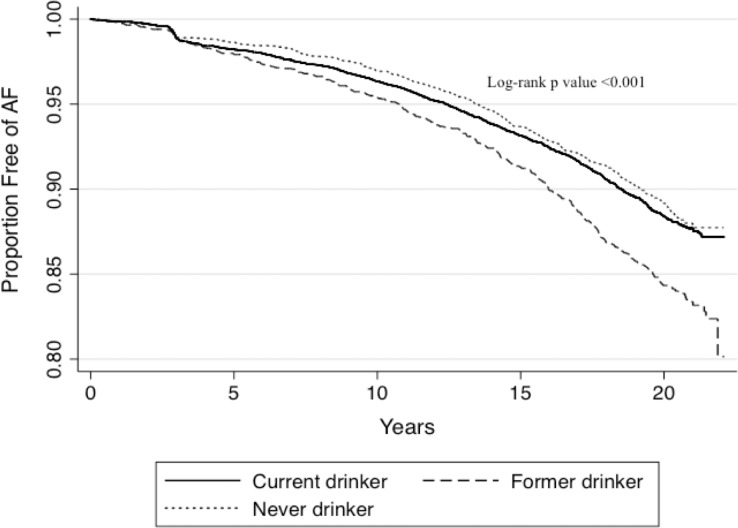
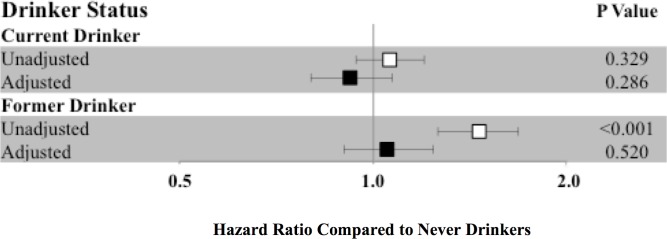
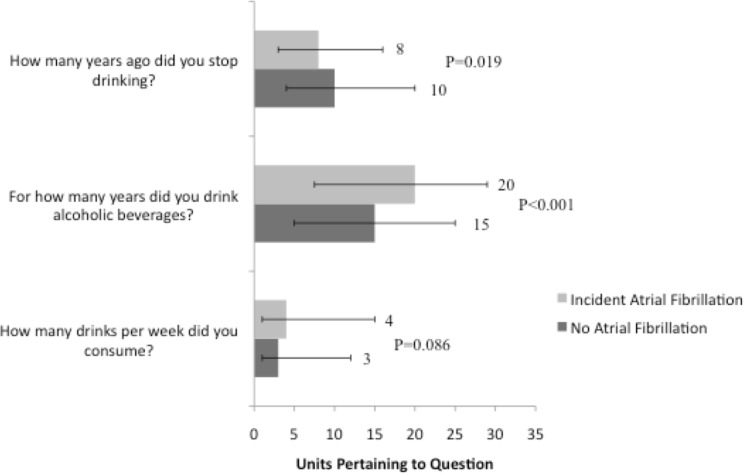
We studied participants enrolled in the Atherosclerosis Risk in Communities Study (ARIC) between 1987 and 1989 without prevalent AF. Past and current alcohol consumption were ascertained at baseline and at 3 subsequent visits. Incident AF was ascertained via study ECGs, hospital discharge ICD-9 codes, and death certificates. Of 15,222 participants, 2,886 (19.0%) were former drinkers. During a median follow-up of 19.7 years, there were 1,631 cases of incident AF, 370 occurring in former consumers. Former drinkers had a higher rate of AF compared to lifetime abstainers and current drinkers. After adjustment for potential confounders, every decade abstinent from alcohol was associated with an approximate 20% (95% CI 11-28%) lower rate of incident AF; every additional decade of past alcohol consumption was associated with a 13% (95% CI 3-25%) higher rate of AF; and every additional drink per day during former drinking was associated with a 4% (95% CI 0-8%) higher rate of AF.
Among former drinkers, the number of years of drinking and the amount of alcohol consumed may each confer an increased risk of AF. Given that a longer duration of abstinence was associated with a decreased risk of AF, earlier modification of alcohol use may have a greater influence on AF prevention.
尽管目前的饮酒量是发生房颤(AF)的一个风险因素,但更具临床相关性的问题可能是,戒酒是否与降低风险相关。
我们研究了 1987 年至 1989 年期间未患有持续性房颤的社区动脉粥样硬化风险研究(ARIC)中的参与者。在基线和随后的 3 次访视中确定了过去和现在的饮酒量。通过研究心电图、医院出院 ICD-9 代码和死亡证明确定了房颤的发生情况。在 15222 名参与者中,有 2886 名(19.0%)为曾经饮酒者。在中位数为 19.7 年的随访期间,有 1631 例发生房颤,其中 370 例发生在曾经饮酒者中。与终身戒酒者和当前饮酒者相比,曾经饮酒者的房颤发生率更高。在调整了潜在混杂因素后,每 10 年戒酒与房颤发生率降低约 20%(95%CI 11-28%)相关;每增加 10 年的过去饮酒史与房颤发生率增加 13%(95%CI 3-25%)相关;而在曾经饮酒时,每天多喝一杯酒与房颤发生率增加 4%(95%CI 0-8%)相关。
在曾经饮酒者中,饮酒年限和饮酒量都可能增加房颤的风险。鉴于较长时间的戒酒与房颤风险降低相关,更早地改变饮酒习惯可能对预防房颤有更大的影响。