Department of Neurosciences, Case Western Reserve University, Cleveland, OH 44106, USA.
Spinal Cord and Brain Injury Research Center, Department of Neuroscience, University of Kentucky College of Medicine, Lexington, KY 40536, USA.
Cell Rep. 2017 Oct 17;21(3):654-665. doi: 10.1016/j.celrep.2017.09.076.
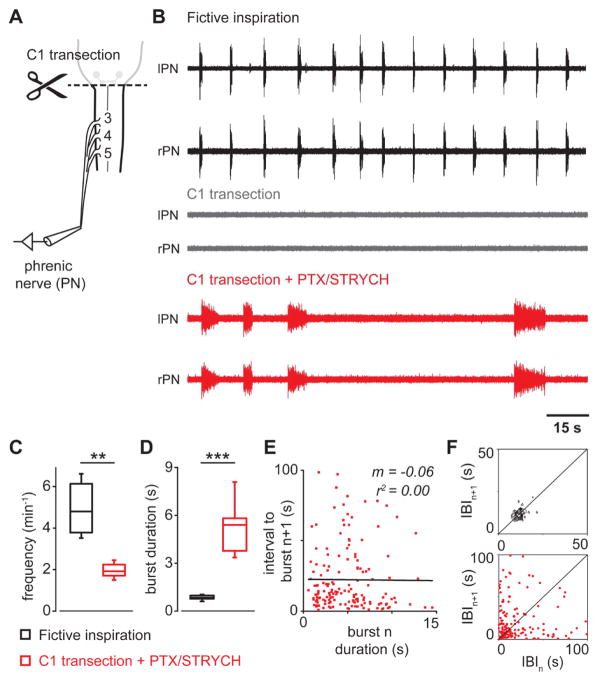
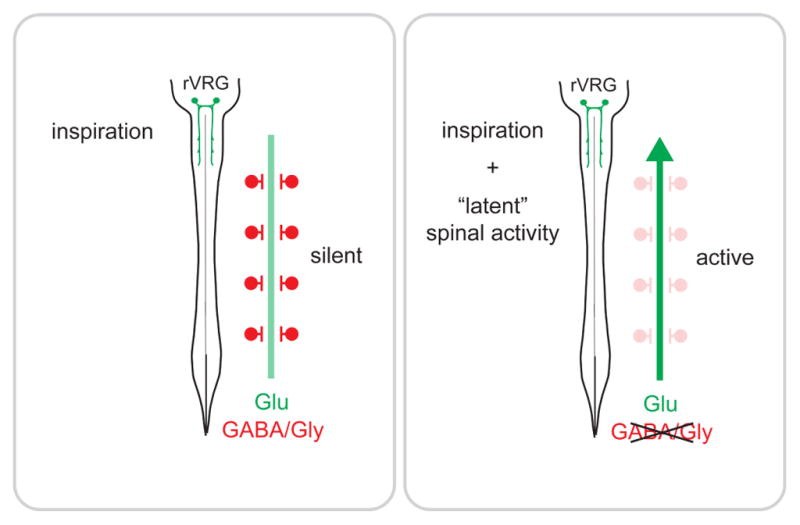
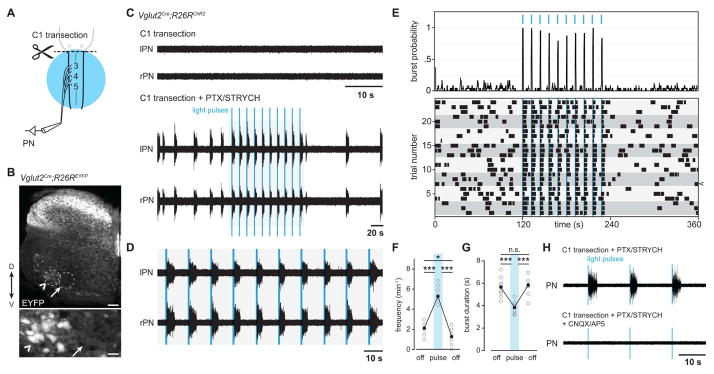
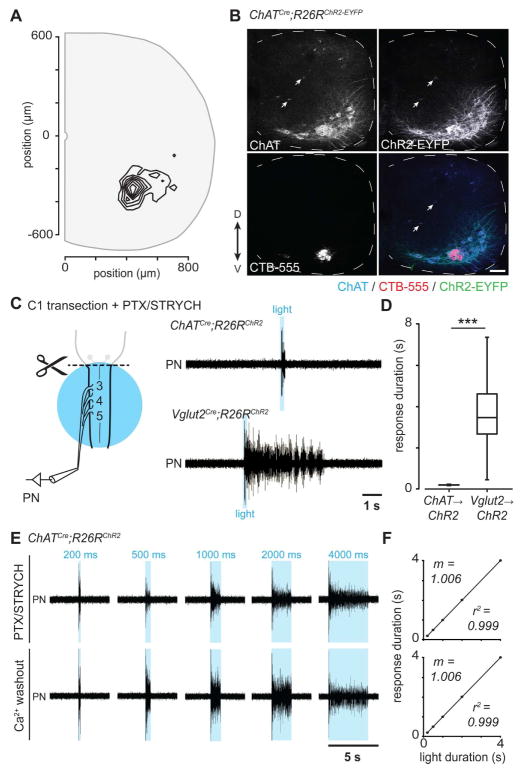
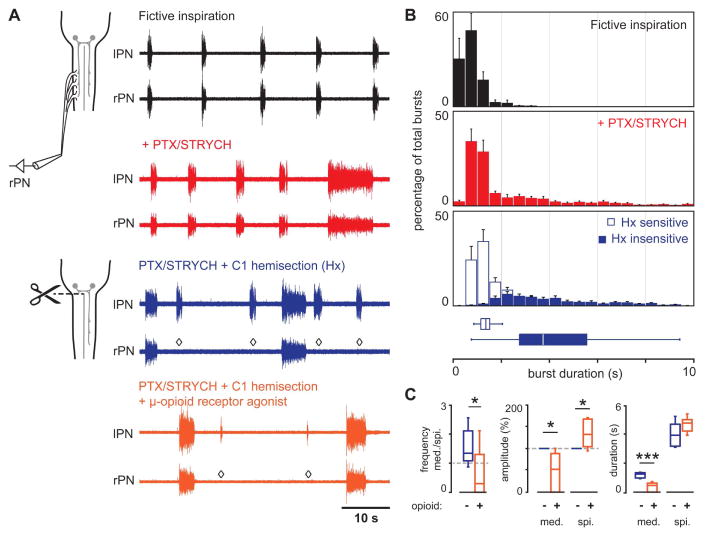
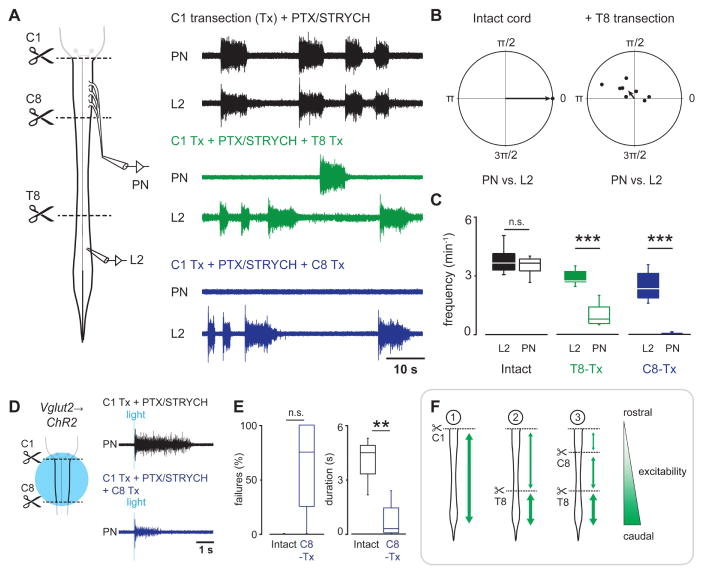
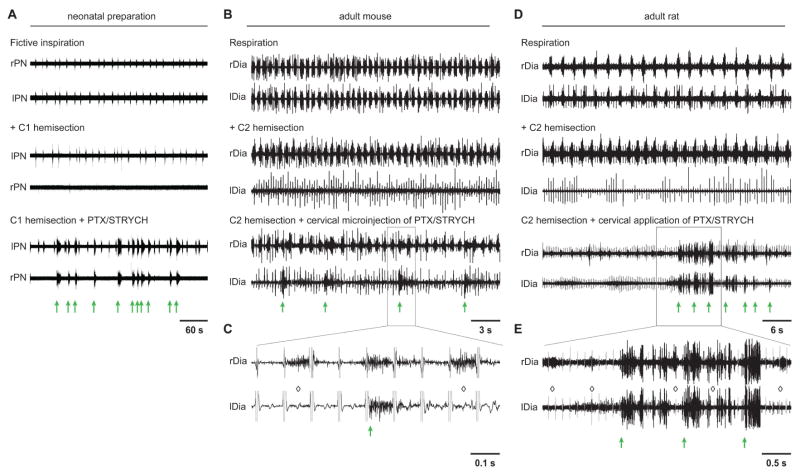
Spinal cord injury (SCI) above cervical level 4 disrupts descending axons from the medulla that innervate phrenic motor neurons, causing permanent paralysis of the diaphragm. Using an ex vivo preparation in neonatal mice, we have identified an excitatory spinal network that can direct phrenic motor bursting in the absence of medullary input. After complete cervical SCI, blockade of fast inhibitory synaptic transmission caused spontaneous, bilaterally coordinated phrenic bursting. Here, spinal cord glutamatergic neurons were both sufficient and necessary for the induction of phrenic bursts. Direct stimulation of phrenic motor neurons was insufficient to evoke burst activity. Transection and pharmacological manipulations showed that this spinal network acts independently of medullary circuits that normally generate inspiration, suggesting a distinct non-respiratory function. We further show that this "latent" network can be harnessed to restore diaphragm function after high cervical SCI in adult mice and rats.
颈髓 4 节段以上的脊髓损伤(SCI)会破坏从延髓支配膈神经运动神经元的下行轴突,导致膈肌无力永久性瘫痪。在新生小鼠的离体标本中,我们发现了一个兴奋性脊髓网络,它可以在没有延髓输入的情况下指导膈神经爆发。在完全颈髓 SCI 后,快速抑制性突触传递的阻断导致自发性双侧协调的膈神经爆发。在这里,脊髓谷氨酸能神经元对于膈神经爆发的诱导既充分又必要。直接刺激膈神经运动神经元不足以引起爆发活动。横切和药理学操作表明,该脊髓网络独立于通常产生吸气的延髓回路起作用,这表明其具有一种独特的非呼吸功能。我们还进一步表明,这种“潜伏”网络可以被用来恢复成年小鼠和大鼠高颈段 SCI 后的膈肌无力。