Osbourn Megan, Soares Dinesh C, Vacca Francesco, Cohen E Suzanne, Scott Ian C, Gregory William F, Smyth Danielle J, Toivakka Matilda, Kemter Andrea M, le Bihan Thierry, Wear Martin, Hoving Dennis, Filbey Kara J, Hewitson James P, Henderson Holly, Gonzàlez-Cìscar Andrea, Errington Claire, Vermeren Sonja, Astier Anne L, Wallace William A, Schwarze Jürgen, Ivens Alasdair C, Maizels Rick M, McSorley Henry J
MRC Centre for Inflammation Research, University of Edinburgh, Queen's Medical Research Institute, 47 Little France Crescent, Edinburgh EH16 4TJ, UK.
Department of Respiratory, Inflammation and Autoimmunity, MedImmune Ltd, Granta Park, Cambridge CB21 6GH, UK.
Immunity. 2017 Oct 17;47(4):739-751.e5. doi: 10.1016/j.immuni.2017.09.015.
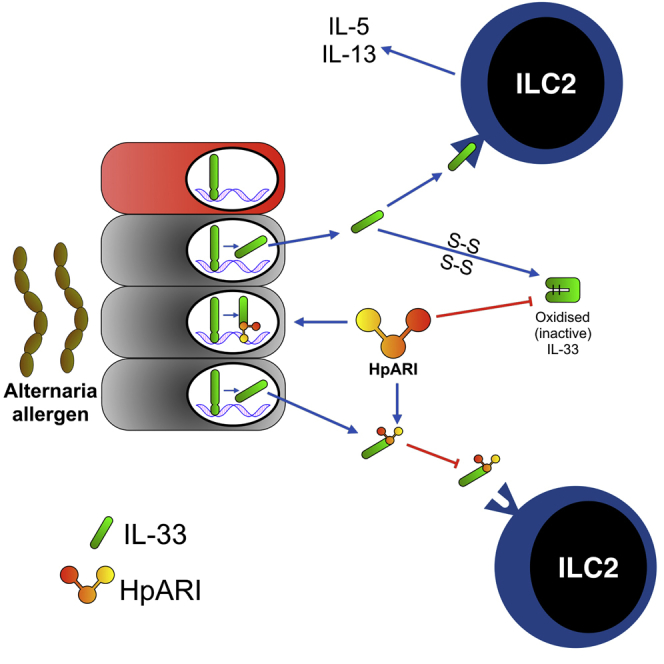
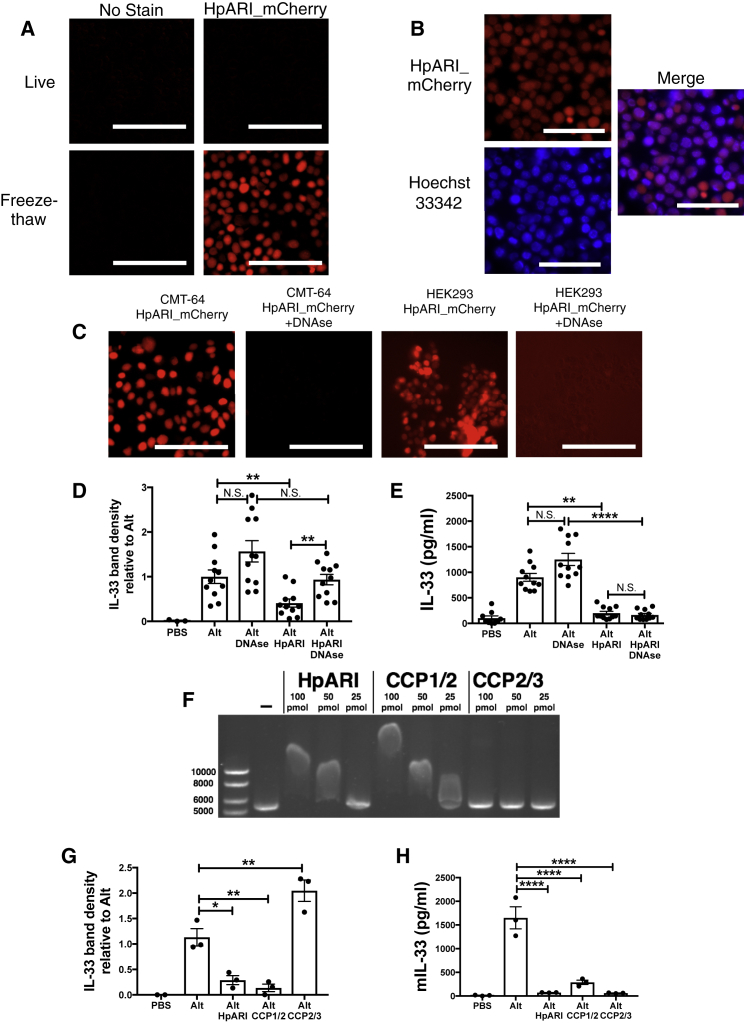
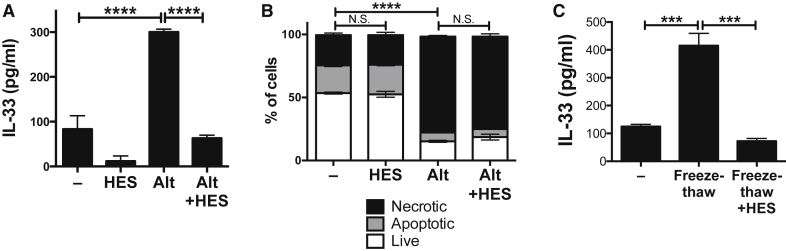
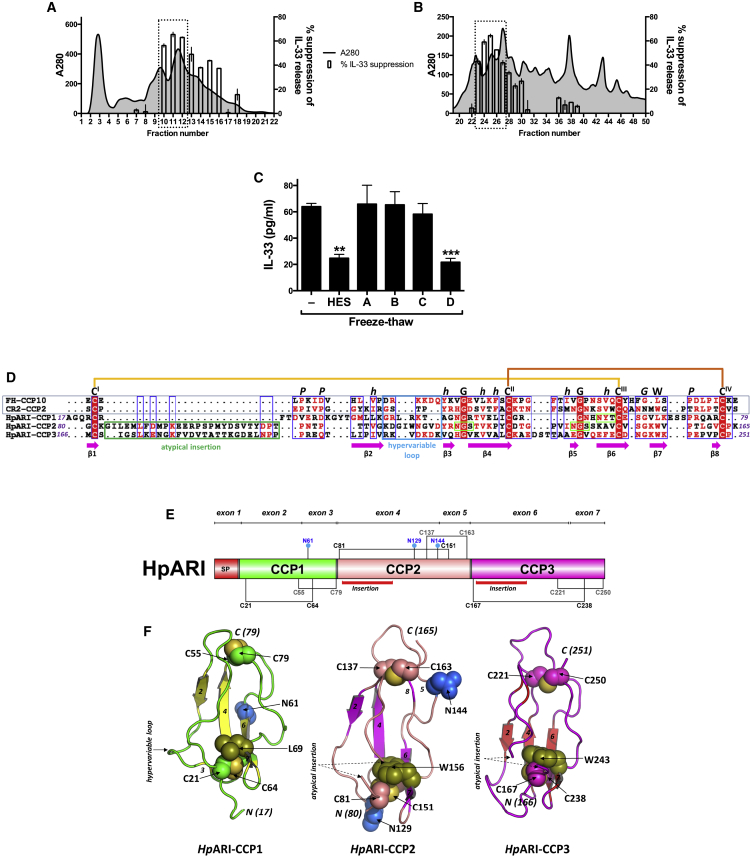
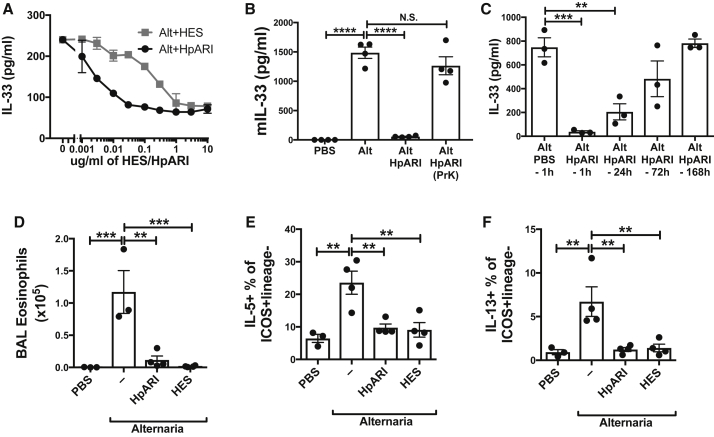
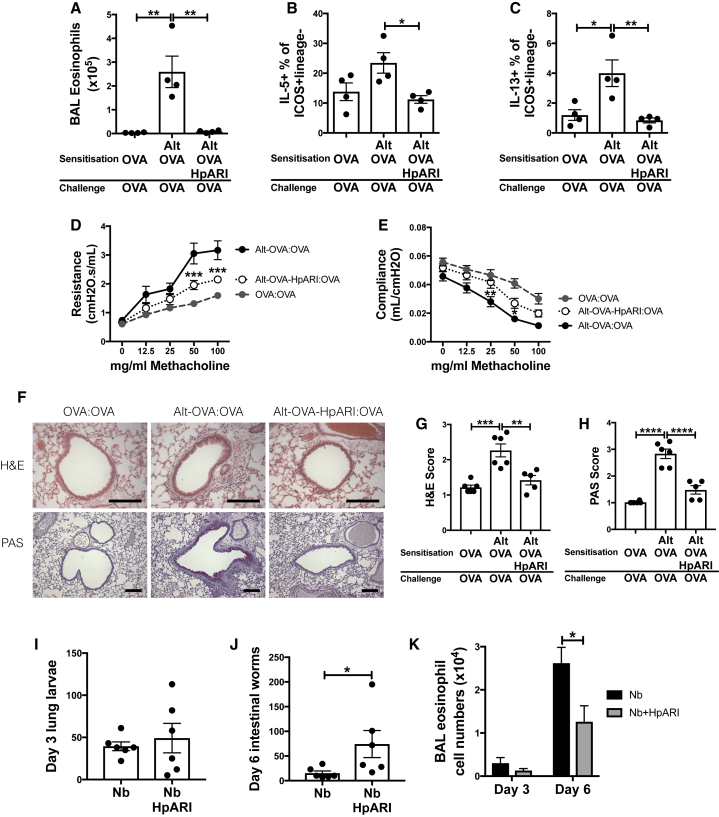
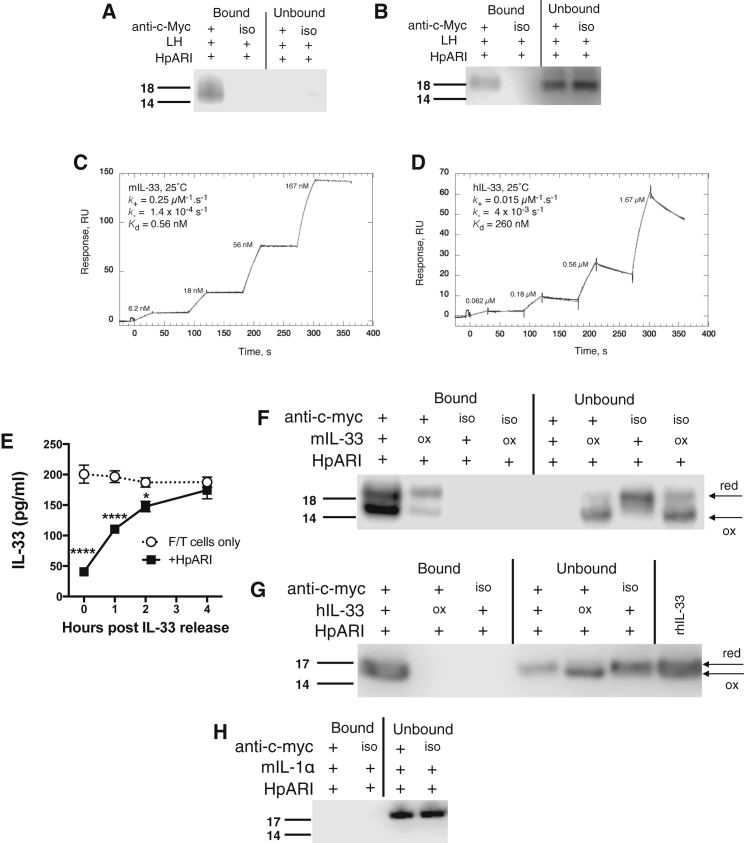
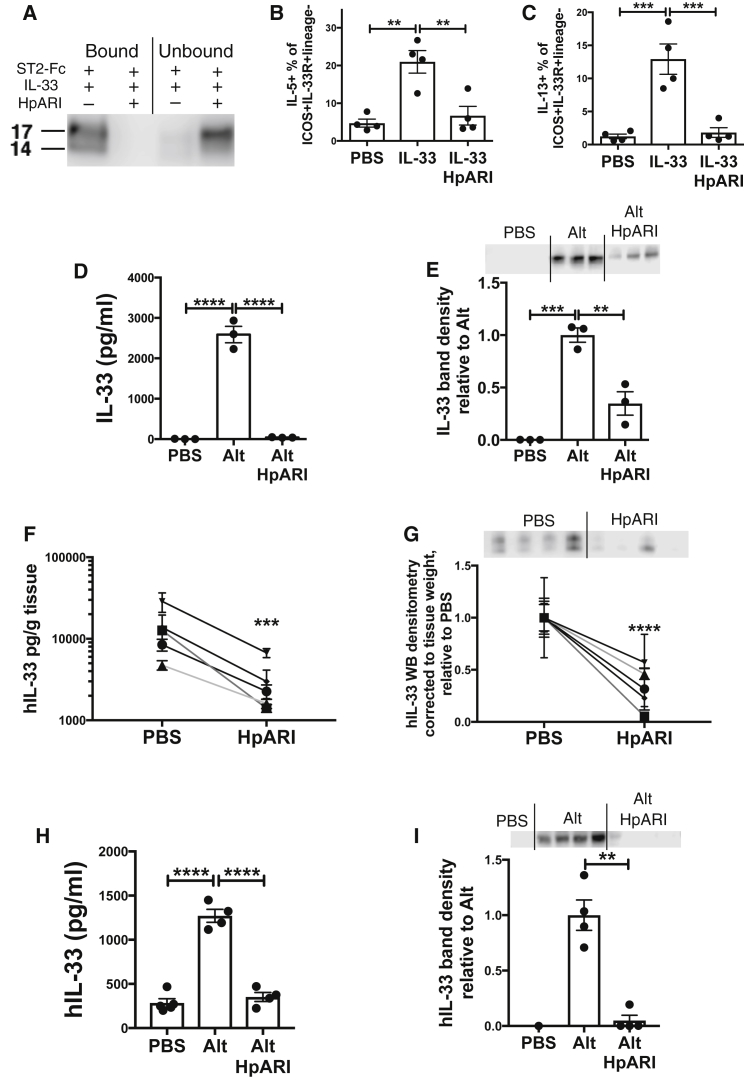
Infection by helminth parasites is associated with amelioration of allergic reactivity, but mechanistic insights into this association are lacking. Products secreted by the mouse parasite Heligmosomoides polygyrus suppress type 2 (allergic) immune responses through interference in the interleukin-33 (IL-33) pathway. Here, we identified H. polygyrus Alarmin Release Inhibitor (HpARI), an IL-33-suppressive 26-kDa protein, containing three predicted complement control protein (CCP) modules. In vivo, recombinant HpARI abrogated IL-33, group 2 innate lymphoid cell (ILC2) and eosinophilic responses to Alternaria allergen administration, and diminished eosinophilic responses to Nippostrongylus brasiliensis, increasing parasite burden. HpARI bound directly to both mouse and human IL-33 (in the cytokine's activated state) and also to nuclear DNA via its N-terminal CCP module pair (CCP1/2), tethering active IL-33 within necrotic cells, preventing its release, and forestalling initiation of type 2 allergic responses. Thus, HpARI employs a novel molecular strategy to suppress type 2 immunity in both infection and allergy.
蠕虫寄生虫感染与过敏反应性的改善有关,但缺乏对这种关联的机制性见解。小鼠寄生虫多房棘球绦虫分泌的产物通过干扰白细胞介素-33(IL-33)途径来抑制2型(过敏)免疫反应。在这里,我们鉴定出了多房棘球绦虫警报素释放抑制剂(HpARI),这是一种抑制IL-33的26 kDa蛋白,含有三个预测的补体控制蛋白(CCP)模块。在体内,重组HpARI消除了对链格孢属过敏原给药的IL-33、2型固有淋巴细胞(ILC2)和嗜酸性粒细胞反应,并减少了对巴西日圆线虫的嗜酸性粒细胞反应,增加了寄生虫负担。HpARI直接与小鼠和人类的IL-33(处于细胞因子的激活状态)结合,还通过其N端CCP模块对(CCP1/2)与核DNA结合,将活性IL-33束缚在坏死细胞内,阻止其释放,并防止2型过敏反应的启动。因此,HpARI采用了一种新的分子策略来抑制感染和过敏中的2型免疫。