Department of Urology, Peking Union Medical College Hospital, Chinese Academy of Medical Sciences and Peking Union Medical College, Beijing 100730, P.R. China.
Oncol Rep. 2017 Nov;38(5):2727-2734. doi: 10.3892/or.2017.5992. Epub 2017 Sep 25.
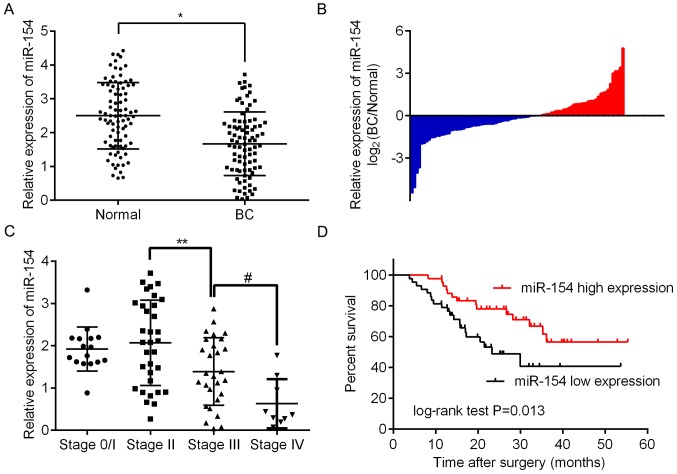
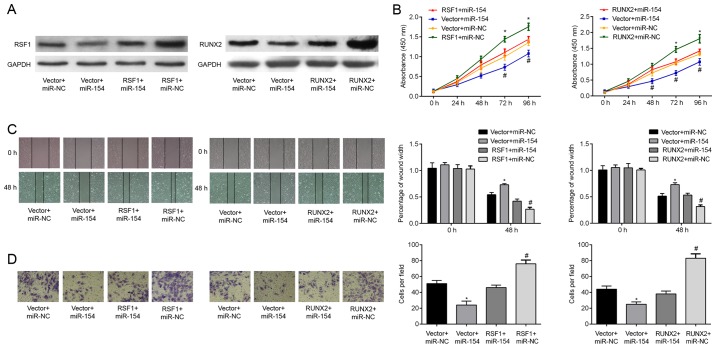
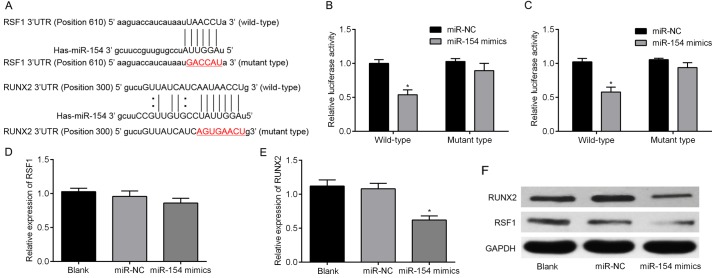
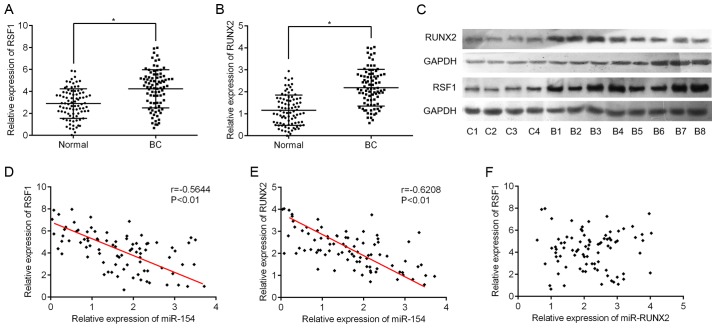
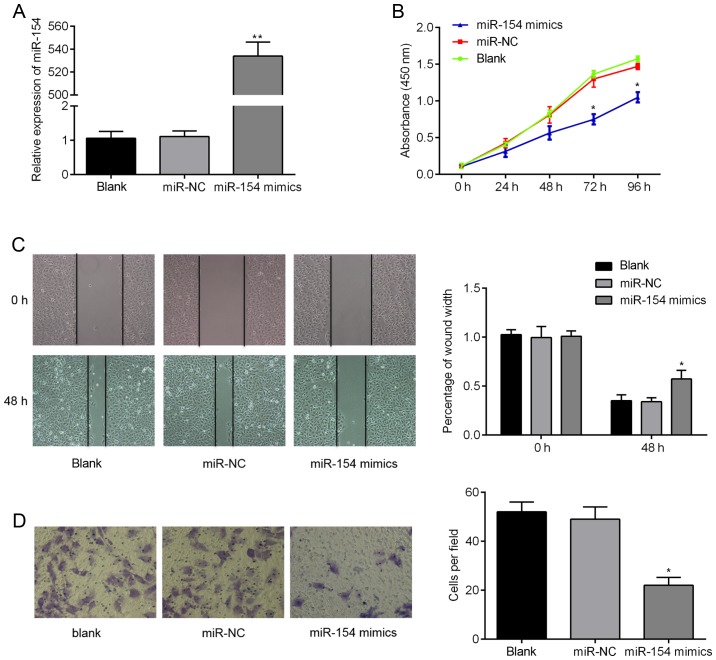
Recent studies have demonstrated that microRNA-154 (miR-154) is involved in tumorigenesis, progression, invasion and metastasis in several types of human cancer. However, whether it plays a role in bladder cancer (BC) is unclear. The aim of the present study was to determine miR-154 levels in human BC tissues and investigate the correlation between miR-154 levels and clinicopathological characteristics as well as patient outcome. Using RT-qPCR, we found that the expression levels of miR-154 were significantly lower in BC tissues compared to adjacent normal tissues. We also demonstrated that downregulation of miR-154 was associated with advanced clinicopathological features and worse prognoses for patients with BC. Using a variety of integrated approaches, we demonstrated that both runt-related transcription factor 2 (RUNX2) and remodeling and spacing factor 1 (RSF1) were miR-154 targets. Notably, there was an inverse correlation between RSF1, RUNX2 and miR-154 expression in BC tissues. The biological functions of miR-154 were examined in vitro using Cell Counting Kit-8 (CCK-8), wound healing, and Transwell assays with T24 human bladder carcinoma cells transfected with miR-154 mimics or negative controls. These assays demonstrated that miR-154 significantly suppressed proliferation, migration and invasion of T24 cells (P<0.05). Furthermore, overexpression of RSF1 and RUNX2 rescued miR-154-induced inhibition of these aggressive behaviors. Our results indicated that miR-154, and its downstream targets RSF1 and RUNX2, are promising options for future BC therapies.
最近的研究表明,microRNA-154(miR-154)参与了多种人类癌症的肿瘤发生、进展、侵袭和转移。然而,它是否在膀胱癌(BC)中发挥作用尚不清楚。本研究旨在确定人膀胱癌组织中 miR-154 的水平,并探讨 miR-154 水平与临床病理特征以及患者预后的相关性。通过 RT-qPCR,我们发现 miR-154 的表达水平在膀胱癌组织中明显低于相邻正常组织。我们还表明,miR-154 的下调与晚期临床病理特征和膀胱癌患者的预后不良有关。通过多种综合方法,我们证明 runt 相关转录因子 2(RUNX2)和重塑和间隔因子 1(RSF1)均为 miR-154 的靶标。值得注意的是,在膀胱癌组织中,RSF1、RUNX2 和 miR-154 的表达呈负相关。通过使用 Cell Counting Kit-8(CCK-8)、划痕愈合和 Transwell 测定法,用 miR-154 模拟物或阴性对照转染 T24 人膀胱癌细胞,在体外研究了 miR-154 的生物学功能。这些测定表明,miR-154 显著抑制 T24 细胞的增殖、迁移和侵袭(P<0.05)。此外,RSF1 和 RUNX2 的过表达挽救了 miR-154 诱导的这些侵袭性行为的抑制。我们的结果表明,miR-154 及其下游靶标 RSF1 和 RUNX2 是未来 BC 治疗的有前途的选择。