a Marketing Department, Peter T. Paul College of Business and Economics , University of New Hampshire.
b Marketing Department, Fuqua School of Business , Duke University.
Health Commun. 2019 Jan;34(1):65-73. doi: 10.1080/10410236.2017.1384428. Epub 2017 Oct 20.
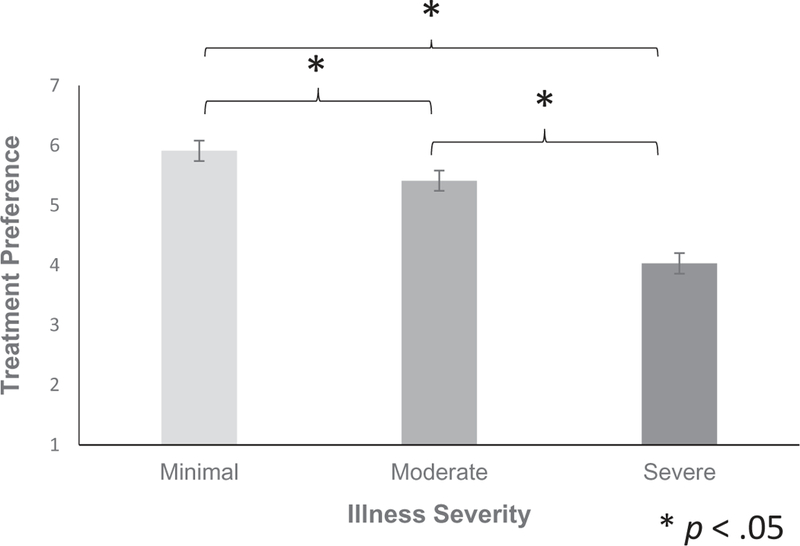
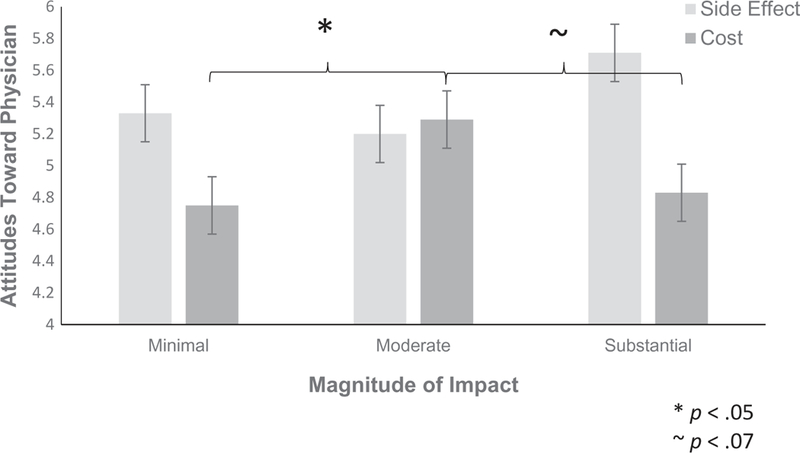
Previous research has suggested that fear of harm to the patient-physician relationship is an important barrier to conversations about cost of care. However, few experimental studies have investigated the effects of cost of care conversations on the patient-physician relationship, particularly from the patient's perspective. In the current research, we take an experimental approach to investigate patients' attitudes and preferences for a hypothetical physician who discusses cost versus one who does not. Across three studies, using data from both the general population and cancer patients, we find that people prefer a hypothetical physician who discusses cost over one who does not (Pilot Study, Studies 1 and 2). In addition, we find that people use cost information to inform their hypothetical treatment decisions without changing their attitudes toward the physician who includes this information (Study 1). Finally, we examine how and when cost information compares to more traditional medical information (e.g., side effects; Study 2). We discuss the implications of this research for cost communications and the patient-physician relationship, highlighting that cost conversations may not be as harmful as previously thought.
先前的研究表明,担心医患关系受损是阻碍有关医疗费用讨论的一个重要因素。然而,很少有实验研究调查过有关医疗费用的讨论对医患关系的影响,尤其是从患者的角度来看。在当前的研究中,我们采用实验方法来调查患者对一位假设医生的态度和偏好,该医生讨论费用,而另一位医生则不讨论费用。通过三项研究,我们利用来自一般人群和癌症患者的数据,发现人们更喜欢讨论费用的假设医生,而不是不讨论费用的医生(初步研究、研究 1 和研究 2)。此外,我们发现,人们在不改变对提供这些信息的医生的态度的情况下,使用费用信息来告知他们的假设治疗决策(研究 1)。最后,我们研究了费用信息与更传统的医疗信息(例如副作用)相比如何以及何时相比(研究 2)。我们讨论了这项研究对费用沟通和医患关系的意义,强调费用讨论可能不像之前认为的那样有害。