Eblovi Darren, Kelly Patricia, Afua Georgina, Agyapong Sarah, Dante Siddhartha, Pellerite Matthew
a Department of Pediatrics , Northwestern University Feinberg School of Medicine , Chicago , IL , USA.
b Department of Global Health , University of Colorado Hospital , Aurora , CO , USA.
Glob Health Action. 2017;10(1):1387985. doi: 10.1080/16549716.2017.1387985.
The Helping Babies Breathe (HBB) program teaches basic newborn resuscitation techniques to birth attendants in low-resource settings. Previous studies have demonstrated a decrease in mortality following training, mostly in large hospitals. However, low-volume clinics in rural regions with no physician immediately available likely experience a greater relative burden of newborn mortality. This study aimed to determine the impact of HBB trainings provided to rural Ghanaian midwives on their skills retention and on first 24 hour mortality of the newborns they serve.
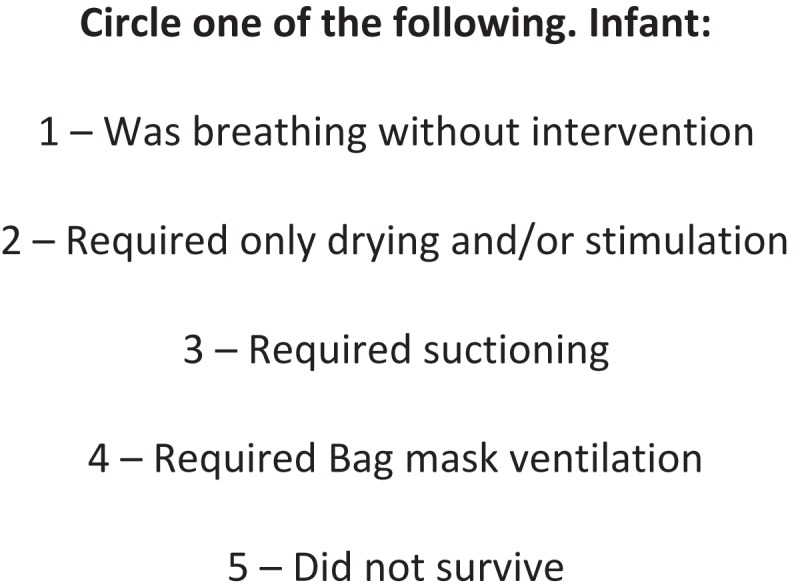
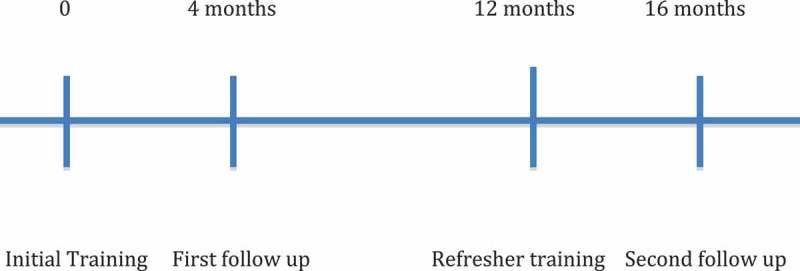
American Acadamy of Paediatrics (AAP)-trained Master Trainers conducted two 2-day HBB trainings and 2-day refresher courses one year later for 48 midwives from Ghanaian rural health clinics. Trainee skills were evaluated by Objective Structured Clinical Examination (OSCE) at three time points: immediately after training, four months after training, and four months after the refresher. Midwives recorded the single highest level of resuscitation performed on each newborn delivered for one year.
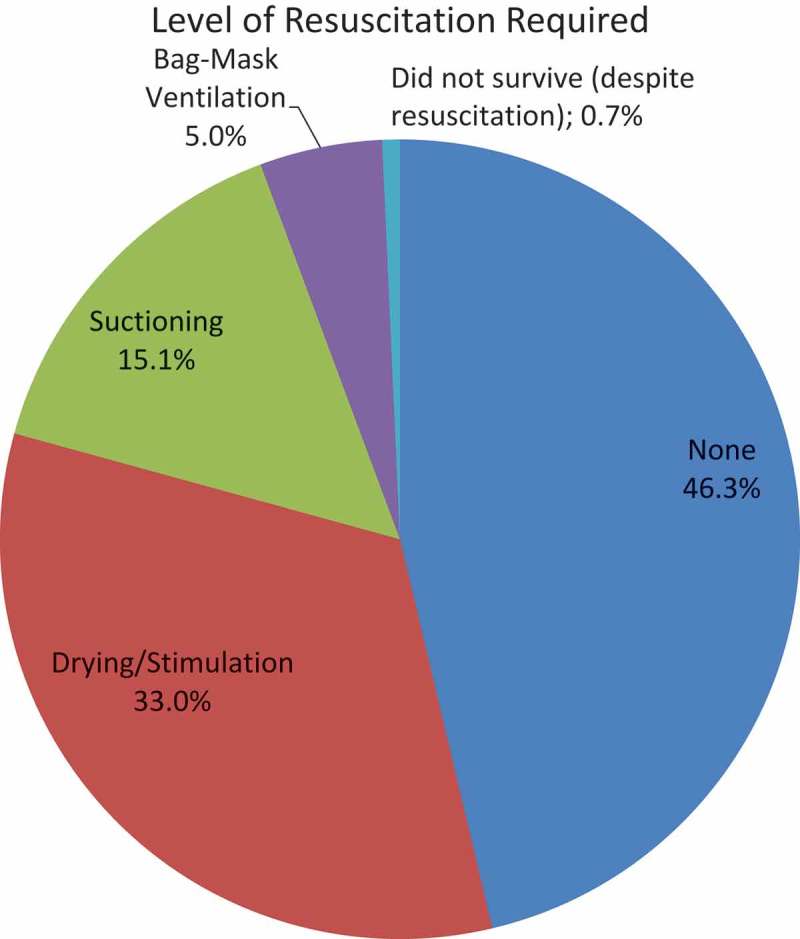
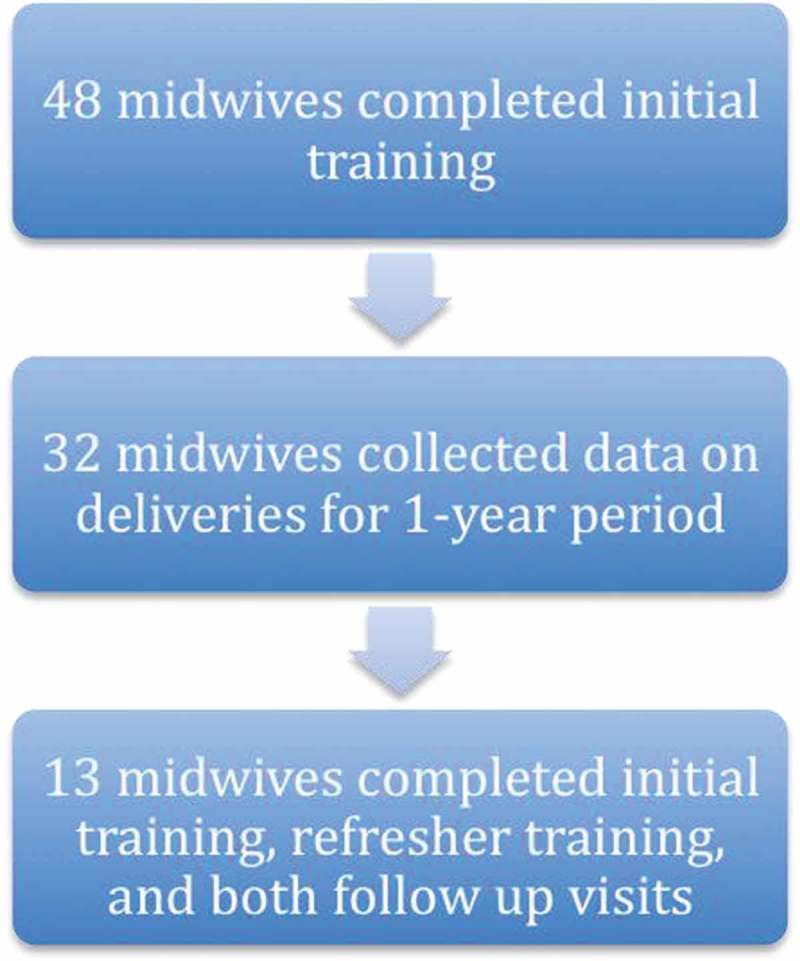
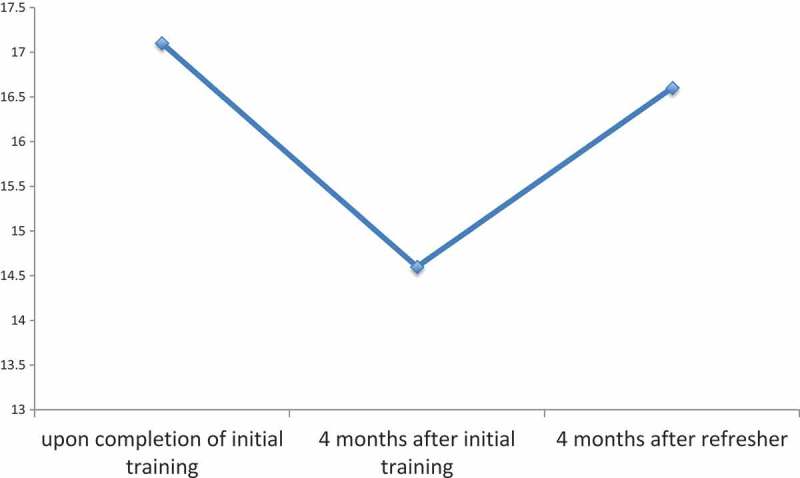
48 midwives attended the two trainings, 32 recorded data from 2,383 deliveries, and 13 completed OSCE simulations at all three time points. The midwives' OSCE scores decreased from immediately after training (94.9%) to four months later (81.2%, p < 0.00001). However, four months following the refresher course, scores improved to the same high level attained initially (92.7%, p = 0.0013). 5.0% of neonates required bag-mask ventilation and 0.71% did not survive, compared with a nationwide first 24 hour mortality estimate of 1.7%.
The midwives' performance on the simulation exercise indicates that an in-depth refresher course provided one year after the initial training likely slows the decay in skills that occurs after initial training. Our finding that 5.0% of newborns required bag-mask ventilation is consistent with global estimates. Our observed first 24 hour mortality rate of 0.71% is lower than nationwide estimates, indicating the training likely prevented deaths due to birth asphyxia.
“帮助婴儿呼吸”(HBB)项目向资源匮乏地区的助产人员传授基本的新生儿复苏技术。以往研究表明,培训后死亡率有所下降,主要是在大型医院。然而,在农村地区且没有医生随时可用的小规模诊所,新生儿死亡的相对负担可能更大。本研究旨在确定为加纳农村助产士提供的HBB培训对她们技能保留情况以及她们所服务新生儿头24小时死亡率的影响。
由美国儿科学会(AAP)培训的培训师为来自加纳农村健康诊所的48名助产士开展了为期两天的HBB培训,并在一年后开展了为期两天的复习课程。在三个时间点通过客观结构化临床考试(OSCE)对学员技能进行评估:培训刚结束后、培训后四个月以及复习课程后四个月。助产士记录了她们在一年中为每位新生儿进行的最高级别的复苏操作。
48名助产士参加了这两次培训,32人记录了2383例分娩的数据,13人在所有三个时间点完成了OSCE模拟。助产士的OSCE分数从培训刚结束后(94.9%)降至四个月后(81.2%,p<0.00001)。然而,在复习课程四个月后,分数提高到了最初达到的相同高水平(92.7%,p=0.0013)。5.0%的新生儿需要面罩正压通气,0.71%的新生儿未能存活,相比之下,全国头24小时死亡率估计为1.7%。
助产士在模拟练习中的表现表明,在初始培训一年后提供的深入复习课程可能减缓了初始培训后技能的衰退。我们发现5.0%的新生儿需要面罩正压通气,这与全球估计一致。我们观察到的头24小时死亡率为0.71%,低于全国估计值,表明培训可能预防了因出生窒息导致的死亡。