Institute of Infection, Immunity and Inflammation, University of Glasgow, Glasgow, UK.
School of Engineering, University of Glasgow, Glasgow, UK.
BMC Genomics. 2017 Oct 23;18(1):807. doi: 10.1186/s12864-017-4215-3.
The bacterial pathogen Streptococcus pneumoniae colonizes the nasopharynx prior to causing disease, necessitating successful competition with the resident microflora. Cytokines of the IL-17 family are important in host defence against this pathogen but their effect on the nasopharyngeal microbiome is unknown. Here we analyse the influence of IL-17 on the composition and interactions of the nasopharyngeal microbiome before and after pneumococcal colonization.
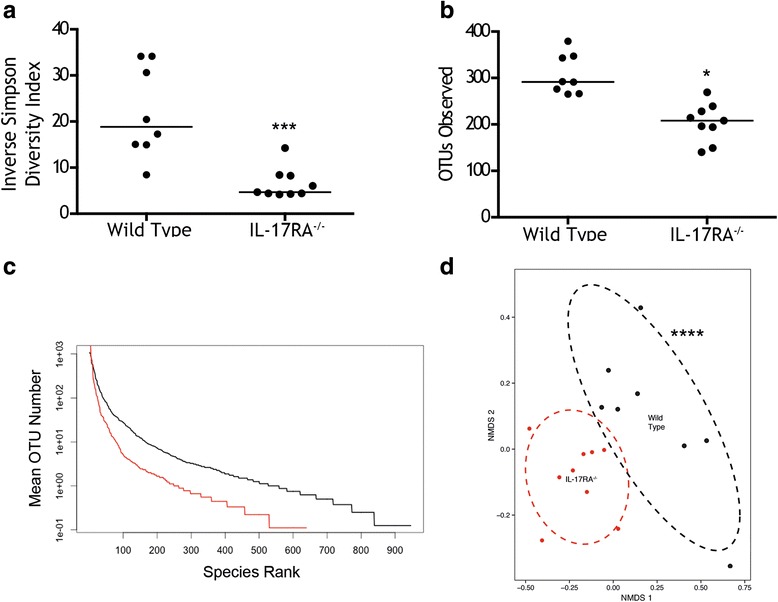
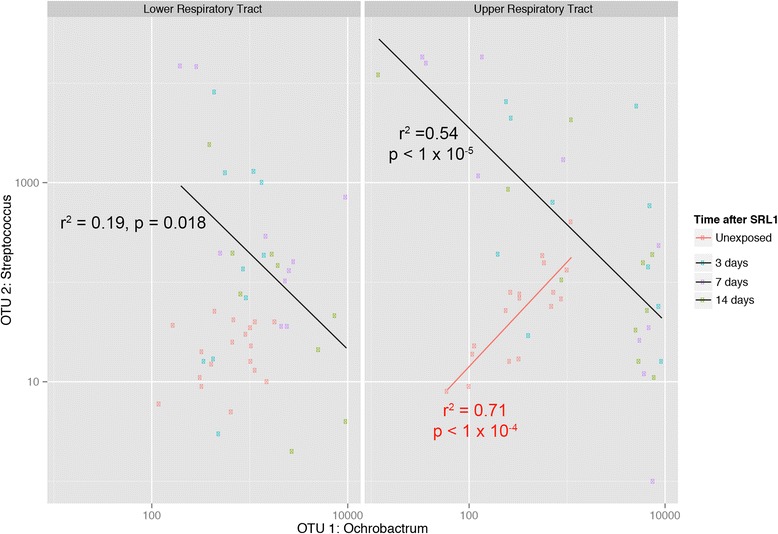
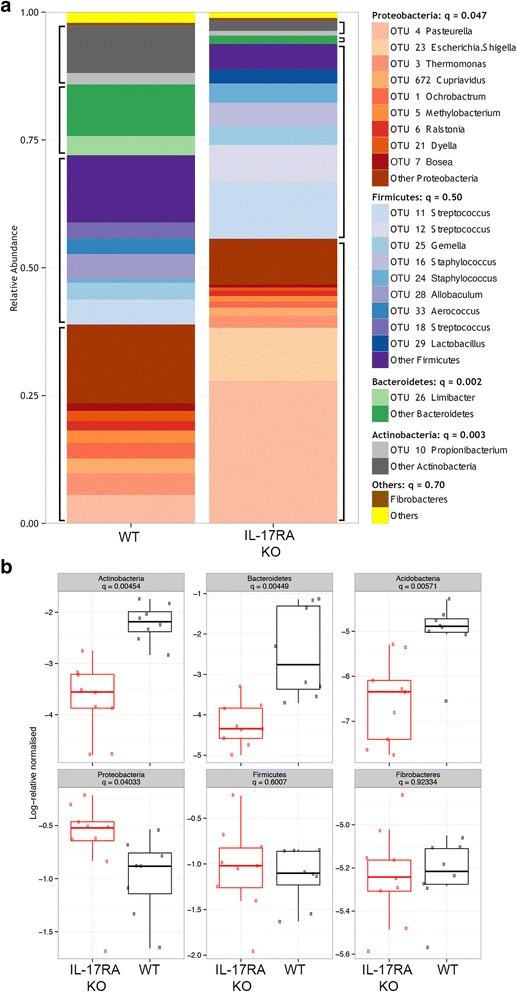
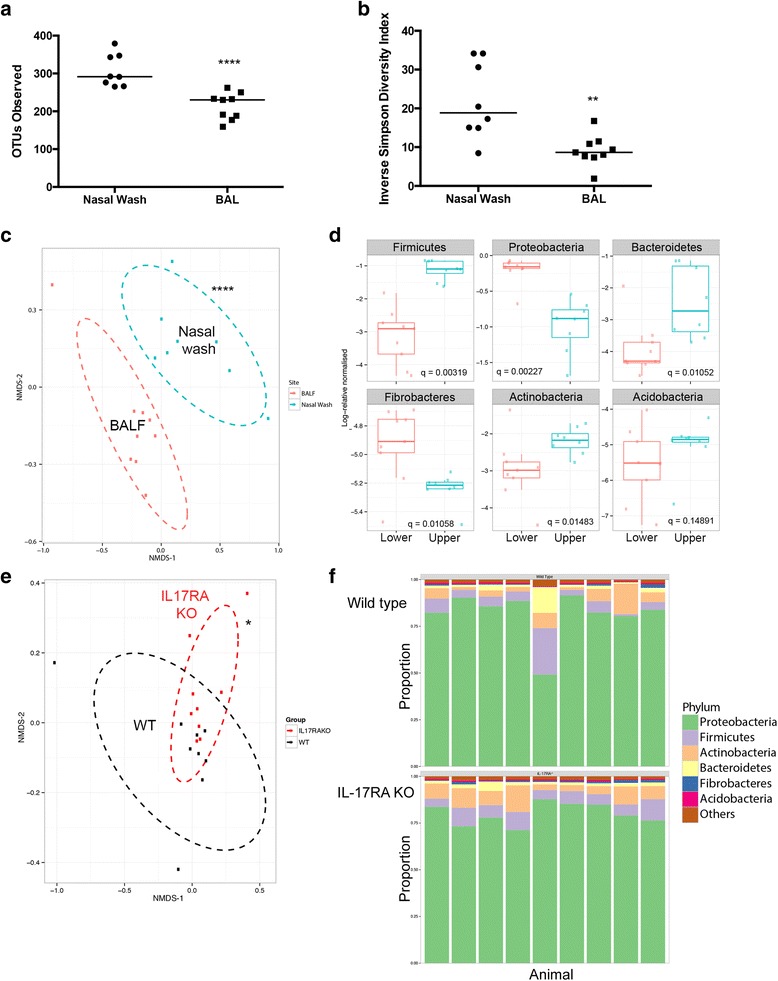
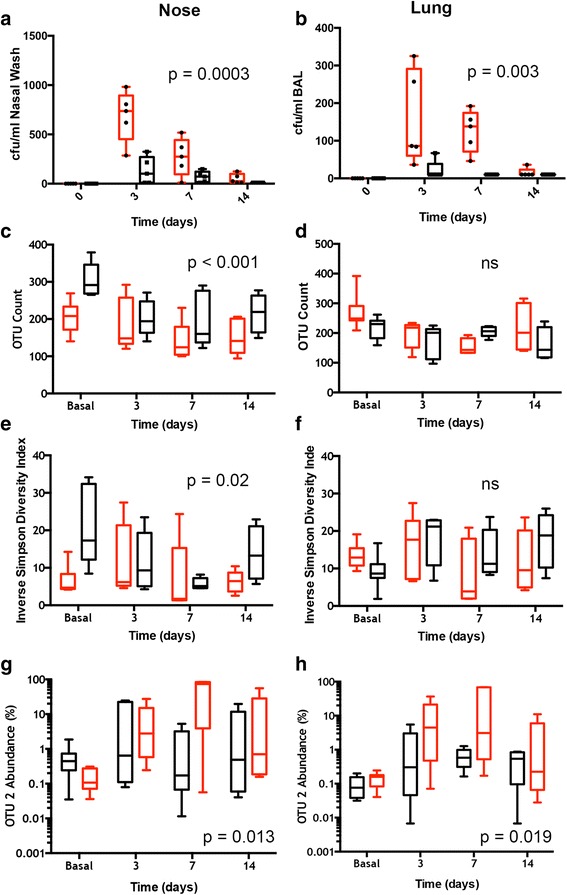
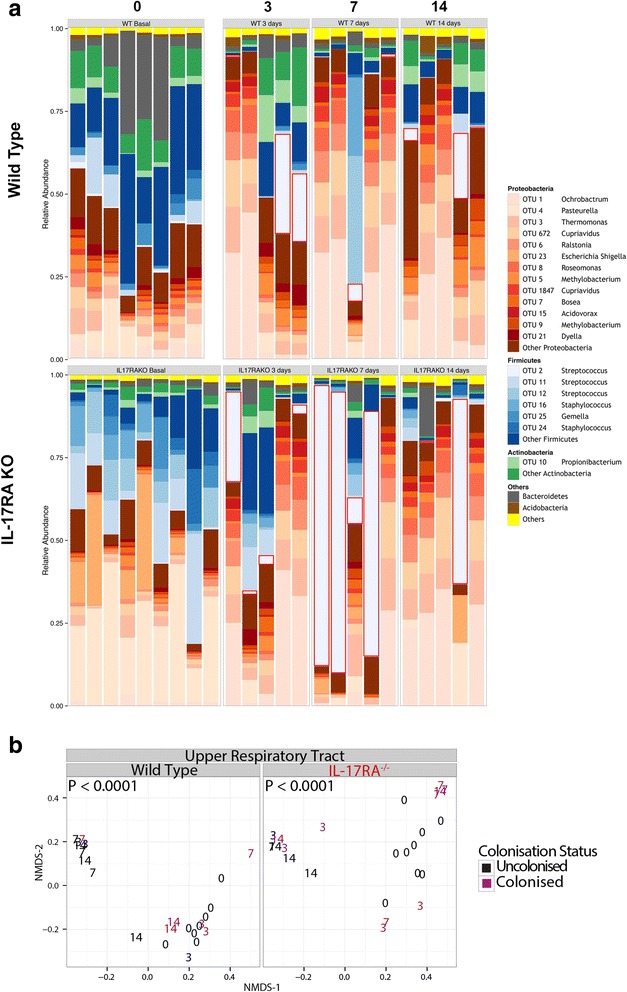
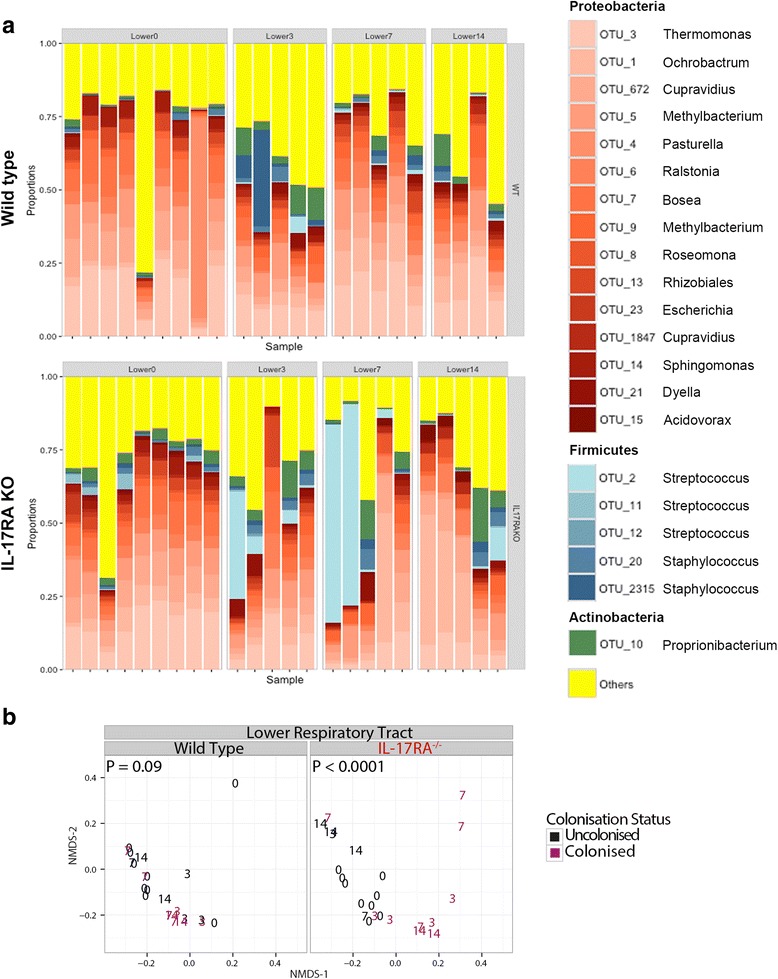
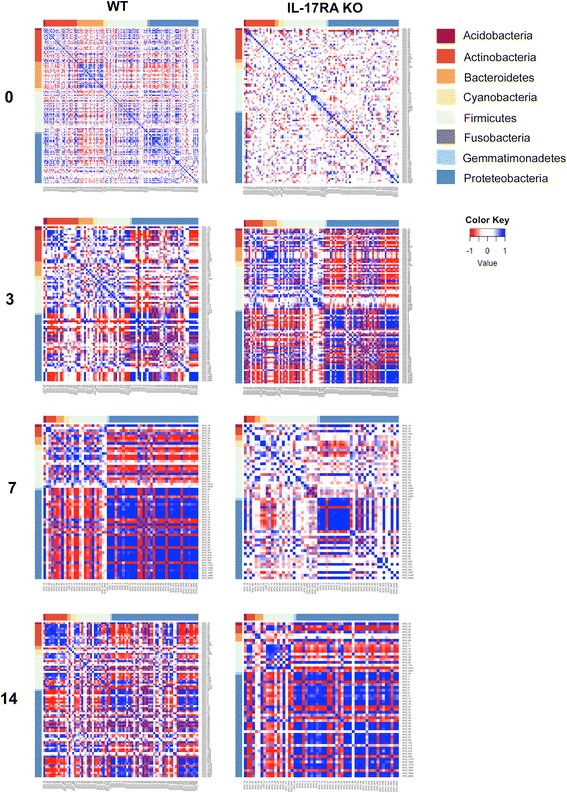
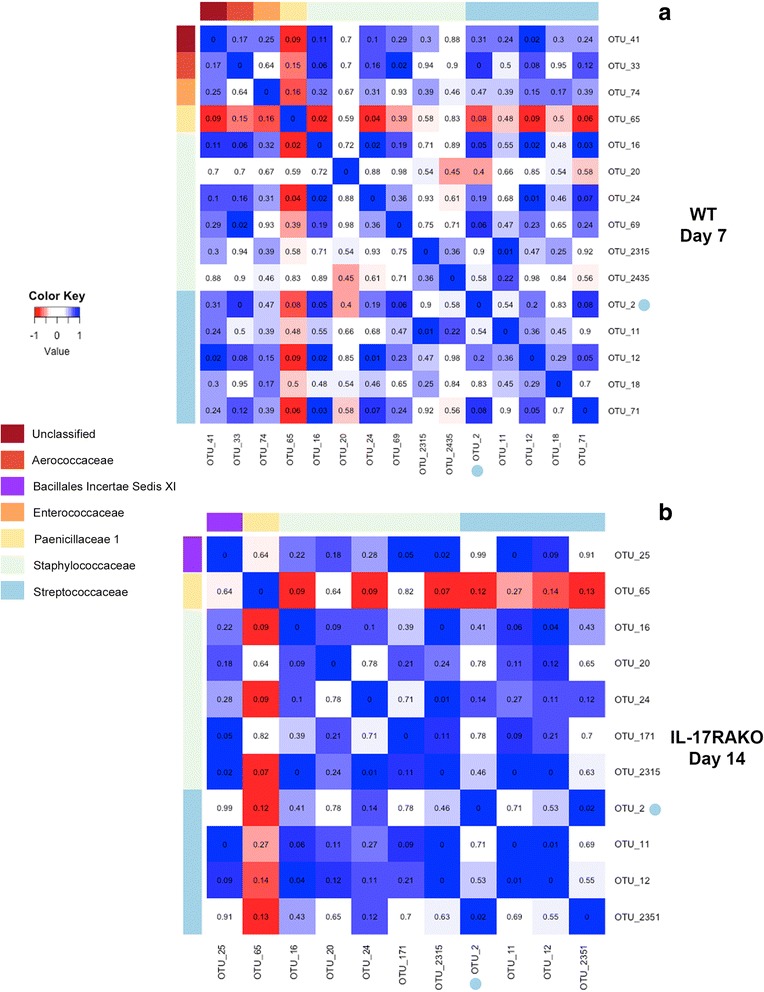
Using a murine model and 16S rRNA profiling, we found that a lack of IL-17 signalling led to profound alterations in the nasal but not lung microbiome characterized by decreased diversity and richness, increases in Proteobacteria and reduction in Bacteroidetes, Actinobacteria and Acidobacteria. Following experimental pneumococcal nasal inoculation, animals lacking IL-17 family signalling showed increased pneumococcal colonization, though both wild type and knockout animals showed as significant disruption of nasal microbiome composition, with increases in the proportion of Proteobacteria, even in animals that did not have persistent colonization. Sparse correlation analysis of the composition of the microbiome at various time points after infection showed strong positive interactions within the Firmicutes and Proteobacteria, but strong antagonism between members of these two phyla.
These results show the powerful influence of IL-17 signalling on the composition of the nasal microbiome before and after pneumococcal colonization, and apparent lack of interspecific competition between pneumococci and other Firmicutes. IL-17 driven changes in nasal microbiome composition may thus be an important factor in successful resistance to pneumococcal colonization and potentially could be manipulated to augment host defence against this pathogen.
细菌病原体肺炎链球菌在引起疾病之前就在鼻咽部定植,这需要它与常驻微生物区系成功竞争。白细胞介素-17 家族的细胞因子在宿主抵抗这种病原体的防御中起着重要作用,但它们对鼻咽微生物组的影响尚不清楚。在这里,我们分析了白细胞介素-17 对肺炎球菌定植前后鼻咽微生物组组成和相互作用的影响。
使用小鼠模型和 16S rRNA 分析,我们发现缺乏白细胞介素-17 信号导致鼻腔而不是肺部微生物组发生深刻改变,其特征是多样性和丰富度降低,变形菌门增加,拟杆菌门、放线菌门和酸杆菌门减少。在实验性肺炎球菌鼻内接种后,缺乏白细胞介素-17 家族信号的动物表现出更高的肺炎球菌定植率,尽管野生型和敲除型动物都表现出明显的鼻腔微生物组组成破坏,即使在没有持续定植的动物中,变形菌门的比例也增加了。感染后不同时间点微生物组组成的稀疏相关分析显示,厚壁菌门和变形菌门之间存在强烈的正相互作用,但这两个门的成员之间存在强烈的拮抗作用。
这些结果表明白细胞介素-17 信号对肺炎球菌定植前后鼻咽微生物组组成有强大的影响,而且肺炎球菌和其他厚壁菌门之间显然没有种间竞争。因此,白细胞介素-17 驱动的鼻腔微生物组组成的变化可能是成功抵抗肺炎球菌定植的一个重要因素,并且可能被操纵以增强宿主对这种病原体的防御。