Świderska Magdalena, Jaroszewicz Jerzy, Stawicka Agnieszka, Parfieniuk-Kowerda Anna, Chabowski Adrian, Flisiak Robert
Department of Physiology, Medical University of Bialystok, Bialystok, Poland.
Department of Infectious Diseases and Hepatology, Medical University of Silesia, Bytom, Poland.
Clin Exp Hepatol. 2017 Sep;3(3):127-134. doi: 10.5114/ceh.2017.68466. Epub 2017 Jun 21.
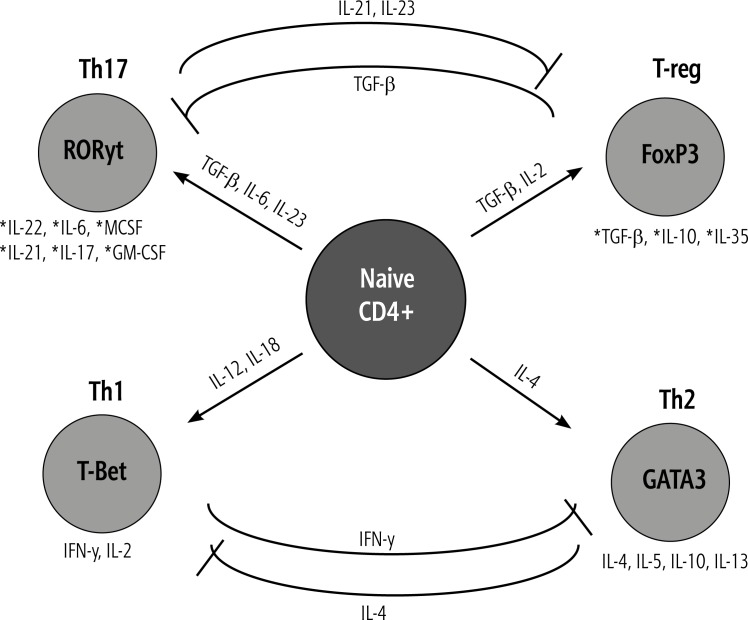
Non-alcoholic fatty liver disease (NAFLD) is a chronic progressive liver disease, coupled with metabolic syndrome, which may progress to non-alcoholic steatohepatitis (NASH). Diabetes, obesity, hypertension, hypercholesterolemia, and hypertriglyceridemia are considered to be the most common causes leading to the incidence of NAFLD. It is assumed that the accumulation of lipid deposits in hepatocytes leads to production of proinflammatory cytokines that triggers the development of liver inflammation. Regulatory T cells (Tregs) play a critical role in regulating inflammatory processes in NASH, while T helper type 17 (Th17) might functionally oppose Treg-mediated responses. In addition, important mediators of hepatic steatosis are fatty hormones known as adipokines. We aimed to describe the significance and interaction between Treg and Th17-related cytokines as well as adipokines in pathogenesis and its potential use as biomarkers of NAFLD, especially with respect to progression to NASH.
非酒精性脂肪性肝病(NAFLD)是一种慢性进行性肝病,与代谢综合征相关,可能进展为非酒精性脂肪性肝炎(NASH)。糖尿病、肥胖、高血压、高胆固醇血症和高甘油三酯血症被认为是导致NAFLD发病的最常见原因。据推测,肝细胞中脂质沉积的积累会导致促炎细胞因子的产生,从而引发肝脏炎症的发展。调节性T细胞(Tregs)在调节NASH中的炎症过程中起关键作用,而17型辅助性T细胞(Th17)可能在功能上对抗Treg介导的反应。此外,肝脂肪变性的重要介质是被称为脂肪因子的脂肪激素。我们旨在描述Treg和Th17相关细胞因子以及脂肪因子在发病机制中的意义和相互作用,及其作为NAFLD生物标志物的潜在用途,特别是在进展为NASH方面。