Departments of Medicine and Microbiology, New York University School of Medicine, New York, New York, USA.
Department of Microbiology and Immunology, Yong Loo Lin School of Medicine, National University of Singapore, Singapore.
mBio. 2017 Oct 24;8(5):e01476-17. doi: 10.1128/mBio.01476-17.
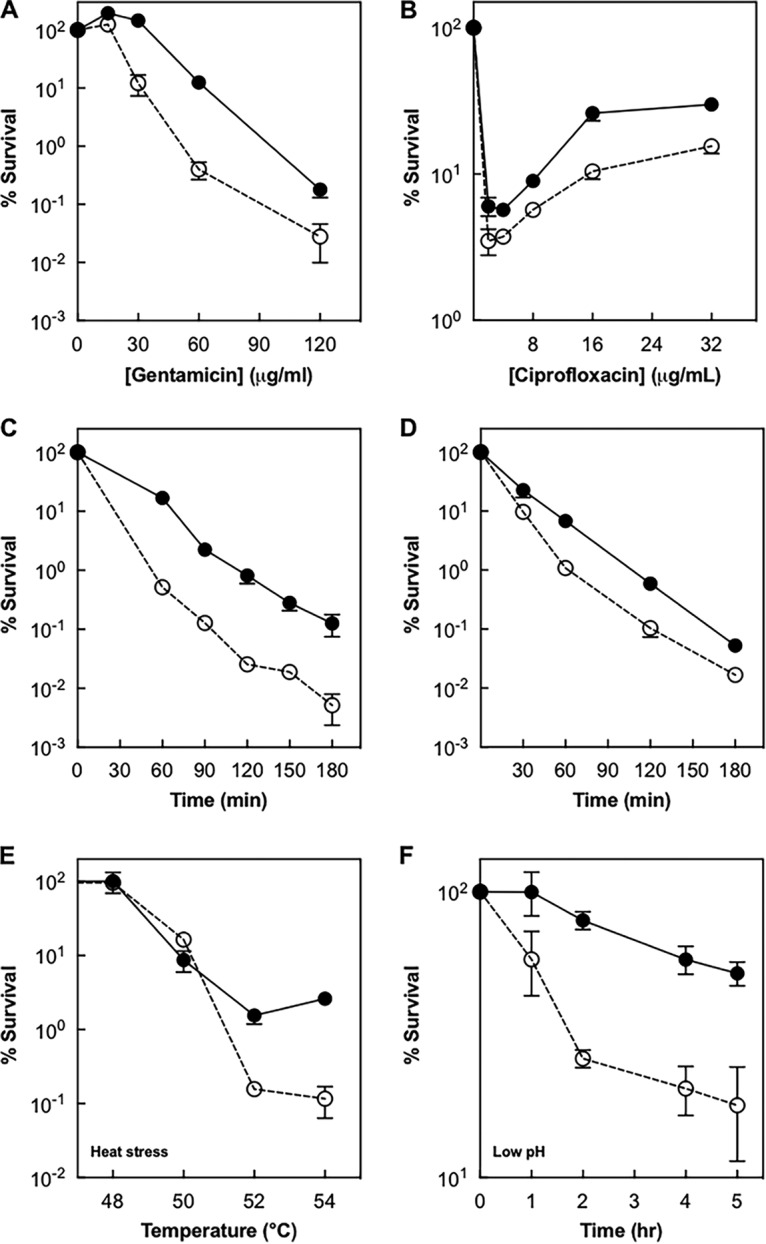
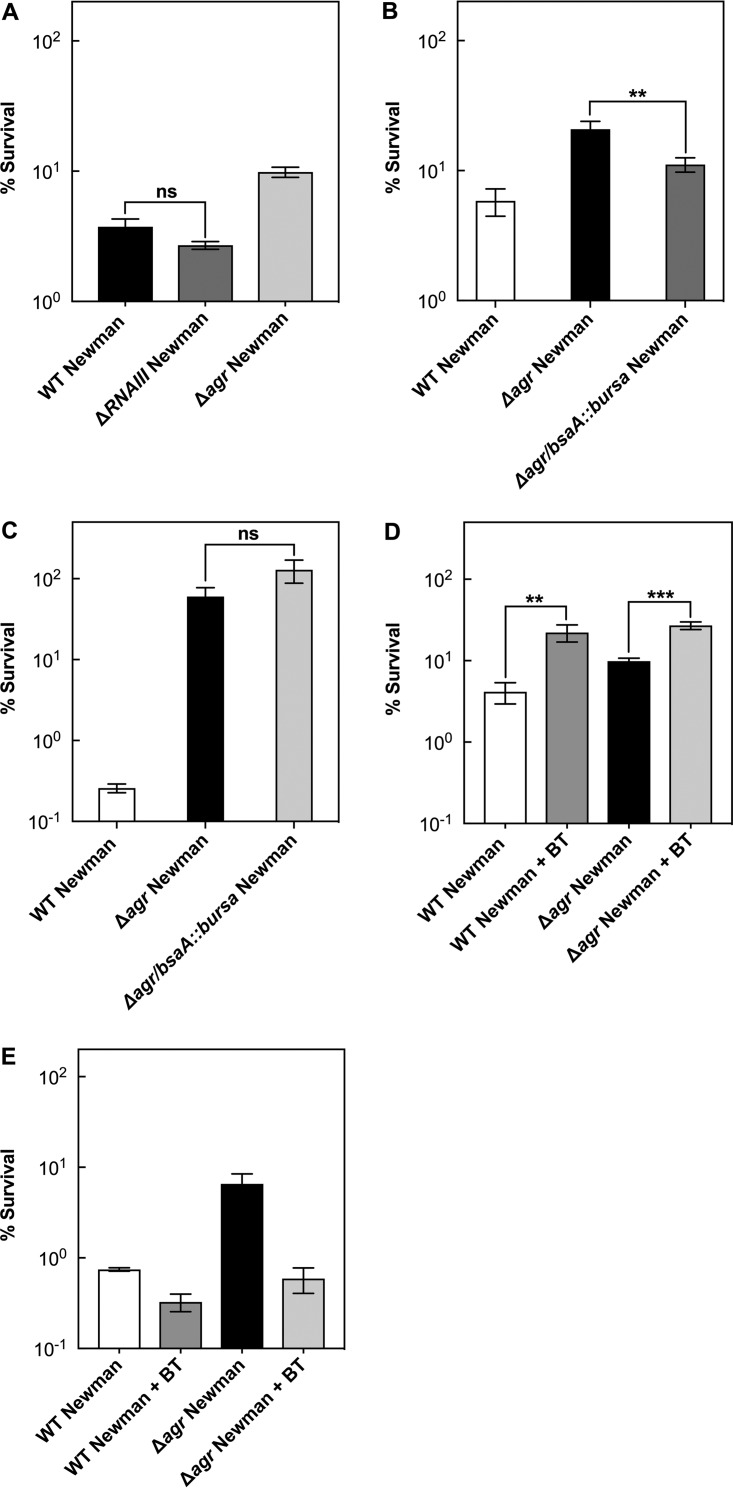
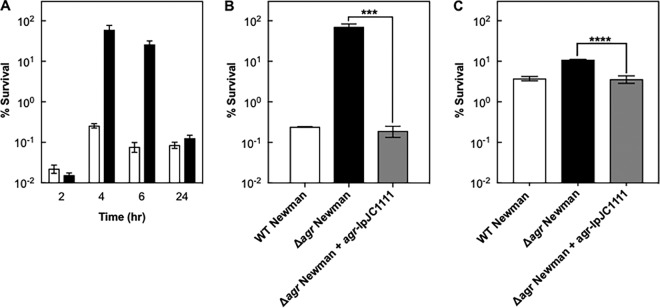
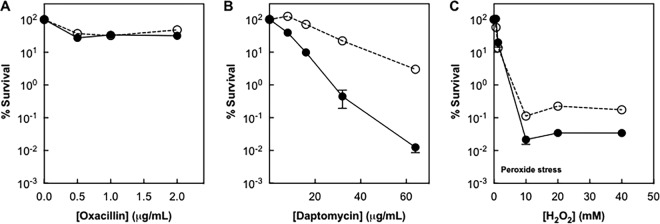
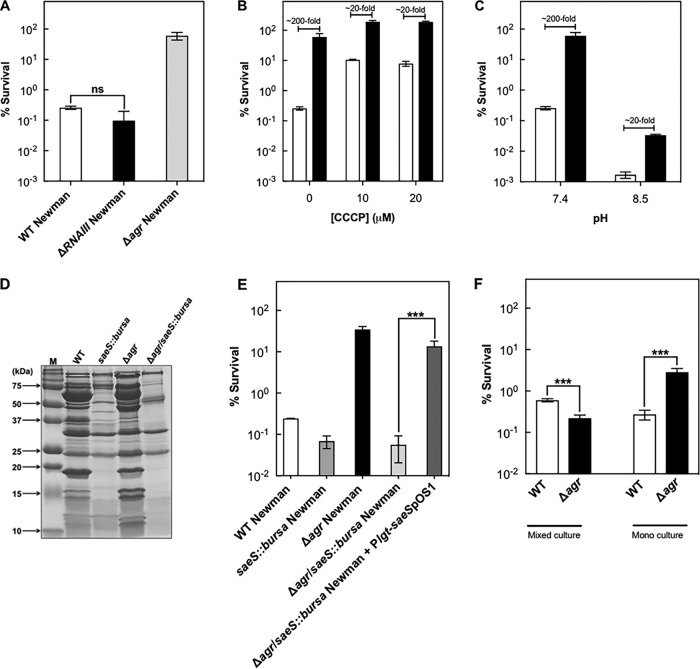
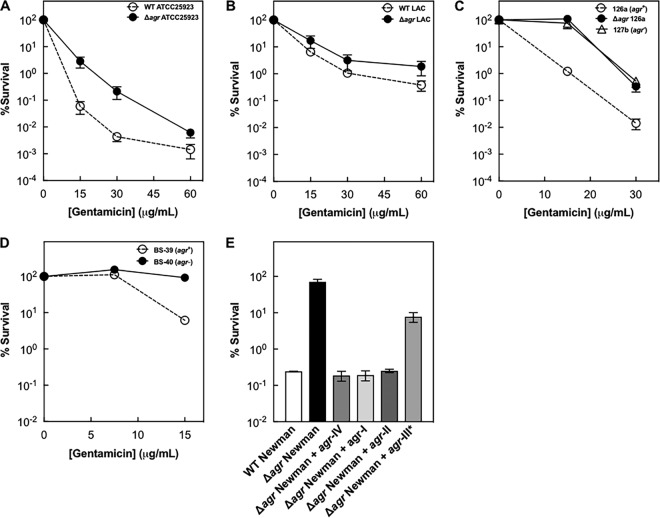
The system of promotes invasion of host tissues, and as expected, agents that block quorum sensing have anti-infective properties. Paradoxically, -defective mutants are frequently recovered from patients, especially those persistently infected with We found that an deficiency increased survival of cultured bacteria during severe stress, such as treatment with gentamicin, ciprofloxacin, heat, or low pH. With daptomycin, deletion of decreased survival. Therefore, activity can be either detrimental or protective, depending on the type of lethal stress. Deletion of had no effect on the ability of the antimicrobials to block bacterial growth, indicating that effects are limited to lethal action. Thus, the effect of an deletion is on bacterial tolerance, not resistance. For gentamicin and daptomycin, activity can be altered by -regulated secreted factors. For ciprofloxacin, a detrimental function was downregulation of glutathione peroxidase (), an enzyme responsible for defense against oxidative stress. Deficiencies in and were epistatic for survival, consistent with having a destructive role mediated by reactive oxygen species. Enhanced susceptibility to lethal stress by wild-type , particularly antimicrobial stress, helps explain why inactivating mutations in commonly occur in hospitalized patients during infection. Moreover, the quorum-sensing system of provides a clinically relevant example in which a single-step change in the response to severe stress alters the evolutionary path of a pathogen during infection. When phenotypes produced in response to an environmental stress are inadequate to buffer against that stress, changes that do buffer may become genetically encoded by natural selection. A clinically relevant example is seen with mutants that are deficient in the key virulence regulator Paradoxically, defects in are selected during serious hospital infection and have been associated with worse outcome. The current work helps resolve this paradox: mutants are often less readily killed by lethal stressors without affecting MIC, a phenomenon known as tolerance. Our results indicate that tolerance, which would not be detected as resistance, can be selected in clinical settings. The data also support the ideas that (i) broadly hedges against environmental change and stress through genome plasticity, (ii) reactive oxygen can be involved in the self-destructive response in bacteria, and (iii) therapeutic targeting of and virulence can be counterproductive.
系统促进了宿主组织的侵袭,不出所料,阻断群体感应的试剂具有抗感染特性。矛盾的是,缺陷突变体经常从患者中恢复,尤其是那些持续感染的患者。我们发现,在严重应激下,如庆大霉素、环丙沙星、热或低 pH 值处理时,培养细菌的存活会增加。对于达托霉素,缺失会降低存活率。因此,活性可能有害也可能有益,具体取决于致死应激的类型。缺失对这些抗生素阻止细菌生长的能力没有影响,表明作用仅限于致死作用。因此,缺失的影响是细菌的耐受性,而不是耐药性。对于庆大霉素和达托霉素,活性可以通过群体感应调节分泌因子来改变。对于环丙沙星,不利的功能是谷胱甘肽过氧化物酶()下调,该酶负责防御氧化应激。和的缺失对存活是上位性的,这与活性通过活性氧介导的破坏性作用一致。野生型对致死应激的敏感性增强,特别是对抗生素的应激,有助于解释为什么在感染期间,失活突变在住院患者中经常发生。此外,的群体感应系统为严重应激反应的单一改变改变感染期间病原体进化途径提供了一个临床相关的例子。当对环境应激产生的表型不足以缓冲该应激时,可能会通过自然选择产生缓冲的变化。一个临床相关的例子是对关键毒力调节剂的缺陷,缺陷突变体在严重的医院感染中选择,并且与更差的结果相关。目前的工作有助于解决这一悖论:缺陷突变体在严重的医院感染中经常不易被致死性应激源杀死,而不会影响 MIC,这种现象称为耐受性。我们的结果表明,在临床环境中可以选择耐受性,而不会被检测为耐药性。这些数据还支持以下观点:(i)通过基因组可塑性广泛应对环境变化和应激,(ii)活性氧可能参与细菌的自我毁灭反应,(iii)针对和毒力的治疗靶向可能适得其反。