Melo Carlos Fernando O R, Delafiori Jeany, de Oliveira Diogo N, Guerreiro Tatiane M, Esteves Cibele Z, Lima Estela de O, Pando-Robles Victoria, Catharino Rodrigo R
INNOVARE Biomarkers Laboratory, School of Pharmaceutical Sciences, University of Campinas, Campinas, Brazil.
Unidad de Proteómica, Instituto Nacional de Salud Publica, Cuernavaca, Mexico.
Front Microbiol. 2017 Oct 10;8:1954. doi: 10.3389/fmicb.2017.01954. eCollection 2017.
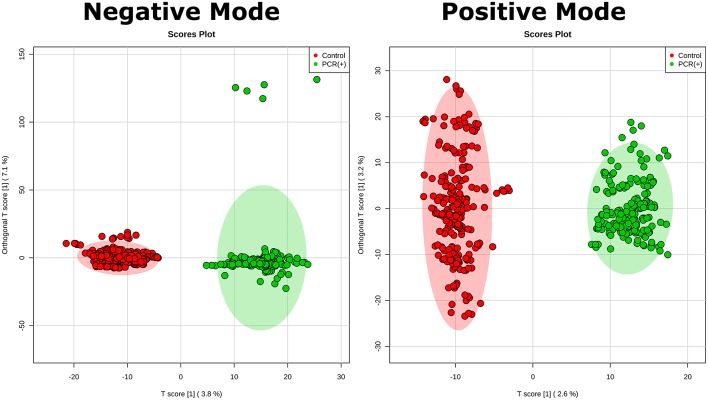
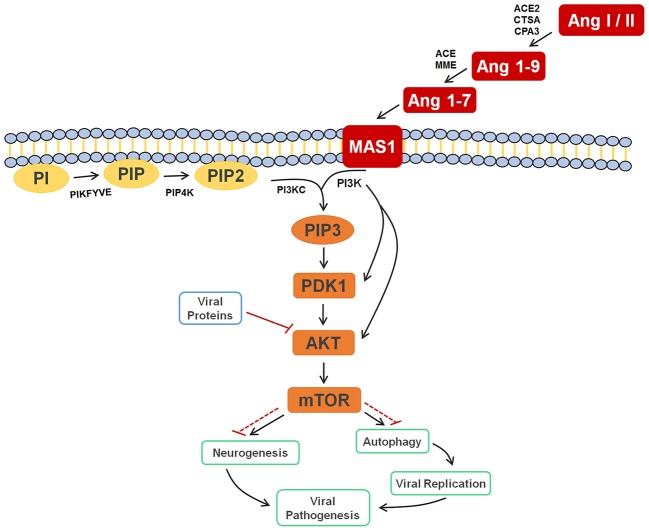
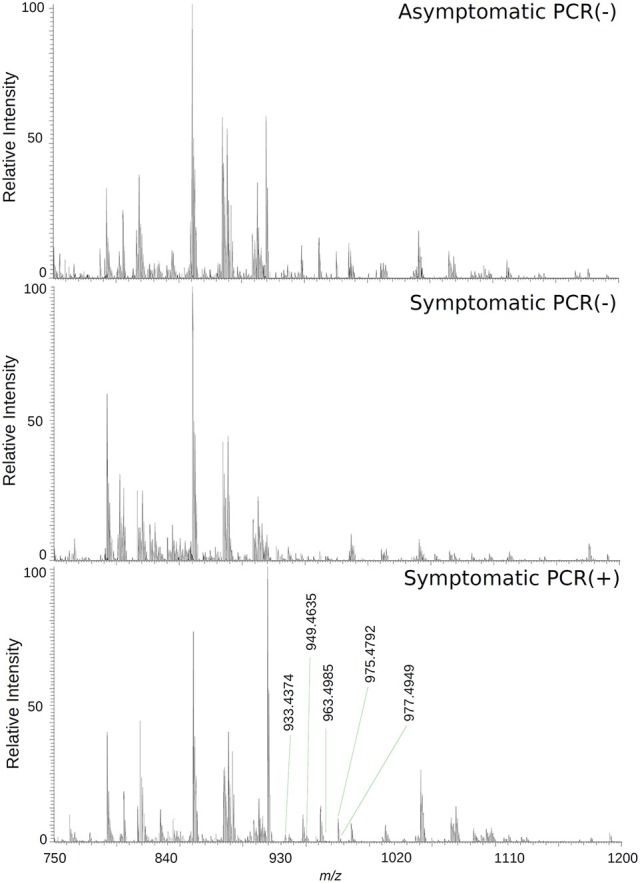
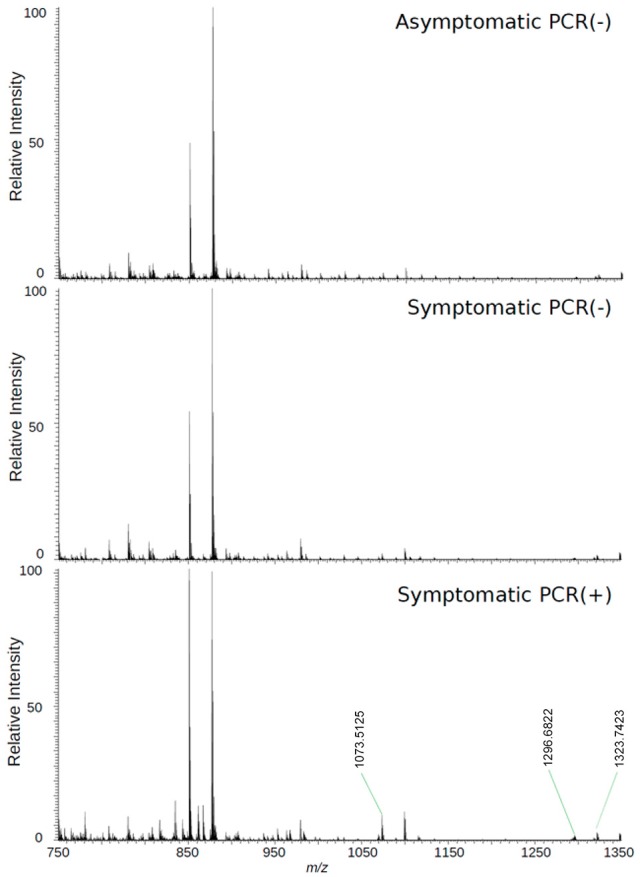
Zika virus (ZIKV) infection has recently emerged as a major concern worldwide due to its strong association with nervous system malformation (microcephaly) of fetuses in pregnant women infected by the virus. Signs and symptoms of ZIKV infection are often mistaken with other common viral infections. Since transmission may occur through biological fluids exchange and coitus, in addition to mosquito bite, this condition is an important infectious disease. Thus, understanding the mechanism of viral infection has become an important research focus, as well as providing potential targets for assertive clinical diagnosis and quality screening for hemoderivatives. Within this context, the present work analyzed blood plasma from 79 subjects, divided as a control group and a ZIKV-infected group. Samples underwent direct-infusion mass spectrometry and statistical analysis, where eight markers related to the pathophysiological process of ZIKV infection were elected and characterized. Among these, Angiotensin (1-7) and Angiotensin I were upregulated under infection, showing an attempt to induce autophagy of the infected cells. However, this finding is concerning about hypertensive individuals under treatment with inhibitors of the Renin-Angiotensin System (RAS), which could reduce this response against the virus and exacerbate the symptoms of the infection. Moreover, one of the most abundant glycosphingolipids in the nervous tissue, Ganglioside GM2, was also elected in the present study as an infection biomarker. Considered an important pathogen receptor at membrane's outer layer, this finding represents the importance of gangliosides for ZIKV infection and its association with brain tropism. Furthermore, a series of phosphatidylinositols were also identified as biomarkers, implying a significant role of the PI3K-AKT-mTOR Pathway in this mechanism. Finally, these pathways may also be understood as potential targets to be considered in pharmacological intervention studies on ZIKV infection management.
寨卡病毒(ZIKV)感染最近已成为全球主要关注的问题,因为它与感染该病毒的孕妇体内胎儿的神经系统畸形(小头畸形)密切相关。寨卡病毒感染的体征和症状常常被误诊为其他常见病毒感染。由于除了蚊虫叮咬外,还可通过生物体液交换和性交传播,这种情况成为一种重要的传染病。因此,了解病毒感染机制已成为重要的研究重点,同时也为可靠的临床诊断和血液制品质量筛查提供了潜在靶点。在此背景下,本研究分析了79名受试者的血浆,分为对照组和寨卡病毒感染组。样本进行了直接进样质谱分析和统计分析,选出并鉴定了八个与寨卡病毒感染病理生理过程相关的标志物。其中,血管紧张素(1-7)和血管紧张素I在感染时上调,显示出诱导被感染细胞自噬的倾向。然而,这一发现对于正在接受肾素-血管紧张素系统(RAS)抑制剂治疗的高血压患者而言值得关注,因为这可能会降低机体对病毒的反应并加重感染症状。此外,神经组织中最丰富的糖鞘脂之一,神经节苷脂GM2,在本研究中也被选为感染生物标志物。作为细胞膜外层重要的病原体受体,这一发现表明神经节苷脂在寨卡病毒感染及其与脑嗜性的关联中具有重要作用。此外,还鉴定出一系列磷脂酰肌醇作为生物标志物,这意味着PI3K-AKT-mTOR信号通路在该机制中发挥着重要作用。最后,这些信号通路也可被视为寨卡病毒感染管理药物干预研究中需考虑的潜在靶点。